Cut a 5.1 cm wedge from your lawn and read the brown band inside it. Thatch is the woven layer of living and dead stems, roots and crowns that sits between green grass and soil. A layer 1.27 cm thick or less protects the lawn. Past that line, water, air and fertilizer struggle to reach the roots, and grass starts living in the mat instead of the soil.
That is the layer at its simplest. A thin layer cushions footsteps, shades the soil and slows evaporation. A thick layer does the opposite. It holds water at the surface, blocks fertilizer from the root zone and shelters insects and disease. I have learned to check the layer before I blame the mower or the weather.
| Point | Detail |
|---|---|
| What it is | A woven mat of living and dead stems, roots, crowns, stolons and rhizomes |
| Healthy limit | 1.27 cm thick or less |
| Act now | Past 1.27 cm, plan thatch control; past 2.54 cm, plan physical removal |
| How to check | Cut a 5.1 cm wedge and measure the brown band |
| Main fix | Core aeration for prevention, vertical mowing for removal |
What Is Thatch?
Thatch is the layer of undecomposed and partly decomposed plant material that sits between the soil surface and the green grass above it. It holds living and dead tissue woven together, mostly stems, roots, crowns, stolons and rhizomes. The layer turns into a problem only when growth outruns decay and the mat thickens past its limit.
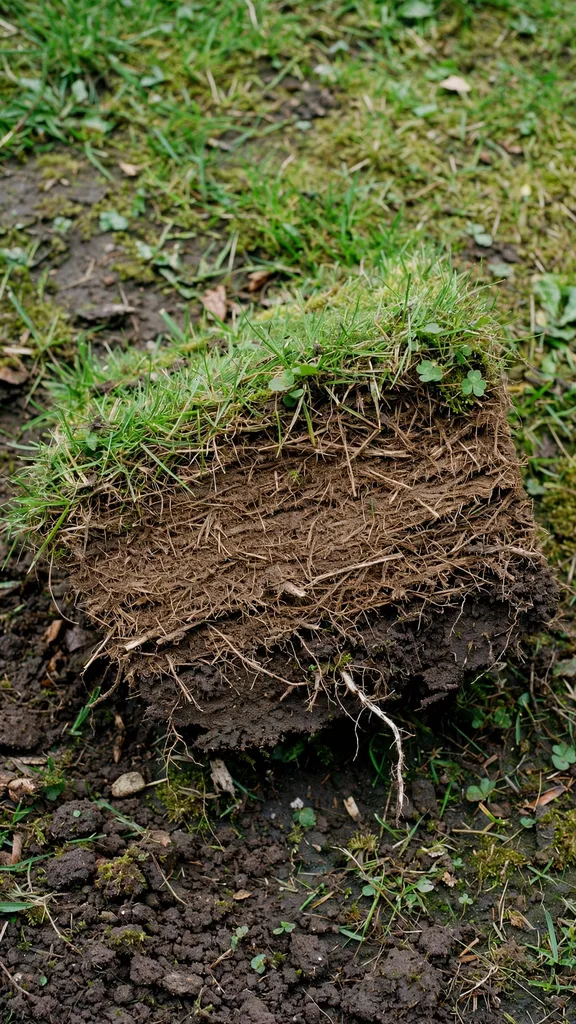
The deciding number is 1.27 cm. The University of Minnesota Extension thatch guide states that a layer 1.27 cm thick or less is usually no problem, and a layer past 1.27 cm calls for a thatch management program. That single measurement answers the question most lawn owners ask. Measure first, act on the number, and leave a thin layer alone.
A thin layer earns its place. It cushions the crowns against foot traffic, buffers the soil against temperature swings, slows moisture loss and limits weed germination by shading the soil. The trouble starts when the mat thickens enough to hold water above the roots, keep fertilizer from washing down and give roots a soft place that dries fast in a dry spell. Roots in the mat sit high, dry and exposed. Roots in the soil sit deep and steady. The gardening glossary defines the other lawn terms in the same plain words.
How Thatch Works
The layer builds up when the lawn produces organic debris faster than soil microbes and earthworms can break it down. Vigorous grass varieties shed stems and roots fast. Heavy nitrogen pushes soft growth that dies back and adds to the pile. Infrequent mowing leaves long clippings with wiry stem material that decays slowly. Compacted or waterlogged soil holds little oxygen, so the organisms that eat thatch slow down or stop. Each cause adds material and slows removal. The gap between the two is the layer you measure.
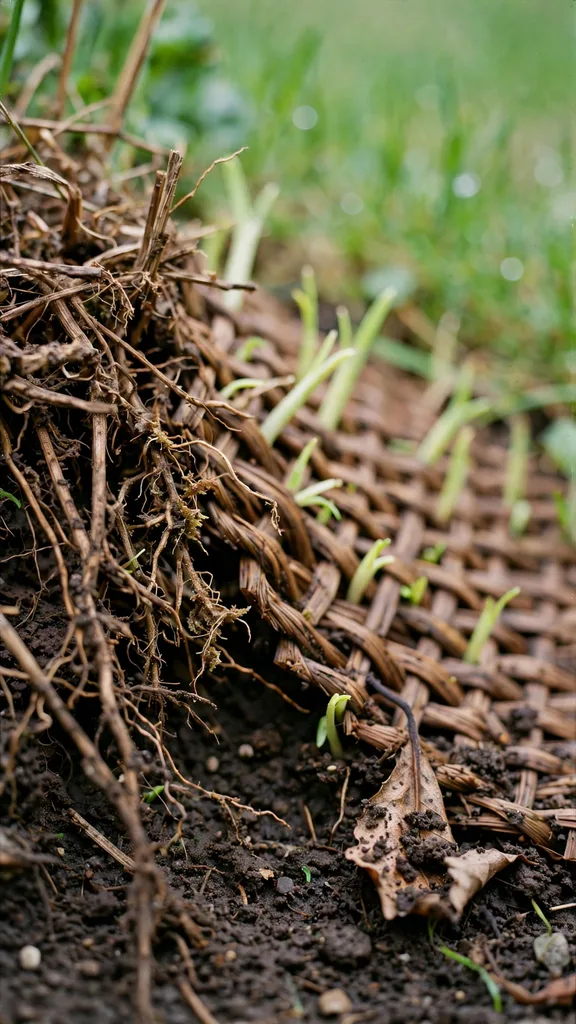
About 25 percent of the mat is lignin, a tough woody compound that resists decay, as Penn State Extension’s guide to managing thatch records. That figure explains why the layer persists. Lignin-rich stems and crowns break down far slower than soft leaf blades. Grass clippings carry little lignin. They break down fast and do not build the mat. Bagging clippings to fight thatch wastes effort and strips nitrogen the lawn would have used.
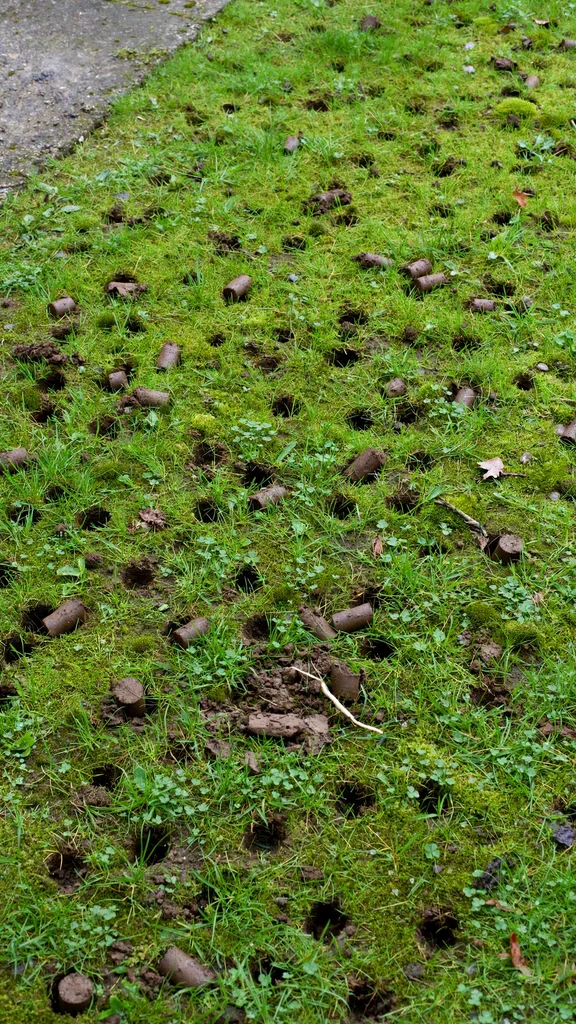
Creeping grasses build the mat fastest. Kentucky bluegrass, creeping red fescue and creeping bentgrass spread by rhizomes or stolons, and each runner adds stems to the mat. Bunch grasses such as tall fescue shed less stem material and rarely build a thick layer. Heavy watering and heavy feeding push the same creeping grasses into faster growth, so the thickest mat often sits on the most pampered lawns. Prevention starts with the grass choice, the fertilizer rate and the mowing height. Core aeration opens compacted soil, lets air and water reach the microbes, and speeds the decay that keeps the layer thin.
Thatch vs Compaction
The mat and compaction both starve roots, and lawn owners often confuse them. The two problems sit in different places and need different fixes. Thatch is an organic layer on top of the soil. Compaction is soil pressed tight below the surface. A lawn can carry both at once, and each makes the other worse, because compacted soil slows the microbes that eat thatch.
| Point | Thatch | Compaction |
|---|---|---|
| Where it sits | Between green grass and soil surface | In the soil itself, below the surface |
| What it is made of | Living and dead stems, roots and crowns | Soil particles pressed together, pore space lost |
| Main sign | Spongy feel underfoot, mower bounces | Screwdriver will not push in, water puddles |
| How to test | Cut a 5.1 cm wedge and measure the brown band | Push a screwdriver into moist soil and feel resistance |
| Main fix | Vertical mowing or power raking to remove the mat | Core aeration to pull soil plugs and open channels |
| Prevention | Right grass, right fertilizer rate, regular mowing | Core aeration, less traffic on wet soil |
Test both before you pick a tool. A spongy lawn with a thin mat points to compaction, and dethatching tears living grass for no gain. A firm lawn with a thick mat points to the layer, and aeration alone will not remove it. When both tests fail, clear the mat first and then aerate, so the aerator tines reach soil instead of punching through a thick organic pad.
How to Measure Thatch
Cut a small wedge with a sharp spade and lift it out. Go 5.1 cm deep, about the width of a trowel blade, and look at the cut face. The band is the brown, woven layer between the green shoots and the dark soil. Measure it with a ruler. Check three or four spots, because sunny, heavily fed areas build the mat faster than shaded, lean areas. One reading can mislead.
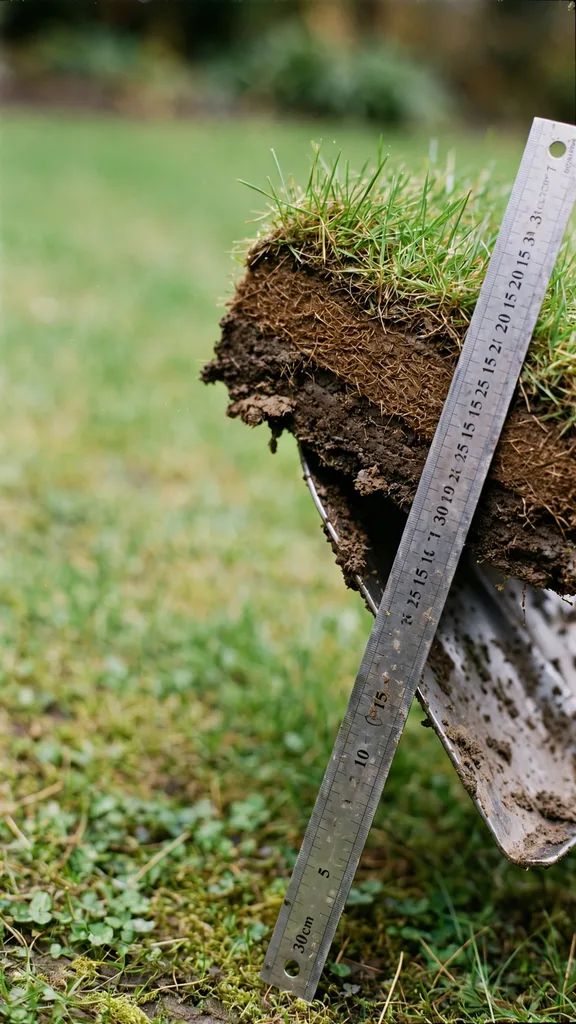
Read the numbers against two lines. A layer 1.27 cm thick or less needs no action. A layer past 1.27 cm needs a management program of less fertilizer, regular mowing and core aeration. A layer past 2.54 cm needs physical removal with a vertical mower or power rake. A layer 5.1 cm thick or more is severe, and cutting it back to a healthy level in one pass will thin the stand badly, so plan on reseeding the bare patches after removal.
Feel the lawn as well. A spongy surface underfoot and a bouncing mower both point to a thick mat. Water that runs off a lawn you just watered points the same way. None of those signs replaces the ruler.
Common Mistakes With Thatch
Dethatching on a calendar schedule is the first mistake. A lawn with a thin layer gains nothing from the pass, while the machine tears living crowns and opens bare soil for weeds. Dethatch only when the ruler says the layer is past 1.27 cm. Dethatching wet soil is the second mistake. Wet thatch clumps, the machine drags, and the turf tears instead of lifting cleanly. Work on moist soil that holds its shape, never on soaked ground.
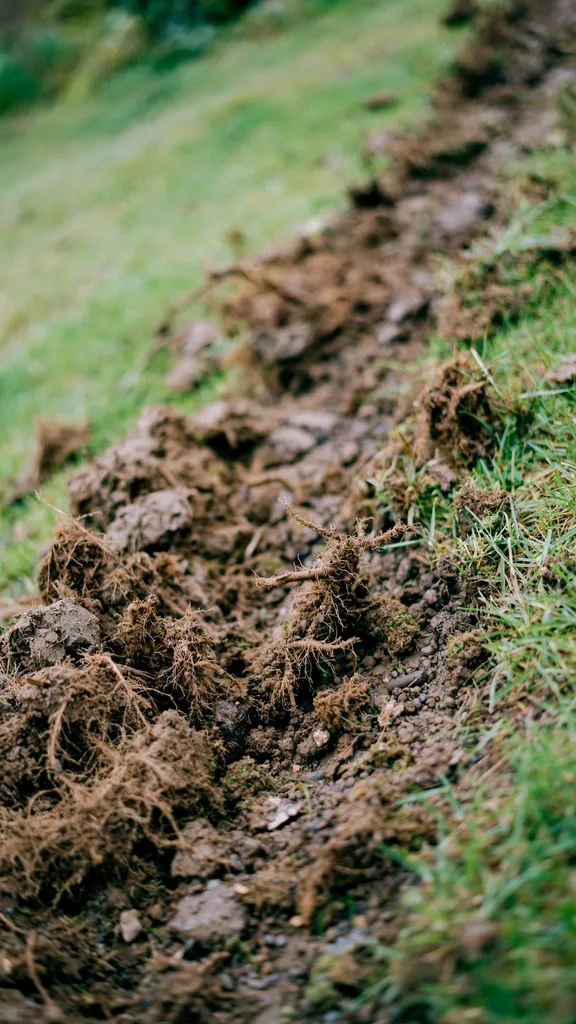
Removing the whole layer in one pass is the third mistake. The mat holds living crowns and roots, and stripping it bare leaves the lawn thin and slow to recover. Take the layer down in stages when it is very thick, and let the grass fill in between passes. Dethatching during heat or drought stress is the fourth mistake. The turf is already weak, recovery is slow, and the opened soil dries fast. Work during active growth with cool weather and adequate moisture, and skip the job in late fall when winter drying can follow.
Bagging clippings to fight the mat is the fifth mistake. Clippings decay fast and return nitrogen to the lawn. Removing them starves the microbes that eat thatch. Mow often enough that no more than one third of the blade comes off in a single cut, and let the short clippings fall. A thin thatch layer acts like a mulch, holding moisture and shading the soil. The goal is a thin layer, never a bare one.
When Thatch Matters in Your Garden
The layer matters most on lawns that see heavy use. A family lawn, a dog run and a play area all take traffic that presses soil tight and slows decay. It matters on lawns fed hard for fast green growth, because each flush of soft growth adds stems to the mat. It matters on creeping grass lawns, where every runner feeds the layer. It matters least on a low input bunch grass lawn mowed tall and fed lightly.
The layer matters before overseeding. Seed that lands on a thick mat sits above the soil, dries out and never germinates. Clear the mat and open the soil first, and the seed will touch soil and take hold. It matters before a dry summer. Roots living in the mat dry out faster than roots in the soil, so a thick layer turns a short dry spell into brown patches. It matters on a new lawn decision too. A lawn that keeps building a thick mat despite good care may carry the wrong grass for the site, and a switch to a bunch type grass can end the cycle.
Check the layer once a year and keep the numbers. A lawn that holds at 1.27 cm or less for three years in a row is a lawn whose feeding, mowing and aeration are in balance. A lawn that climbs past the line each year is asking for less nitrogen, shorter intervals between mows and a regular core aeration pass.
FAQ
A layer 1.27 cm thick or less is healthy and needs no action. It cushions the crowns, shades the soil and slows evaporation. Past 1.27 cm, start a management program of lighter feeding, regular mowing and core aeration. Past 2.54 cm, plan physical removal with a vertical mower or power rake, and expect to reseed bare patches after a heavy pass.
No. Clippings are mostly water and soft compounds that soil microbes break down fast. The mat comes from tough stems, crowns, stolons and roots, and a large share of it is lignin, a woody compound that resists decay. Bagging clippings removes nitrogen the lawn needs and does nothing to slow the mat. Mow often, cut no more than one third of the blade, and let short clippings fall.
Yes. Rent a vertical mower or power rake, and work during active growth in cool weather with moist soil. Set the blades to nick the mat without tearing deep into the soil. Make one pass, rake up the debris and remove it from the site. A small lawn also responds to vigorous hand raking, though the work is slow and suits patches rather than a whole lawn.
Dethatch cool-season grasses in late summer to early fall, when the grass recovers fast. Dethatch warm-season grasses in late spring to early summer, once the grass has greened up and grows actively. Never dethatch during heat, drought or late fall, when the turf is weak or winter drying can follow. Pair the job with core aeration and overseeding for a full reset.
No. A thin layer protects the lawn, so the goal is 1.27 cm or less, never zero. Stripping the mat bare tears living crowns and roots, thins the stand and opens soil for weeds. Remove a thick layer in stages when needed, and let the grass fill in between passes. Keep feeding light, mowing regular and aeration routine so the layer stays thin on its own.