Snip 1 stem 10.2 cm long, stick it in damp mix, and wait for roots. A cutting is a piece of stem, leaf, or root cut from a parent plant and coaxed into growing a whole new plant of its own.
Cuttings are the most used asexual propagation method, and the reason is simple: one healthy shrub gives a dozen new plants in an afternoon, each one a clone of the parent. No seed, no graft, no special bench. A knife, a pot, and a clear bag cover most jobs, and the failures cost nothing but time.
| Item | Detail |
|---|---|
| What it is | A severed piece that grows into a plant |
| Stem types | 4: herbaceous, softwood, semi-hardwood, hardwood |
| Best length | 10.2 to 15.2 cm for most stems |
| Watch out for | Dry air that wilts the cutting |
What Is Cutting?
A cutting is a vegetative plant part severed from the parent plant to regenerate into a whole new plant. Cuttings can come from stems, leaves, or roots, and stem cuttings are the most common type in the home garden. The 4 main types of stem cuttings are herbaceous, softwood, semi-hardwood, and hardwood, and the type names the growth stage of the wood at collection time. Propagation by stem cuttings is the most commonly used method to propagate many woody ornamental plants.
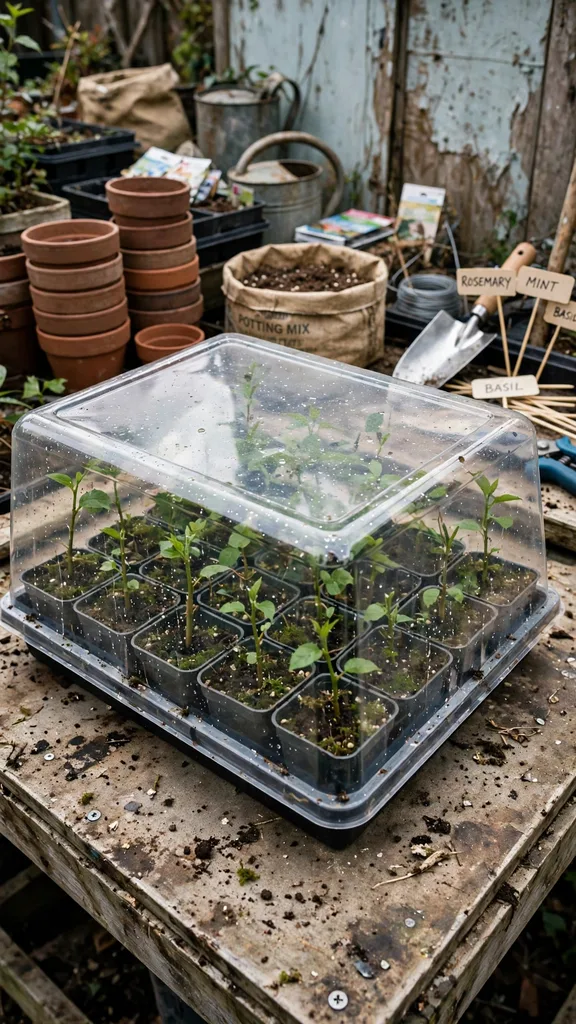
The wood stage matters more than the calendar. Softwood comes from new spring growth that snaps when bent, semi-hardwood from partly matured summer wood, and hardwood from dormant winter stems. Herbaceous cuttings come from non-woody plants like coleus and dahlia, and they root fastest of all. A cutting taken at the wrong stage roots slowly or not at all, while the same plant at the right stage roots in weeks. Match the type to the season, and the plant does the rest.
How Cutting Works
A cutting roots because the cells at its base can change jobs. Wounded stem tissue grows callus, and callus grows roots, as long as the cutting stays moist and the leaves keep making food. Early morning is the best time to take cuttings, because the plant is fully turgid, and the cuttings hold their water through the morning. Cuttings are generally 10.2 to 15.2 cm long, and a herbaceous piece runs 7.6 to 12.7 cm, according to the North Carolina State University Extension stem cuttings guide. Remove the leaves from the lower one-third to one-half of the cutting, so no leaf sits in the mix to rot.
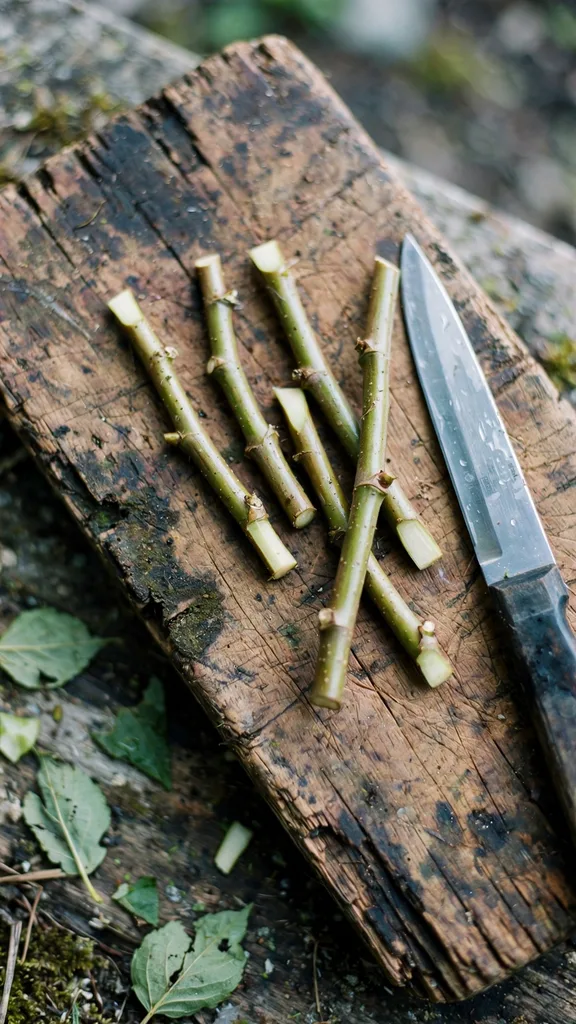
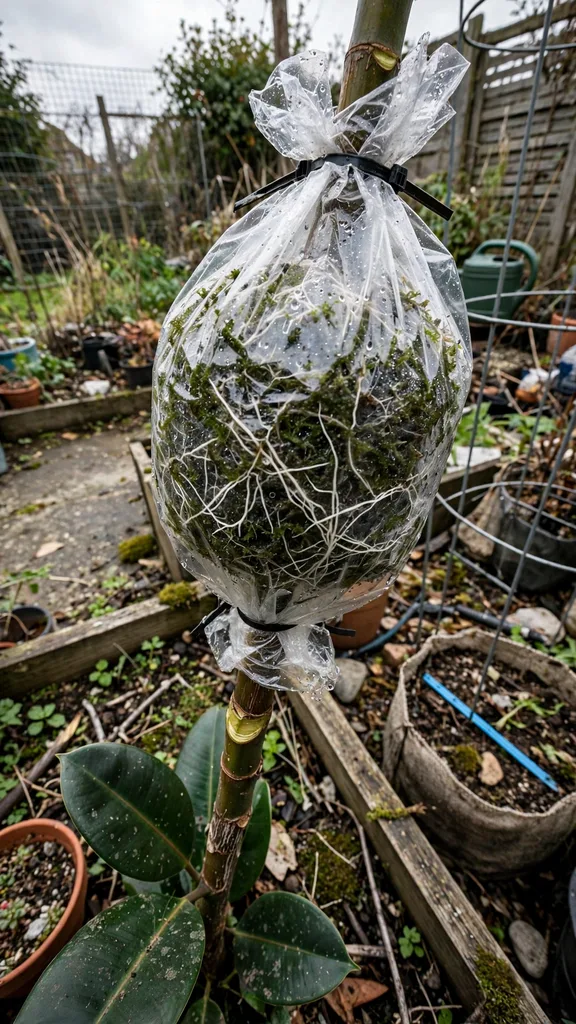
Insert the cutting one-third to one-half of its length into the mix, with the buds pointing up, and never upside down. A sterile, low-fertility, well-drained mix suits most cuttings: coarse sand, or 1 part peat to 1 part perlite by volume. Maintain high humidity by covering the pot with a bottomless jug or a clear plastic bag, and keep the mix moist until roots form. The University of Georgia Extension propagation circular notes that sweet tea olive roots readily from cuttings, and the same easy-rooting habit marks most soft-stemmed shrubs. Seed-grown plants start differently, and the seed starting guide covers that route.
Cutting vs Layering
Cutting and layering both clone the parent, and both start with a wound. The cutting leaves home at once, while the layer stays fed by its parent until its roots hold. Gardeners pick between them by weighing speed against certainty.
| Feature | Cutting | Layering |
|---|---|---|
| Start | Severed from the parent at once | Stays attached until rooted |
| Numbers | Dozens from one shrub | 1 or 2 per branch |
| Speed | Roots in 2 to 10 weeks | Roots in 6 weeks to a season |
| Risk | Dries or rots easily | Low, the parent feeds it |
| Best use | Easy shrubs, soft stems, bulk | Hard-to-root shrubs, big plants |
How to Recognize and Measure Cutting
Recognize a rooted cutting by the tug test. After 3 weeks, pull very gently: a rooted cutting resists, and an unrooted one slides out of the mix. New growth from the tip is the surest sign, since a cutting spends its stored food on roots first and only then pushes a shoot. Leaves that stay green and firm mean the cutting still drinks, while leaves that yellow and drop mean the base has rotted. Rooting time varies with the cutting type, the species, and the conditions, and conifers need more time than broadleaf plants.
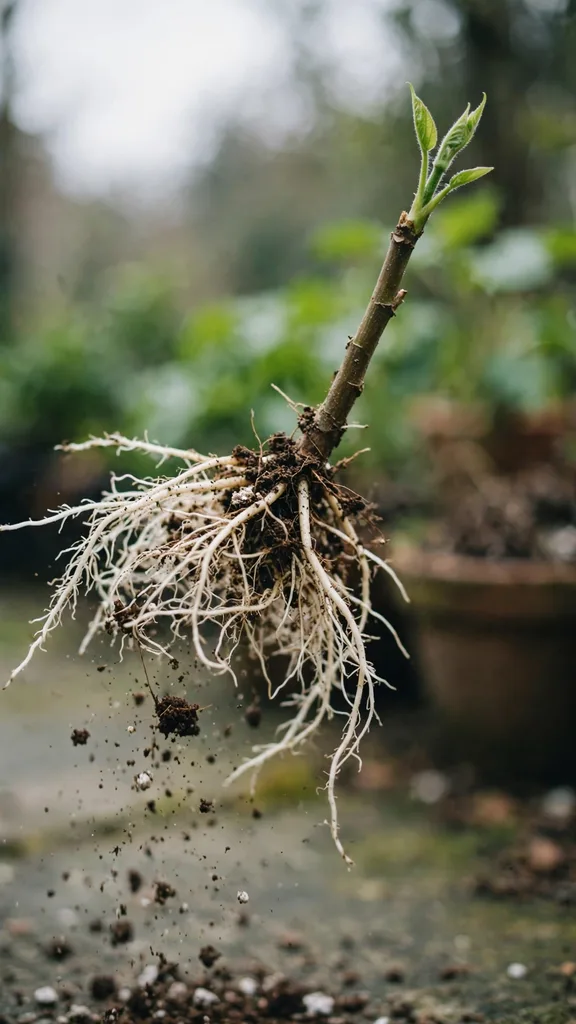
Measure the cutting before it goes in the mix. A stem 10.2 to 15.2 cm long, with 2 or 3 leaves left at the top and the lower half stripped, roots best. A cutting too long dries before its base roots, and a cutting too short has no stored food to draw on. Disinfect the blade between plants, so a sick plant cannot pass its trouble to a healthy one. Space cuttings far enough apart that every leaf catches light, and water again after planting.
Common Mistakes With Cutting
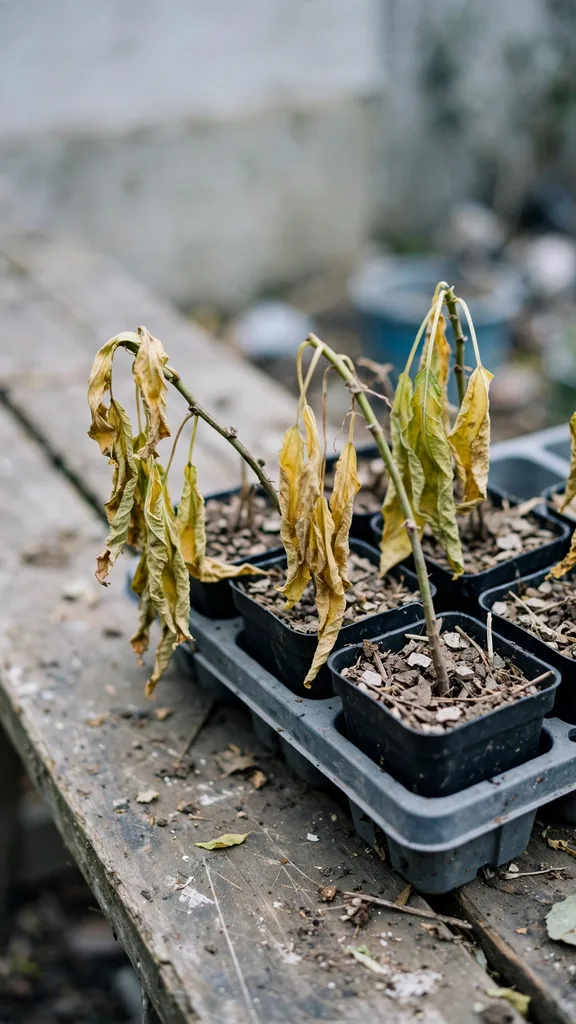
- Taking flowering wood. Flowers drain a cutting, and buds set to bloom will not root. Remove flowers and flower buds when preparing cuttings, so the energy goes to new roots.
- Leaving too many leaves. Leaves lose water faster than a rootless stem can replace it, so every extra leaf shortens the cutting’s life. Strip the lower half, and cut large remaining leaves in half to slow the loss.
- Skipping humidity. Open air wilts a cutting in hours. Cover the pot with a clear bag or jug, and mist when the inside of the cover dries out.
- Planting upside down. A cutting stuck upside down grows roots at the top and shoots at the bottom, and it never recovers. Keep the buds pointing up, and mark the top if the stem looks the same both ways.
- Using dirty tools. A blade that cut a sick plant carries the sickness to the next one. Dip the tool in disinfectant between plants, and use a fresh, sharp edge for each batch.
When Cutting Matters in Your Garden
Cuttings matter most when you want many plants fast. A hedge, a border, or a row of shrubs all start from a tray of cuttings taken in one morning, and the bill stays near zero. They matter too when a variety must stay exact: a named rose, a variegated shrub, or a fruit that seed cannot repeat all travel by cutting. The wider skill sits in the propagation guide, which places cuttings among the 7 asexual methods.
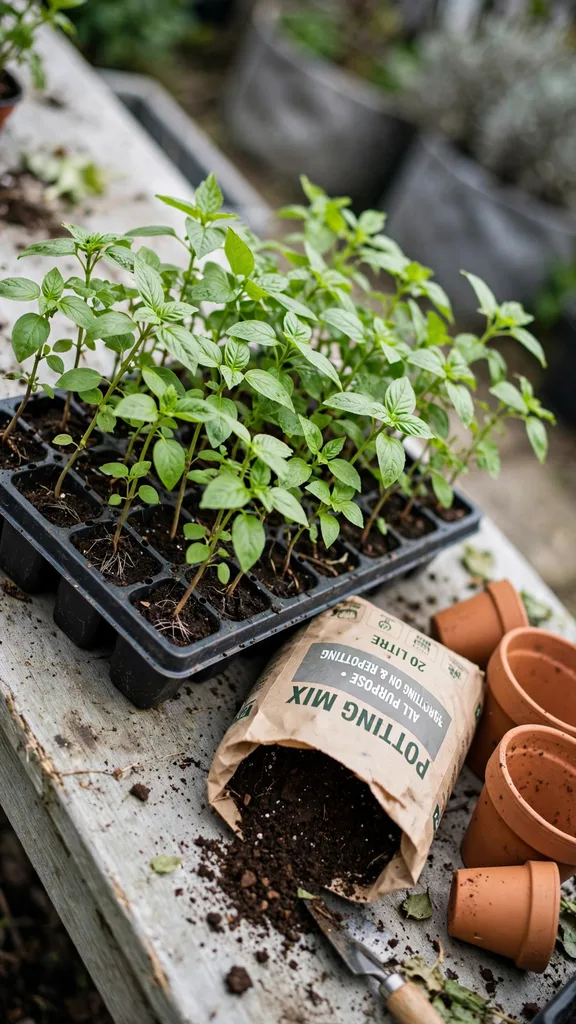
They matter least for plants that refuse them. Tap-rooted perennials, many conifers, and fruit trees root poorly from cuttings, and a gardener who forces the method wastes a season. For those plants, layering or grafting does the job, and the cutting tray stays for the shrubs that answer it. For the full picture of the terms in this series, see the gardening glossary.
FAQ
Most stem cuttings run 10.2 to 15.2 cm long, with herbaceous pieces a little shorter at 7.6 to 12.7 cm. That length holds enough stored food to grow roots, without so much leaf that the cutting dries. Cut just below a node, strip the lower leaves, and insert one-third to one-half of the stem into the mix.
Water suits soft stems like pothos and coleus, which root fast and show their roots through the glass. Soil suits woody stems, which rot in standing water and need air around the base, so a free-draining mix beats a jar of water every time. Move water-rooted cuttings into mix once the roots reach 2.54 cm, while they are still short and flexible enough to pot without snapping.
Wet, airless mix rots cuttings faster than dry air wilts them. Use a sterile, well-drained mix, water lightly, and let the surface dry between waterings. Strip leaves that touch the mix, space cuttings so air moves between them, and throw away any cutting that turns black at the base.
Yes, for hardwood cuttings. Take dormant, mature stems in late fall, winter, or early spring, when the wood is firm and shows no active growth. Forsythia, privet, fig, grape, and spirea all root from hardwood cuttings. Keep them cool and moist until spring, then pot them as growth starts.