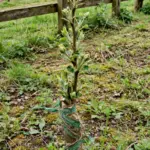
Set 1 strawberry crown exactly at soil level, with the growing point showing and the roots spread below. A crown is the dense central point of a plant where the roots meet the shoots, and the depth of that one point decides whether the plant grows or rots.
A crown is a knot of buds and root tissue. Leaves rise from its top, roots hang from its bottom, and new growth each spring comes from the buds packed into its center. The crown sits at the junction of two worlds: the shoots above need air and light, and the roots below need dark and moisture. Bury the crown and the shoots rot. Leave it high and the roots dry.
Crown is a word with two meanings in the garden, and this page covers only one of them. The crown of a plant is the root-shoot junction described here. Crown gall and crown rot are diseases with similar names and a different meaning entirely, and they belong to plant care, not to planting depth. A healthy crown is a growing point. A diseased crown is a problem to diagnose.
| Point | Detail |
|---|---|
| What it is | The junction where roots meet shoots |
| Deciding number | Set the crown at soil level, not above or below |
| Where it sits | At the base of the stem, just at the soil surface |
| Main risk | Buried crown rots, high crown dries out |
| Best for | Strawberries, asparagus, hostas, rhubarb, perennials |
What Is Crown?
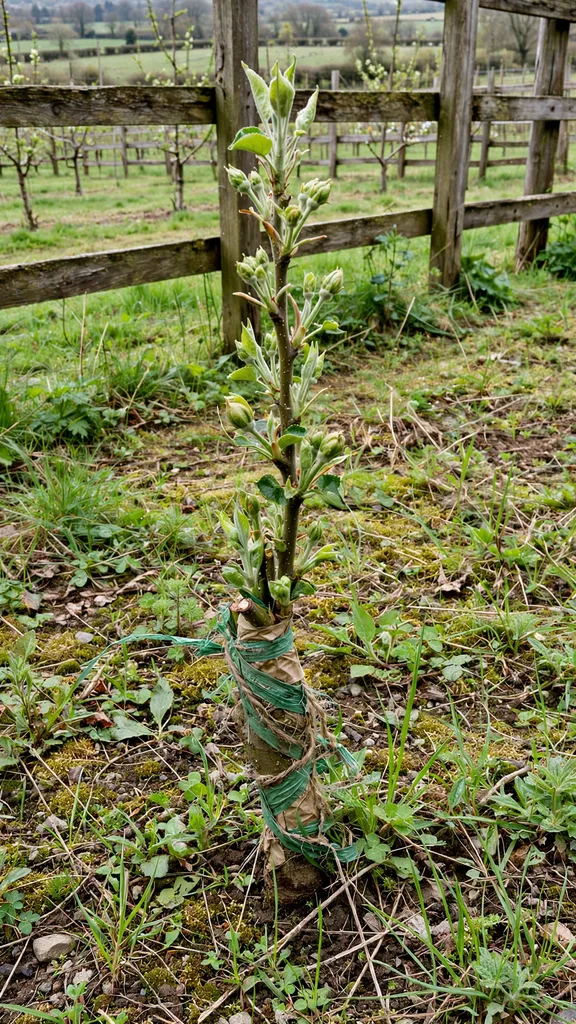
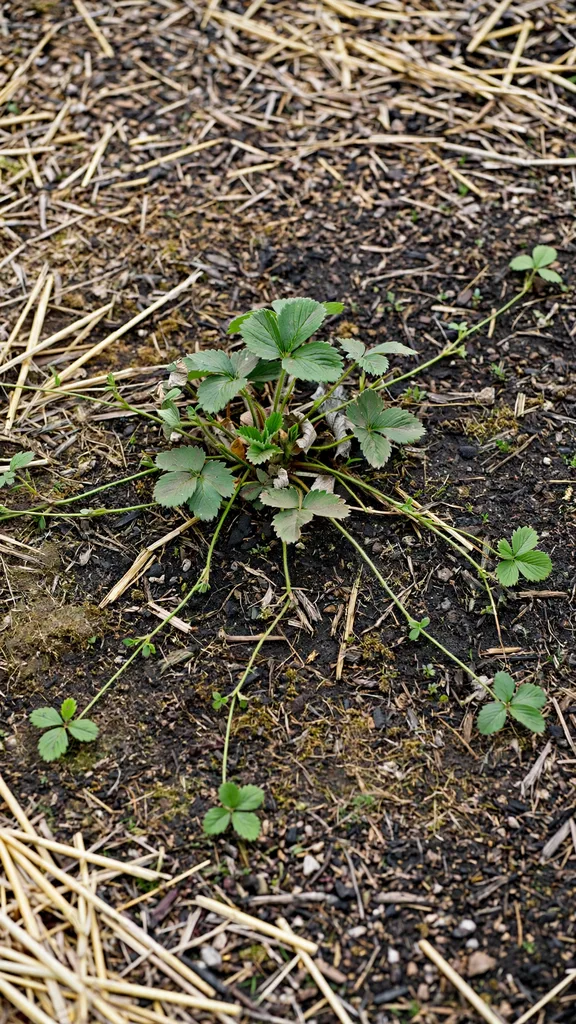
A crown is the compressed stem at the base of a plant, where leaves, buds, and roots all join. On a strawberry plant the crown is a short woody knob with leaves rising from the top and roots hanging below. On asparagus the crown is a mass of buds and fleshy roots sold as a single unit. On a hosta the crown is the pointed bud cluster at the top of a bare-root division.
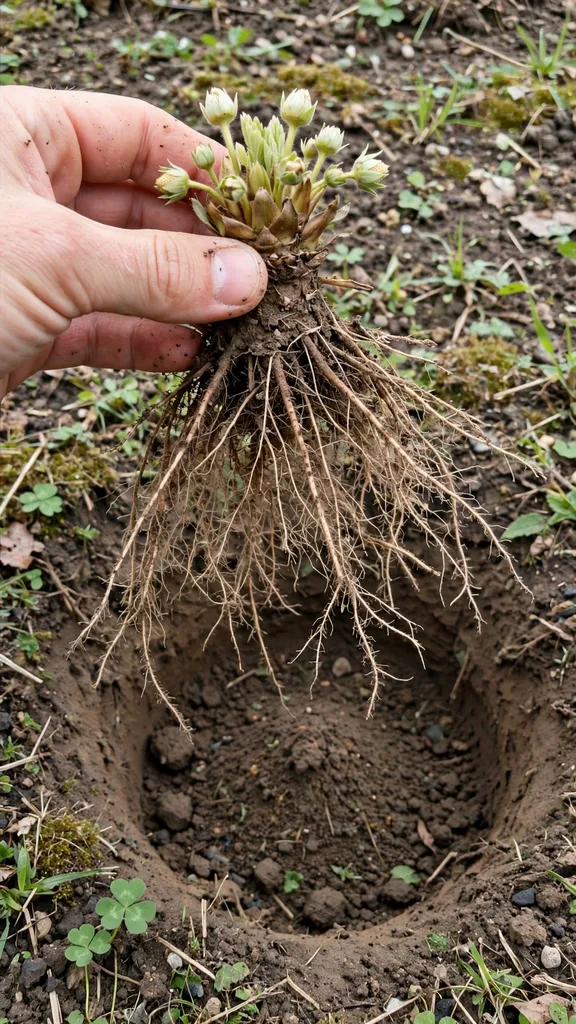
The deciding number is the depth. The Penn State Extension strawberry planting guide sets the rule plainly: the soil level should be at mid-crown, and if the plant is too shallow the roots dry out, while if it is too deep the soil covers the growing point and rots set in. Mid-crown means the center of the knob sits at the soil surface, with the growing point showing and the roots covered.
The crown grows each year. New buds form on its top, new roots grow from its sides, and the crown itself rises slowly as the plant ages. An old strawberry crown can sit 2.5 cm above the soil after 3 years, and the plant needs a mulch top-up to keep the new roots covered.
How a Plant Crown Works
A plant crown works as a store and a factory at once. The buds packed into its center hold next spring growth in miniature, the fleshy tissue stores starch through winter, and the roots below pull water up through the crown into the leaves. Cut the crown in half and the plant has two crowns, which is how gardeners divide perennials.
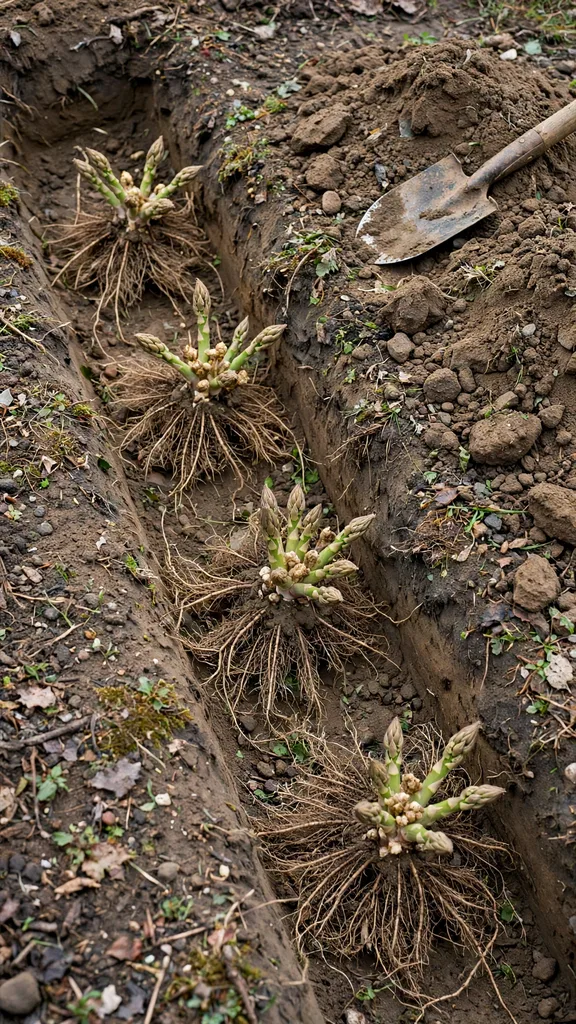
Asparagus shows the crown at its largest. The University of Minnesota Extension asparagus guide advises digging a trench 15.2 to 30.5 cm deep for crowns, spacing the buds 30.5 cm apart head to toe along the furrow, and covering the crowns with 5.1 to 7.6 cm of soil at planting, with the rest of the soil added a few weeks later once the ferns have emerged. The trench depth changes with soil type: shallow in heavy clay, deeper in sand.
The crown sets the planting depth for the whole plant. Set the crown right and the roots sit in moist soil while the buds sit in air. Set it wrong and either the roots dry or the buds rot, and the plant spends its first season recovering instead of growing.
Crown vs Root
| Point | Crown | Root |
|---|---|---|
| What it is | The junction where shoots meet roots | The underground organ that takes up water |
| Where it sits | At the soil surface | Below the soil surface |
| What grows from it | Leaves, stems, flower buds | Fine root hairs, side roots |
| Needs | Air on the buds, moisture on the roots | Dark, moist soil |
| If buried | Buds rot and the plant fails | Normal, roots belong underground |
| If exposed | Roots dry and the plant wilts | Roots dry and die back |
The crown and the root do different jobs. The root belongs underground. The crown belongs at the surface, half in and half out. A gardener who buries the crown like a root kills the buds, and a gardener who leaves the roots exposed like a crown kills the roots.
How to Recognise a Plant Crown
A crown looks like a knobbly knob with buds on top and roots below. Hold a bare-root strawberry in your hand and the crown is the dense center where the leaf stems meet the root mass. The buds sit as small points on the top, and the roots fan out from the bottom. The line between them is the planting depth.
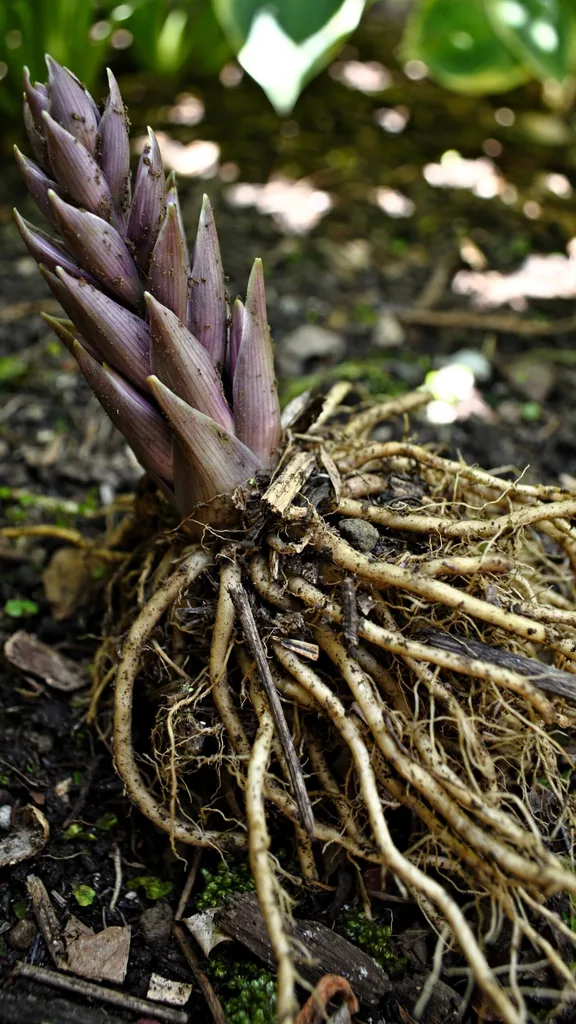
Check the buds before planting. Firm green or pale buds that sit tight to the crown are alive and ready. Soft brown buds that crumble at a touch are dead, and a crown with no live buds will not grow. Trim dead roots back to firm tissue, and set the crown on a small cone of soil in the hole so the roots spread downward.
Check the depth after watering. Soil settles when it is watered, and a crown set at the surface can sink 2.5 cm below it by morning. Water the plant in, check the crown the next day, and lift or lower the plant while the soil is still loose. The bare root guide covers the soaking and hole digging that come before the crown goes in.
Common Mistakes With Crown
Burying the crown is the first mistake. A crown under soil stays wet, the buds rot, and the plant either dies or emerges weak and late. Set the crown at soil level, with the growing point visible, and check the depth again after the first watering settles the soil.
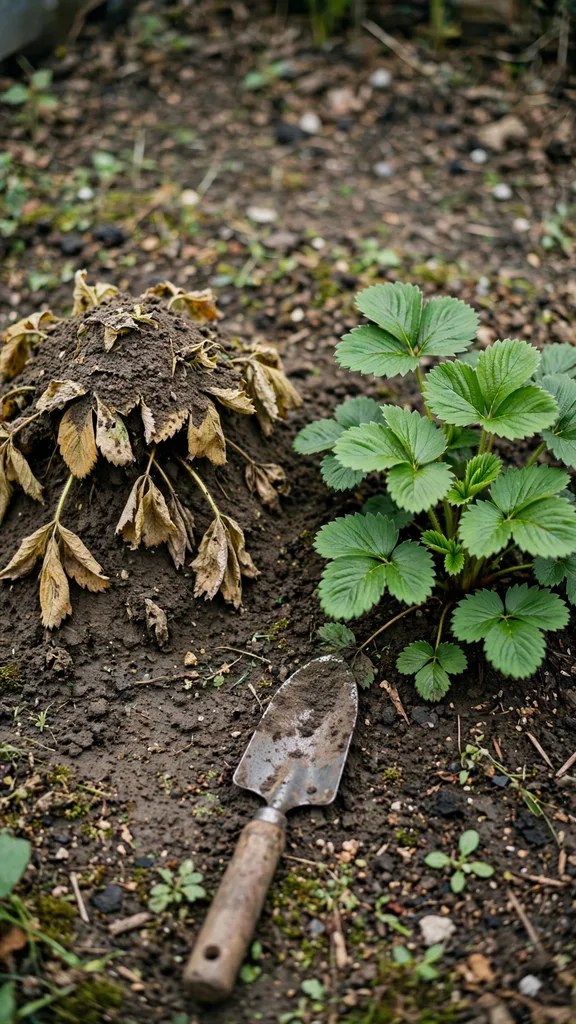
Leaving the crown high is the second mistake. A crown sitting above the soil dries out in sun and wind, the roots hang in air, and the plant wilts even in damp soil. Firm the soil around the crown so the roots have contact, and mulch the surface to hold moisture without covering the buds.
Dividing a crown at the wrong time is the third mistake. A crown divided in full leaf loses water faster than its cut roots can replace it, and the divisions wilt. Divide perennials in early spring or autumn, when the plant is dormant or the weather is cool, and water the divisions well. The runner guide shows how a strawberry crown sends out runners, which is the plant dividing itself.
When Crown Matters in Your Garden
Crown matters most at planting time. Every bare-root strawberry, asparagus crown, hosta division, and rhubarb piece you plant carries one, and the depth of that one point decides the first season. A gardener who sets the crown right gets a plant that grows from the first week. A gardener who sets it wrong gets a plant that struggles all year.
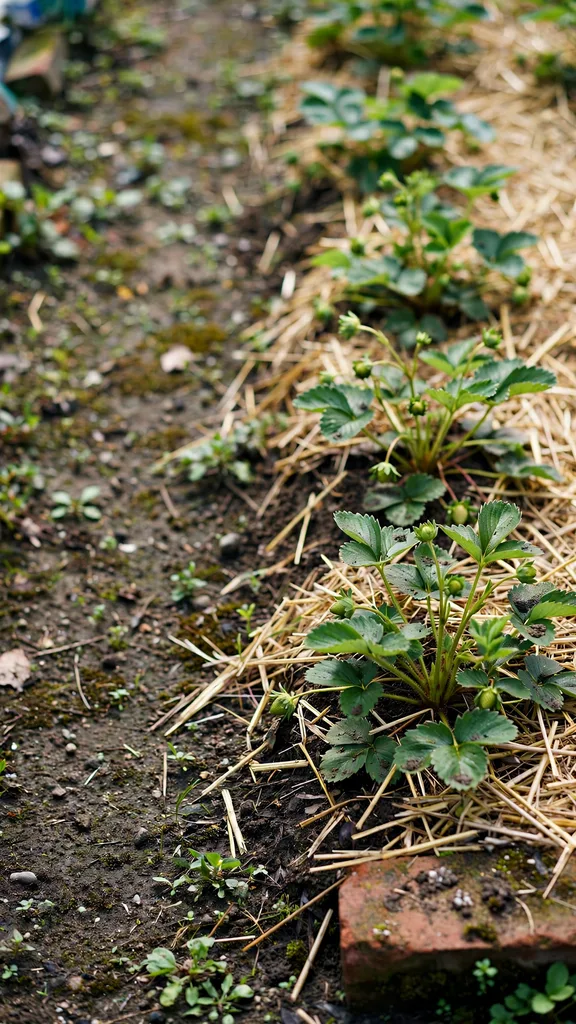
Crown also matters when a bed ages. Strawberry crowns rise above the soil as the plants age, and the exposed roots dry out in summer. Top up the mulch around old crowns each autumn, and renew the bed with fresh daughters before the crowns rise too high.
Start from the gardening glossary when a term in this page is new. The crown is a small point with a large job, and a finger-width of soil above it or below it is the difference between a plant that thrives and a plant that fails.
FAQ
Set the crown exactly at soil level, with the center of the crown at the surface and the growing point showing. Too shallow and the roots dry out. Too deep and the soil covers the growing point and rot sets in. Water the plant in, then check the depth the next day after the soil settles.
No. A tree crown is the canopy of branches and leaves at the top of a tree. A plant crown is the root-shoot junction at the base of a herbaceous plant. The two share a word and nothing else, and the planting rules for one do not apply to the other.
Yes, when the plant is a clump-forming perennial such as hosta, daylily, or rhubarb. Dig the clump in early spring or autumn, cut the crown into sections with a sharp spade, and make sure each section carries buds and roots. Replant at once at the same depth, and water well.
Crown rot is a disease that attacks the crown, turning it soft, brown, and foul smelling. It spreads in wet soil and through wounds, and it kills the plant from the base upward. It is a different subject from the healthy crown in this page, and it needs diagnosis and clean planting practice to control.