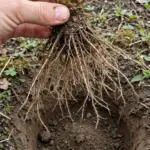
Pin 1 strawberry runner to the soil in July and a new daughter plant roots there within weeks. A runner is a horizontal stem that grows out from the crown of a mother plant, touches the soil at a node, and forms a new plant that can be cut free and grown on its own.
A runner looks like a thin green wire running across the soil. It carries no leaves of its own, only a small plantlet at the tip, and the plantlet grows leaves and roots where it lands. The mother plant feeds the daughter through the runner until the daughter roots, and then the runner can be cut.
Runners are the strawberry’s way of spreading. A June-bearing plant in a matted row fills the bed with daughters, and a gardener who wants new plants lets the runners root. A gardener who wants fruit cuts the runners off, since every runner is energy the plant does not spend on berries.
| Point | Detail |
|---|---|
| What it is | A horizontal stem that forms a daughter plant at a node |
| Deciding number | Space mother plants 45.7 to 61 cm apart in the row |
| When to root | July through August, after the June harvest |
| When to remove | All season on day-neutral types |
| Best for | June-bearing strawberries in matted rows |
What Is Runner?
A runner is a stolon, a horizontal stem that grows outward from the crown of the mother plant, just above the soil surface. The runner extends several centimetres from the crown, and at its tip a daughter plant forms with leaves above the soil and roots below. The daughter is a clone of the mother, with the same variety and the same fruit.
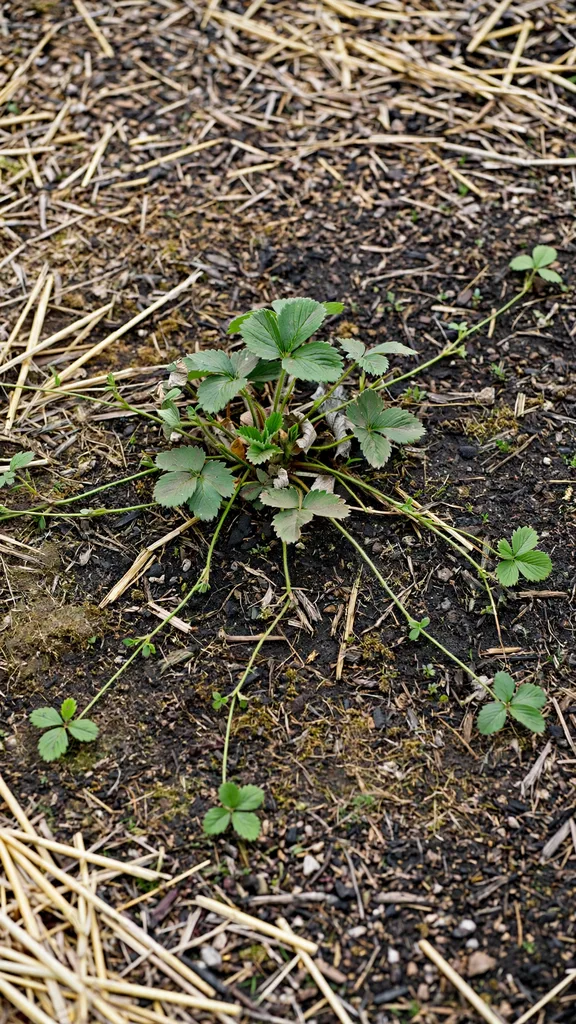
The deciding number is the spacing. The University of Minnesota Extension strawberry guide sets June-bearing spacing at 45.7 to 61 cm apart in rows 91.4 to 121.9 cm apart, and the same guide warns that June-bearing plants will send out many runners through the season and fill in the space between plants. Space the mothers wide and the runners have somewhere to go. Space them tight and the bed chokes within a year.
Runners also spread other plants. Spider plants, creeping thyme, and many ground covers use runners to colonise new ground, and the same rule applies: the runner is a stem, not a root, and it roots only where a node touches soil.
How a Runner Grows
A runner grows from the crown after flowering. The mother plant pushes a thin stem outward along the soil, and the stem grows a node every few centimetres. At the second or third node a plantlet forms, with tiny leaves on top and root initials underneath. The plantlet touches soil, roots in 2 to 3 weeks, and grows into a daughter plant.
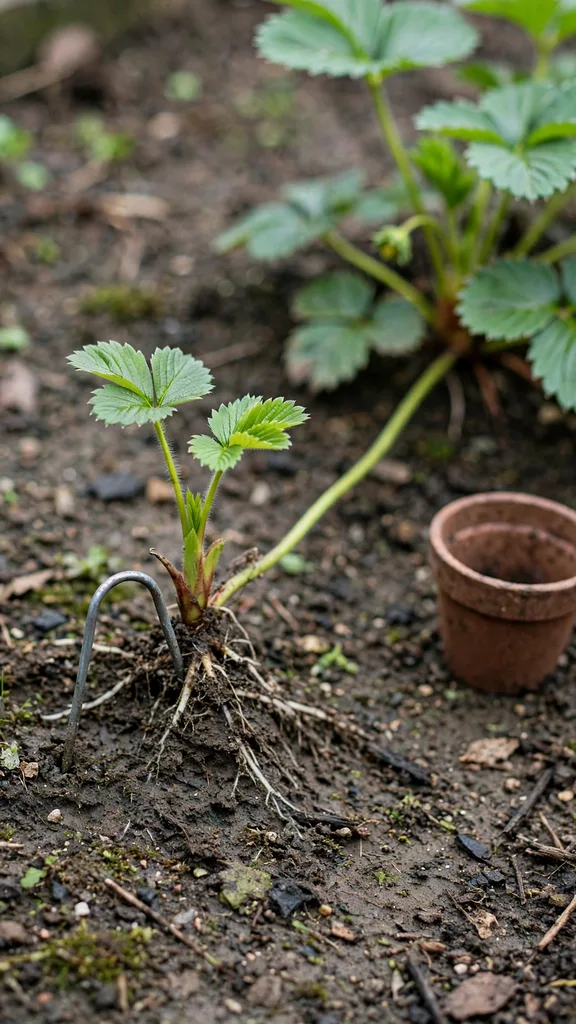
The University of Minnesota Extension strawberry growth guide states the mechanism plainly: strawberry plants reproduce through stolons or runners, which extend out several centimetres from the crown, take root in the soil, and produce new plants called daughter plants. The same guide adds the management rule: runners are necessary in June-bearing strawberries to fill out the rows, and runners are not needed in day-neutral strawberries, so they should be removed through the season.
Root the first runners only. A runner from the mother plant gives a strong daughter. A runner from a daughter gives a weaker plant, and a chain of daughters gives a bed of small plants that fruit poorly. Keep the first generation, cut the rest.
Runner vs Rhizome
| Point | Runner | Rhizome |
|---|---|---|
| Where it grows | Above the soil surface | Below the soil surface |
| What it is | A horizontal stem with a plantlet at the tip | A horizontal underground stem with buds |
| How it spreads | Daughter plants root at nodes on the surface | New shoots rise from buds along the stem |
| Example plants | Strawberry, spider plant | Ginger, iris, bamboo, mint |
| How to stop it | Cut the runner at the mother plant | Dig the rhizome out of the soil |
| Propagation | Pin the daughter to soil, then cut free | Cut a section with a bud and replant |
A runner and a rhizome both spread a plant sideways, and the difference is the depth. A runner runs across the surface where you can see it and cut it. A rhizome runs underground where you find it only when you dig. Strawberries use runners. Mint uses rhizomes. The control follows the depth.
How to Recognise a Runner
A runner is a thin stem with no leaves. Look at the base of a strawberry plant in July and you will see 2 or 3 green wires running outward across the soil, each one ending in a small plantlet with 2 or 3 tiny leaves. The plantlet sits on the soil surface, and white root tips show underneath when you lift it gently.
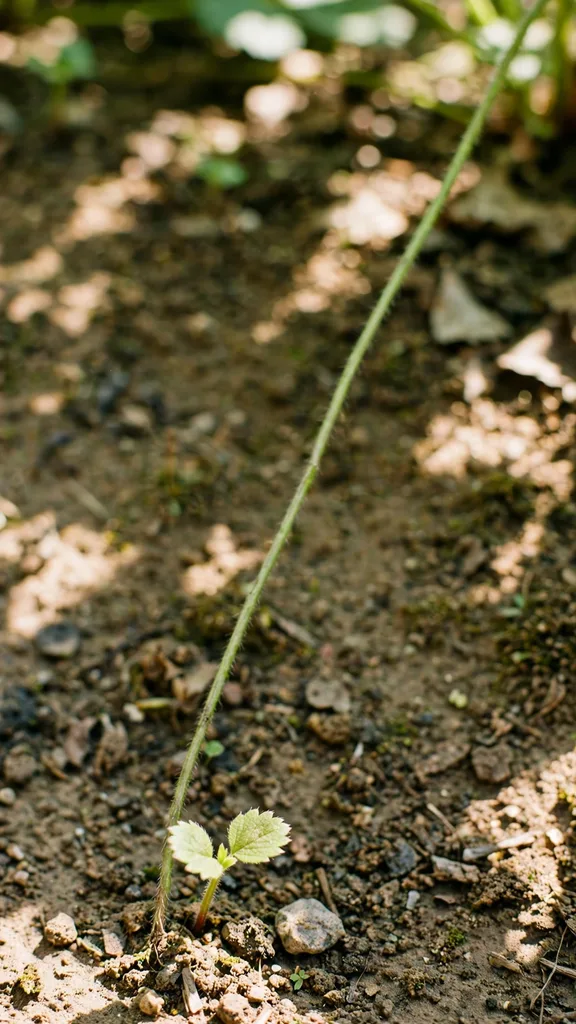
Check the variety before you decide what to do. June-bearing plants produce many runners and need them to fill the row. Day-neutral plants produce few runners, and the runners they do produce should be removed so the plant spends its energy on fruit through the season. The variety tag on the plant tells you which rule applies.
Pin the plantlet to the soil with a bent wire or a small stone, and keep the soil damp. The crown guide explains the crown the runner grows from, since the runner, the leaves, and the roots all meet at that one point on the plant.
Common Mistakes With Runner
Letting runners root everywhere is the first mistake. A matted row left alone fills with daughters, the bed grows crowded, airflow falls, and the berries shrink. Let the runners fill the row to 30.5 to 45.7 cm wide, then cut every new runner that crosses the path or the row edge.
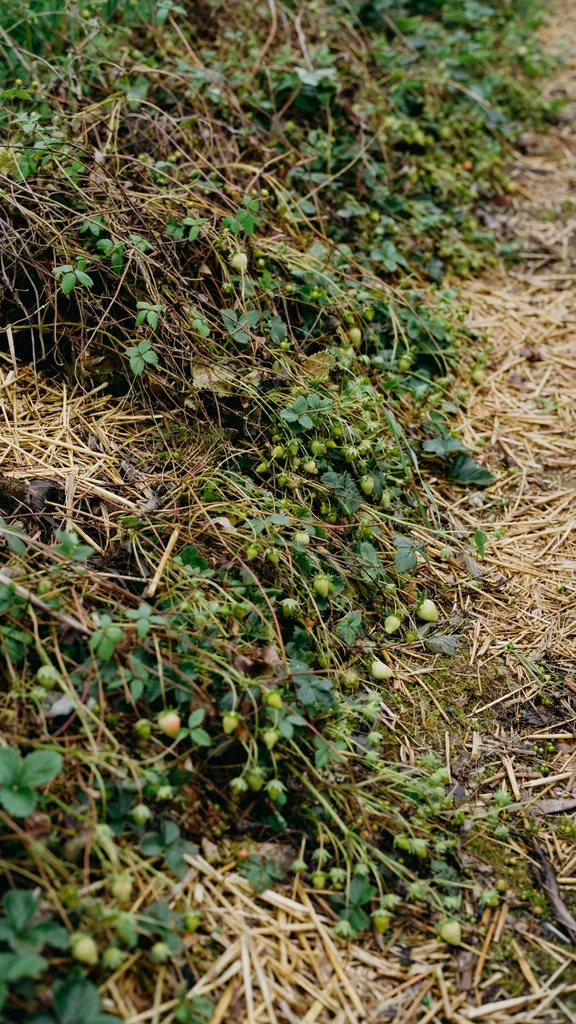
Rooting runners from a sick plant is the second mistake. Virus and disease travel through runners, and a daughter from a diseased mother carries the same disease into the new bed. Take runners only from healthy, high-yielding plants, and buy certified stock when you start a new bed.
Cutting the runner too early is the third mistake. A daughter cut free before it roots wilts in a day, since it has no roots of its own. Wait until a gentle tug meets resistance, which means the roots have gripped the soil, then cut the runner between mother and daughter. The companion planting guide helps you place the new strawberry bed beside neighbours that suit it.
When Runner Matters in Your Garden
Runner matters most when you renew a strawberry bed. A June-bearing bed fruits well for a few seasons, then yields fall as the plants age. Root a batch of first-generation runners in July, plant them in a fresh bed in autumn, and the new bed fruits the next June while the old bed rests.
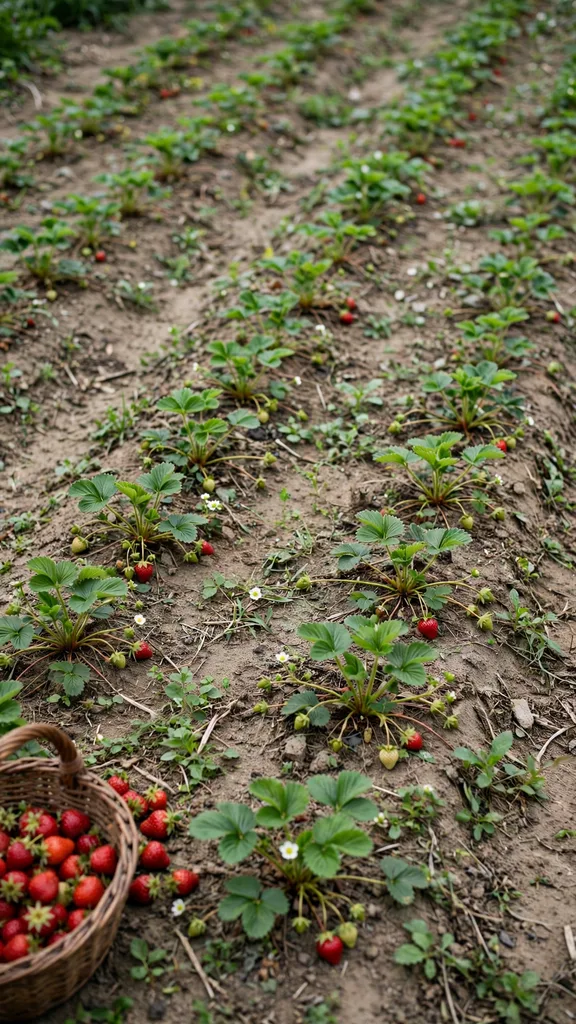
Runner also matters when you want free plants. A single healthy mother gives 2 to 6 daughters in a season, and a row of mothers gives a whole new bed for the cost of a few pots of soil. The plants are clones, so the fruit matches the mother exactly.
Start from the gardening glossary when a term in this page is new. A runner is the strawberry’s gift to the gardener, and the gardener who pins a few each July never buys strawberry plants again.
FAQ
Root them in July and August, right after the June-bearing harvest ends. Runners rooted before September settle in, grow strong crowns, and fruit well the next year. Runners rooted late in autumn stay small through winter and fruit poorly, so cut late runners off instead.
Keep 2 to 6 runners per mother plant, and keep only the first-generation runners that grow directly from the mother plant itself. Cut the rest. A runner from a daughter gives a weaker plant, and a mother carrying too many runners gives small daughters and small berries.
Yes. Set a small pot of soil beside the mother, pin the daughter plantlet onto the surface, and keep the soil damp. The plantlet roots in 2 to 3 weeks, and then you cut the runner and move the pot. Potted daughters are easy to hold until a new bed is ready.
Yes, but far fewer than June-bearing types, and the runners they produce should be removed through the season. Day-neutral plants fruit from July to frost, and every runner is energy taken from fruit. Remove the runners as they appear and the plants keep fruiting.