
Hosta virus X has no cure. A hosta that tests positive stays infected for life, and the only honest response is to destroy the plant, sanitize everything that touched it, and protect the rest of the collection. The 10 strategies below tell you how to recognize the virus, test it, and stop it spreading, and they work because this virus moves only in sap, on tools, hands, and divisions, never on the wind and never through insects.
The first fact to hold is the trap. Infected hostas were sold for years as exciting new cultivars, with names like Breakdance, Leopard Frog, and Lunacy, and gardeners bought them eagerly. The “unique markings” were virus symptoms. I have learned that a hosta grower who treats every unusual marking as suspect until proven otherwise protects the whole collection, while a grower who celebrates the novelty spreads the epidemic.
The rest of this page walks the identification, the hosts, the two comparisons that matter, the mechanism, the risk factors, and the 10 strategies. The disease name leads. The pathogen, Potexvirus ecshostae, stays in the background after this introduction.
What Hosta Virus X (HVX) Actually Is
Hosta virus X is a viral disease of hostas. The pathogen is Potexvirus ecshostae, genus Potexvirus, family Alphaflexiviridae, abbreviated HVX. It was first identified in 1996 by Ben Lockhart at the University of Minnesota. The virus infects hostas only in the garden. A laboratory host, Nicotiana benthamiana, is experimental only and never a garden host.
The virus weakens the plant. It seldom kills outright. Infected hostas grow slower, look worse each year, and lose vigor. Highly susceptible varieties may lose entire leaves. Some sources say infection may eventually lead to death, but the standard view is weakening, not killing. The reason to destroy an infected plant is spread prevention, not because the plant dies tomorrow.
There is no cure. The virus lives inside the cells, and it cannot be killed without destroying the whole plant. No chemical treatment works. No home remedy works. Tea tree oil and comfrey spray, sometimes suggested online, do not cure a virus. The management is prevention, testing, and destruction. Everything here follows from that spine.
Plants may go asymptomatic for years while still infected and infectious. Some plants stay symptomless for 3 to 4 years yet still carry the virus, and symptoms may vanish in spring regrowth while the plant stays infected, so a hosta that looks clean is not proof against HVX, and only a test settles it.
How to Identify Hosta Virus X on Your Hostas
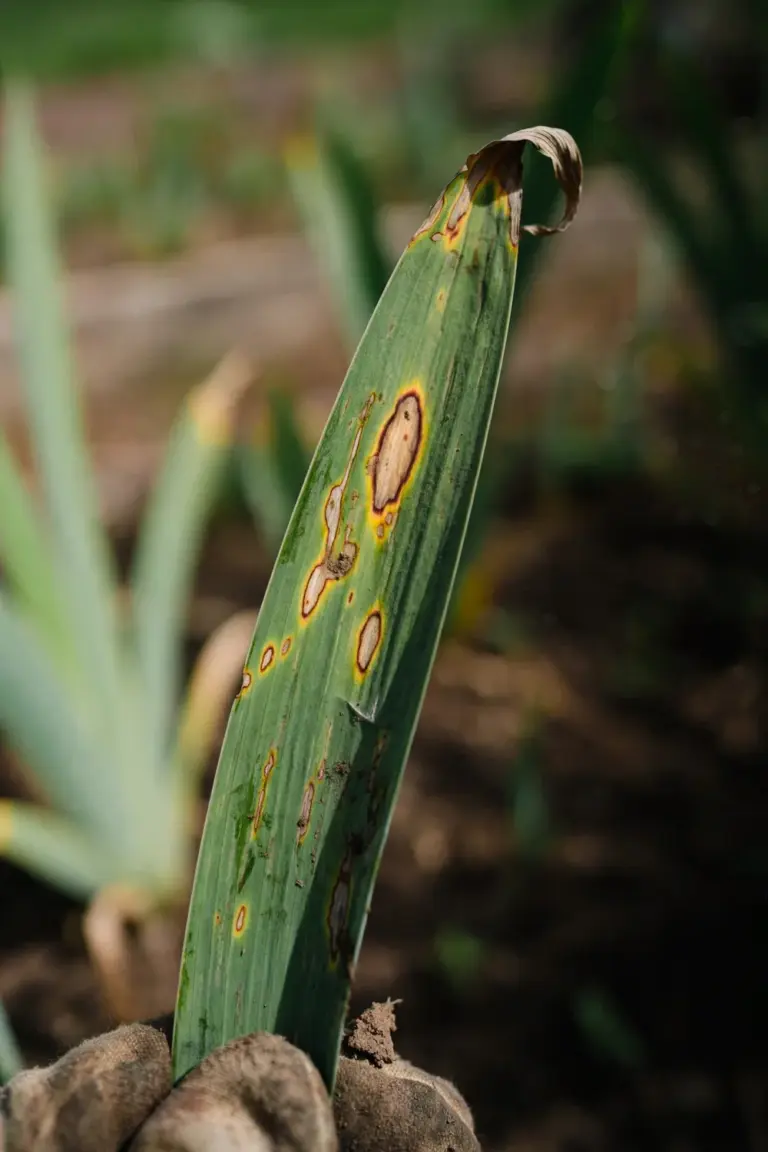
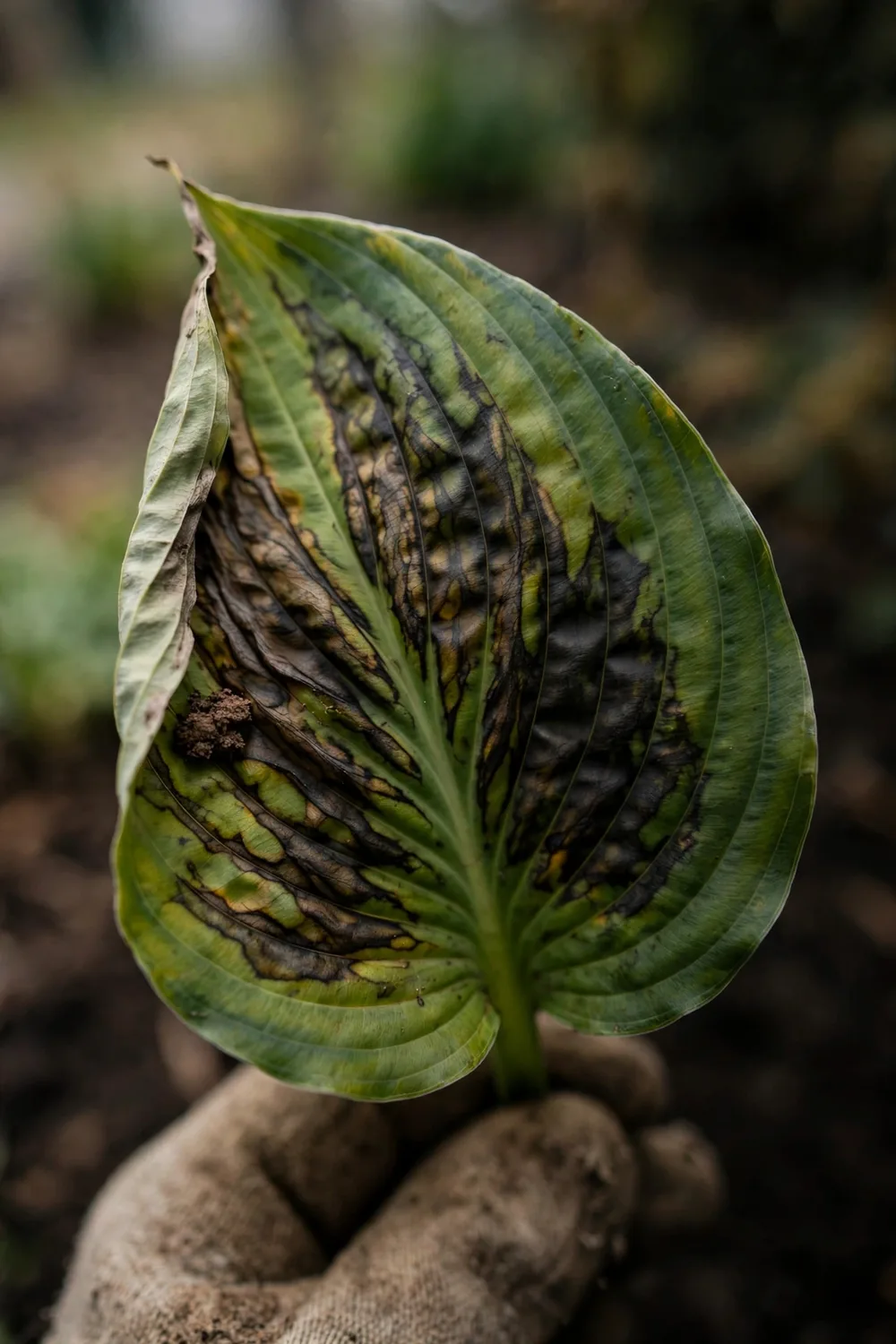
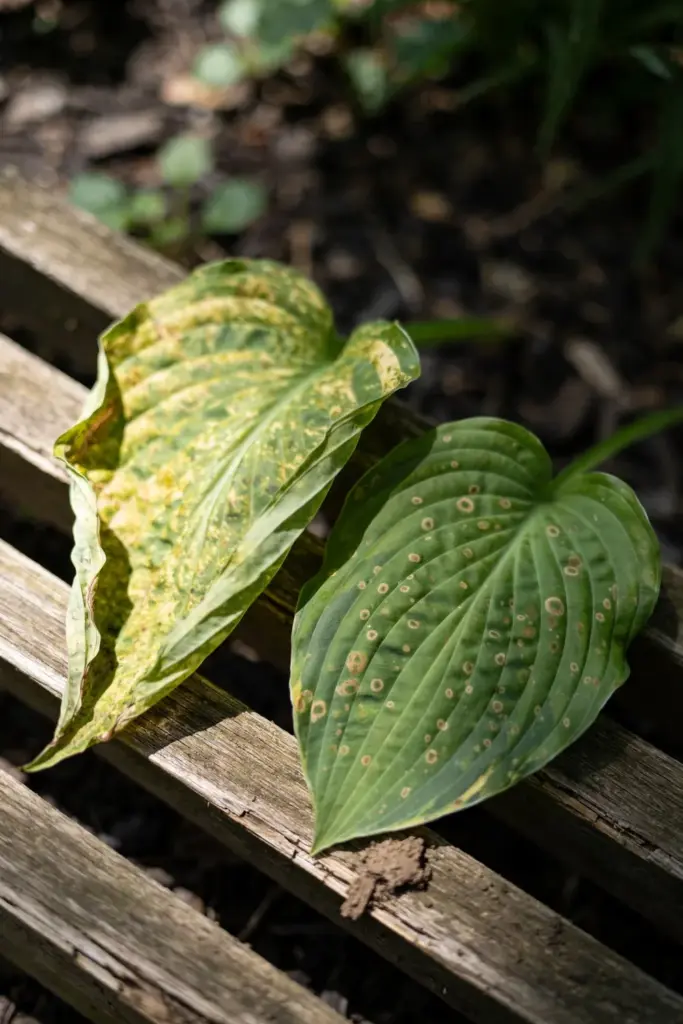
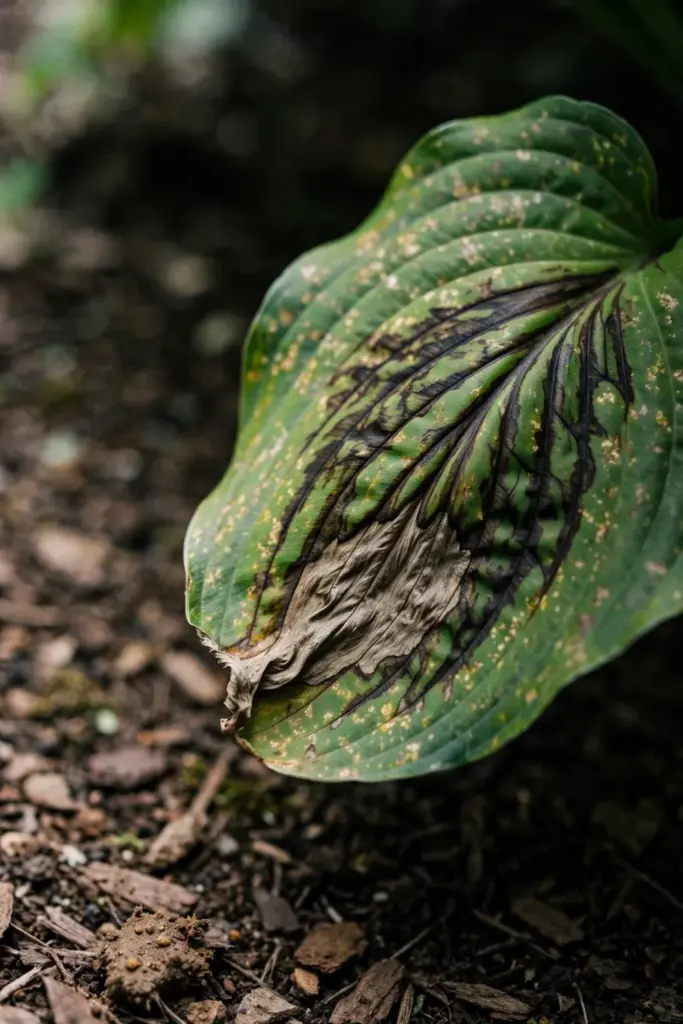
Learn the signature: inkbleed, collapsed tissue, and mottling. Inkbleed is a darker discoloration centered on the veins, the most common symptom, usually present to some degree in almost all symptomatic plants. The virus is assumed to come from the vein and spread into the leaf tissue, causing discoloration as it infects healthy tissue. A dark bleed along the veins is the first sign to learn.
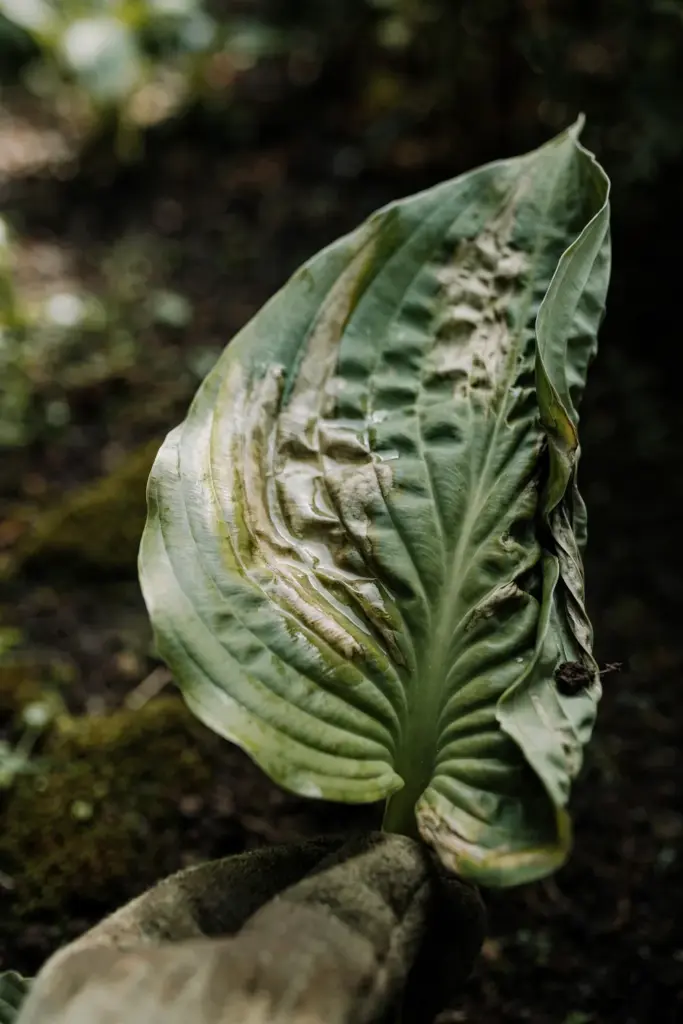
Collapsed tissue means heavier infection. The leaf tissue looks as if it collapsed, as if all the water was removed from those spots, flattened and empty-looking, not dry or dead, and it can remain the whole season. Collapsed tissue often shows discoloration and heavier wax than surrounding healthy tissue. Inkbleed symptoms can usually be found on plants with collapsing tissue. A dimpled, puckered, flattened patch is the second sign.
Mottling is the least specific sign. Mottled tissue, flecks, and mosaic patterns can mean HVX or another virus. A plant with this mottling should be considered infected by a virus and destroyed, because this type of mottling is never a mutation in a healthy hosta. Mottling alone leaves the virus unnamed, yet it settles the action: treat as virus.
Check the whole plant, not one leaf. Symptoms vary widely by cultivar, and a single leaf can mislead. Walk the whole plant, then the whole bed. Compare suspect leaves against healthy leaves of the same cultivar. Hold a suspect leaf to the light against a healthy leaf for subtle cases. The comparison, not the single leaf, carries the identification.
Expect symptoms to change. Symptoms vary by cultivar, may disappear year to year, and may vanish in spring regrowth. A plant that showed inkbleed last year and looks clean this year is still infected. A plant that shows mottling this year and none next year is still infected. The virus does not leave. The symptoms come and go.
Which Hostas Get Hit Hardest
Gold-leafed varieties are highly susceptible. Arkansas Extension names Sum and Substance, Golden Tiara, and Gold Standard as highly susceptible, and susceptibility should be considered before planting these varieties. A gold hosta with inkbleed is a hosta to test at once. A gold hosta bought from a mass-propagation source deserves a quarantine before it joins the bed.
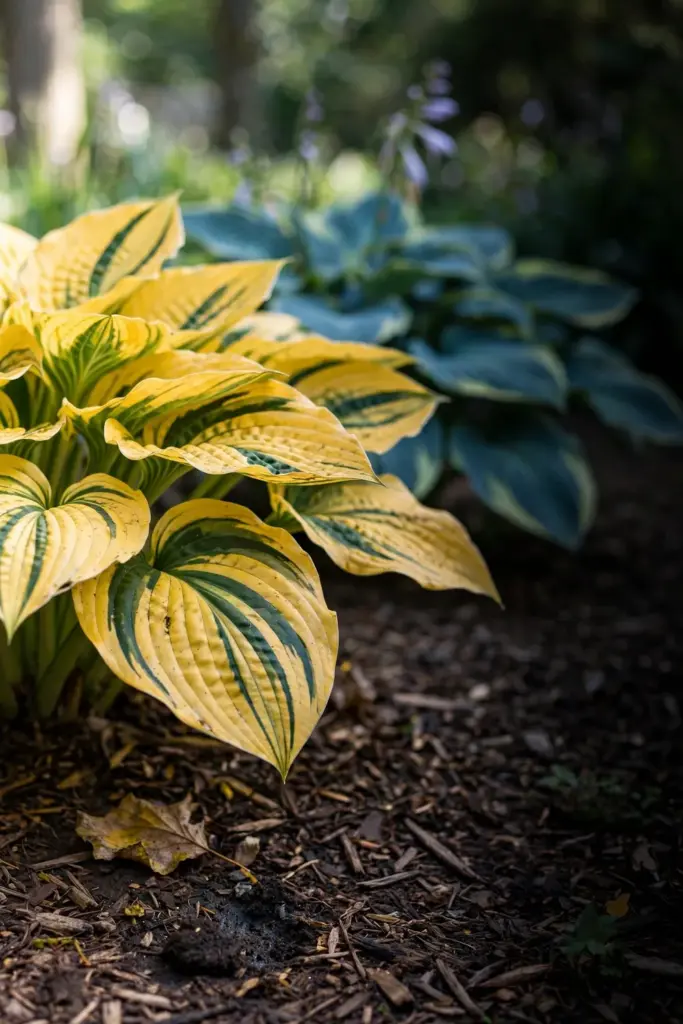
The infected-cultivar list is the trap made concrete. Breakdance, Eternal Father, Leopard Frog, Blue Freckles, Lunacy, Kiwi Watercolours, and Parkish Gold were all derived from virus-infected stock and sold as novelties. If you own one of these, it is infected. Destroy it, do not propagate it, and do not share it. The cultivar name is the diagnosis.
Mass-propagated and big-box stock carries more risk. The American Hosta Society reports that virused hostas increasingly show up in large general nurseries and box stores, because mass propagation of infected hostas propagates the virus with the plants. A cheap hosta from a bulk bin carries more risk than a virus-indexed plant from a specialist nursery. The price difference buys the testing.
Any hosta can catch HVX. Susceptibility varies, but no hosta is immune. A collection of twenty hostas with one infected plant is a collection at risk, because the virus moves on tools and divisions. The susceptible list tells you where to look first. It does not tell you where to stop looking.
Hosta Virus X vs Other Hosta Viruses
The field check is the vector. HVX spreads in sap, mechanically, with no insect vector, while the other hosta viruses spread by thrips, nematodes, or aphids. The vector separates the groups. The symptoms do not: mottling, puckering, ringspots, and distortion overlap across viruses, and field ID cannot separate them. The lab test settles it.
| Clue | Hosta Virus X (HVX) | Other Hosta Viruses (group) |
|---|---|---|
| Pathogen | Potexvirus ecshostae (Potexvirus) | ToRSV, INSV, TSWV, TRV, CMV, Arabis mosaic (Nepovirus, Tospovirus, Tobravirus, Cucumovirus) |
| Spread | Sap / mechanical only, no insect vector | Thrips (INSV, TSWV), nematodes (ToRSV, TRV, Arabis mosaic), aphids (CMV) |
| Hosts | Hostas only in the garden | Broad: INSV and TSWV infect 1000+ hosts each; others wide |
| Symptoms | Inkbleed + collapsed tissue + mottling | Mottling, puckering, ringspots, distortion, overlapping and not separable in the field |
| Field ID | Presumptive: inkbleed is the HVX signature | Presumptive only; symptoms overlap |
| Lab test | Agdia ImmunoStrip (HVX only) or lab ELISA | Lab screen tests 7+ viruses; HVX strip does NOT cover them |
| Cure | None | None |
| Management | Destroy any virus-symptomatic hosta, regardless of which virus | Same: destroy any virus-symptomatic hosta |
No published home-gardener head-to-head comparison exists for this pair. This table compiles the grouping-level distinction from parallel sources: Arkansas Extension FSA-7548, the Agdia hosta screen, and hosta society guidance. A negative HVX test does NOT mean virus-free: at least six other viruses attack hostas, and a hosta that tests negative for HVX but shows virus symptoms still gets destroyed.
Hosta Virus X vs Normal Variegation
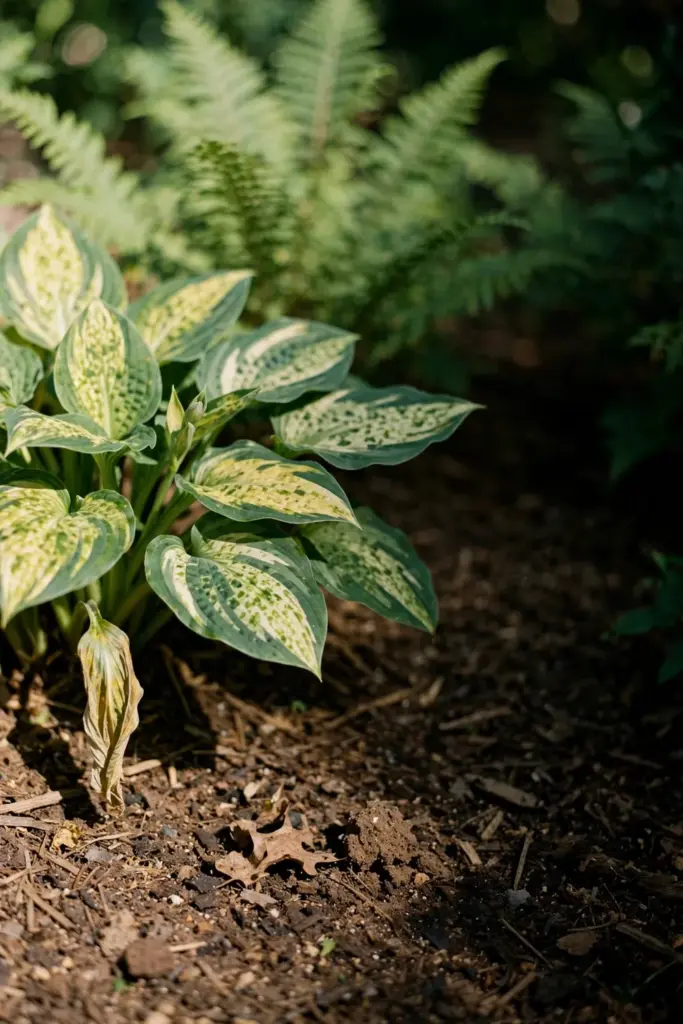
Compare against the cultivar’s normal pattern. A healthy variegated hosta shows a crisp, stable pattern, the same on every leaf, season after season. A virused hosta shows bleeding, mottling, and collapse that break the pattern, differ leaf to leaf, and change through the season. The pattern comparison is the field check.

Know the mottled-but-clean cultivars. Xanadu Paisley, Cynthia, Laella, Kiwi Forest, Wild Bill, and Filigree all show mottling that repeatedly tests clean. Xanadu Paisley mottles with no known cause and never passes it to other plants. A mottled hosta of a known mottled-but-clean cultivar, stable and unchanging, is probably clean. A mottled hosta of a cultivar that should be crisp is suspect.
When in doubt, treat as virus. The American Hosta Society rule is plain: when in doubt, throw it out. A hosta with unusual markings that you cannot explain is a hosta to isolate, test, or destroy. The cost of destroying a healthy oddity is one plant. The cost of keeping a virus is the collection.
Do not mistake tissue culture for a guarantee. Tissue-culture plants are not automatically virus-free: the virus propagates with the plant if the mother was infected. A tissue-cultured label is not a virus-indexed label. Ask for virus-indexed stock, not tissue-cultured stock.
How Hosta Virus X Spreads
The virus moves in sap. HVX spreads when the sap of an infected plant contacts an open wound in a clean plant. Dividing, pruning, cutting scapes, handling roots, and digging all move sap. Tools carry sap from plant to plant. Hands carry sap from plant to plant. Gloves carry sap. The whole spread story is sap on a wound.
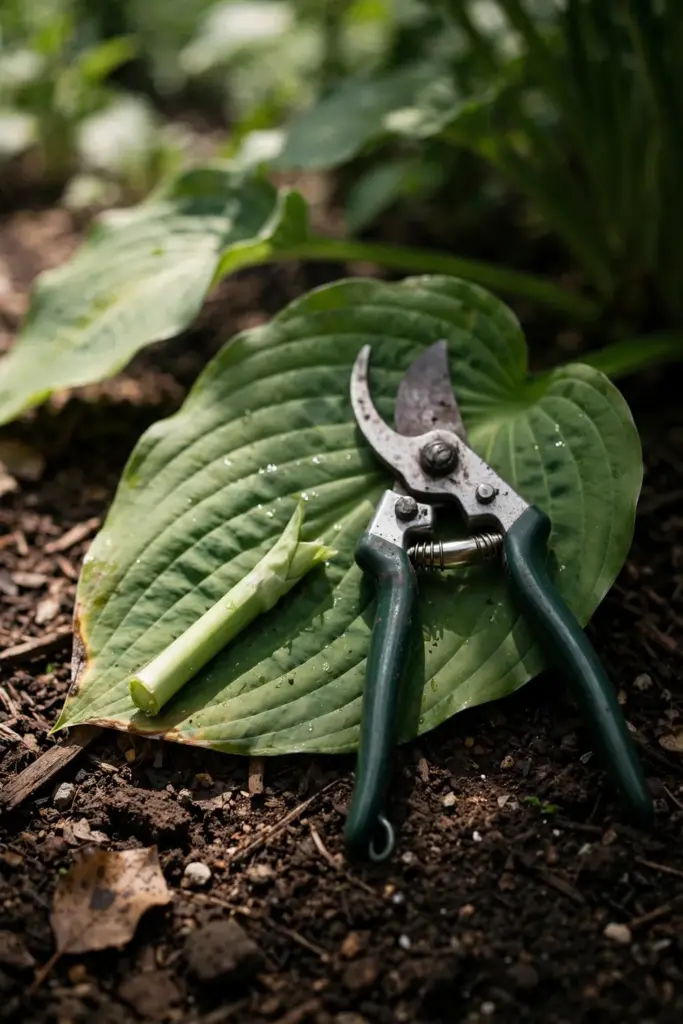
Tools are the main vector. A pruner that cuts an infected scape and then cuts a clean scape transfers the virus. A spade that divides an infected clump and then divides a clean clump transfers the virus. A knife that trims infected roots and then trims clean roots transfers the virus. Every tool that touches hosta tissue is a vector until it is disinfected.
Hidden routes matter. Deer browsing wounds leaves and moves sap. Mower and string-trimmer hits wound leaves and move sap. Hail damage wounds leaves. Cutting deer-damaged or hail-damaged leaves with the same tool spreads the virus. Keep string trimmers and lawn mowers away from hosta leaves. The hidden routes are the ones gardeners miss.
Insects do not spread HVX. No evidence supports insect transmission of HVX, and deer, rabbit, or slug feeding could potentially move sap, but that is an unproven possibility, not established fact. The proven routes are mechanical: tools, hands, divisions, and wounds. The prevention targets the proven routes.
Seed transmission is unresolved. One study found seed transmission, with virus detected in seeds, sprouts, and seedlings from infected plants. Arkansas Extension and Massachusetts sources state the virus is not shown to spread via seeds and is not believed to spread by infected seed. This article flags the conflict rather than resolving it. Do not promise seed safety. Do not promise seed risk.
What Raises the Risk of Hosta Virus X
Sharing divisions raises the risk most. A division from an infected plant is an infected plant. A division from a friend’s garden, a plant swap, or a neighbor’s dug-up “unusual” hosta carries the virus into the collection. Every shared hosta is a risk until it is tested or quarantined. The generosity of hosta growers is the virus’s best friend.
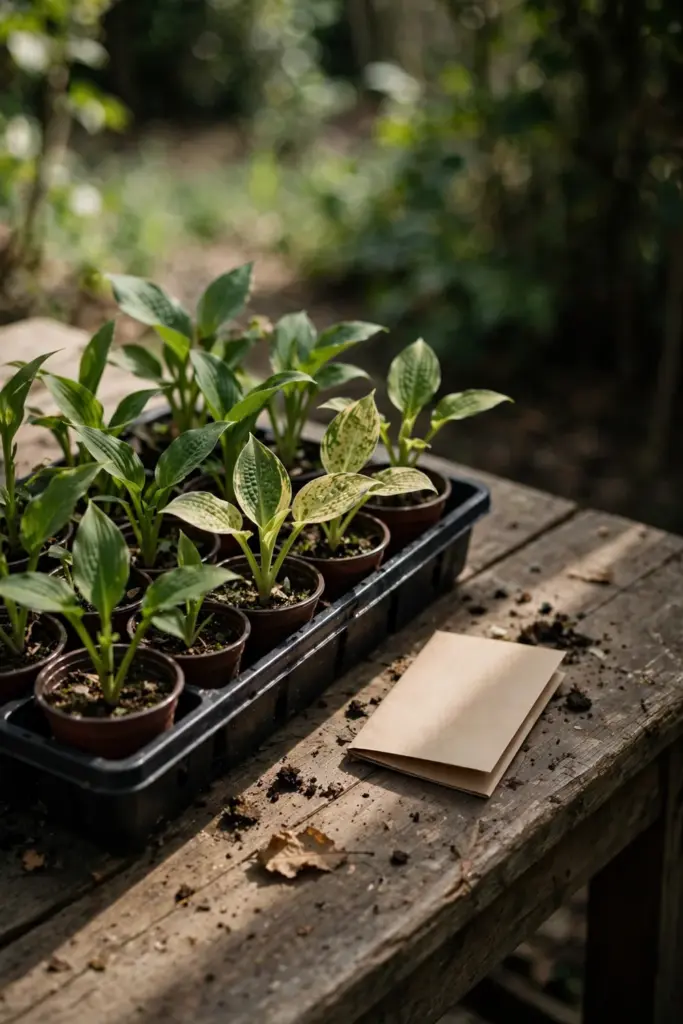
Buying mass-propagated stock raises the risk. Bulk bins, box stores, and mass-propagated lots carry more virused plants than specialist nurseries. A lot with 5 percent symptomatic plants can be 100 percent infected, because asymptomatic plants in the same lot carry the virus, per the American Hosta Society. Zero tolerance is the standard: ask whether the supplier inspects to zero-tolerance standards.
Skipping tool sanitation raises the risk every time. A single unsterilized cut between plants transfers sap. A single division session with one tool and twenty plants can infect the whole bed. The risk is not the one cut. It is the habit of cutting without disinfecting.
Wounding raises the risk. Pruning scapes, cutting damaged leaves, dividing clumps, and trimming roots all open wounds. Wounds are the entry points. A garden that wounds hostas often, without sanitation, spreads the virus often. Minimize wounding. Sanitize when wounding is unavoidable.
Strategy 1: Learn the Signature and Accept the Destroy Decision
Learn inkbleed, collapsed tissue, and mottling. Inkbleed is the signature, darker discoloration centered on the veins, collapsed tissue means heavier infection, flattened empty-looking patches that stay all season, and mottling means virus of some kind, so treat as virus, and the three signs together are the field identification.
Accept the cost-benefit before you test. Testing costs money and time, destroying costs one plant, and keeping a suspect plant risks the collection, so the cheapest response to a clearly symptomatic plant is destruction without testing, and you should save test kits for questionable plants, not obvious ones, since the test earns its cost when the answer changes the decision.
Do not prune diseased leaves off and keep the plant, since pruning spreads the virus via pruners while the plant stays infected, so a hosta with virus symptoms is a hosta to destroy, not a hosta to tidy, because the pruner does not cure, the pruner spreads. Do not keep an infected plant “even if it appears cured,” since symptoms disappearing does not mean cured, the virus persists, still infectious, inside the cells, and a plant that looks cured is a plant that still spreads, which makes the appearance of cure the most dangerous stage, because it invites sharing.
Strategy 2: Tell Virus From Variegation Before You Act
Compare the suspect plant against the cultivar’s normal pattern. A healthy variegated hosta shows a crisp, stable pattern, the same on every leaf, season after season, while a virused hosta shows bleeding, mottling, and collapse that break the pattern, differ leaf to leaf, and change through the season. Get a reference. A photo of the cultivar, a healthy plant of the same cultivar, or the nursery description settles most cases, because the pattern comparison, not the single leaf, carries the identification.

Check the mottled-but-clean list. Xanadu Paisley, Cynthia, Laella, Kiwi Forest, Wild Bill, and Filigree mottle without virus, so a mottled plant of one of these cultivars, stable and unchanging, is probably clean, while a mottled plant of a cultivar that should be crisp is suspect. The list saves healthy plants from the destroy pile.
Hold the leaf to the light. Subtle inkbleed shows better with light behind the leaf, so compare the suspect leaf against a healthy leaf of the same cultivar, held to the same light, since the backlight test catches cases the naked eye misses in shade, and the light is free and immediate. When in doubt, treat as virus: isolate the suspect plant, test it if the answer changes the decision, destroy it if it does not, since the doubt itself is the signal, and a plant that makes you hesitate is a plant to isolate at once, before the next tool touches it.
Strategy 3: Tell HVX From Other Hosta Viruses With the Lab, Not the Eye
Use the vector logic. HVX spreads in sap only, with no insect vector, while thrips, nematodes, and aphids spread the other hosta viruses, so a bed with thrips damage and virus symptoms points away from HVX, and a bed with clean insects and virus symptoms points toward it. The vector logic narrows the field, never settles it.
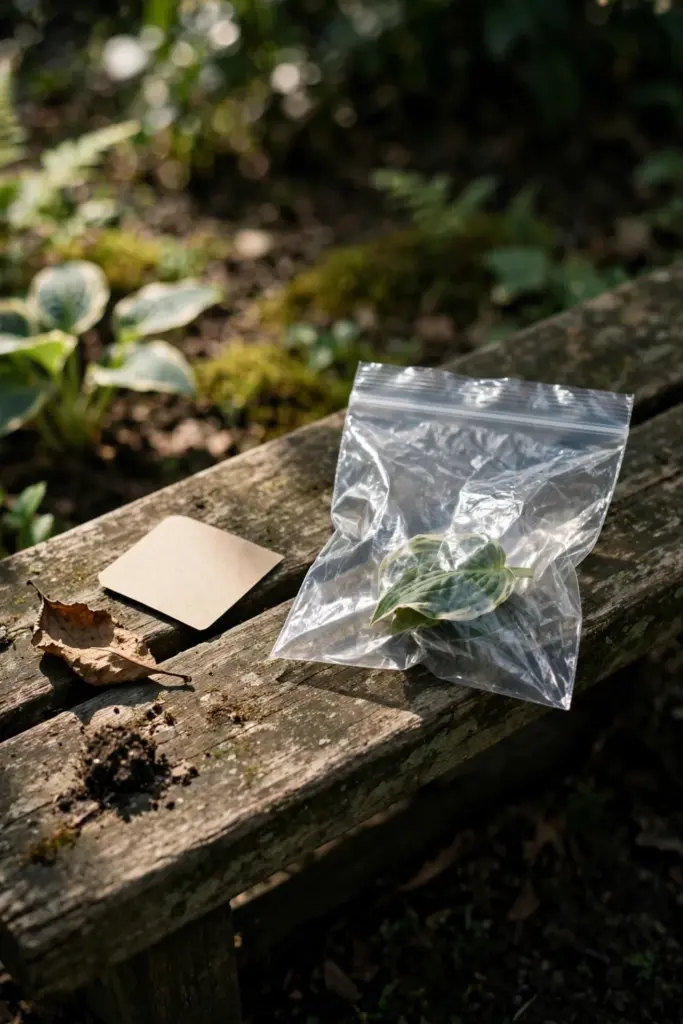
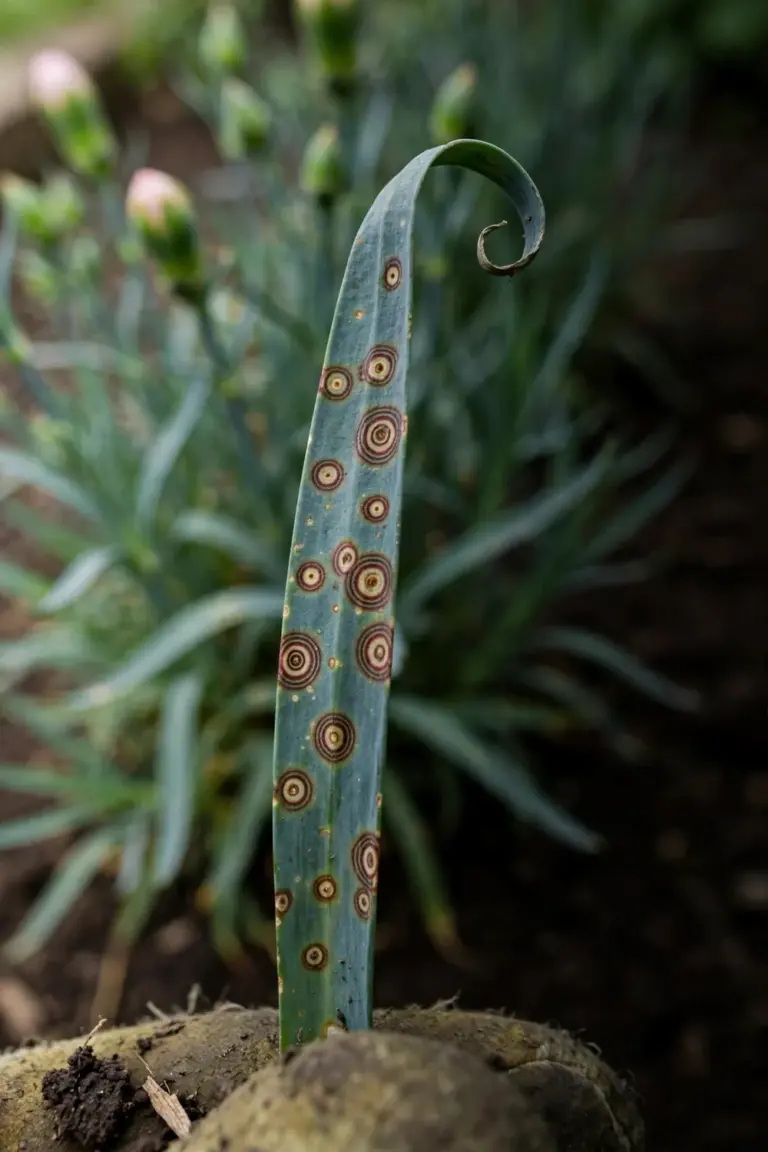
Accept the symptom overlap. Mottling, puckering, ringspots, and distortion appear across hosta viruses. No field check separates them. A hosta with ringspots may carry HVX or another virus. The eye cannot tell. The lab can.
Test with the right tool. The Agdia ImmunoStrip tests HVX only, so a positive strip means HVX, while a negative strip means not HVX, not virus-free. A hosta with virus symptoms and a negative HVX strip needs a lab screen, which tests seven or more viruses. The strip answers one question. The lab answers the rest.
Destroy any virus-symptomatic hosta regardless of which virus. The management converges: any virus means destruction. The species of virus changes the label, not the action, so a hosta with virus symptoms gets destroyed whether the lab names HVX or another virus. The test informs the collection, not the fate of the plant.
Strategy 4: Test Before You Trust With the ImmunoStrip
Buy the test before you need it. The Agdia ImmunoStrip kit costs 50 dollars for 5 tests, or 125 dollars for 25. Store unused kits in the refrigerator, where they keep for at least a year. A kit on the shelf beats a kit ordered after the symptoms appear. The test is the hobbyist’s lab.
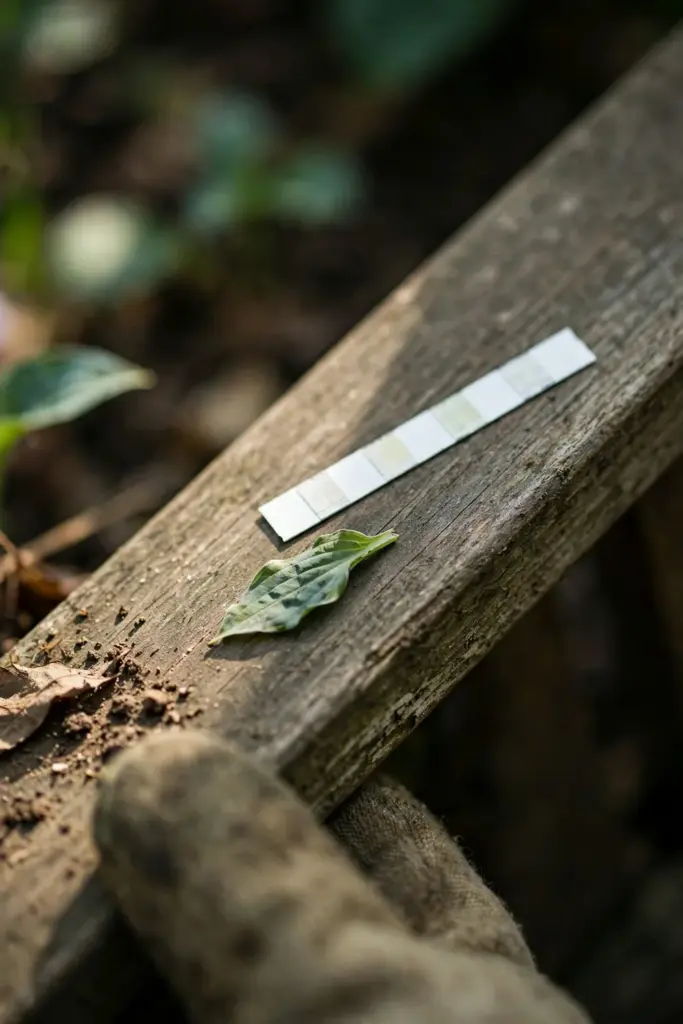
Run the test correctly. Take a quarter-sized piece from a suspect leaf, mash it in the buffer-solution-filled bag, insert the test strip, and read the result in 30 minutes. Two red lines mean positive. One red line means negative. The common mistakes are pushing the strip too far into the bag and using too large a sample. Follow the kit instructions.
Test before you buy, divide, and repot. The Agdia regimen is test before you buy, before you divide, and before you repot. A test before buying protects the collection from a new infection. A test before dividing protects the divisions from an old infection. A test before repotting protects the bench from both.
Know the limits. The test is accurate once the virus reaches the threshold level, which can happen before symptoms appear. Newly infected plants with low but increasing virus levels can test negative. A negative test on a freshly infected plant is a false negative. A negative test does not guarantee a clean plant, and a negative HVX test does not diagnose other viruses. Test again later where suspicion remains.
Strategy 5: Destroy, Do Not Cure, the Infected Plant
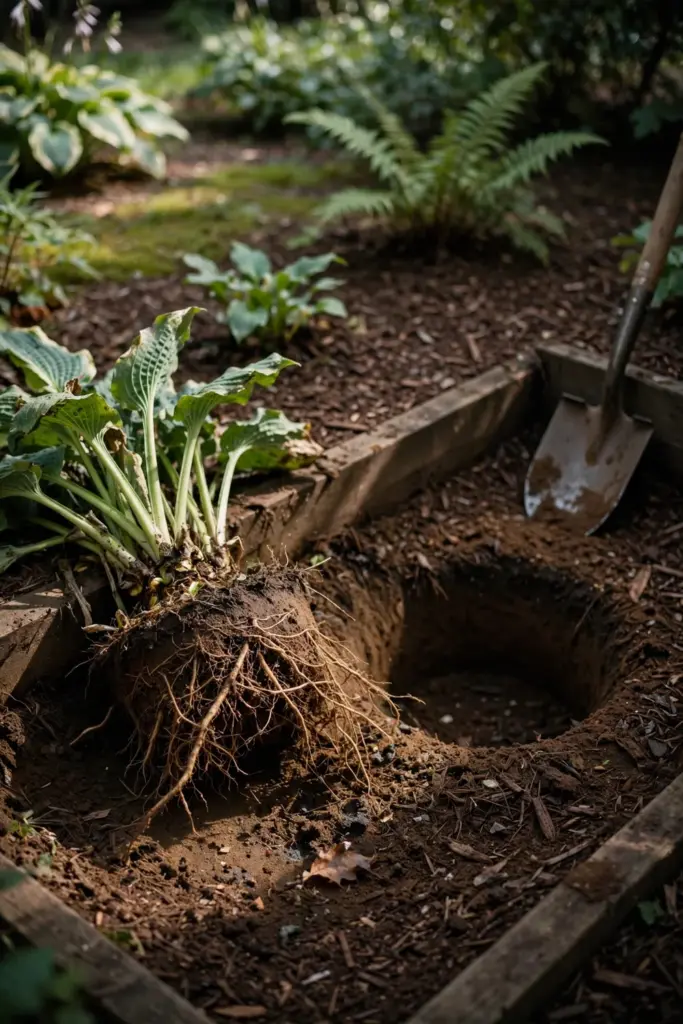
Remove the entire plant, including all roots, digging the whole clump, roots and all, since every root fragment left in the soil is a potential reservoir and the removal is total or it is wasted. Dig wide. Sift the soil. Pull every fragment, because partial removal leaves the virus in the ground and a clean hole is the only safe hole.
Burn where legal, or landfill. Burn the removed plant where local rules allow, otherwise bag it and put it in municipal waste, landfill-bound, and never compost an infected hosta, home compost or community compost, since home compost does not reliably kill the virus and community compost spreads it to every garden that uses the compost. The compost pile is a distribution route, not a disposal route.
Never prune diseased leaves off and keep the plant, since pruning spreads the virus via pruners while the plant stays infected, so a hosta with virus symptoms is a hosta to destroy. Do not share, sell, or give away the plant, since an infected hosta given to a friend is an infection given to a friend, an infected hosta sold at a plant sale is an infection sold, and an infected hosta dumped on a roadside is an infection dumped. The chain stops at destruction.
Strategy 6: Disinfect Tools and Hands Between Every Plant
Scrub sap off first, then disinfect. Disinfectant does not penetrate dried sap, so scrub the blades clean, then disinfect, because a tool with sap on it is a tool that still carries the virus. The scrub is the first step, not an optional extra.
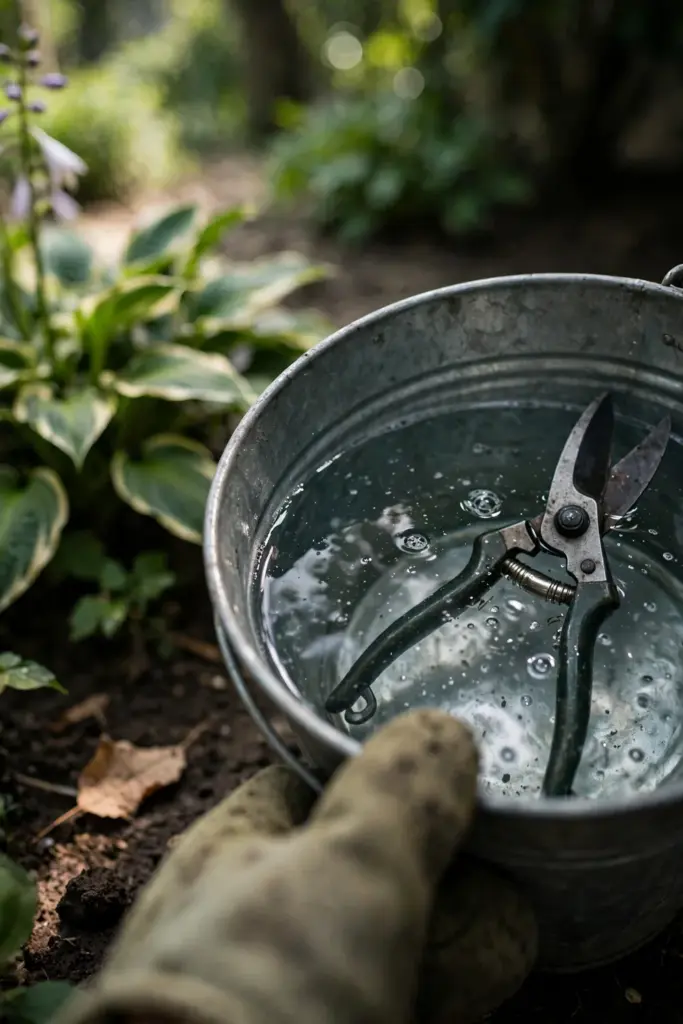
Disinfect between every plant. Not between beds, not between sessions, between every plant, because every cut transfers sap and every plant deserves a clean tool. The habit is the prevention. One skipped disinfection can infect the next plant.
Use a verified recipe. Sources differ: Arkansas Extension advises a 10 percent bleach dip for tools. University of Wisconsin guidance offers three options, including trisodium phosphate, Alconox plus sodium lauryl sulfate, and dry milk plus polysorbate, while home blogs use rubbing alcohol or a 1 to 9 bleach solution. This article does not present one recipe as the settled method, because the sources differ, so verify one recipe against Extension before printing it on a workshop handout. The recipe matters less than the habit: scrub, disinfect, every plant.
Wear disposable gloves and change them between plants. Gloves carry sap like tools do, so change gloves between plants, wash hands with soap and water after handling hostas, especially after handling a suspect plant, and work the healthiest plants first and the suspect plants last, so the dirtiest tools meet the fewest clean plants, which keeps the sanitation chain unbroken from the first cut to the last.
Strategy 7: Mind the Hidden Spread Routes
Guard the division session. Dividing is the highest-risk activity, because it opens wounds on many plants in quick succession, so disinfect between every division, change gloves between every division, and test before dividing a suspect clump, since a division session with one tool and no sanitation can infect the whole collection in an afternoon.
Guard the scape cut. Cutting flower scapes wounds the plant and moves sap, so disinfect between every scape cut. The scape cut feels harmless. It is not. The sap on the blade is the virus on the blade.
Keep trimmers and mowers away from hosta leaves. String trimmers and lawn mowers wound leaves and move sap, and a trimmer nick on an infected leaf, followed by a nick on a clean leaf, transfers the virus. Mow away from the hosta bed. Trim by hand near hostas, with disinfected tools.
Watch deer and hail damage. Deer browsing wounds leaves, hail wounds leaves, and the damage itself does not spread the virus, while the tool that cleans up the damage does, so cut damaged leaves with a disinfected tool and disinfect after each cut.
Strategy 8: Quarantine and Inspect New Plants Before They Join the Bed
Isolate new hostas for several weeks before introducing them. A new hosta sits apart, in a pot, away from the collection, for several weeks. The quarantine catches symptoms that appear after purchase. A suspect plant gets a year or more of isolation, or destruction. The quarantine is the cheapest insurance in hosta growing.
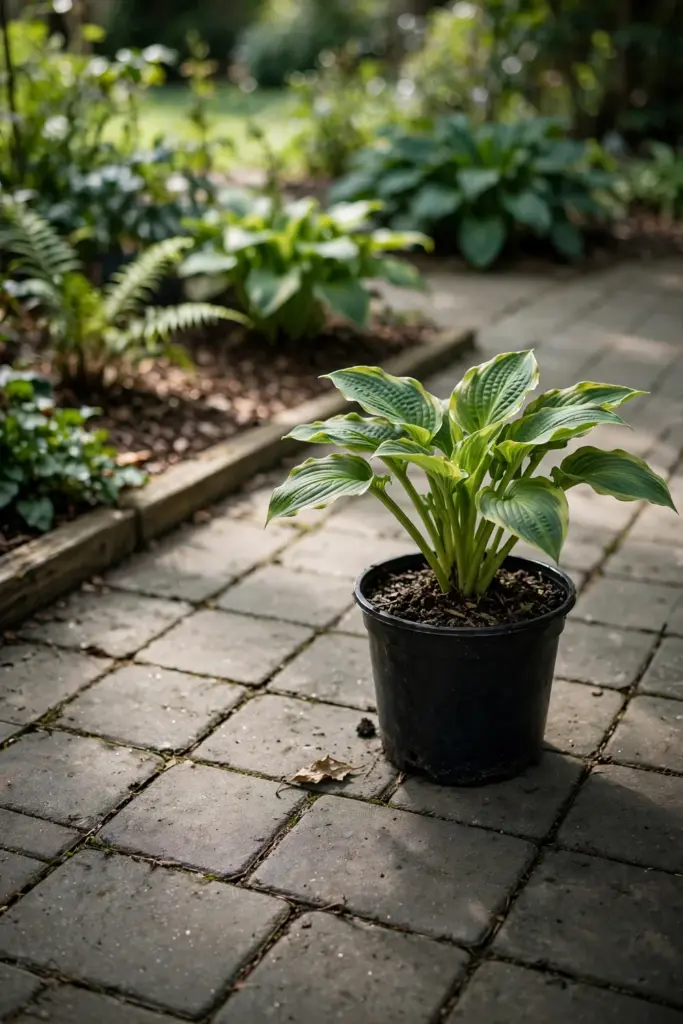
Inspect before purchase. Look for inkbleed, collapsed tissue, and mottling. Avoid unusually mottled plants. Avoid plants with markings that do not match the cultivar description. A plant that looks “unique” is a plant to suspect, not a plant to celebrate. The nursery bench is the first quarantine.
Ask the seller for HVX-free proof. Request virus-indexed stock for expensive plants. Ask whether the supplier inspects to zero-tolerance standards. A reputable seller answers. A seller who cannot answer is a seller to avoid. The question costs nothing. The answer protects the collection.
Beware mass-propagated and big-box stock. Virused hostas increasingly appear in large general nurseries and box stores, because mass propagation of infected hostas propagates the virus with the plants. A cheap hosta from a bulk bin carries more risk than a virus-indexed plant from a specialist nursery. The price difference buys the testing.
Strategy 9: Do Not Fall for the Infected-Cultivar Trap
Know the trap cultivars. Breakdance, Eternal Father, Leopard Frog, Blue Freckles, Lunacy, Kiwi Watercolours, and Parkish Gold were all derived from virus-infected stock and sold as novelties. The “new cultivar” was the virus. The gardeners who bought them bought the epidemic.
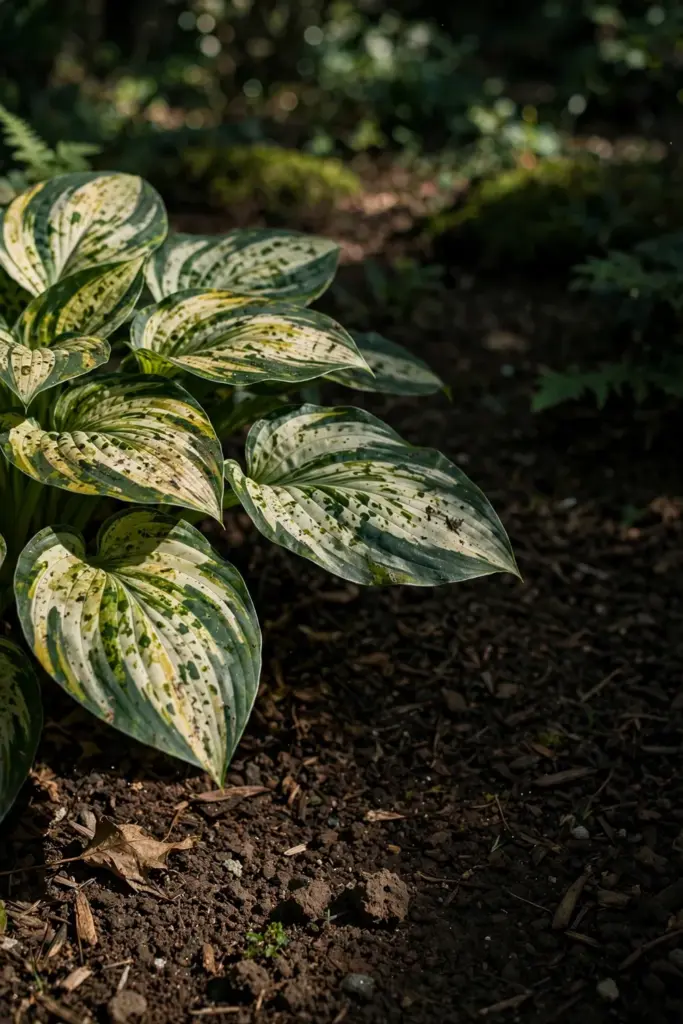
If you own one, it is infected. Destroy it, do not propagate it, do not share it, and do not sell it, since the cultivar name is the diagnosis. A Breakdance in the collection is a virus in the collection, whatever it looks like this season.
Distrust novelty markings. A hosta with markings that no catalogue describes, a hosta that looks “one of a kind,” a hosta dug from a neighbor’s garden because it looked unusual, all deserve suspicion. The unusual hosta is the trap. The ordinary hosta from a virus-indexed source is the safe buy.
Tell friends and neighbors. A friend who owns a trap cultivar and does not know it spreads the virus through sharing. Tell them. The conversation is awkward. The epidemic is worse. The hosta community stopped the spread by talking about it, not by staying quiet.
Strategy 10: Replant Rules, With the Conflict Flagged
Know the majority view. Most sources state the virus needs a living host and does not persist in soil. Once the infected roots have decayed, after a few weeks, replanting in the same spot is acceptable. The virus dies with the roots. The spot is safe again.
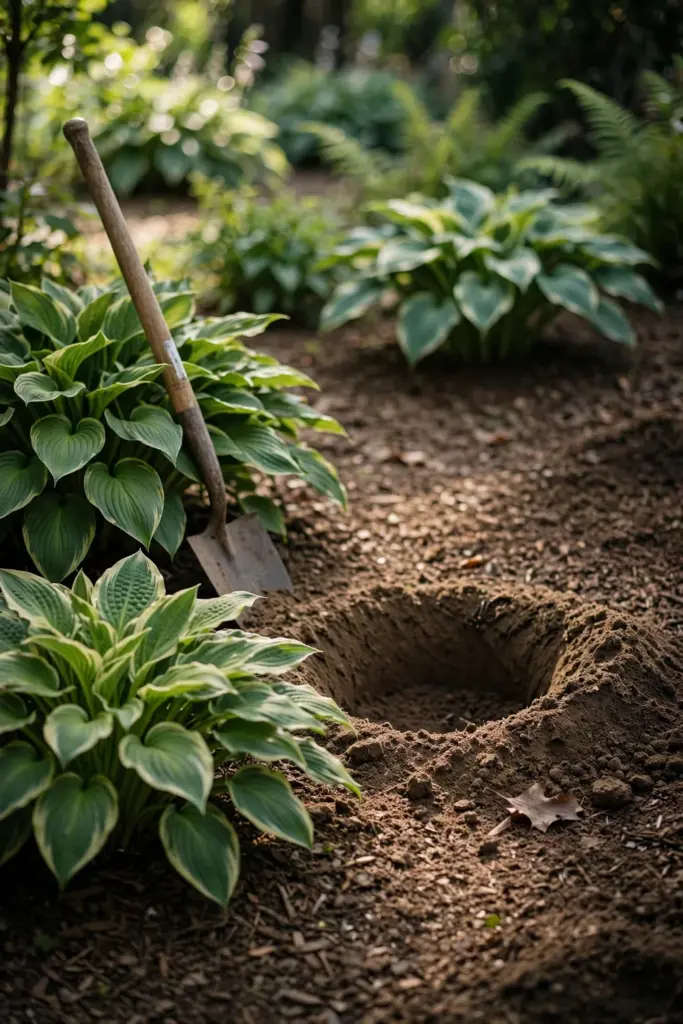
Know the conflict. One home source claims infected roots can persist in soil for at least 2 years and advises against replanting in the same spot. This article flags the conflict rather than resolving it. The sources disagree, and the article does not pretend otherwise.
Remove all root material either way. Whatever the soil rule, remove all root material when destroying an infected plant. Dig wide. Sift the soil. Pull every fragment. The root removal is the step both views agree on. A clean hole is a safe hole under either rule.
Wait where doubt remains. If the spot held a trap cultivar, if the removal left root fragments, or if the replacement plant is valuable, wait. Plant the replacement elsewhere and let the spot rest. The wait costs a season. The risk costs a plant. A patient gardener re-plants with confidence.
Living With Hosta Virus X in a Collection You Already Own
A collection with HVX is a collection to manage, not a collection to abandon. Keep testing suspect plants. Keep disinfecting between every plant. Keep quarantining new arrivals. Keep destroying infected plants. The virus will still appear, but it will appear slowly, and the collection will keep growing.
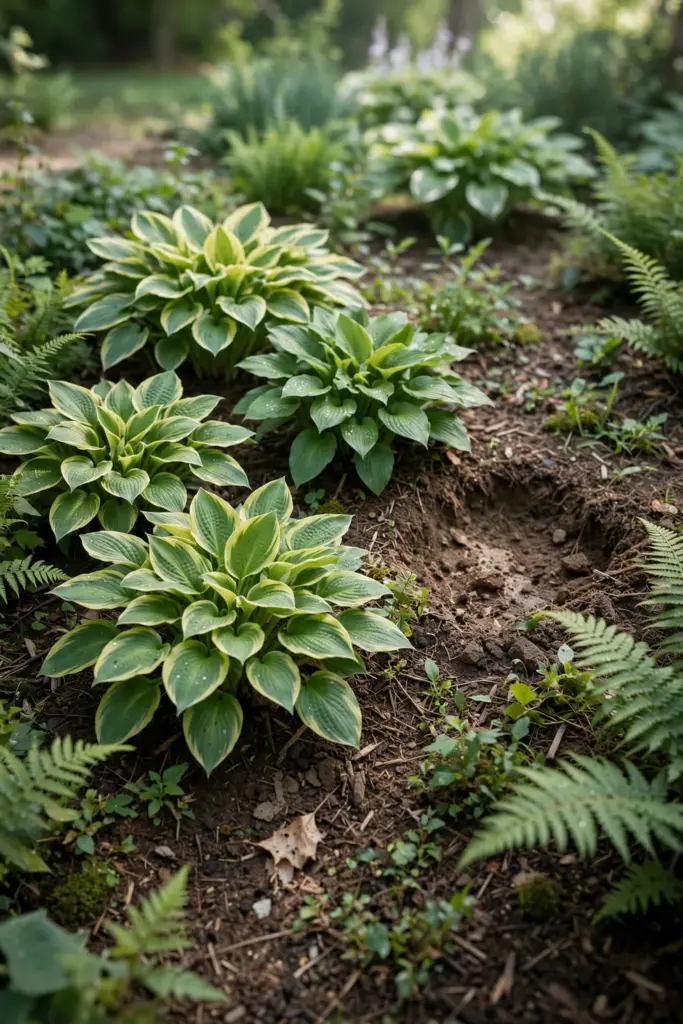
Stop three habits. Do not share divisions without testing. Do not cut without disinfecting. Do not keep an infected plant because it looks better this year. Keep those three lines unbroken and the virus stays contained to the plants that already carry it.
The Plant Care archive collects the site’s disease coverage, and the hosta growing guide covers hostas from seed. Neither replaces the 10 strategies here. The test, the tool sanitation, and the destroy decision carry the collection.
Frequently Asked Questions
No. Hosta virus X has no cure. The virus lives inside the cells and cannot be killed without destroying the whole plant. No chemical treatment works. No home remedy works. Management means destroying infected plants, disinfecting tools and hands between every plant, and quarantining new arrivals. A plant that looks cured is still infected and still spreads the virus. The destroy decision is the cure for the collection.
Usually not. HVX seldom kills the plant outright, but it weakens it over years, and highly susceptible varieties may lose entire leaves. Some sources say infection may eventually lead to death. The reason to destroy an infected plant is spread prevention, not because the plant dies tomorrow. A weakened plant still spreads the virus to healthy neighbors. The collection, not the single plant, drives the decision.
No. Save test kits for questionable plants, not obvious ones. A clearly symptomatic plant gets destroyed without testing, because the test result does not change the decision. Test plants where the answer changes what you do: a valuable cultivar, a plant you plan to divide, a new purchase, a plant with subtle markings. Test before you buy, before you divide, and before you repot. The test earns its cost when it changes the decision.
The majority view says yes, once the infected roots have decayed, after a few weeks. One home source claims infected roots can persist for at least 2 years and advises against replanting in the same spot, so this article flags the conflict rather than resolving it, and either way you should remove all root material when destroying the plant. Where doubt remains, wait and plant the replacement elsewhere. A patient gardener re-plants with confidence.
No, not to non-hostas. HVX infects hostas only in the garden, so your roses, tomatoes, and ferns are safe. The virus does spread to other hostas, through sap on tools, hands, divisions, and wounds, though it does not spread through insects and does not spread through the air, which means the bed itself is the boundary: keep tools clean, keep divisions tested, and the virus stays inside the hosta bed.
Where to Go From Here
Hosta virus X rewards the grower who tests, disinfects, and destroys without hesitation. Learn the signature, separate virus from variegation, and let the lab settle the species. Test before you trust, destroy, do not cure, and disinfect between every plant. Mind the hidden routes, quarantine new arrivals, dodge the trap cultivars, and replant with the conflict in mind.
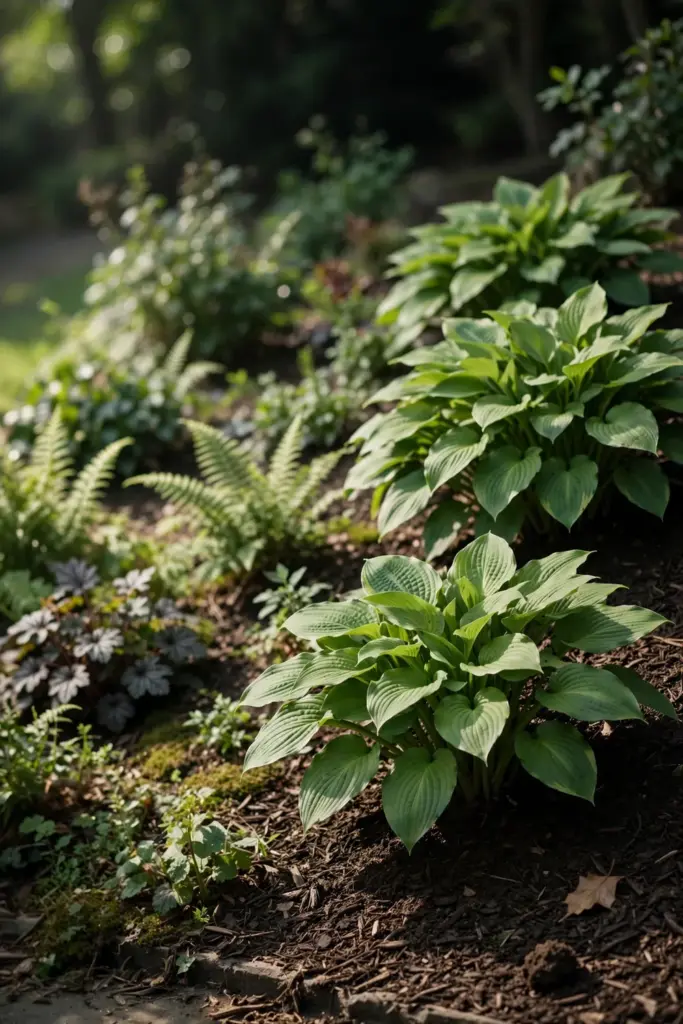
Next season, start clean. A collection with tested stock, disinfected tools, and a quarantine bench will hold HVX to an occasional loss. The American Hosta Society guide to identifying HVX is a useful companion for the full identification picture, since it sets the home-garden response here against the hobbyist-authority evidence behind it.