
Pull one suspect vine and look at the leaves. Sweet potato feathery mottle virus often shows little or nothing, and there is no cure. The honest response is prevention, in 3 moves: start with certified virus-tested slips, pull and destroy plants that show symptoms, and never replant slips from an infected bed.
I have learned to trust the lab result over the leaf. Sweet potato feathery mottle virus is a virus of sweet potato (Ipomoea batatas) in the Potyviridae family, and its current name is Potyvirus batataplumei. Clemson lists it under the genus Potyvirus only. The virus travels 3 ways: aphids, cuttings, and storage roots sprouted for slips, and it stays for the life of the plant.
The rest of this page is short on purpose. It names what the virus does, why field identification fails, how it spreads, and the few moves that still help. No spray cures it, and no home test settles it.
What Sweet Potato Feathery Mottle Virus Actually Is
Sweet potato feathery mottle virus is a potyvirus that infects sweet potato and wild Ipomoea species such as morning glory. The Queensland biosecurity page gives its current name as Potyvirus batataplumei. The virus lives in the plant. It does not wash off, and it does not leave on its own.

A single-virus infection is often mild. Many infected plants show no symptoms at all, or faint marks that fade as new leaves open. That mild picture is the trap. A bed can look healthy while the virus rides inside the vines and the roots.
The severe damage most growers fear comes from a co-infection, not from this virus alone. Sweet potato feathery mottle virus plus sweet potato chlorotic stunt virus (SPCSV), a whitefly-transmitted crinivirus, form sweet potato virus disease (SPVD). The Plantwise decision guide for the SPVD complex describes the pair as a dual infection, with SPFMV carried by aphids and SPCSV carried by whiteflies. Judge this virus on its own record. Do not borrow the co-infection damage.
One naming fence matters. Sweet potato virus C (SPVC) was once treated as the C strain of this virus. The National Clean Plant Network sweetpotato virus page states that SPVC is now recognized as a separate species. This page covers sweet potato feathery mottle virus only.
Why This Virus Is Hard to Identify in the Field
Sweet potato feathery mottle virus is hard to identify in the field because its symptoms vary and often vanish. The Lucid Central fact sheet on sweetpotato feathery mottle calls it difficult to identify on symptoms alone. Variety, plant age, strain, and growing conditions all shift the picture.
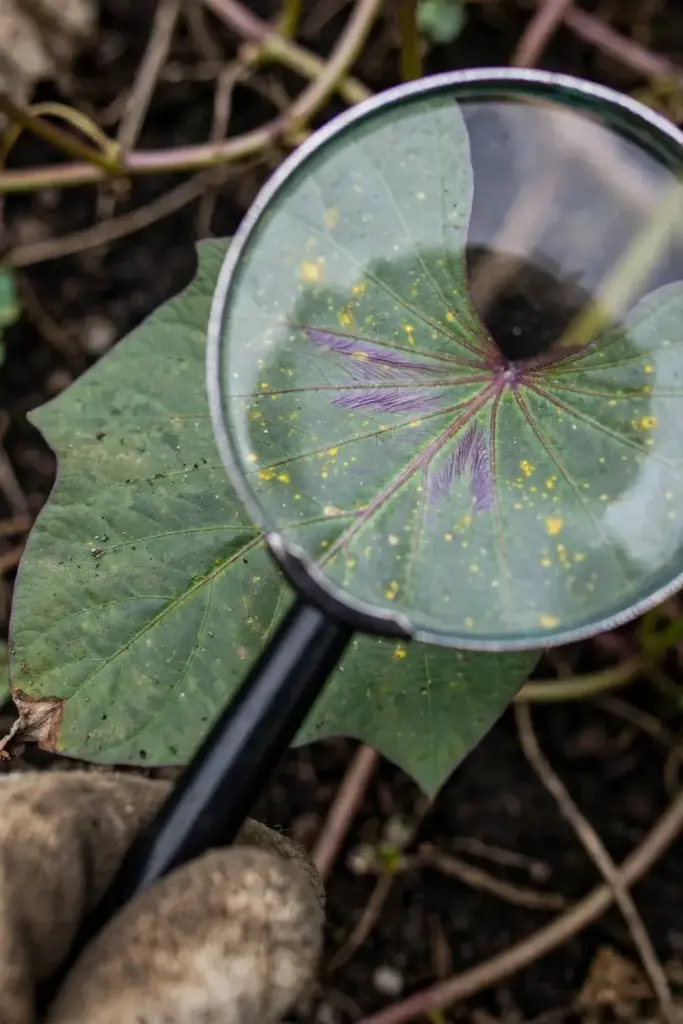
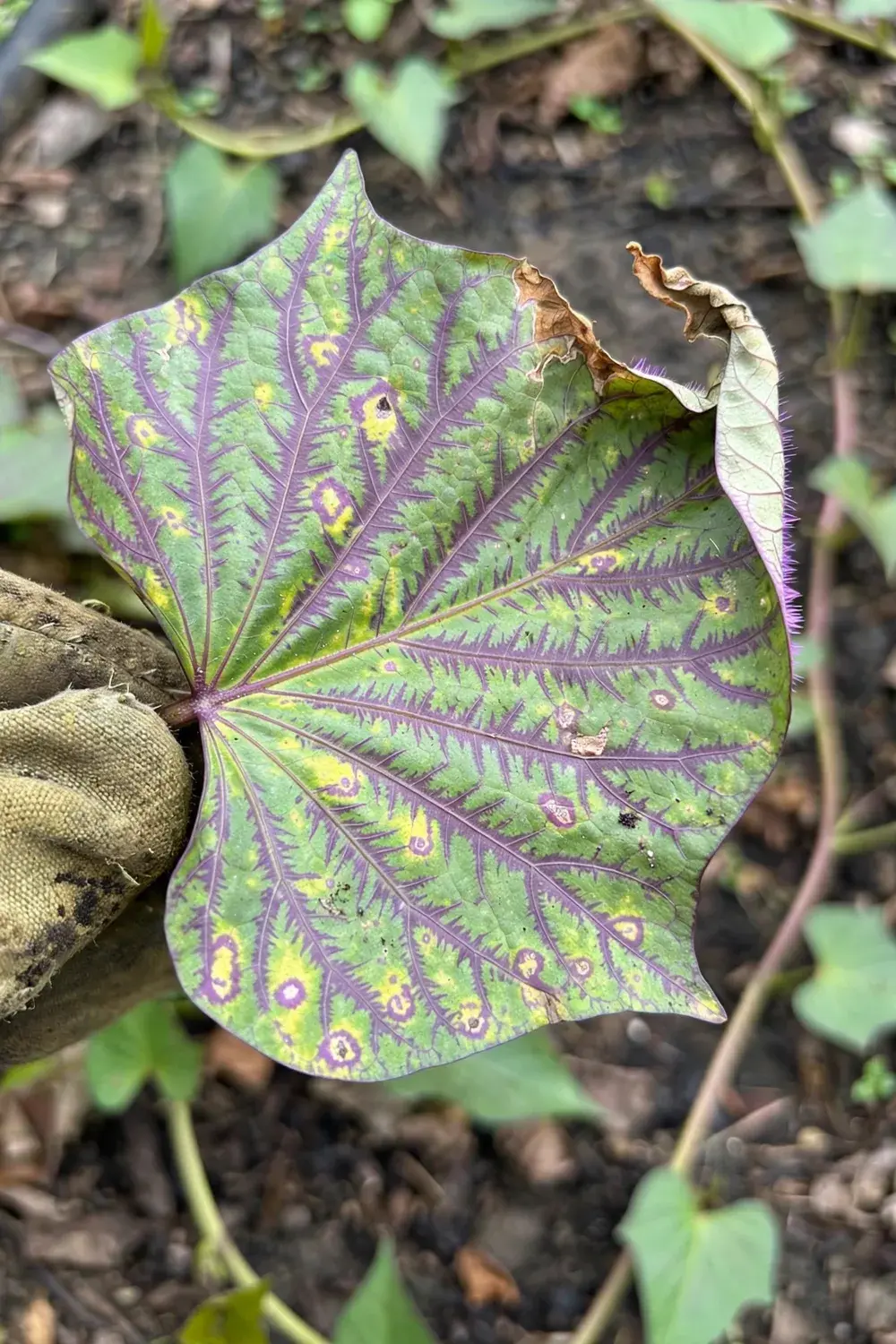
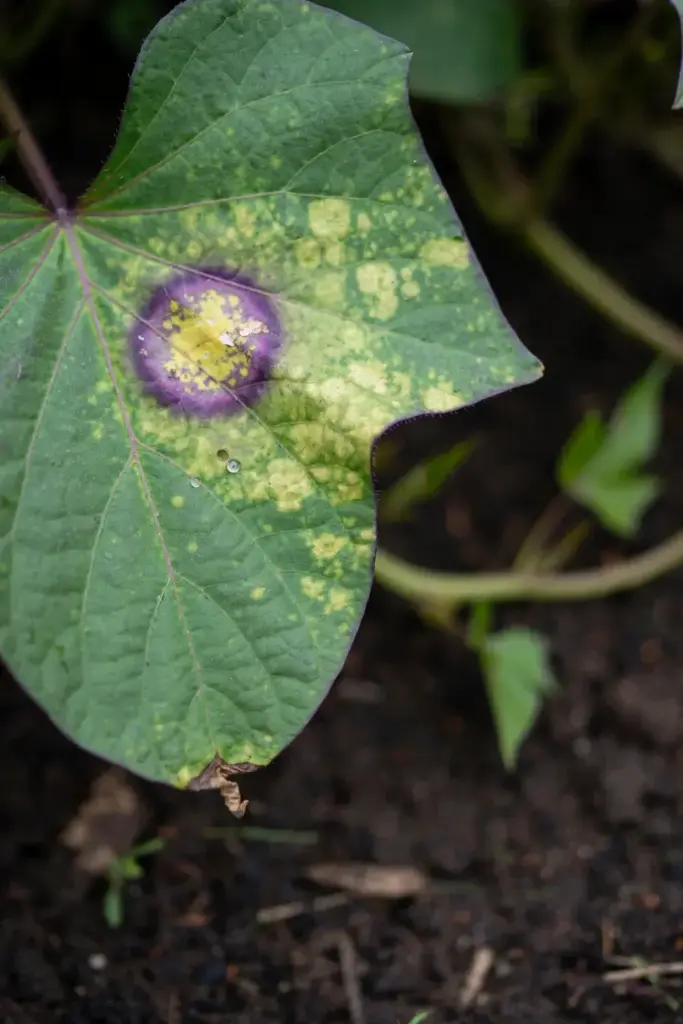
The most common sign is a feathery pattern along the leaf veins, often purple. Leaves may also show yellow spots, purple ring spots, chlorotic spots with purple borders, or diffuse mottling. In many cases there are no symptoms, or the marks are faint and short-lived while new leaves look healthy.
The russet crack strain is the exception that reaches the roots. It causes external cracking in rings around storage roots and internal cork, small brown to black corky spots found after harvest and during storage. Even then, the leaf picture alone does not name the strain.
Only lab testing settles identity. The National Clean Plant Network page describes PCR testing, including a multiplex PCR procedure that detects the sweetpotato potyviruses in one test. A home gardener cannot confirm this virus by eye. An Extension clinic can run the test.
How This Virus Spreads
Sweet potato feathery mottle virus spreads three ways. The Lucid Central fact sheet lists all three: aphids, cuttings used for planting, and storage roots sprouted for slips. True seed is not among them.
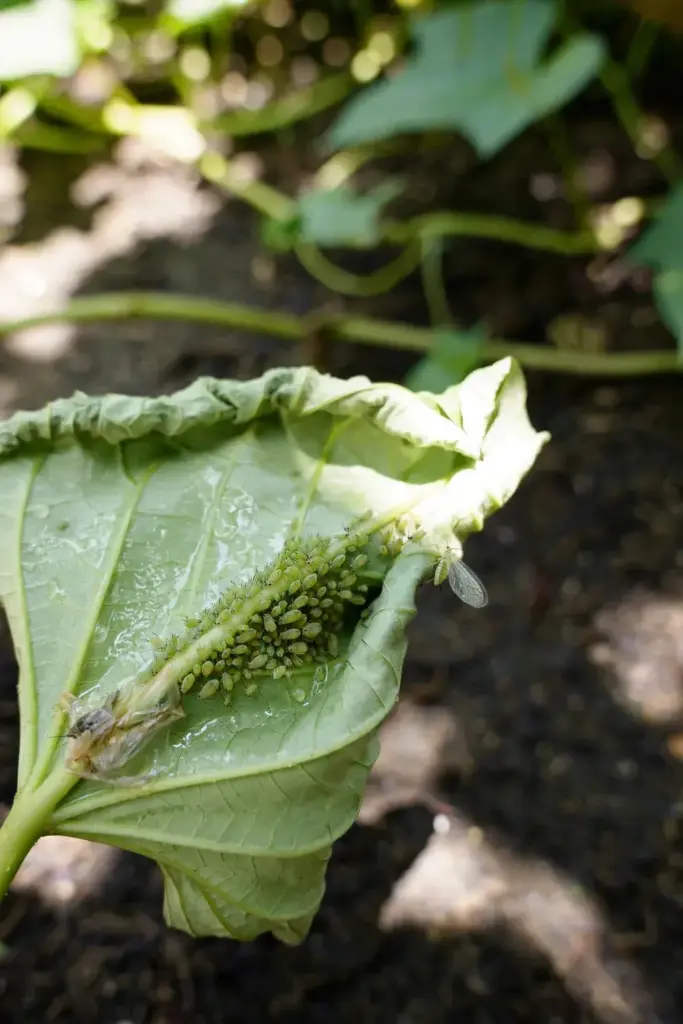
Aphids carry the virus in a non-persistent way. An aphid picks up the virus very quickly as it feeds on an infected plant, passes it to a healthy plant at the next feed, and then loses the ability to infect quickly. The speed is the point. Infection happens before any spray can kill the aphid.
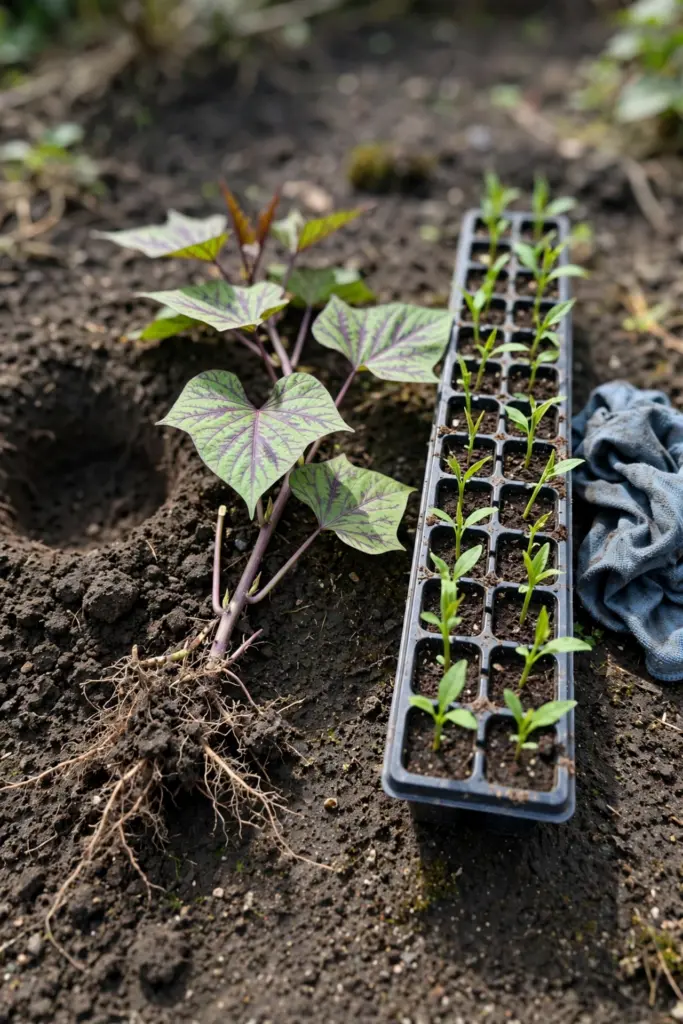
Infected planting material is the route a home gardener controls. Cuttings taken from an infected plant carry the virus. Storage roots bought for eating and then sprouted for slips carry it too. A new variety can enter a garden this way, through a market root grown for slips.
The virus survives between seasons in vines left in the field after harvest, in storage roots discarded in the field or kept as planting material, and in wild Ipomoea species such as morning glory. Clean beds start with clean material and end with a clean field.
What You Can Actually Do About It
Sweet potato feathery mottle virus has no cure, so every move below is prevention or removal. None of them rescues an infected plant. They protect the next planting.
| Move | Do This | Why It Helps |
|---|---|---|
| Buy certified slips | Buy certified virus-tested slips from a clean-plant source, and do not sprout market roots for slips. | Clean planting material starts the bed virus-free. |
| Rogue and destroy | Pull plants that show symptoms and destroy them. | Removal takes the virus source out of aphid reach. |
| Clean cutting tools | Clean cutting tools between plants when you take cuttings. | Tools carry sap, and sap carries the virus. |
| Clear vines and morning glory | Clear old vines after harvest and pull wild morning glory at the bed edge. | Leftover vines, kept roots, and wild Ipomoea carry the virus between seasons. |
| Space and rotate | Plant the new crop at least 15 m from the old crop, and rotate with a crop other than sweet potato next season. The Plantwise decision guide sets that 15 m separation. | Distance and rotation break the chain between old and new plantings. |
| Skip aphid sprays as virus control | Do not rely on insecticide to stop this virus. | Spread happens before the spray kills the aphid, so sprays miss the transmission window. |
That last row is the one most gardeners get backwards. Aphid control still has its place against aphid feeding damage, and crop rotation still pays across the whole garden. Neither one stops a non-persistent virus. The moves that stop it are certified slips, roguing, and clean tools.
Do not replant slips from a bed that showed symptoms. Do not keep suspect storage roots as next season planting material. Buy fresh certified slips and start clean. For the wider crop, the sweet potato growing guide covers planting and harvest timing.
Frequently Asked Questions
No. Sweet potato feathery mottle virus has no cure. No spray, feed, or home treatment removes it from an infected plant. Laboratory methods that strip the virus from meristem tissue exist, but they are lab work, not a home treatment. The home response is prevention: certified virus-tested slips, roguing, clean tools, and no replanting from an infected bed.
Only lab testing settles it. Symptoms vary by variety, age, strain, and conditions, and many infections show nothing at all. Field identification cannot confirm this virus. Take a sample to an Extension clinic and ask for ELISA or PCR testing. The National Clean Plant Network page describes PCR testing that detects the sweetpotato potyviruses, including a multiplex test that covers them in one run.
No. Aphids carry this virus in a non-persistent way, which means an aphid picks it up fast, passes it at the next feed, and loses infectivity fast. Infection happens before an insecticide kills the aphid. The Lucid Central fact sheet calls insecticide control of aphids impractical for preventing spread by this virus. Spray for aphid feeding damage if you must, but do not expect it to stop the virus.
Sweet potato virus disease is the co-infection of sweet potato feathery mottle virus and sweet potato chlorotic stunt virus (SPCSV). Aphids carry the first virus, and whiteflies carry the second. Together the pair causes far more severe damage than either virus alone: severe yellowing, stunting, and small misshapen leaves. Do not read co-infection damage as the damage of one virus alone.
Where to Go From Here
Sweet potato feathery mottle virus rewards one habit above all others. Buy certified virus-tested slips every season, and treat any bed that showed symptoms as a source to clear, not as a source of next year slips. Rogue the marked plants. Clean the tools. Clear the vines and the morning glory at the edge. That is the whole playbook, and it is enough.