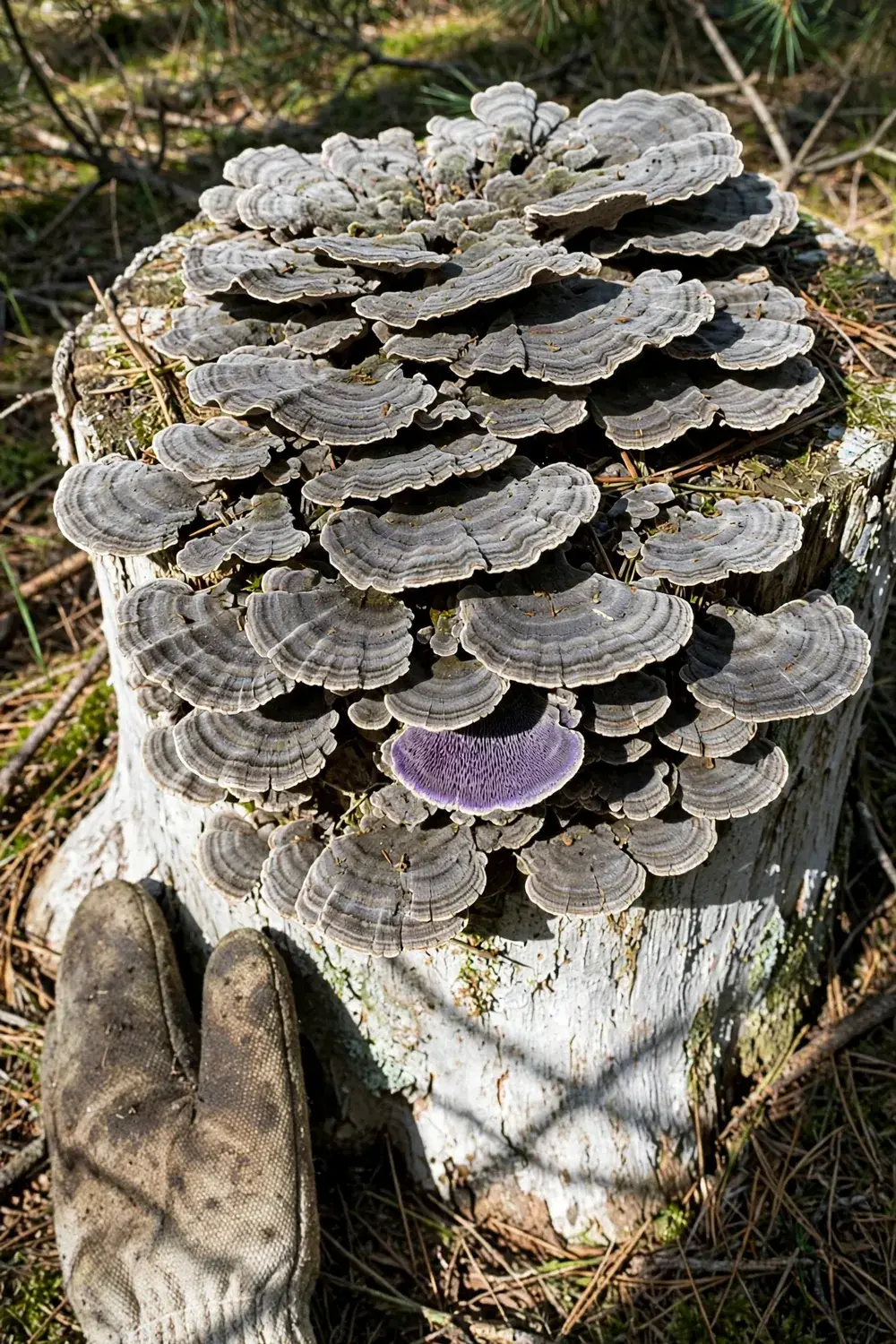

Sapwood Rot on a white pine is decay of dead sapwood by the fungus Trichaptum abietinum. The fungus grows thin shelflike brackets 1 to 4 cm wide on logs, stumps, and dead wood, and it leaves living tissue alone. No spray, no scraping, and no rescue changes anything, because there is no living-tree disease to treat.
I have learned to check the canopy before I judge a bracket. Sapwood Rot is a decomposer at work on wood that already died. The brackets look alarming on a stump beside a healthy pine, and they still mean nothing for the living tree.
The rest of this page gives the field signs, the reason no treatment exists, 5 moves that help the living pine, and one warning about a decay problem that does kill. The moves cost nothing beyond normal tree care.
What Sapwood Rot Actually Is
Sapwood Rot is decay of dead sapwood by Trichaptum abietinum, a saprotrophic bracket fungus. Sapwood is the outer band of wood under the bark, and it carries water up the tree while the tree lives. When a log, stump, or branch section dies, its sapwood becomes dead wood, and decomposers move in to break it down.
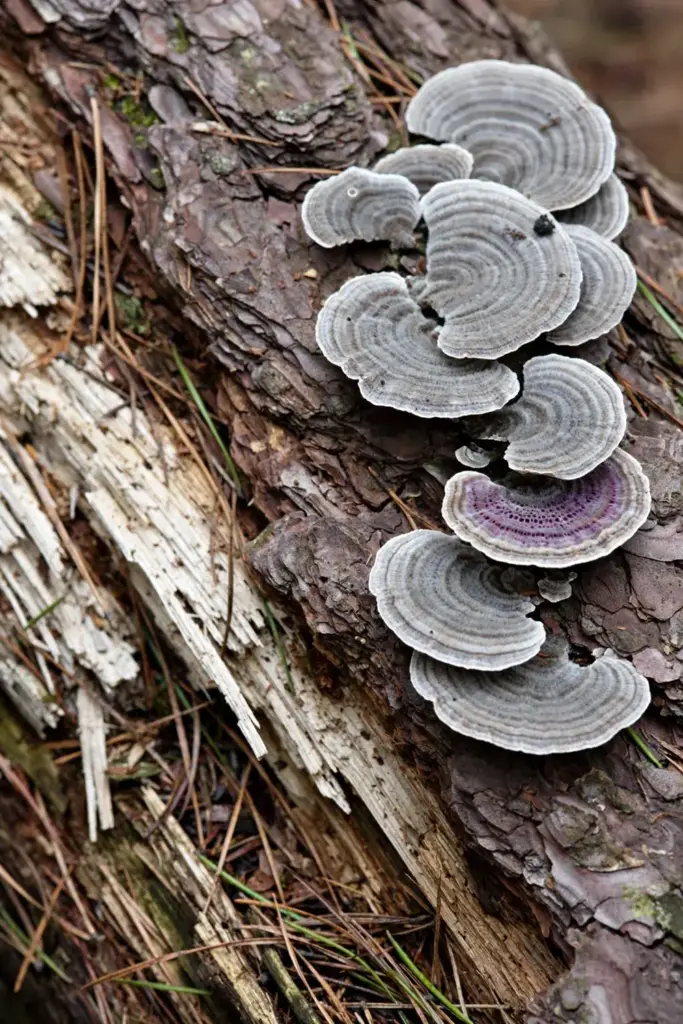
The MushroomExpert page on Trichaptum abietinum describes the fungus as saprobic on the dead or dying sapwood of conifers, growing in overlapping clusters on logs and stumps. The Clemson entry names this fungus on white pine, Pinus strobus. The fungus itself colonizes dead conifer wood more broadly.
Sap rot is a broad label, and many decay fungi rot sapwood. This page covers one named instance, Trichaptum abietinum on white pine. Other sap-rot fungi are different fungi with different habits, and they do not share this page. A tree grows new wood under bark each year, and the how trees grow thicker each year guide shows how those layers stack.
How to Recognize Sapwood Rot on Dead Pine Wood
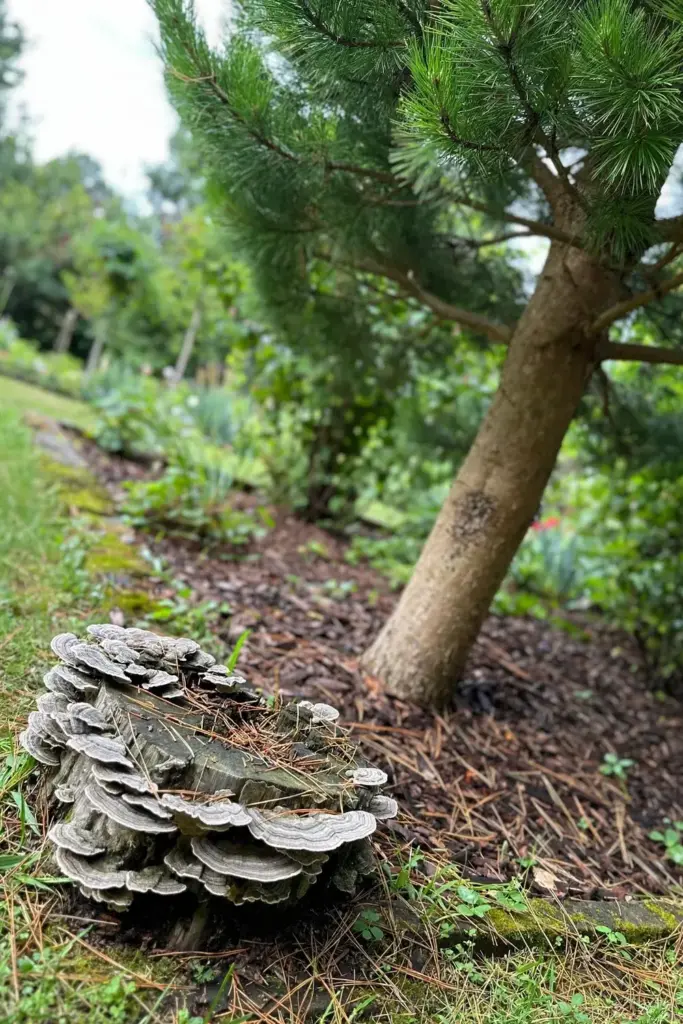
Look for thin shelflike brackets on dead conifer wood, on a log, a stump, or a dead branch stub. The brackets grow in overlapping clusters or rings around the wood, and they show most often on stumps and slash. The fungus fruits on wood that already died.
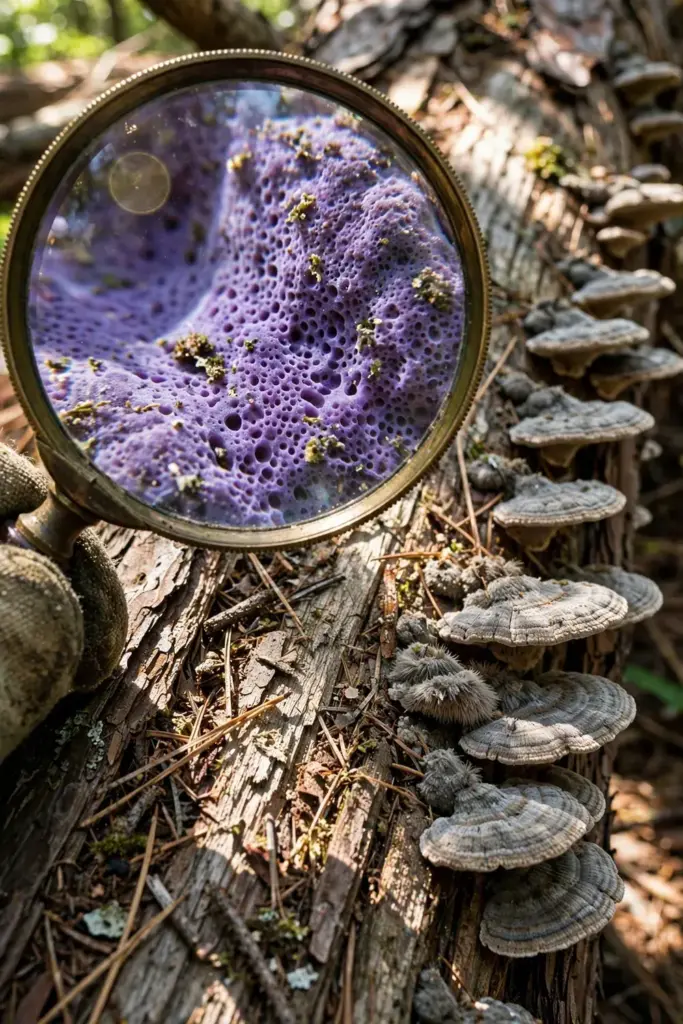
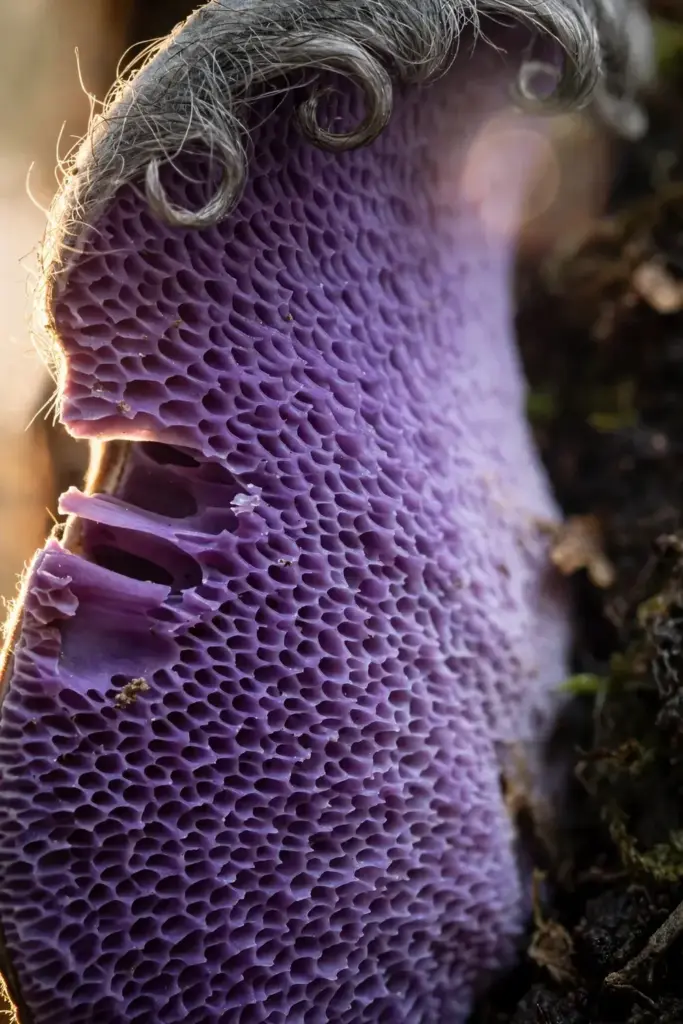
The caps sit semicircular to fan-shaped, 1 to 4 cm wide and up to 3 cm deep, with a gray hairy upper surface. The pore surface runs purple when fresh, especially near the margin, then fades to lilac or brown with age. The MushroomExpert page on Trichaptum abietinum gives 2 to 3 angular pores per mm on that surface.
| What You See | What It Tells You |
|---|---|
| Thin gray hairy brackets in overlapping clusters | Fruiting bodies of a saprotrophic bracket fungus |
| Purple pore surface when fresh, fading with age | Fresh Trichaptum abietinum, a field mark that fades |
| Brackets on a log, stump, or dead branch stub | The fungus works dead wood, the only wood it colonizes |
| Wood under the brackets soft and pocketed | White rot decay inside wood that already died |
Flip a bracket and check the underside. The purple pore surface is the mark that separates this fungus from the gray-brown brackets that crowd dead wood. Color fades with age, so an old brown bracket may show only a purple rim. Field signs point toward the name, and microscopy settles close calls.
Why Sapwood Rot Needs No Treatment
Sapwood Rot needs no treatment because the fungus feeds on wood that already died. It breaks down sapwood in logs, stumps, slash, and dead wood inside a living tree. The living tissue of the pine stays untouched.
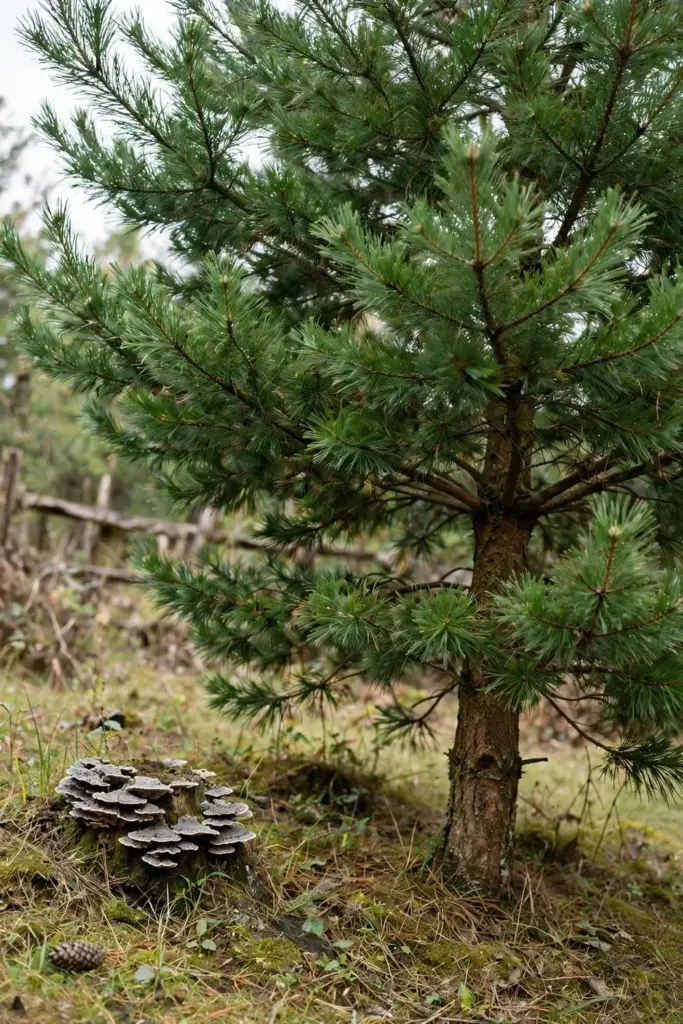
The Forest Pathology wood decay list places Trichaptum abietinum in its saprobic decays group, the fungi that decay dead trees or dead portions of live trees, and it names the decay type as pitted white rot. The same page keeps stem decays of living trees in a separate group. That split is the whole story. This fungus belongs with the decomposers.
Treatment talk usually starts from fear. Brackets on a stump look like disease spreading to the pine beside it. The brackets mark wood that already died, and nothing under them needs fixing.
1. Leave the Brackets Alone
Leave the brackets where they grow. Pulling them off does nothing to the decay inside the wood, and the fungus keeps working whether the brackets stay or go.
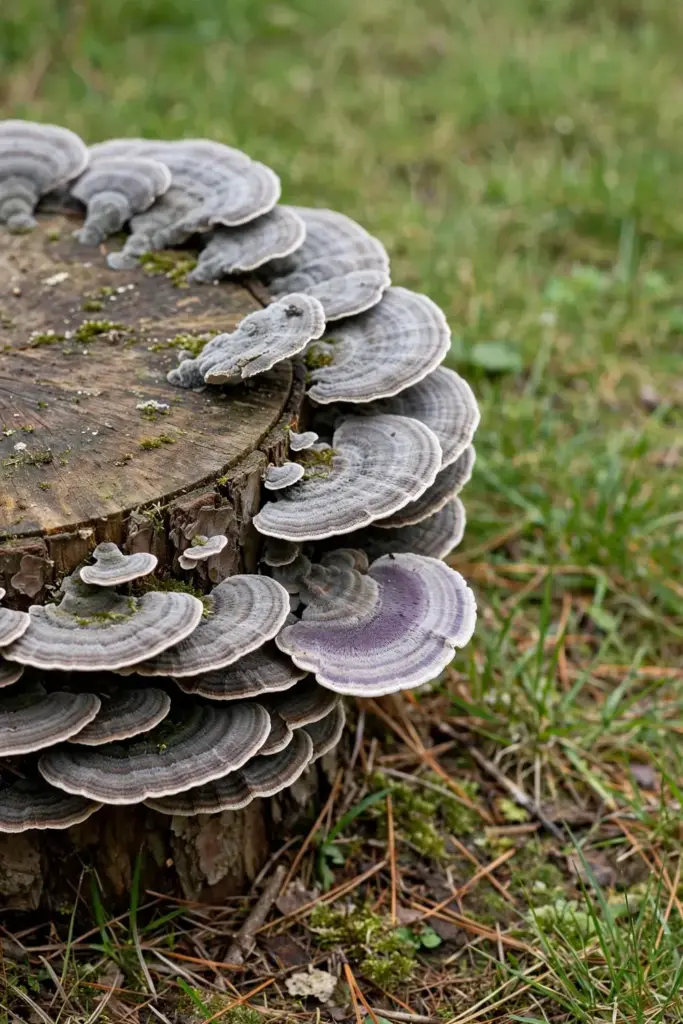
The brackets are the fruiting bodies, and they release spores that seed new dead wood. Spores landing on sound bark of a healthy pine find no dead wood to colonize. A healthy pine stands outside the reach of this fungus.
Let the log or stump decay in place when it sits out of the way. Decay feeds soil life, and the wood returns to the ground on its own schedule.
2. Clear Dead Wood That Blocks Paths or Beds
Clear dead wood that blocks a path, a bed, or a mowing line. Haul it out. The brackets go with the wood.
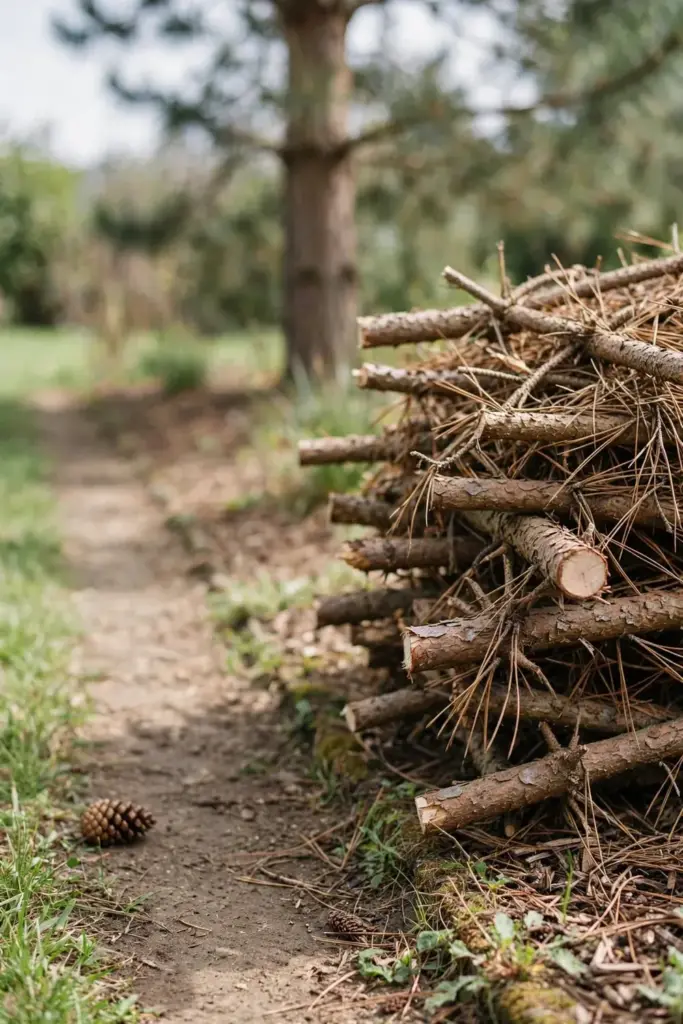
Cut dead branches off the living pine with clean cuts at the branch collar. The spring pruning techniques guide shows how a clean cut closes fast. A ragged stub dies back and becomes more dead wood for decomposers.
Keep cut wood off the lawn until you haul it. A pile of dead branches on grass smothers the grass under it, and the pile invites pests that a clear yard avoids.
3. Water the Living Pine Through Dry Spells
Water the pine deeply when weeks pass without rain. Drought stress weakens a tree and opens the door to real killers.
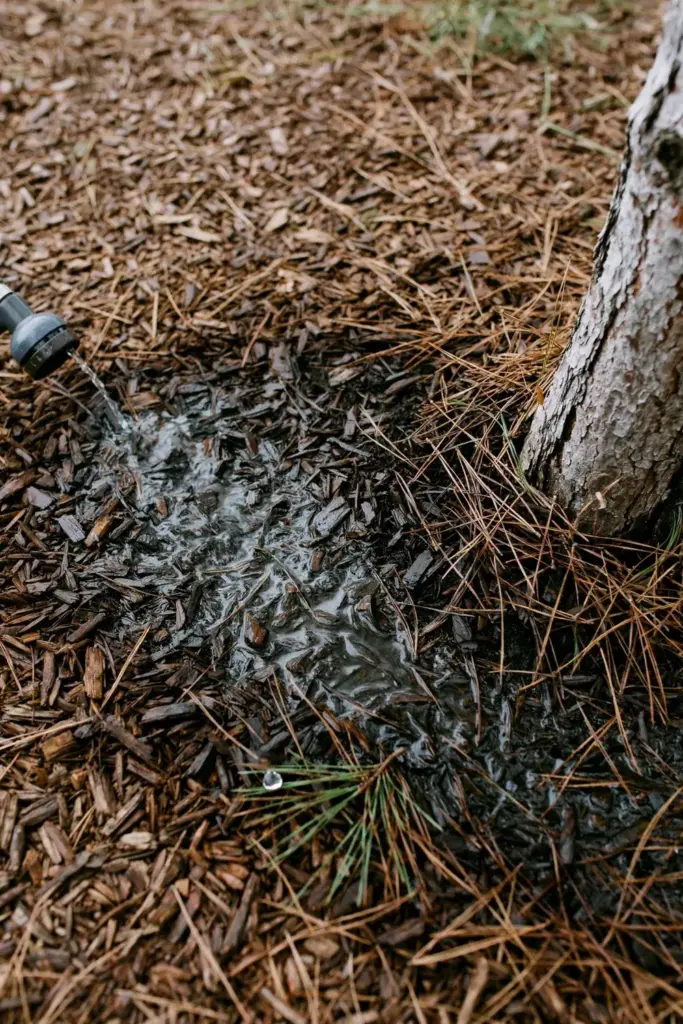
Soak the ground under the canopy. Keep the spray off the trunk. A deep soak beats a daily sprinkle, because surface water never reaches the feeder roots.
Skip watering when rain does the job. Wet feet rot roots, and rot invites worse trouble than a bracket fungus.
4. Mulch the Root Zone, Not the Trunk
Spread mulch in a wide ring under the canopy. Mulch holds soil moisture and cools roots in summer heat.
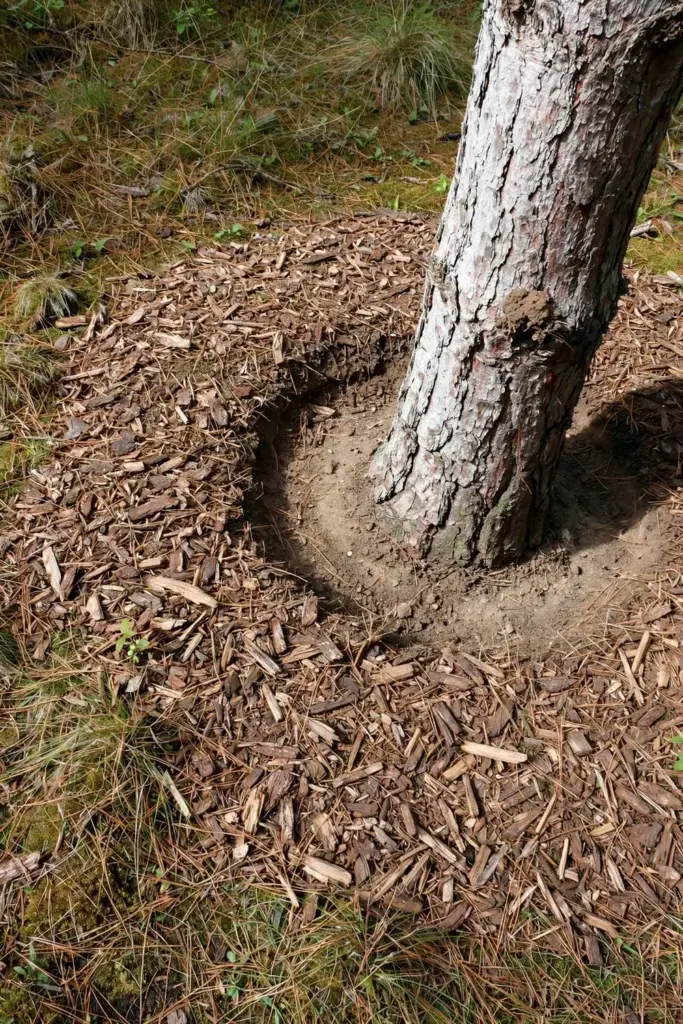
Keep mulch off the trunk. A mulch pile against bark traps moisture and rots the bark it touches. Leave a clear gap of bare soil around the trunk base.
The soil health guide covers how mulch and organic matter build the soil a tree stands in.
5. Check the Canopy Once a Year
Check the canopy once a year, in full needle. Full needles and steady shoot growth mean a healthy pine.
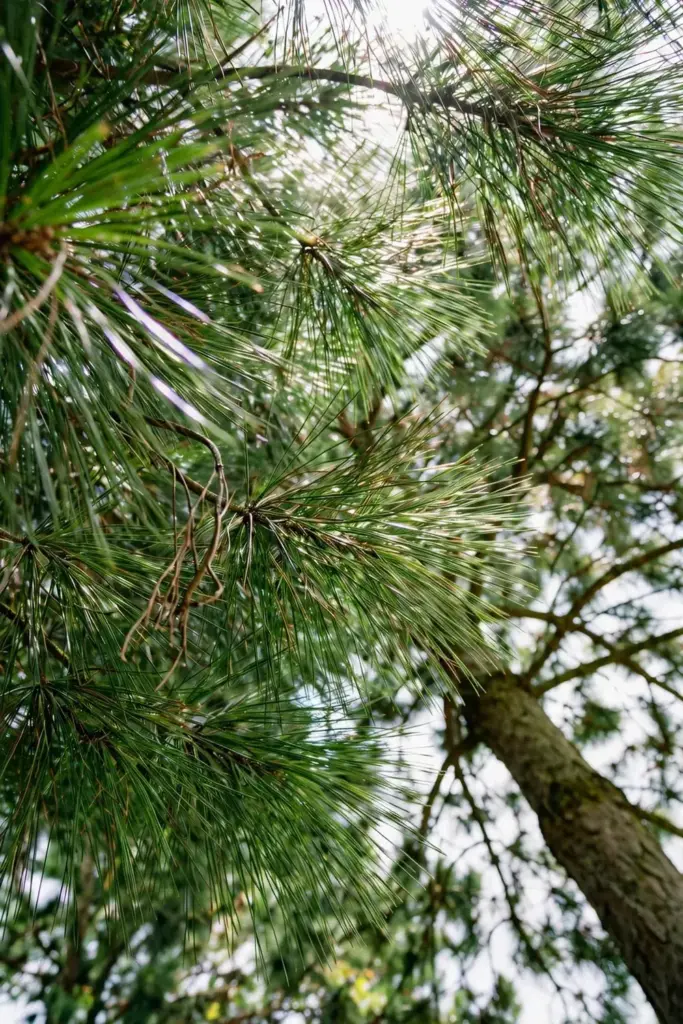
Note what changes. Thinning needles, dead shoot tips, or a bare crown section point at a different problem, and that problem may need an arborist.
A bracket check without a canopy check misses the tree. The canopy reports health. The bracket only reports dead wood.
The One Decay Problem You Must Not Confuse It With
Wood Rot is a different problem with a different fix. Wood Rot is the umbrella name for decay inside living trees, where fungi rot wood that still serves the tree. Sapwood Rot decays wood that already died. One rots a living tree, and the other cleans up after death.
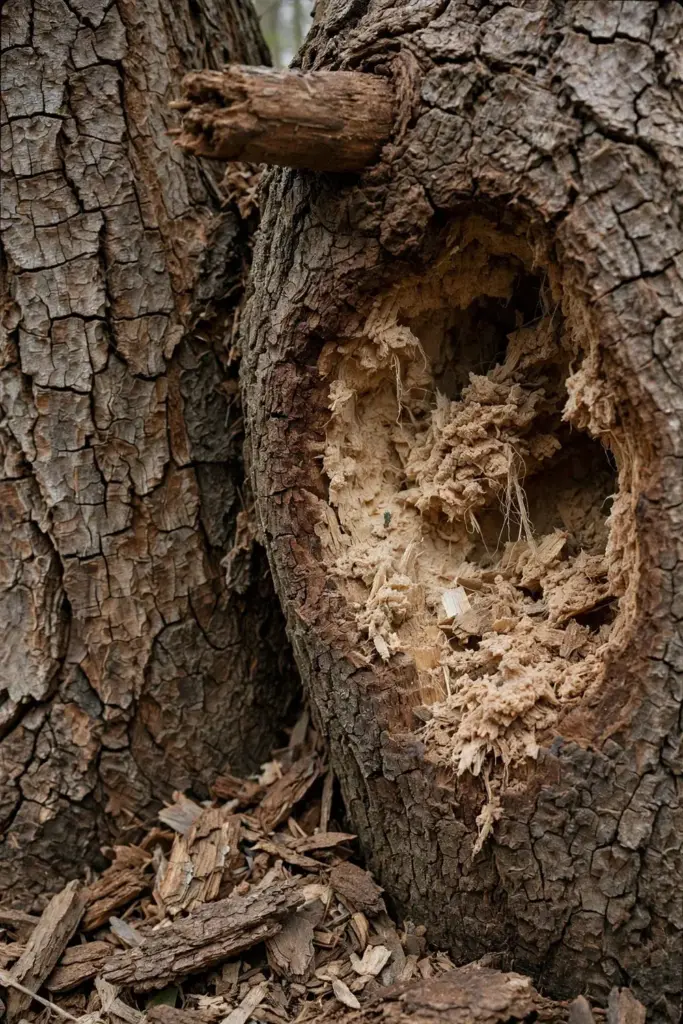
The signs differ from Sapwood Rot. Soft, spongy, or crumbly wood in a living trunk, cavities, deep cracks, conks on the trunk or roots, and a thinning canopy point at decay inside a living tree. That tree may stand less steady in wind, and it needs an arborist to judge stability.
Pines face other real killers too. Diplodia tip blight attacks living pines and kills shoot tips. A pine with dying shoot tips and thinning needles needs a name, and the name decides the response. Sapwood Rot never earns that call. Decay inside a living tree can.
Frequently Asked Questions
No. Sapwood Rot feeds on sapwood that is already dead, and it never attacks living tissue. A living white pine keeps growing, keeps leafing, and keeps adding new wood while the fungus works through a dead log or stump nearby. Brackets on a stump beside a healthy pine say nothing about the pine. Judge the living tree by its canopy. Full needles and steady shoot growth mean the pine stands healthy.
No. No spray reaches decay inside dead wood, and the living pine needs no rescue. Fungicides cost money and add chemical load to the yard, and spending either on a decomposer buys nothing. Save the spray budget for a disease that answers to it. Water the pine in drought, mulch the root zone, and keep mowers and trimmers off the trunk. Those moves help the living tree. A spray does not.
It will not attack a living pine. The fungus colonizes wood that is already dead, so a healthy pine with sound bark stands outside its reach. Brackets may open on more dead wood nearby as logs and stumps decay, and that spread still harms nothing living. Watch the canopy instead. Thinning needles or dying shoot tips point at a different problem, and that problem may need an arborist.
Look at the host and the underside. Sapwood Rot grows on conifer wood, and its fresh pore surface runs purple to violet before it fades. Turkey tail grows on hardwood, and its pore surface stays cream to tan. The caps look alike from above, so flip a bracket and check the underside. When the host is a pine log or stump and the pores show purple, the bracket fits Trichaptum abietinum. Field signs point, and microscopy settles close calls.
Where to Go From Here
Walk out and look at the wood. Thin gray brackets with a purple pore surface on a pine log or stump mean Sapwood Rot, and Sapwood Rot means no action.
Water in drought and mulch the root zone. Keep the mower off the bark. Check the canopy once a year. Call an arborist when a living trunk turns soft or spongy, or when the canopy thins.
Sapwood Rot is the decomposer that asks nothing of you. Give the pine water and mulch. Keep the mower off the bark. The fungus handles the dead wood.