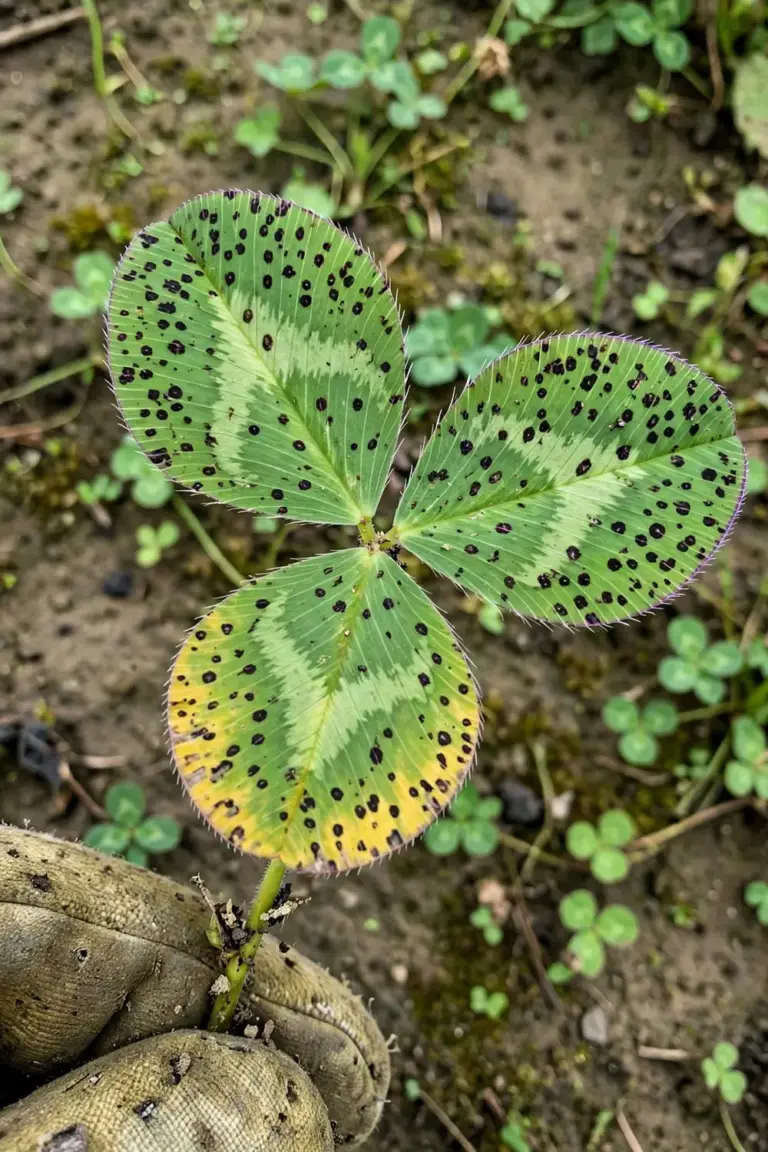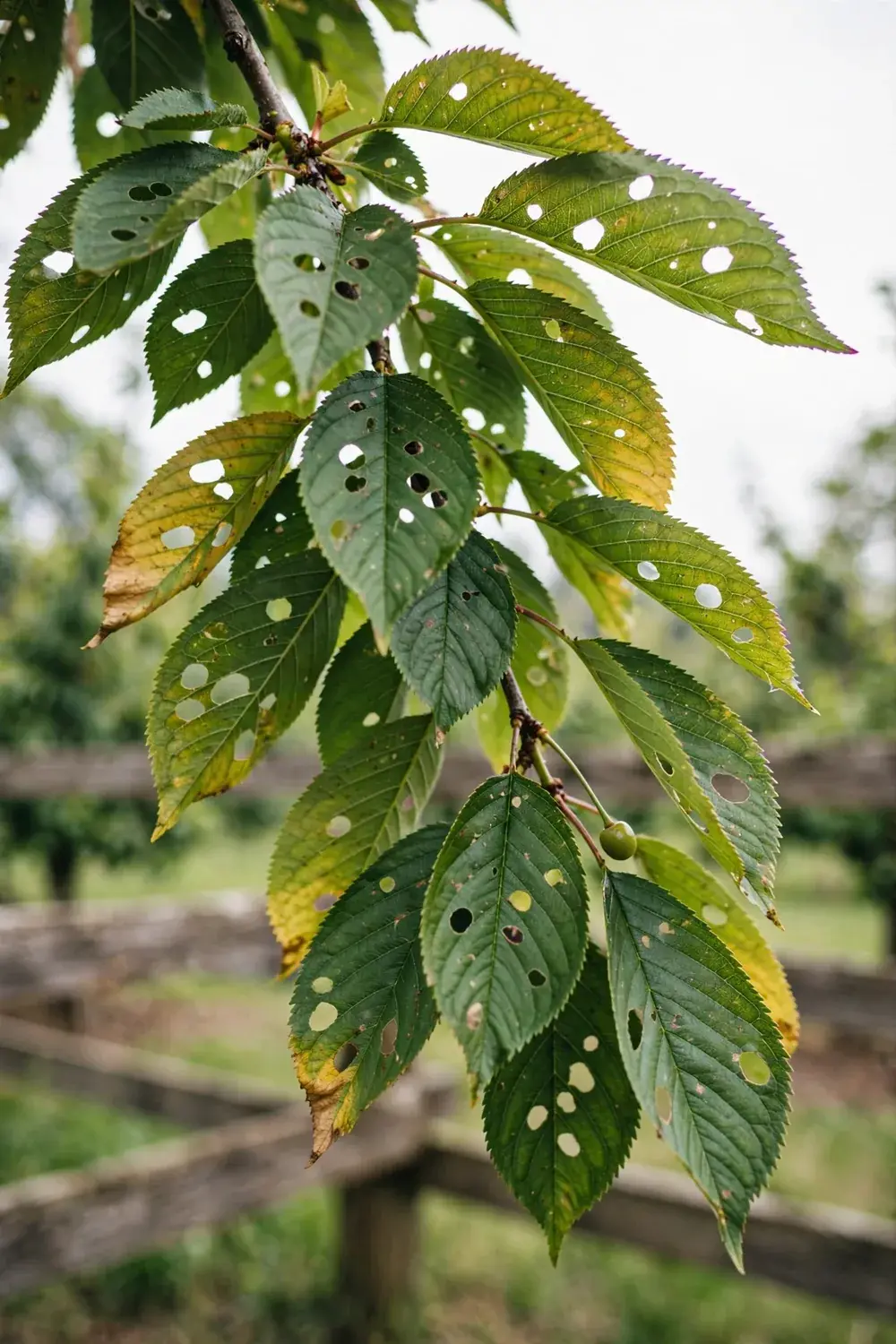

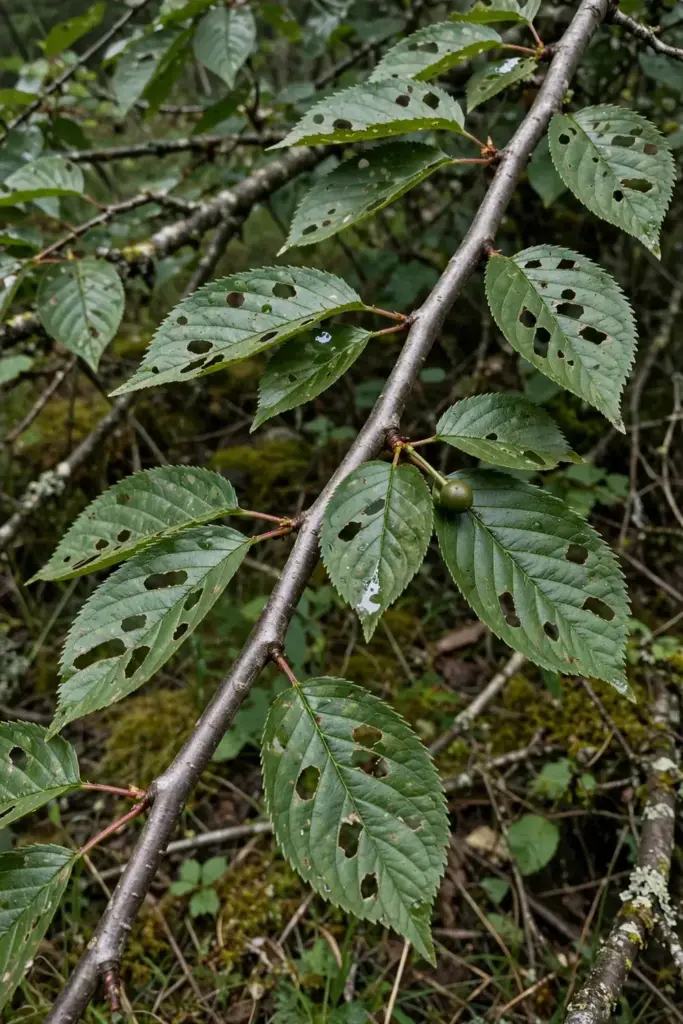
Shothole cherry leaf spot is a symptom phase, not a separate disease. It is the stage of cherry leaf spot when dead spots, after 6 to 8 weeks, drop out of the leaf and leave round holes. The fungus Blumeriella jaapii drives the fungal side. A bacterium, Pseudomonas syringae pv. syringae, can leave the same holes on chokecherry.
I have learned to read the holes as a question, not a verdict. A leaf with a few holes still photosynthesizes around them, and a tree with a full canopy shrugs off a scattering of spots.
The name comes from the Clemson index entry for chokecherry, which lists the condition under the genus Coccomyces only, with no species attached. That genus-only label is the first clue that the name describes a symptom on one host, not a standalone disease. The holes form the same way on cherry and chokecherry, and the response starts the same way too.
1. What Shothole Cherry Leaf Spot Actually Is
Shothole cherry leaf spot is cherry leaf spot at its hole stage, on cherry and chokecherry: spots appear first, dead centers drop out later, and the holes are the end of that process. They are not a second disease arriving after the first.
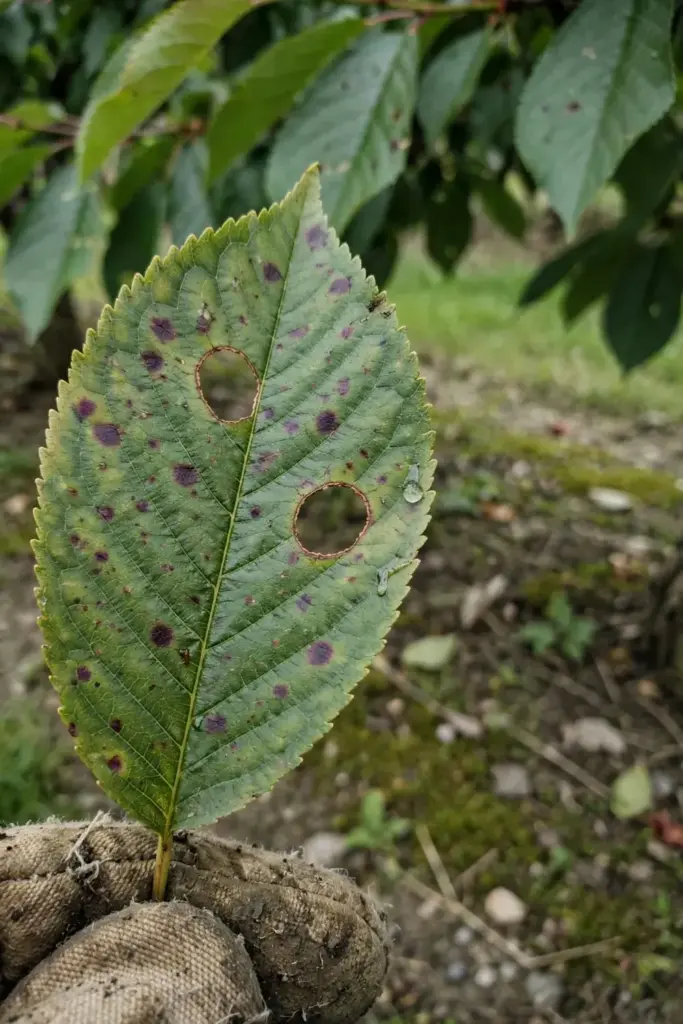
The naming takes some untangling. The fungus behind the fungal side is Blumeriella jaapii, formerly Coccomyces hiemalis. Its asexual stage also carries the name Cylindrosporium padi. One fungus, three labels. If the tree losing leaves is a cherry tree, the Cylindrosporium leaf spot guide carries the full cherry account.
Chokecherry is the host on the Clemson row, and chokecherry is a windbreak, ornamental, and wild plant rather than a home-garden fruit crop. Agriculture and Agri-Food Canada states that leaf spot on chokecherry can be caused by either a fungus or a bacterium, both causing the typical shot-hole lesions characteristic of the disease. The same page warns that heavy infections often lead to premature defoliation, and that repeated infections eventually lead to tree decline. The two agents share one symptom. They do not share one treatment.
2. How the Holes Form on Cherry and Chokecherry Leaves
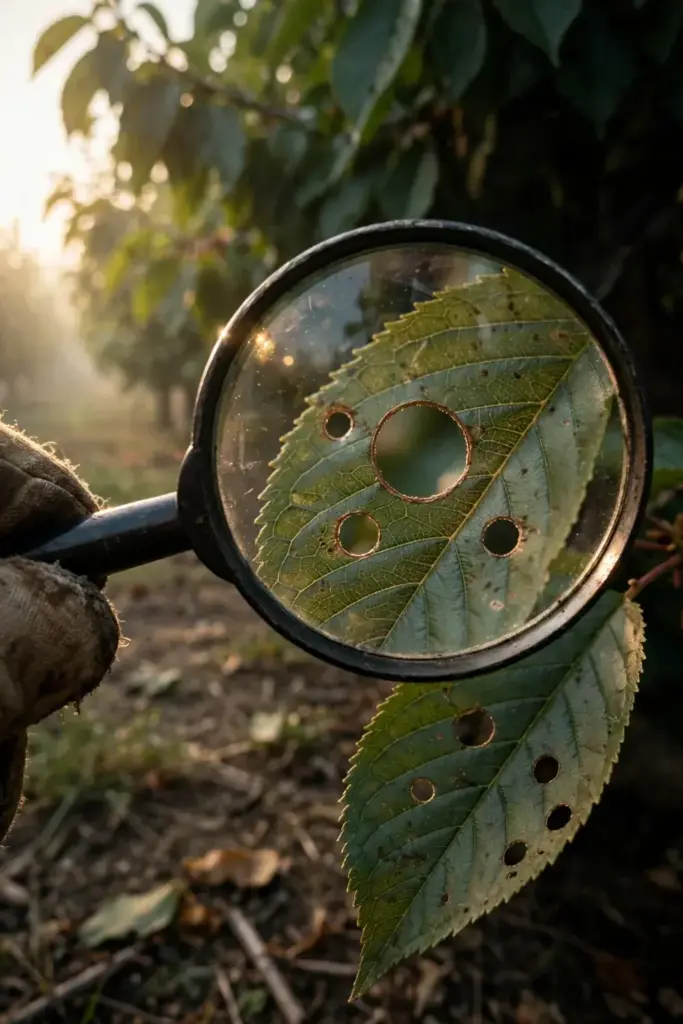
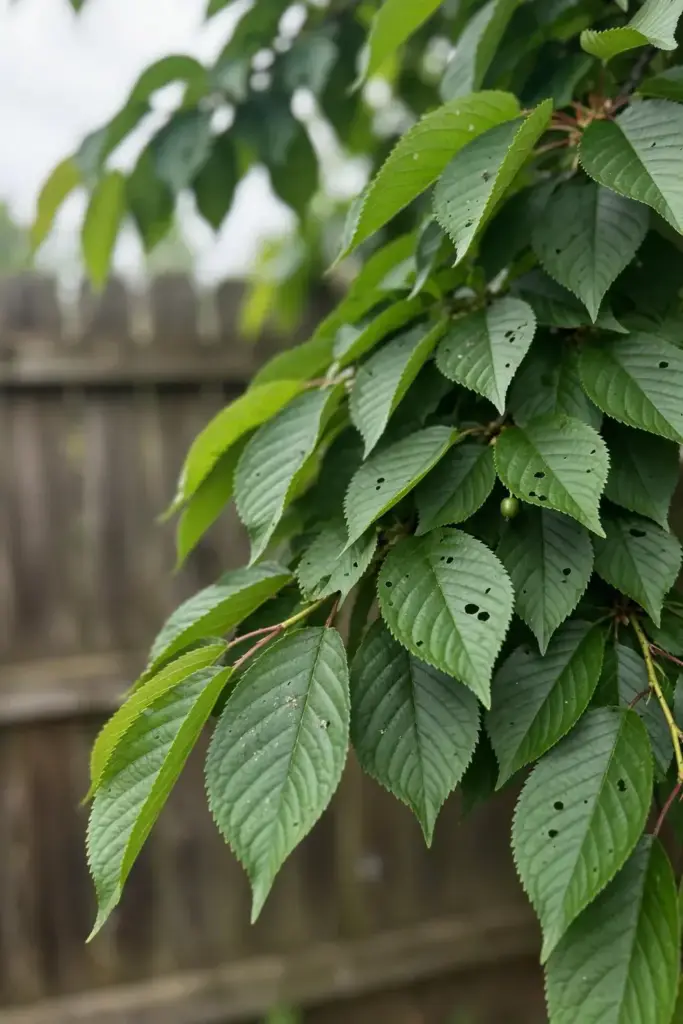
The holes form in four steps: a spot appears, the tissue inside the spot dies, the leaf builds a cork layer around the dead patch, and the dead center separates and falls out, leaving a clean round hole behind.
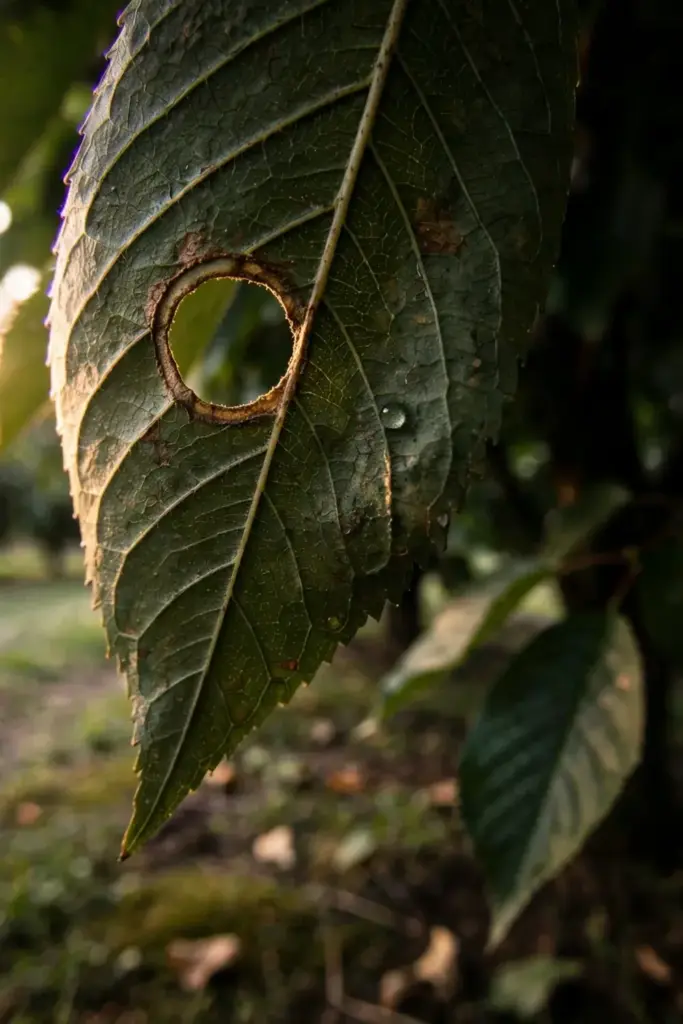
Purdue Extension describes this cork layer in its account of shot hole leaf spot of Prunus, noting that the layer sometimes forms a few millimeters beyond the edge of the dead tissue. The same account notes that the name refers to the holes in the foliage as if the leaves were shot with a gun. The mechanism is the leaf sealing off damage, not an insect chewing holes.
Timing runs slow. Ohio State University Extension reports that the spots enlarge to about 1/4 inch in diameter and turn reddish brown, and that after 6 to 8 weeks the centers of the spots may dry up and drop out, giving a shot-hole appearance. The same source adds that the shot-hole effect is more common on sour cherries than on sweet cherries. A hole you see in July may trace back to a spot that formed in May.
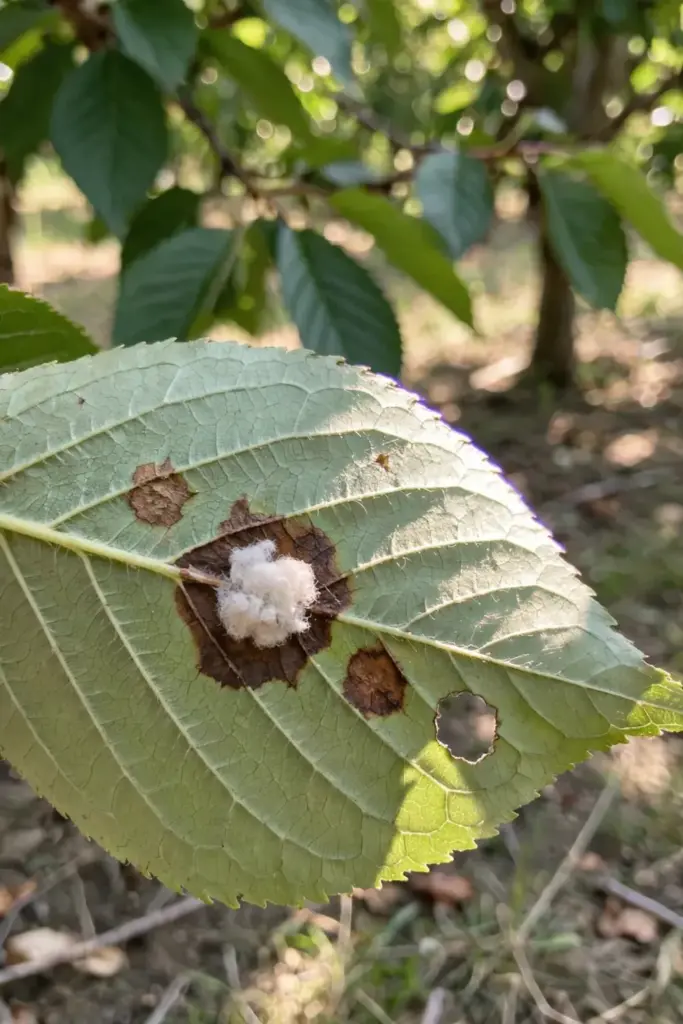
Wet leaves drive the infection. Ohio State University Extension publishes a wetness table showing that at 63 to 68 degrees Fahrenheit, about 5 hours of leaf wetness is enough for infection. Five hours is one rainy night or one heavy dew that lingers past sunrise. In humid weather, a white spore mass may show on the underside of still-intact lesions. That mass points toward the fungal side. Dry weather hides it, so a dry-afternoon check can miss it.
3. Shothole Cherry Leaf Spot vs Bacterial Shot Hole vs Shot-Hole Disease
Three lookalikes share one hole pattern. The fungal side and the bacterial side both produce shot-hole lesions on chokecherry. Shot-hole disease, caused by the fungus Wilsonomyces carpophilus, leaves the same holes on stone fruit and also marks buds, twigs, and fruit. The holes alone cannot separate the three. The overwintering site, the underside sign, and the branch symptoms can.
| Clue | Fungal Side: Blumeriella Jaapii | Bacterial Side: Pseudomonas Syringae | Shot-Hole Disease: Wilsonomyces Carpophilus |
|---|---|---|---|
| Organism | Fungus | Bacterium | Fungus |
| Overwintering site | Fallen leaves | Cankers on branches | Buds and twig cankers |
| Underside sign | White spore masses on intact lesions in humid weather | No spore masses | No white spore masses |
| Branch and twig marks | None from the fungus itself | Cankers and gum on branches | Cankers on branches, plus fruit lesions |
| First home move | Rake and remove fallen leaves | Check branches for cankers and confirm the diagnosis before spraying | Read the dedicated shot-hole disease guide, which covers that disease in full |
Field identification sorts suspects. A lab names the agent. Leaf appearance alone does not separate the fungal side from the bacterial side, and a fungicide does nothing against bacteria. When branch cankers and gum dominate the picture, the problem may be bacterial canker rather than leaf spot, and the site’s bacterial canker guide covers canker care in fruit trees.
4. 5 Moves That Break the Cycle
Five moves carry the whole response. They all aim at the same weak point. The fungus winters in fallen leaves, and the bacterium winters in branch cankers, so every move below removes shelter, removes wetness, or protects new leaves before infection lands.
Rake and Remove Fallen Leaves
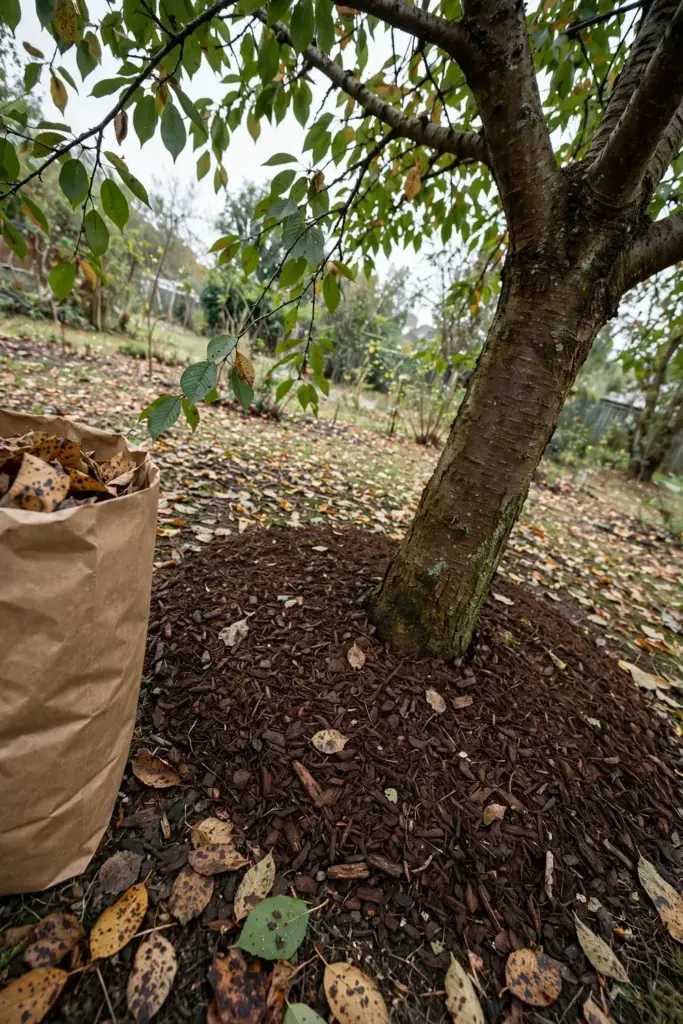
Rake every fallen leaf from under every cherry and chokecherry in autumn, after leaf fall finishes. Work outward from the trunk past the drip line, since wind scatters spotted leaves beyond the canopy edge. Bag the leaves and remove them from the garden. Iowa State University Extension advises raking and removing fallen leaves to break the disease cycle, since the fungus survives the winter on dead leaves on the ground. This one move cuts next spring’s infection at the source.
Water at the Soil Line
Water at the soil line. Drip lines, soaker hoses, and a slow hose at the base put water on roots, not leaves. Overhead sprinklers wet the whole canopy and hold it wet into the evening, which hands the fungus its 5-hour window on a schedule. If overhead watering is the only option, run it in the morning so leaves dry by midday.
Open the Canopy for Airflow
Prune for air and light. An open canopy dries hours faster than a crowded one, and dry leaves resist infection. Remove crossing branches, inward growth, and dead wood. The site’s spring pruning techniques cover the cuts and the timing for fruit trees. Prune in dry weather, and clean the tools when bacterial disease is suspected.
Protect New Leaves in Wet Springs
New leaves need protection during the wet window, and only during it, because the spring spore wave rises from the litter just as leaves unfold. Protectant fungicide on healthy new leaves, applied before rain, blocks the spores that land there, while spray after the rain, on already infected leaves, protects nothing. Read the label as the whole instruction: it sets the host, the rate, the interval, and the stop rules for your area.
Keep Infected Leaves Out of the Compost
Bag the fallen leaves from infected trees and remove them from the garden. Do not add them to the home compost pile. Home piles rarely heat evenly enough to destroy the fungus in every leaf, and a pile of spotted leaves becomes a spore bank beside the garden. Municipal green waste collection is the safer outlet.
5. When to Do Nothing and When to Get a Lab ID
Do nothing in most cases. Purdue Extension states that in most cases no management is necessary, since the damage is usually minor and does not cause severe defoliation. A tree with scattered holes and a full canopy keeps photosynthesizing, keeps fruiting, and drops the holed leaves on its own schedule. The holes look worse than they are.
Watch one measure. Leaf drop is the number that matters. Light leaf loss with scattered holes means wait. Significant leaf drop changes the call. Purdue Extension advises that when significant leaf drop is observed, having the cause identified matters so the right management strategy follows. Identification first, treatment second. Treatment aimed at the wrong cause wastes money and can make the real problem worse.
Holes do not heal. A leaf with shot holes keeps those holes until it falls. No spray, feed, or tonic closes them. Do not strip the remaining leaves. A damaged leaf still photosynthesizes around its holes, and a tree that lost half its canopy needs every working leaf it has left. The time to remove leaves is autumn, when they fall on their own and carry the fungus with them.
Frequently Asked Questions About Shothole Cherry Leaf Spot
No. Shothole cherry leaf spot is the hole stage of cherry leaf spot, not a standalone disease. The fungus Blumeriella jaapii drives the fungal side, and the bacterium Pseudomonas syringae pv. syringae can leave the same holes on chokecherry. The Clemson index lists the chokecherry entry under the genus Coccomyces only, with no species attached. Treat the holes as a symptom, find the agent, and act on that.
Rarely on its own. A single season of scattered holes costs a tree little leaf area, and the tree keeps fruiting. Repeated early defoliation drains the reserves a tree needs for winter hardiness and next spring’s growth. That cumulative loss is the real risk, not one bad-looking summer. Rake the fallen leaves each autumn, and escalate to the full protection program when a tree defoliates early two years running.
No, not with certainty. Both agents leave the same round holes once the dead centers drop out. White spore masses on the undersides of intact lesions in humid weather point toward the fungal side. Cankers and gum on branches point toward the bacterial side. Either sign can hide in dry weather or early infection. Send a fresh sample to a local extension clinic when leaf drop turns significant, and act only on the identified cause.
No. Spraying after the holes appear cannot heal holes already there. Fungicides protect healthy leaves only when they go on before infection, and they do nothing against bacteria. Rake the fallen leaves, keep the canopy dry, and wait. Reserve sprays for protecting new leaves through the wet spring window, and read the label for the host, rate, interval, and stop rules in your area.
Where to Go From Here
Walk the tree this week. Flip a few spotted leaves and check the undersides on a damp morning. Rake the litter under every cherry and chokecherry before winter. Those three moves cut next spring’s infection more than any product.
Then set the calendar. Autumn cleanup, dormant-season pruning for airflow, and protection of new leaves through the wet spring window. The cycle is simple and the work is ordinary. The fungus wins when the litter stays. Remove the litter and the garden wins.
More plant care guides live in the Plant Care archive.