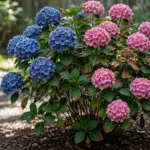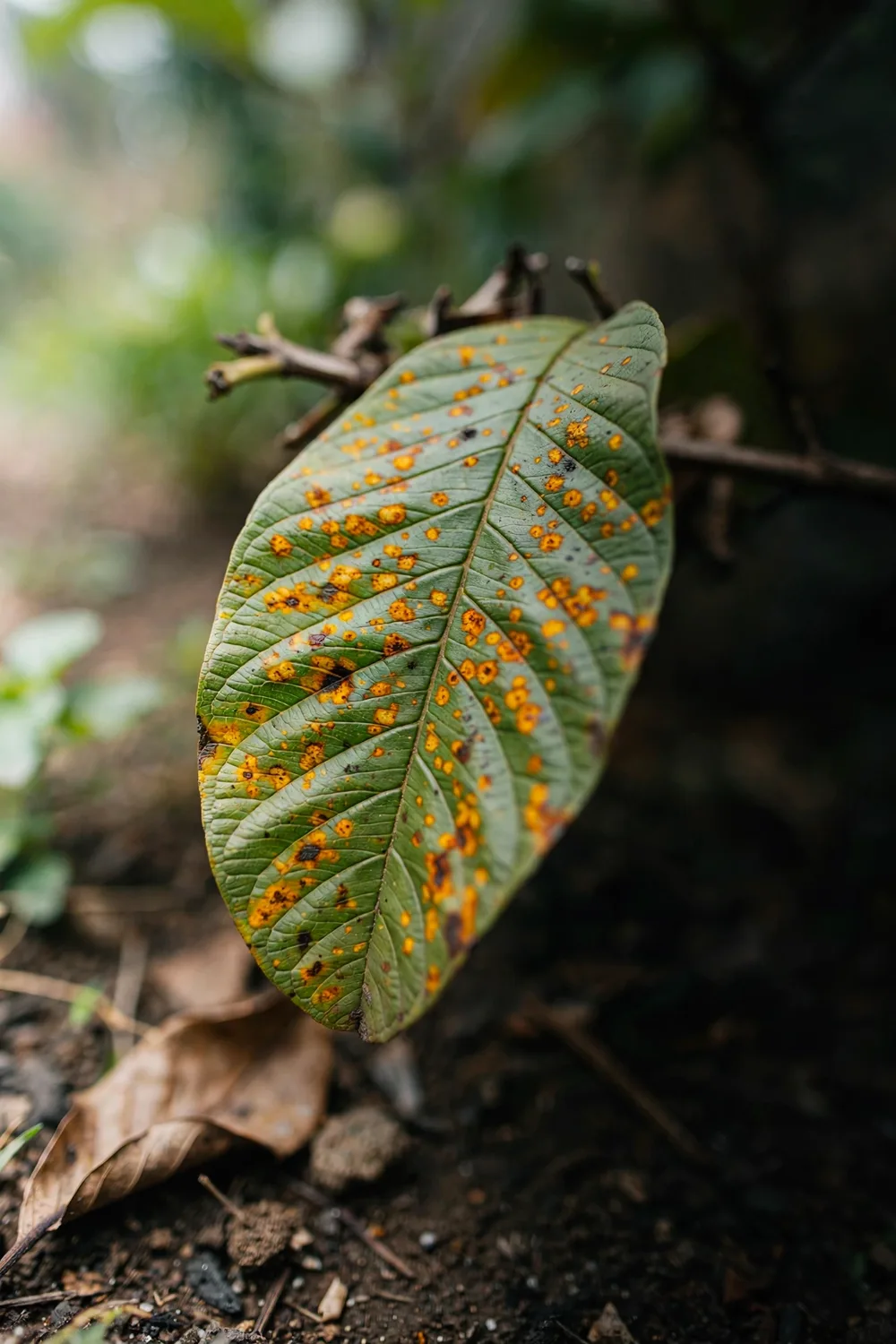

Guava rust is a rust of Myrtaceae. The pathogen is Puccinia psidii, current name Austropuccinia psidii. It attacks 5 young-tissue targets: new leaves, shoots, buds, flowers, and fruit. The 5 strategies below tell you how to read the yellow pustules, how to run the honest home response, and why the biosecurity frame matters.
Start with the honesty. This row is guava rust, not myrtle rust. The pathogen carries several common names (myrtle rust, guava rust, ohi a rust, eucalyptus rust), but this article covers the guava-rust lane only. The biosecurity evidence for myrtle rust is a different commission, not this row.
Start with the second honesty. Guava rust has not been reported on guava in Florida. In Florida, the disease appears on other Myrtaceae hosts (Simpson’s stopper, myrtle, bottlebrush, rose apple, brush cherry, java plum). Guava itself is FISC Category 1 Invasive in Florida, and IFAS does NOT recommend planting guava there. This article does not recommend planting guava in Florida.
What Guava Rust Actually Is
Guava rust is a rust of Myrtaceae. The pathogen is Puccinia psidii, current name Austropuccinia psidii. Clemson lists it as “Puccinia psidii: Guava rust” under Callistemon (Bottlebrush). One pathogen, one host family, one disease.
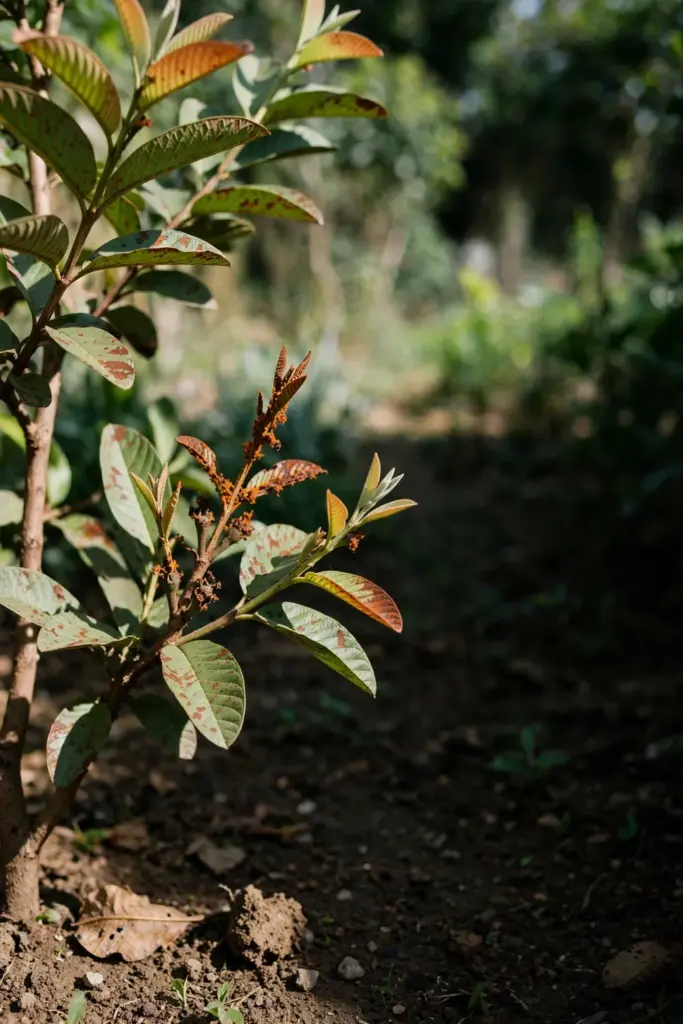
Guava rust is not guava-only. The pathogen infects Myrtaceae broadly: bottlebrush, eucalyptus, melaleuca, myrtle, rose apple, brush cherry, java plum, Simpson’s stopper, ohi a, and more. The guava in the name is historical: the pathogen was first described from common guava (Psidium guajava) in Brazil in the 1880s. The name is the history. The host range is the family.
Guava rust attacks young tissues. New leaves, shoots, buds, flowers, and fruit are the targets. The young tissue is the vulnerability. The mature tissue is the resistance. The flush is the risk.
Guava rust cycles fast. Life cycle as short as 10 to 14 days. Favorable conditions: new tissue, high humidity, free water on the plant surface for more than 6 hours, moderate temperatures around 15 to 25 degrees Celsius. The fast cycle is the spread. The wet leaf is the trigger. The new growth is the window.
How to Identify Guava Rust on Your Guava
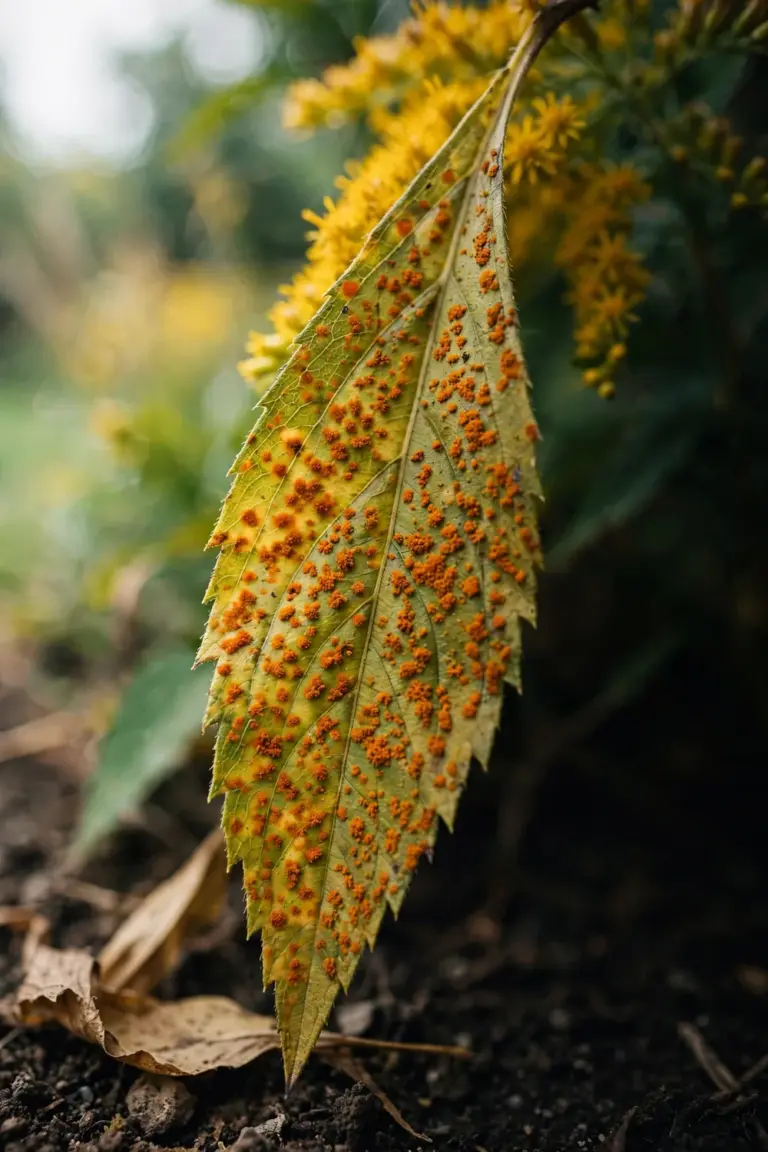
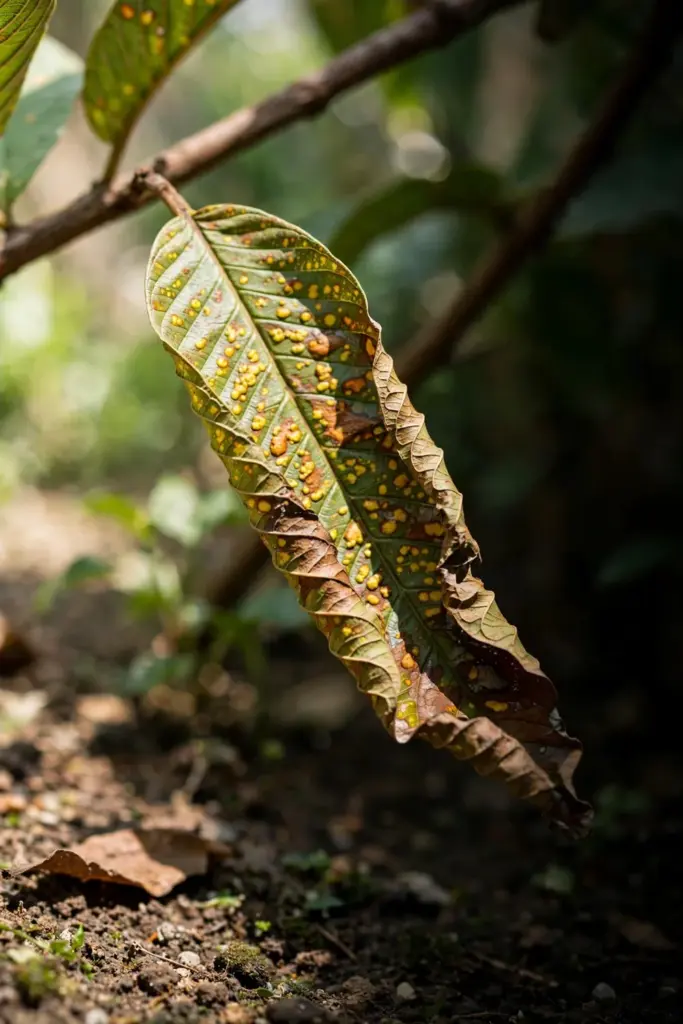
Look for chlorotic specks becoming pustules. First symptoms are chlorotic specks becoming pustules with yellow masses of spores. The chlorotic speck is the start. The yellow pustule is the rust. The spore mass is the confirmation.
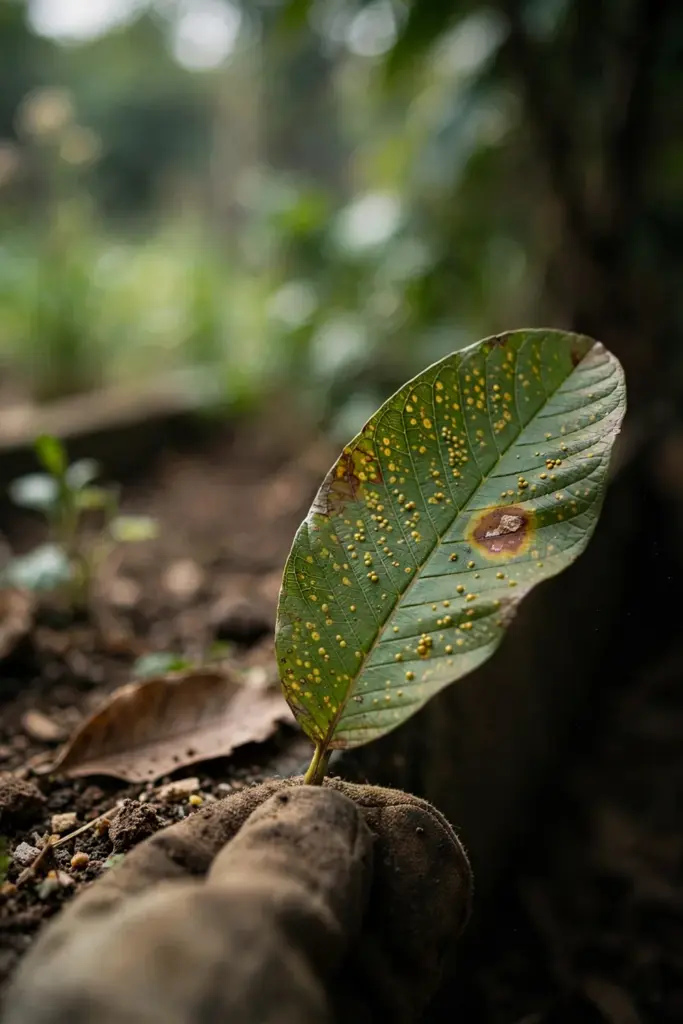
Look for pustules that coalesce. Pustules coalesce into larger patches, so the coalesced patch is the spread and the single pustule is the early sign. The merging is the progression.
Look for leaves that distort. Leaves distort as pustules grow, so the distorted leaf is the damage and the flat leaf is the healthy leaf. The distortion is the sign.
Look for heavy defoliation and dieback. Heavy defoliation, dieback, stunted growth, and sometimes death follow severe infection. The defoliation is the late sign. The dieback is the severe sign. The death is the worst case.
Look for dark-bordered lesions on expanded leaves. On fully expanded leaves, dark-bordered roughly circular brown lesions with yellow halos. The brown lesion is the field sign. The yellow halo is the frame. The circle is the shape.
Look for yellow to orange spores. Spores are distinctive yellow to orange, occasionally encircled by a purple ring. The yellow spore is the rust. The orange spore is the rust. The purple ring is the occasional frame.
Do not confuse with red rust. Red rust (algal spot, Cephaleuros virescens) is a parasitic alga, not a fungus, with velvety orange-brown spots marking the alga. The alga is the red rust, the fungus is the guava rust, and the kingdoms are different.
Do not confuse with anthracnose. Anthracnose (Colletotrichum gloeosporioides) hits mature fruit with sunken dark necrotic lesions and pinkish spore masses in humidity, so the mature fruit is the anthracnose and the young tissue is the guava rust. The stages are different.
Do not confuse with guava wilt. Guava wilt (Fusarium oxysporum f. sp. psidii) is a different disease: the wilt kills the tree, the rust defoliates the tree, and the pathogens are different.
Strategy 1: Scout for Onset and Conditions
Scout trees for onset and conducive conditions. The scout is the early warning, the missed onset is the spread, and the check is the habit.
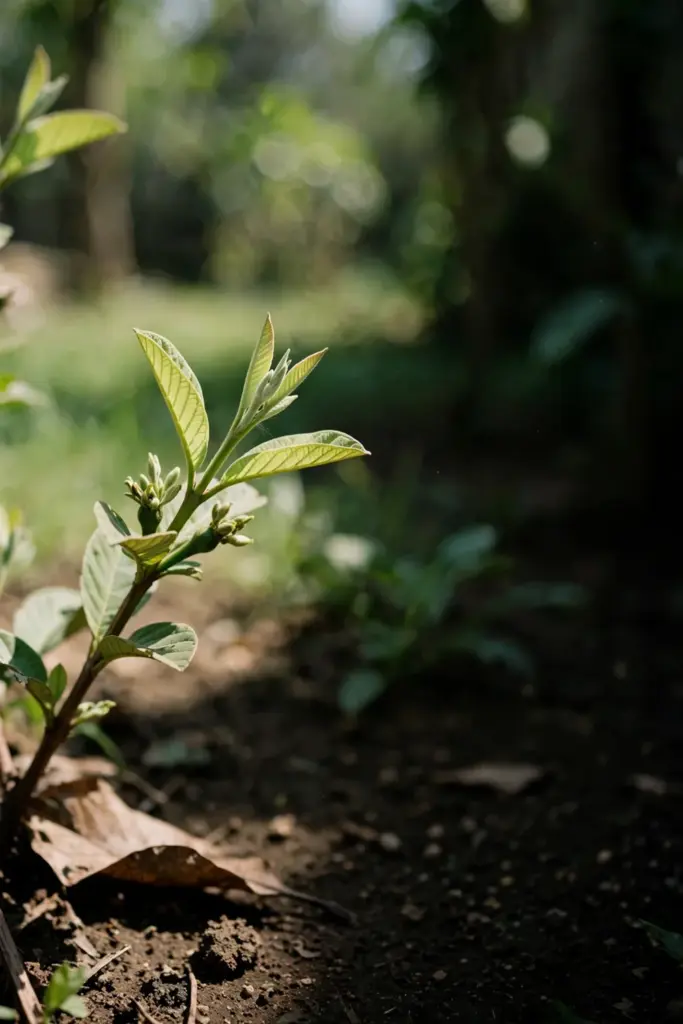
Check new growth first. New leaves, shoots, buds, flowers, and fruit are the targets. The new growth is the check. The old growth is the relief. The flush is the risk.
Watch wet weather. Free water on the plant surface for more than 6 hours favors infection. The wet leaf is the trigger. The dry leaf is the defense. The weather is the clock.
Strategy 2: Prune for Light and Air
Prune the canopy for light and air. The open canopy dries faster, the dense canopy stays wet, the pruning is the airflow, and the density is the trap.
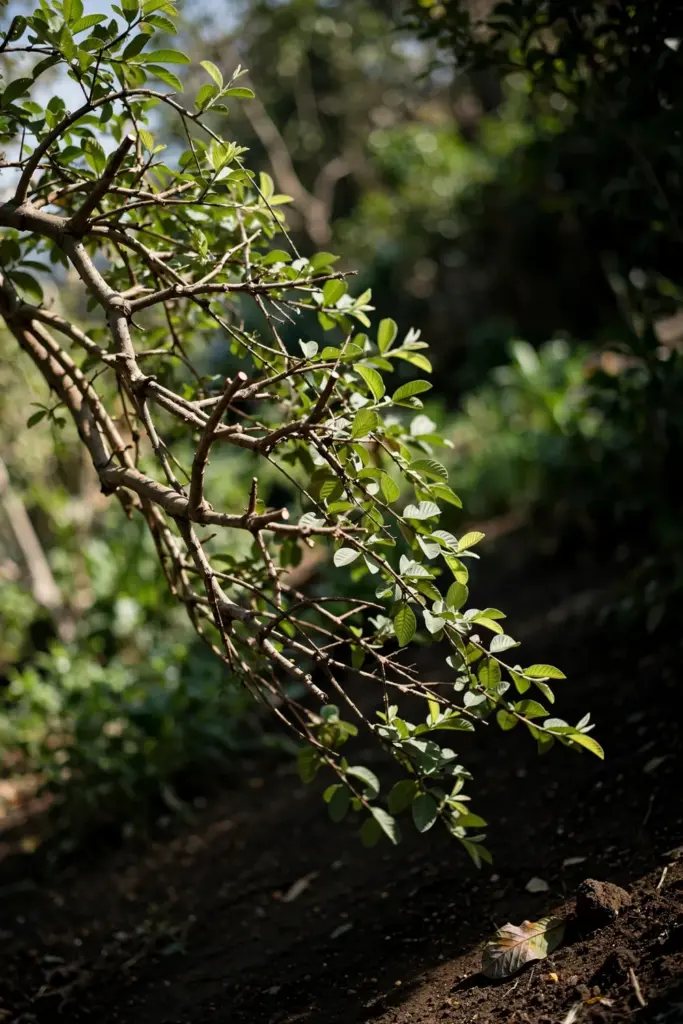
Remove crossing branches. Crossing branches rub and shade, so the crossing branch is the wet pocket and the removed branch is the airflow. The cut is the habit.
Water at the base. Water at the base keeps leaves dry, so the wet leaf is the trigger and the dry leaf is the defense. The base is the watering place.
Strategy 3: Sanitize and Remove Infected Tissue
Remove infected tissue promptly. The infected tissue is the spore source, so the removed tissue is the removed inoculum. The prompt removal is the cut.
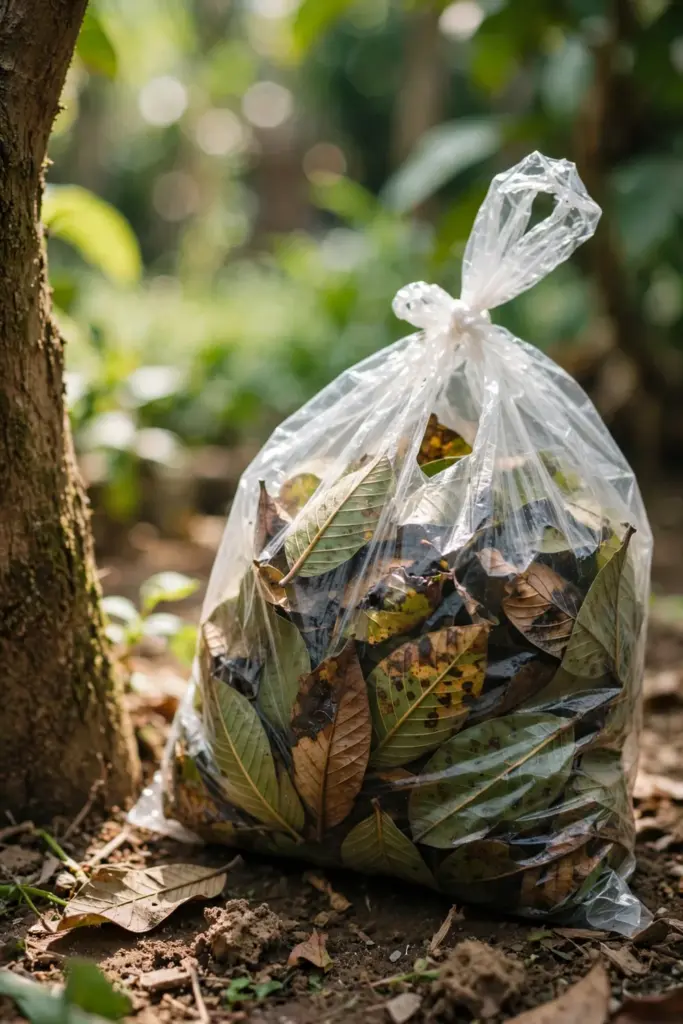
Destroy infected leaves and shoots. Prune and destroy affected leaves, since the destroyed leaf is the removed spore and the left leaf is the spread. The destruction is the break.
Clean up fallen leaves and fruit. Fallen material carries spores, so the fallen leaf is the reservoir and the clean ground is the fence. The cleanup is the habit.
Strategy 4: Check Local Biosecurity Rules
Check local biosecurity rules before acting. Guava rust is a biosecurity disease in several regions, so the local rule is the law, the home habit is the second line, and the reporting is the first line. The Plant Care archive carries the site’s other biosecurity explainers for readers who want the pattern across crops.
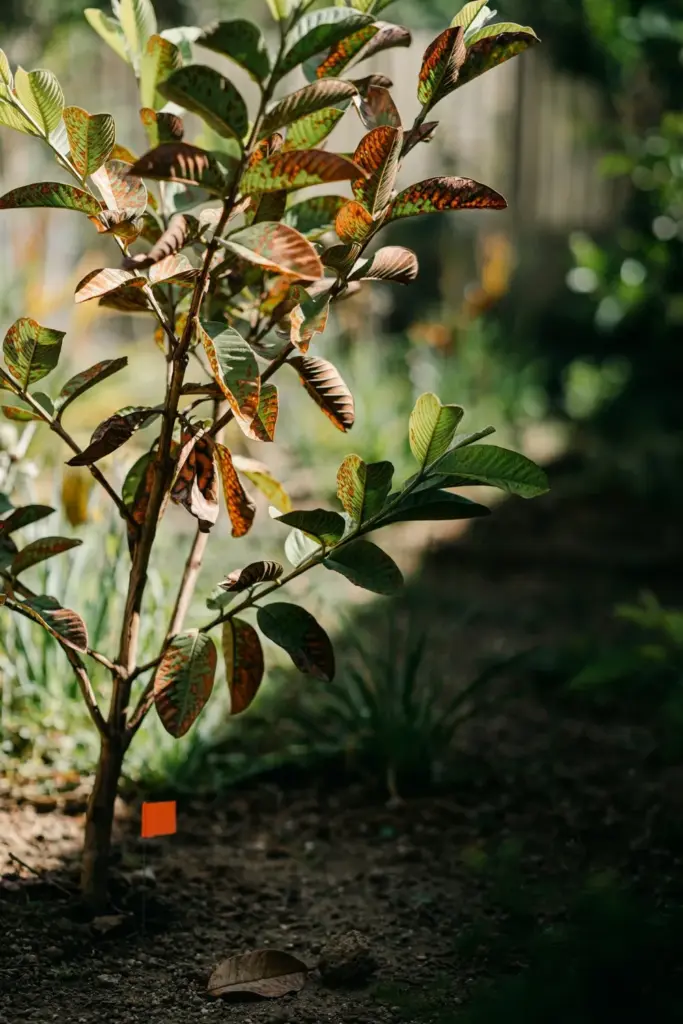
Report suspected finds where reporting is required. Some regions require reporting of rust on Myrtaceae, so the report is the biosecurity and the silence is the spread. The call is the habit.
Do not move infected material. Moving infected material spreads the pathogen, so the moved cutting is the vector and the left cutting is the containment. The stillness is the fence.
Strategy 5: Do Not Spray Your Way Out
Do not carry Brazil fungicide trial programs as home advice. Brazil trials (chlorothalonil, mancozeb, triadimenol, azoxystrobin at trial rates, bi-weekly commercial schedules) are commercial orchard guidance, not home advice. The trial is the research. The home is the garden. The rates are not the home rates.
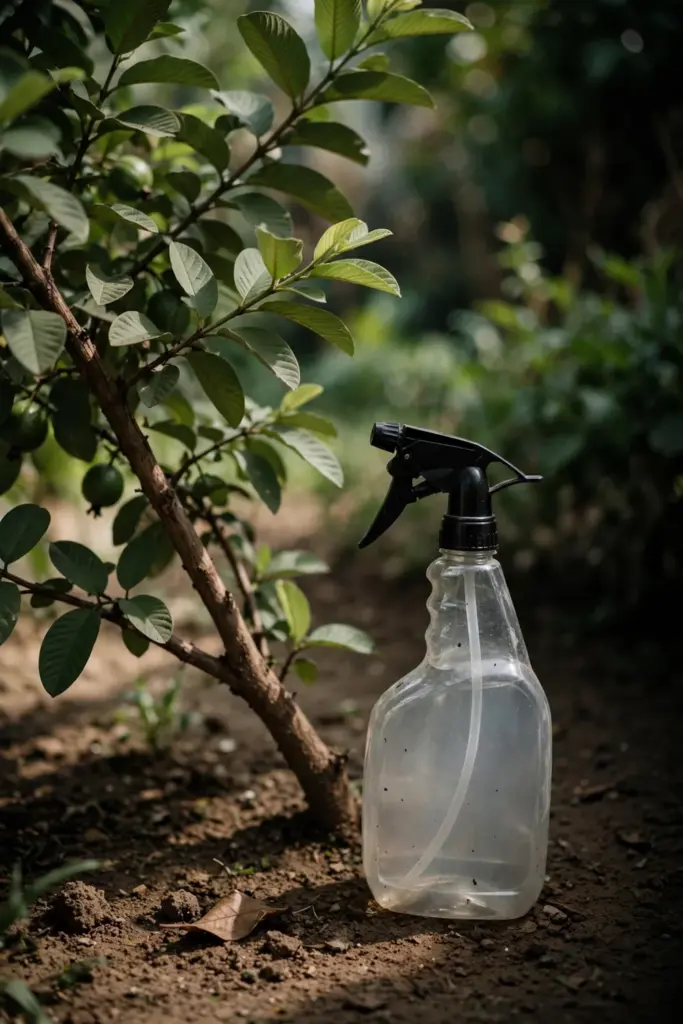
Do not spray without a local label. The label governs every spray decision, the rate is the label rate, and the label is the law, so the unlabelled spray is the violation.
Run the cultural program first. Prune for airflow, sanitize, remove infected tissue, and check biosecurity. The cultural program is the home answer. The spray is not the first step. The spray is the last resort.
Living With Guava Rust on Guava You Already Grow
A guava tree with rust is a tree to manage, not a tree to abandon. Scout for onset, prune for light and air, sanitize and remove infected tissue, check local biosecurity rules, and do not spray your way out. The rust will still appear, but it will appear on a few shoots, not on the whole tree.
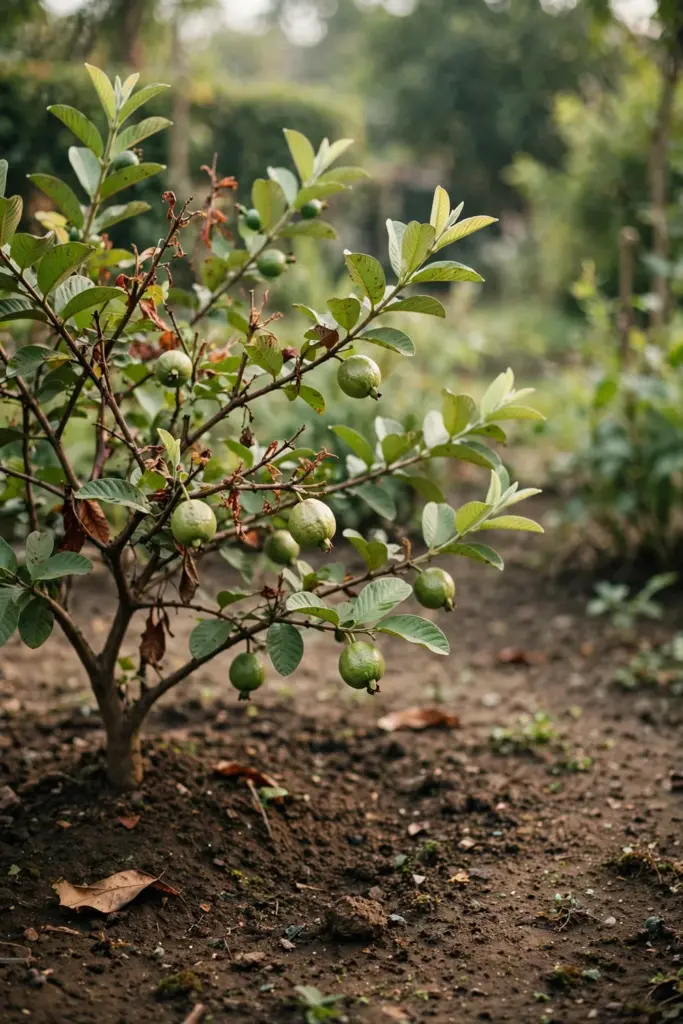
Stop three habits. Do not let the canopy stay dense and wet. Do not leave infected leaves on the tree or the ground. Do not move infected material off the property. Keep those three lines unbroken and the guava rust stays cosmetic. The Plant Care archive collects the site’s disease coverage for the next problem the garden throws up.
Frequently Asked Questions
Same pathogen, different commission. The pathogen Puccinia psidii (current name Austropuccinia psidii) carries several common names: myrtle rust, guava rust, ohi a rust, and eucalyptus rust. This article covers the guava-rust lane only. The myrtle-rust biosecurity evidence is a different commission, not this row.
No. In Florida, guava rust has not been reported on guava. It appears on other Myrtaceae hosts (Simpson’s stopper, myrtle, bottlebrush, rose apple, brush cherry, java plum). Guava itself is FISC Category 1 Invasive in Florida, and IFAS does NOT recommend planting guava there.
Check the tissue and the stage. Guava rust attacks young tissues with yellow pustules, distortion, and defoliation; on expanded leaves it shows dark-bordered brown lesions with yellow halos. Anthracnose hits mature fruit with sunken dark necrotic lesions and pinkish spore masses in humidity. The young tissue is the rust. The mature fruit is the anthracnose.
Not as the first step. UF/IFAS notes that fungicides are needed to control guava rust in production settings, but Brazil trial programs (chlorothalonil, mancozeb, triadimenol, azoxystrobin at trial rates, bi-weekly commercial schedules) are commercial orchard guidance, not home advice. Home actions come first: scouting, pruning for airflow, sanitation, and biosecurity. If you spray, use only a product labeled for guava rust in your state and follow the label.
It can, if severe. Heavy defoliation, dieback, stunted growth, and sometimes death follow severe infection. Most home trees show leaf distortion and defoliation, not death. Scout early, prune for airflow, and remove infected tissue promptly. The early removal is the protection. The skipped removal is the spread.
Where to Go From Here
Guava rust rewards the gardener who scouts for onset, prunes for light and air, sanitizes and removes infected tissue, checks local biosecurity rules, and does not spray their way out. Scout, prune, sanitize, check biosecurity, and skip the spray.
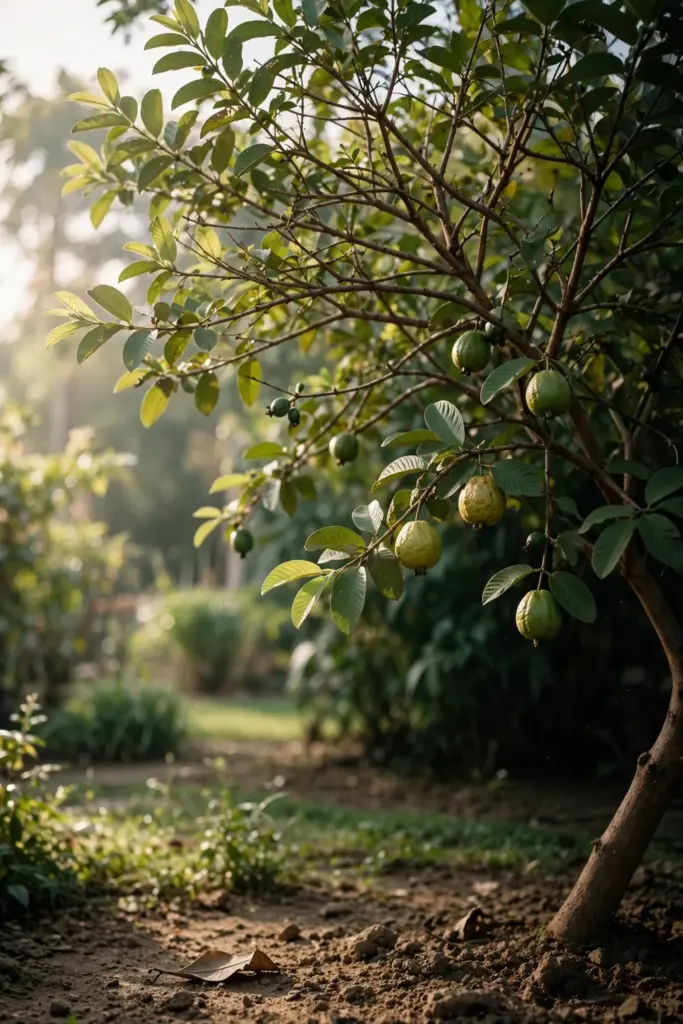
Next season, start with an open canopy. A tree with light, air, prompt removal, and biosecurity will hold guava rust to a few shoots. The UF/IFAS Florida Disease Guide for Guava is a useful companion for the Florida picture, since it sets the home-garden response here against the evidence behind it.