
Ramorum blight has no cure. The 9 strategies below keep Phytophthora ramorum out of the garden and out of the region, starting with the buying habits that stop the pathogen at the nursery gate.
The pathogen is a water mold, not a true fungus. It causes ramorum blight on rhododendron, camellia, viburnum, lilac, Pieris, and mountain laurel, and sudden oak death on oaks and tanoak. One pathogen causes both syndromes.
The rest of this page runs the order a gardener should follow. Understand the pathogen first, learn the suspect signs, then work the 9 strategies from buying safe to reporting. I have learned that the report filed early protects more trees than any treatment bought after symptoms show.
What Ramorum Blight and Sudden Oak Death Actually Are
Ramorum blight and sudden oak death are two syndromes of one pathogen. The water mold Phytophthora ramorum causes ramorum blight and sudden oak death.
The distinction matters. Ramorum blight is the twig and leaf disease on nursery and landscape plants such as rhododendron and camellia. Sudden oak death is the trunk canker disease that kills oaks and tanoak. Same pathogen. Different host, different syndrome. This article never treats them as two diseases, and it never builds a differential between them.
The United States Department of Agriculture Animal and Plant Health Inspection Service states the core facts in its disease alert on Phytophthora ramorum. Phytophthora ramorum is an invasive plant pathogen that causes sudden oak death, ramorum blight, ramorum dieback, and Phytophthora canker diseases. There is no cure for the diseases caused by Phytophthora ramorum. Preventing the movement of infected plants and materials is the best way to protect forests and landscape plants. The water mold can infect over 100 plant species. In coastal California and southern Oregon, it causes sudden oak death, a disease that has killed millions of trees, primarily tanoak and coast live oak.
The pathogen is a water mold, an oomycete, not a true fungus. That classification matters because it explains the wet-weather behavior. Phytophthora ramorum thrives in wet conditions. It moves in water, in wet soil, and on wet plant material. It survives in leaf litter, in soil, and in infected nursery stock. Dry conditions slow it. Standing water, overhead irrigation, and wet foliage speed it.
The disease is established in coastal California and southern Oregon, and in parts of the United Kingdom on larch and rhododendron. It is not established across the rest of the United States. That geography shapes the article. Two audiences read it. Gardeners inside infested areas protect their plants and contain the pathogen. Gardeners outside infested areas buy safe, quarantine new plants, and report anything suspect. Both audiences follow the same 9 strategies.
There is no treatment for Phytophthora ramorum infection. Prevention is the best defense. Those two sentences, from the APHIS alert, are the honesty spine of this article. An infected plant is not saved. It is reported, and authorities coordinate its destruction. The article’s value is keeping the pathogen out, not rescuing a plant that already has it.
How to Spot Possible Ramorum Blight in the Garden
| Situation | What It Means | First Action |
|---|---|---|
| Inside an infested area (coastal CA, OR, UK zones) | Pathogen present nearby | Protect, contain, report anything suspect |
| Outside an infested area | Pathogen not established | Buy safe, quarantine new plants, report anything suspect |
| Long-established plant, no symptoms, no new neighbors | Infection unlikely | Monitor, no action needed |
| Plant bought since 2002, highly susceptible species, symptomatic | Infection possible | Photograph, document, report, do not dig up |
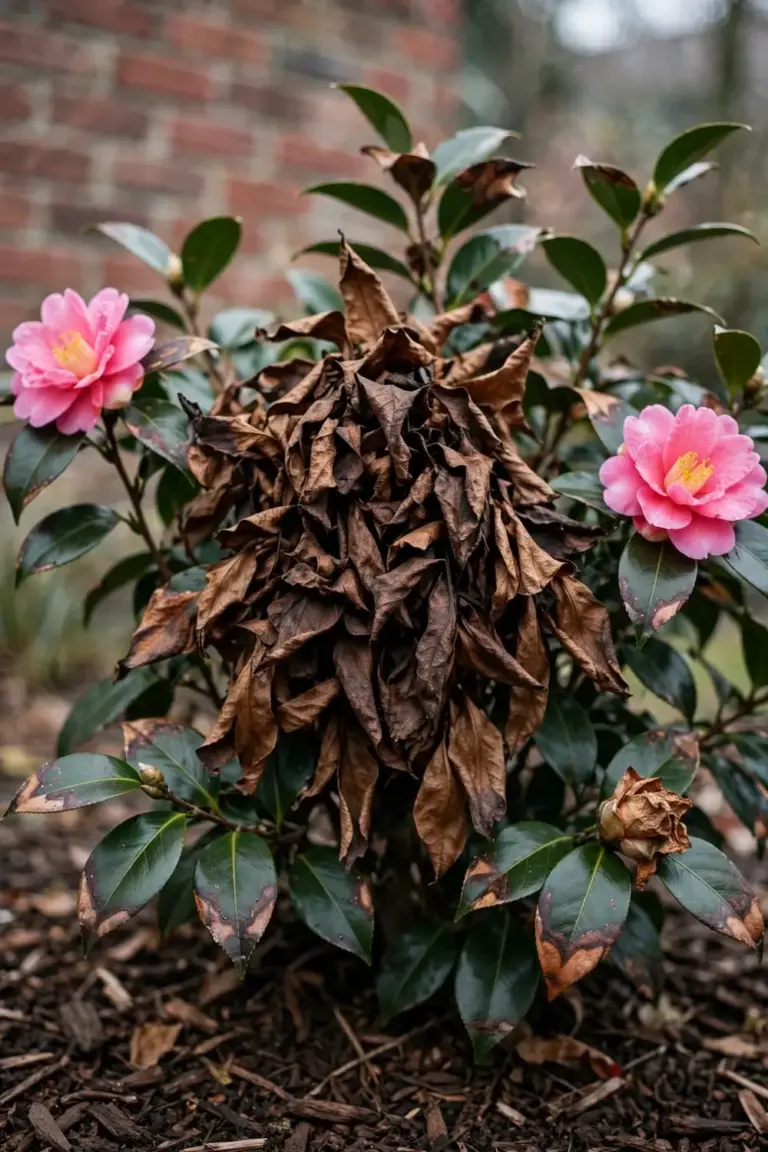
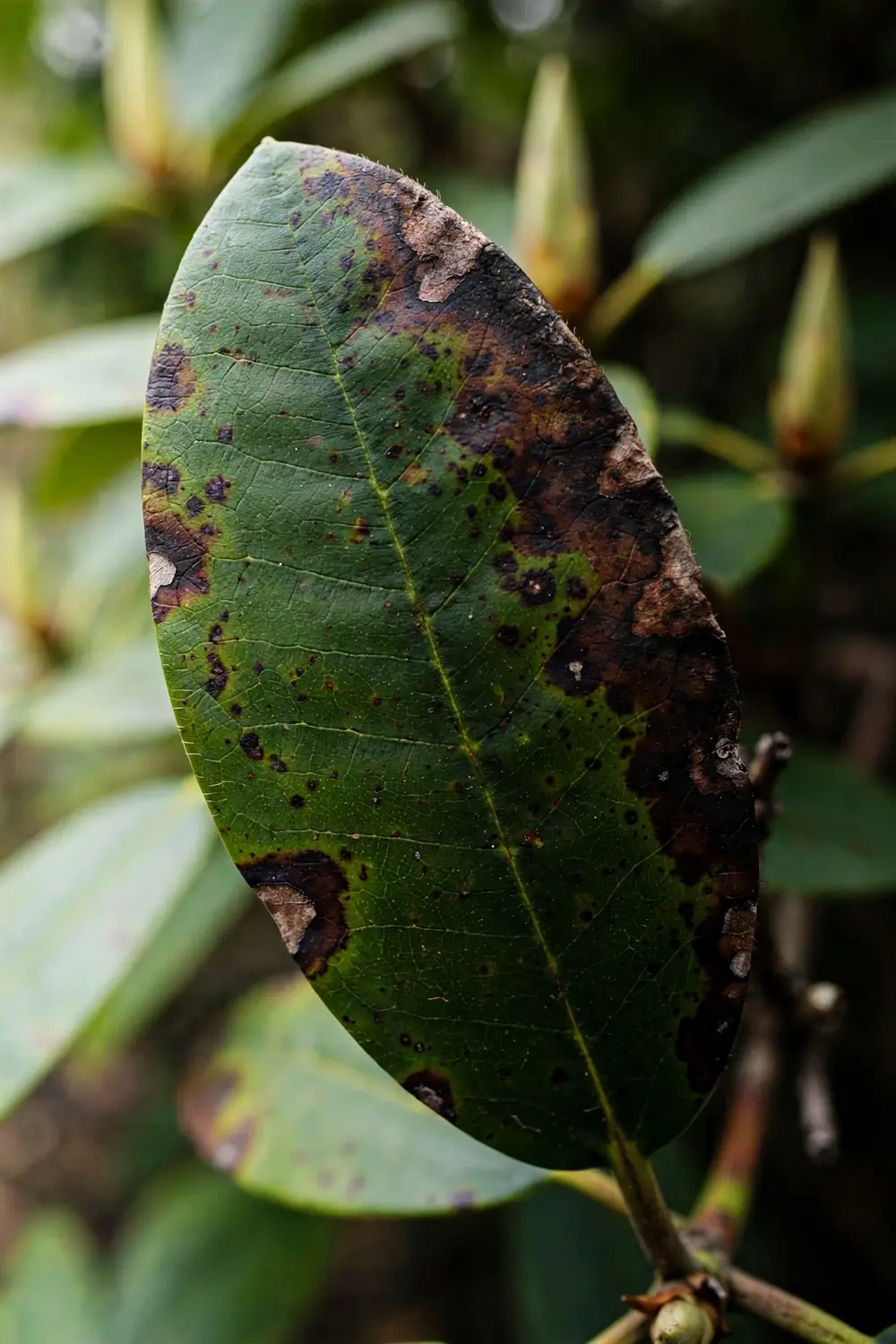
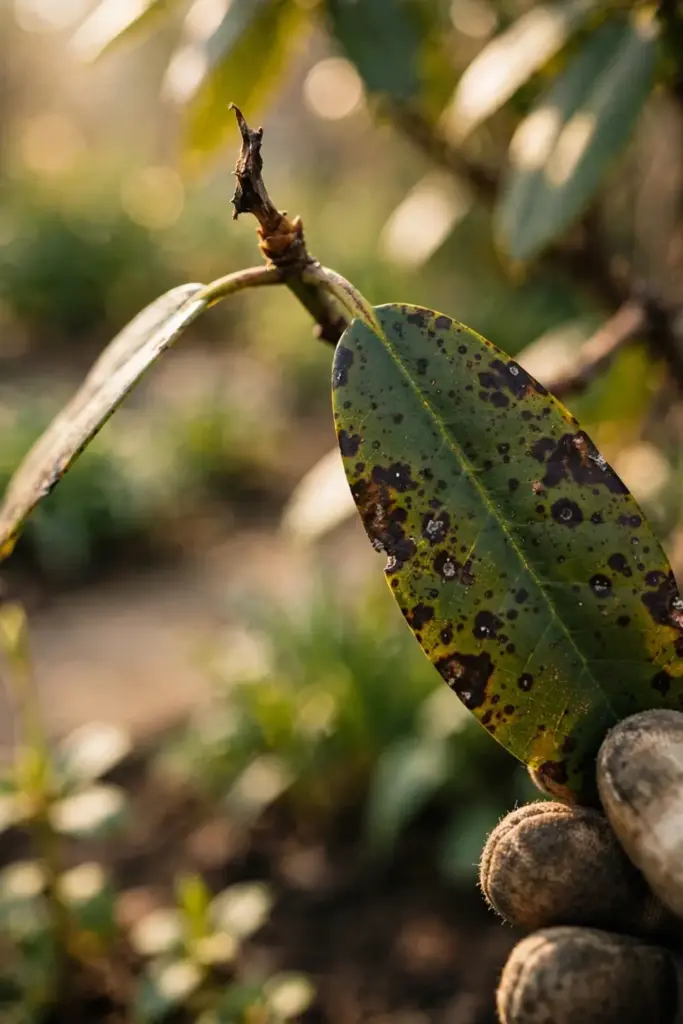
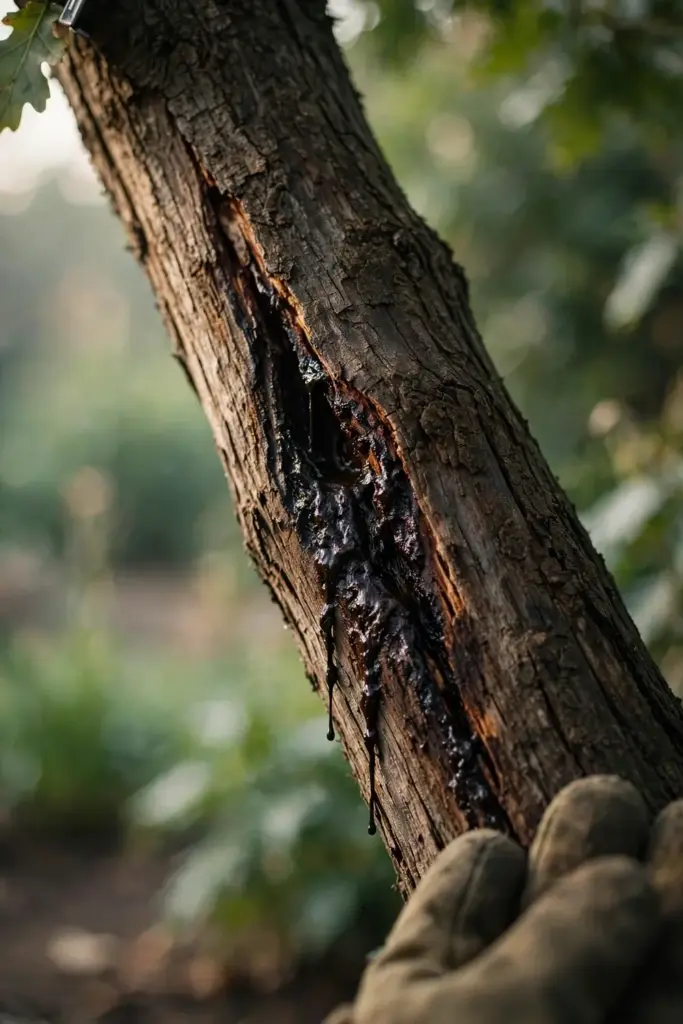
Brown to black lesions on leaves, twig dieback, and trunk and branch cankers point at possible ramorum blight. Symptoms alone never confirm it.
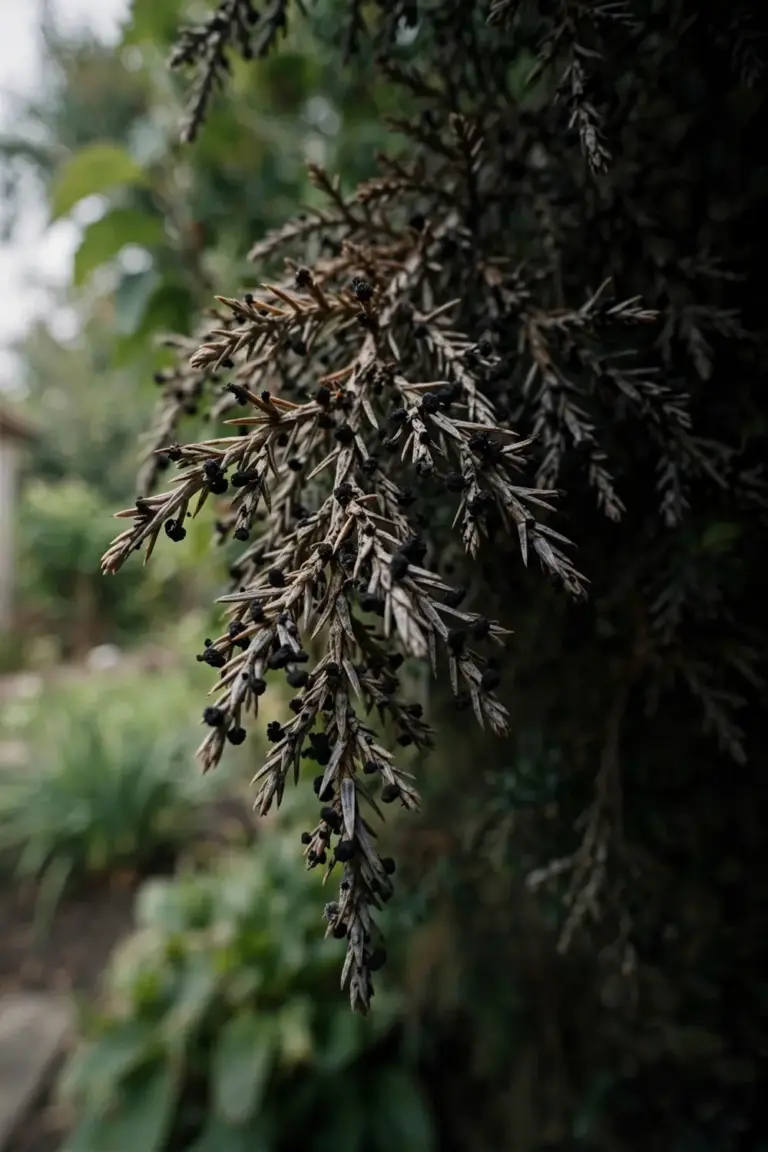
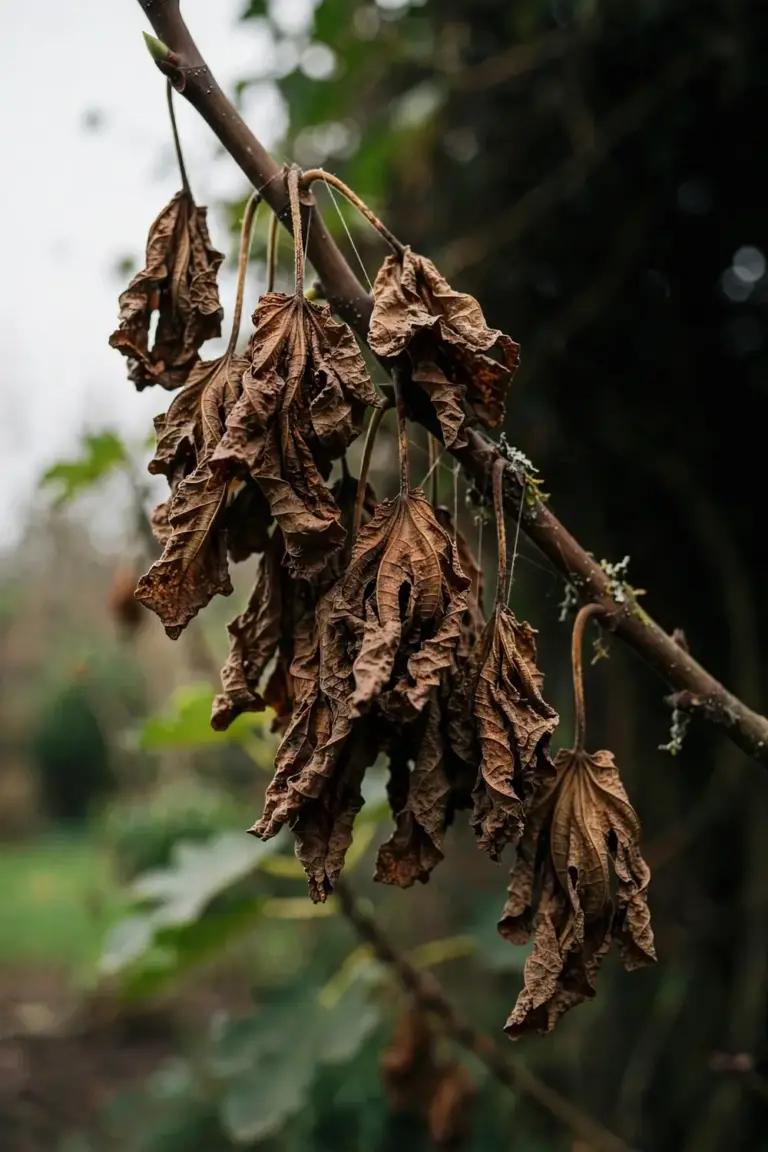
The APHIS alert lists the symptom set: trunk and branch cankers, brown to black lesions on leaves, and twig dieback. On rhododendron and camellia, leaf lesions start as brown to black spots that spread along the leaf. On oaks, the trunk shows a bleeding canker with dark ooze. On tanoak, the whole crown can collapse fast. The symptoms vary across hosts, and they overlap with other diseases, drought stress, and freeze injury.
Field identification is suspect-only. An official diagnosis must be made by a trained professional and confirmed by laboratory testing. That sentence also comes from the APHIS alert, and it governs every identification claim below. A gardener who sees a suspect plant documents it and reports it. A gardener never declares a diagnosis from symptoms alone.
Check the likelihood criteria before panicking. Washington State University Extension notes that infection is not likely in the landscape unless highly susceptible species are present, purchased since 2002, and symptomatic, or standing near a plant that meets all three criteria. The University of Georgia adds that long-established plants are unlikely to be infected. A rhododendron planted in 1995 with no symptoms and no new neighbors is not a likely case. A rhododendron bought last year, showing fresh leaf lesions, is a case worth reporting.
Check the whole garden, not one plant. Ramorum blight on one rhododendron, beside a healthy camellia and a healthy viburnum, is a single suspect. Ramorum blight signs on several host species at once, after a wet spring, is a pattern worth reporting fast. The pattern across the garden tells the reporter how urgent the call is.
Strategy 1: Buy Healthy Plants From Reputable Nurseries
Buy healthy plants from reputable sources. Inspect host plants before purchase, and buy only from nurseries with clean stock.
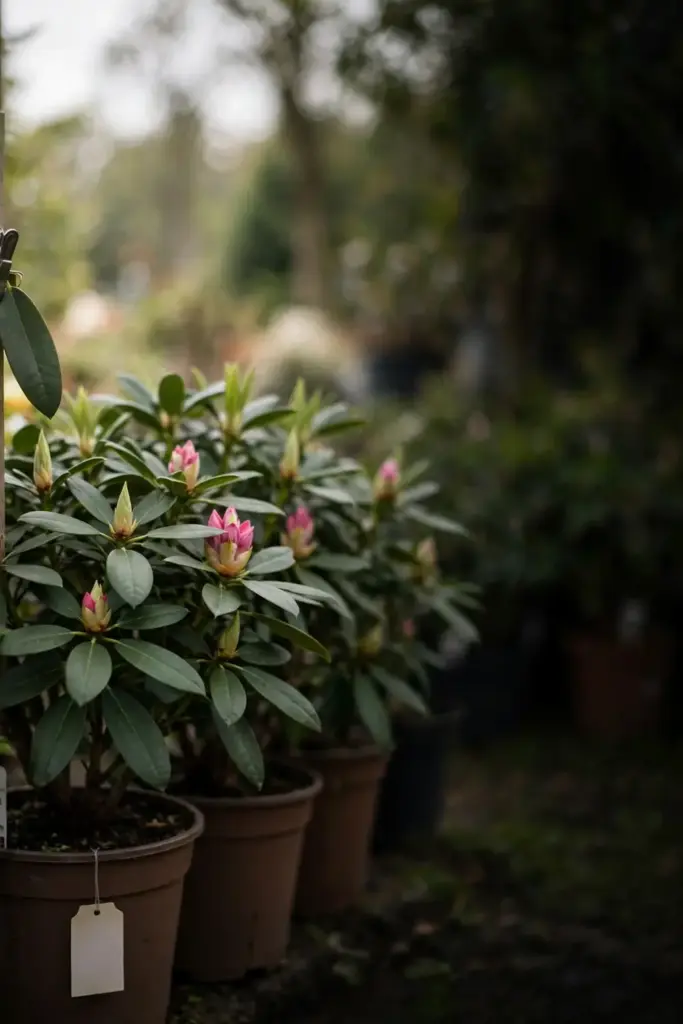
The APHIS alert gives this as the first prevention step: only buy healthy plants from reputable sources. A nursery that inspects its stock, isolates new shipments, and holds certification for freedom from Phytophthora ramorum is the safest source. A bargain plant with spotted leaves from an unknown seller is the riskiest purchase in the garden.
Inspect before paying. Look at the leaves for brown to black lesions. Look at the twigs for dieback. Look at the trunk and branch junctions for cankers. Look at the plants beside the one you want. A whole bench of rhododendrons with spotted leaves is a nursery problem, not a bargain. Walk away from a bench that shows symptoms across many plants.
Ask the nursery about its sourcing and its inspection program. A reputable nursery answers plainly: where the plants came from, how long they have held them, and whether the stock is certified free of Phytophthora ramorum. A nursery that cannot answer, or that waves the question away, earns no sale. The question costs nothing. The infected plant costs the garden.
Do not buy a sick plant to rescue it. A gardener who buys a spotted rhododendron at a discount imports the pathogen into a clean garden. Rescue feels kind. It spreads disease. The kindest purchase is the healthy plant from the clean nursery. Leave the sick plant for the nursery to destroy under its own protocols.
Strategy 2: Quarantine New Host Plants for 4 to 8 Weeks
Quarantine new host plants for 4 to 8 weeks before planting them near established hosts. Isolation catches the infection that inspection missed.
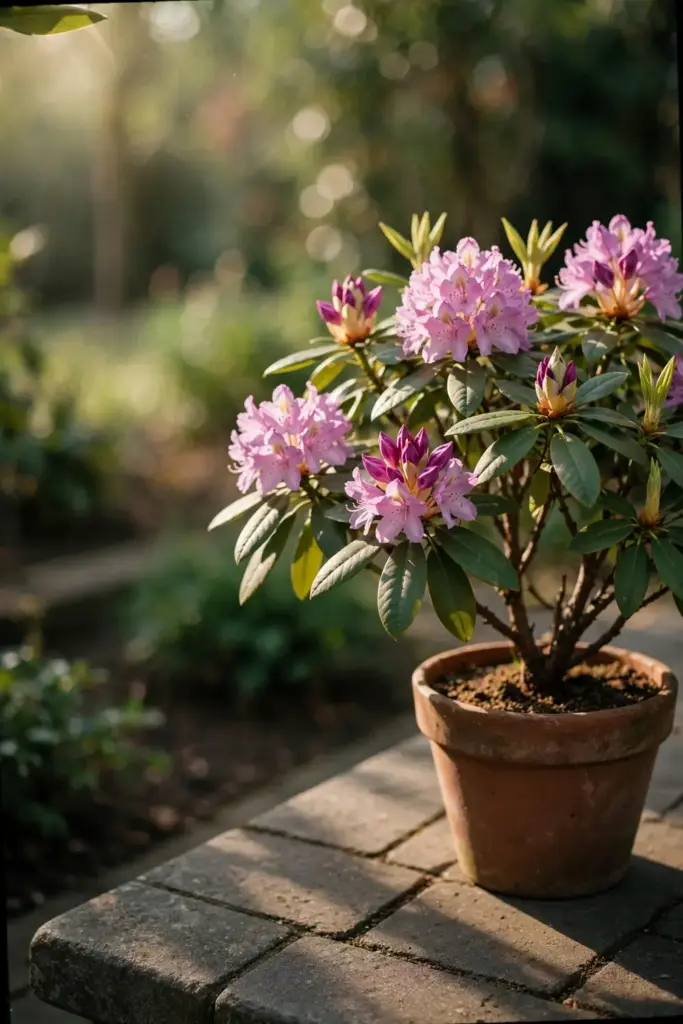
Quarantine windows differ by source: Washington State University Extension gives 4 to 6 weeks, while a research summary of American Phytopathological Society guidance gives 8 weeks, so this routine uses the full 4 to 8 week range and picks the long end when the new plant will sit near oaks or tanoak.
Quarantine means physical separation, not a corner of the same bed. Hold the new plant apart from established hosts, on a hard surface or a bench where water does not drain toward other plants. Water it at the base. Do not let its drainage reach the main bed. Keep its tools separate. A quarantine that shares water, tools, and soil with the main bed is not a quarantine.
Inspect the quarantined plant weekly. Look for new leaf lesions, twig dieback, and cankers. Photograph anything suspect with a date stamp. A plant that stays clean for the full quarantine period joins the garden. A plant that shows symptoms during quarantine gets reported, not planted. The quarantine period is the cheapest insurance in the whole routine. It costs space and patience. It saves the garden.
Do not shorten the quarantine because the plant looks healthy on arrival. Phytophthora ramorum can sit in a plant without visible symptoms. The incubation period is the reason quarantine exists. A plant that looks healthy on day one can show lesions in week five. The full period is the test. Cutting it short throws the test away.
Strategy 3: Keep Host Plants Away From Susceptible Oaks
Keep host plants away from susceptible oaks and tanoak. Distance between the leaf hosts and the trunk hosts breaks the chain.
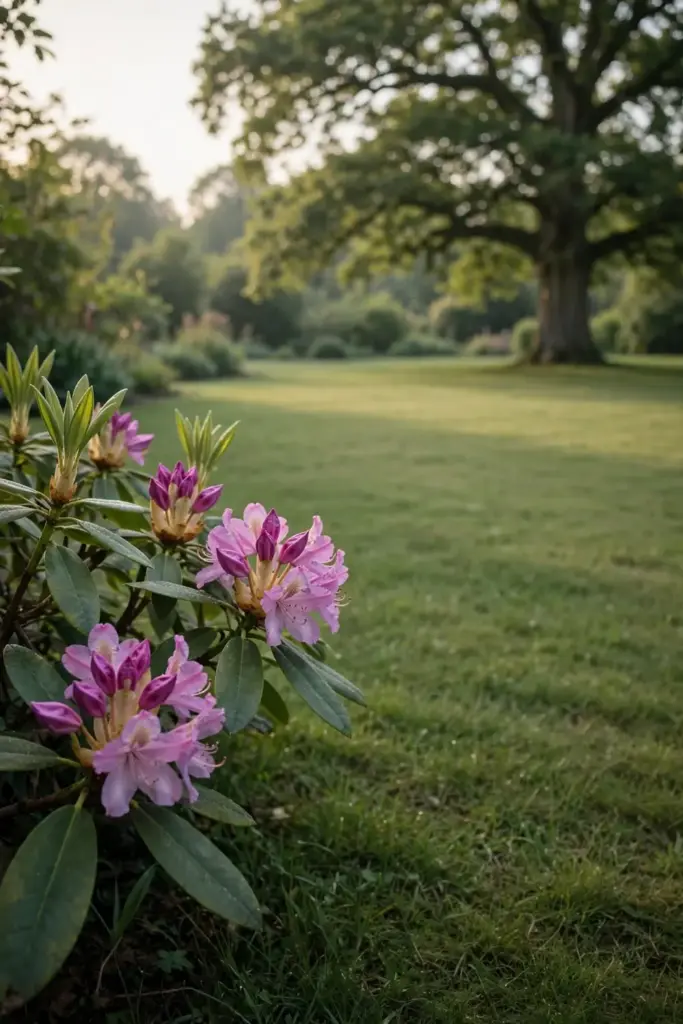
Research on sudden oak death shows that bay laurel near oaks is the strongest predictor of oak infection risk. Bay laurels close to oaks carry the highest risk. Strategic bay laurel management near oaks may decrease that risk. Home-press guidance from Palo Alto gives a working distance: cut bay laurel back at least 30 feet from oaks. Research findings cite 5 meters as the key distance band. This article presents both figures as a range, because the sources measure different things. The point is the same: distance helps.
Do not plant rhododendron, camellia, or viburnum under or beside a susceptible oak. A leaf host under an oak drips spores onto the oak’s root zone and trunk with every rain. A leaf host across the garden, separated by lawn or hardscape, does not. Site new host plants away from oaks at planting time. Moving an established plant is harder than choosing the right spot the first time.
Manage bay laurel near oaks strategically, not by wholesale removal. Wholesale bay laurel removal is not warranted. Bay laurel is a native tree in its range, and it supports wildlife. Cut back the bay laurel that stands closest to the oak. Keep the bay laurel that stands far from any oak. The goal is a gap between the spore source and the oak trunk, not a landscape without bay laurel.
Check the oak’s trunk every season. Look for bleeding cankers, dark ooze, and bark cracks. A canker on an oak trunk is a report-first finding, not a prune-first finding. Do not cut into a suspect oak canker. Photograph it, note the date, and report it. Cutting into a canker spreads the pathogen and destroys the evidence the lab needs.
Strategy 4: Water With Discipline and Cut Standing Water
Water with discipline. Reduce standing water, avoid overhead irrigation, and improve drainage where water ponds.
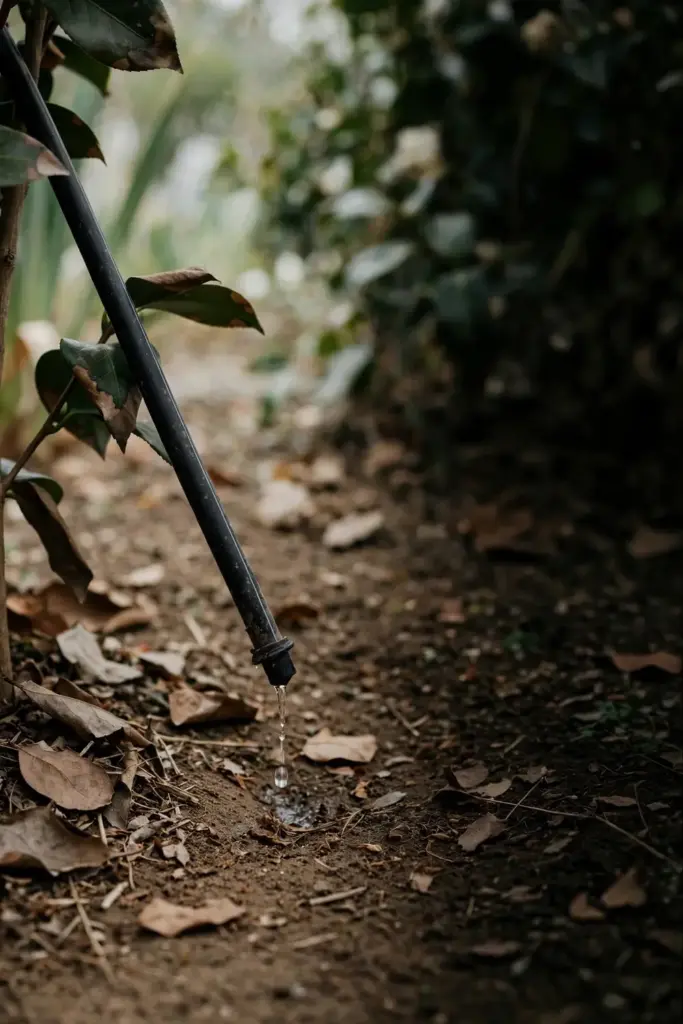
The APHIS alert gives the water rule directly: because Phytophthora ramorum is a water mold that thrives in wet conditions, reduce standing water in the yard or garden and avoid overhead irrigation. Washington State University Extension gives the same guidance for landscape management: no overhead watering. The Pacific Northwest handbooks add cultural water management as a core control. Three sources, one rule.
Use drip or soaker watering at the root zone. Lay drip line or a soaker hose around host plants, not against trunks. Water slowly so the soil absorbs it without runoff. Water in the morning so any splash that reaches foliage dries during the day. A morning base watering that splashes a little beats an evening overhead watering that soaks the canopy overnight.
Fix drainage where water stands. Fill low spots where water ponds after rain. Grade soil away from trunks so water does not sit against bark. Clear clogged gutters and downspouts that dump water beside host plants. A puddle that stands for days beside a rhododendron is a nursery for water mold. A bed that drains in hours is not.
Keep foliage dry between waterings. Wet leaves give spores the hours they need to germinate and enter through wounds. Dry leaves break the chain. The pruning and spacing habits that open a canopy for airflow work with the watering habit. One dries the canopy from inside. The other stops wetting it from above. Together they starve the water mold of the moisture it needs.
Strategy 5: Disinfect Tools, Shoes, and Equipment
Disinfect tools between plants. Clean shoes, paws, tires, and equipment after visiting infested areas.
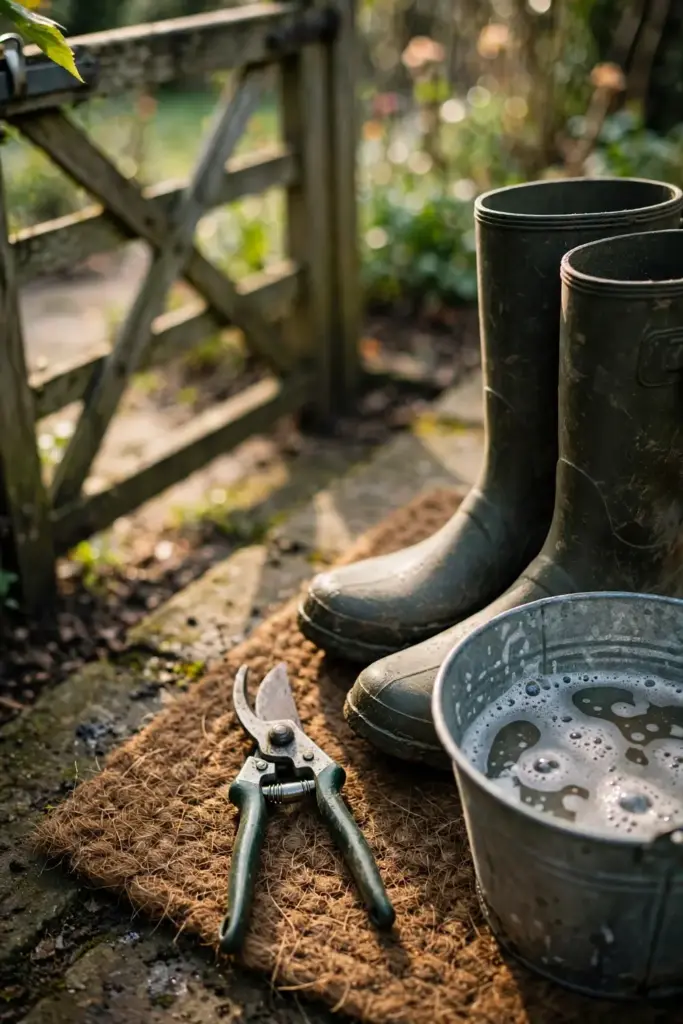
The APHIS alert gives the tool rule: disinfest pruning and other gardening tools between plants. Home-press guidance for sudden oak death adds the rest: clean shoes, pets, and equipment after visiting an infested area. The pathogen rides on soil, on wet leaves, and on anything that touched them. A blade that cuts a suspect rhododendron and then cuts a healthy camellia moves the pathogen. A boot that walks an infested trail and then walks the home garden moves it too.
Disinfect blades between plants with 70 percent rubbing alcohol or a 10 percent bleach solution, following the APHIS alert rule to disinfest pruning and other gardening tools between plants. Dip the blades, wipe them, and cut again. Keep the disinfectant bucket within arm’s reach of the plant. A bucket left at the shed does not get used. Bleach corrodes steel fast, so wash blades with soap and water after the last cut, dry them, and oil them before storage.
Clean shoes and boots before entering a clean garden. Knock off soil. Wash soles with soap and water. Change shoes after visiting an infested site when possible. Wipe a dog’s paws after a walk through an infested area. Rinse tires and wheelbarrow wheels that rolled through infested soil. Each of these habits is small. Together they close the pathways the pathogen uses.
Do not share tools between a suspect plant and a healthy plant without disinfecting. Keep a separate set of pruners for suspect plants when the garden holds both. Label the set. The separate set costs less than one infected camellia, and it removes the temptation to cut one more branch before disinfecting.
Strategy 6: Never Move Firewood, Host Material, or Soil
Never move firewood, host material, or soil out of an infested area. Buy local firewood and burn it local.
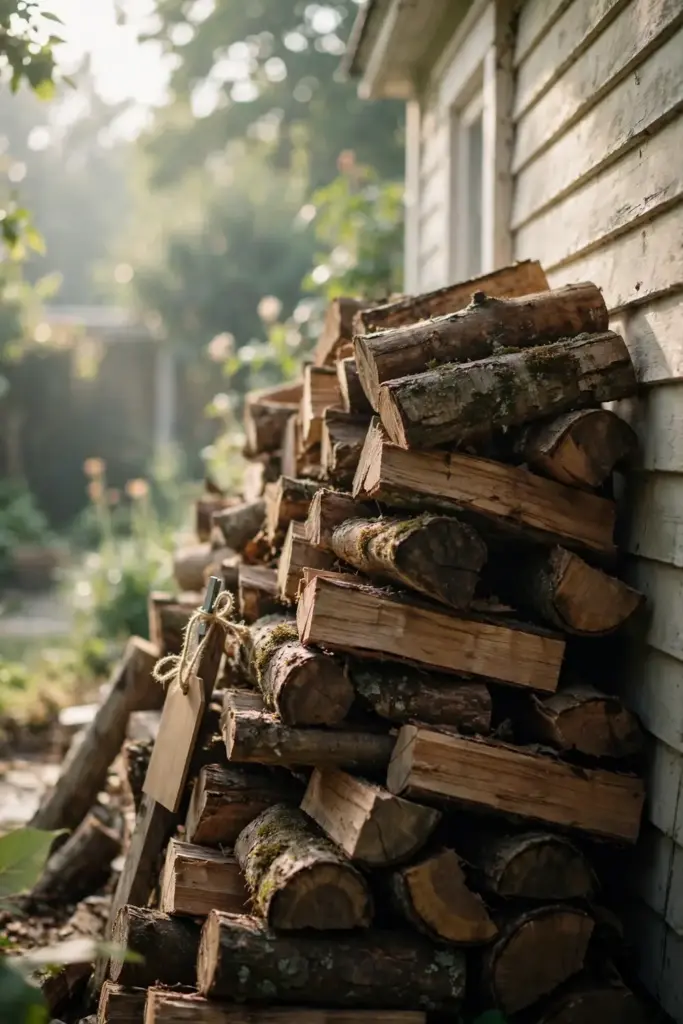
Home-press guidance for sudden oak death gives this rule plainly: do not move firewood. Do not move host material. Do not move soil from an infested area. The pathogen rides in firewood, in cut branches, in leaf litter, and in soil. A truckload of firewood from an infested county carries the pathogen to a clean county. A bag of leaf litter from a suspect rhododendron carries it to a new bed.
Buy firewood where it will be burned. Burn it where it was bought. Do not carry firewood home from a camping trip in an infested area. Do not carry firewood to a cabin in a clean area. The firewood rule is the single most effective containment habit here, because firewood moves farther and faster than any other pathway.
Do not move host plants that appear sick or dying. The APHIS alert gives this rule directly: do not move plants that appear sick or dying. A sick rhododendron moved to a new garden moves the pathogen with it. Leave the sick plant in place. Report it. Let the authorities arrange destruction. Moving it helps no one and spreads the disease.
Do not take cuttings, wreaths, or greenery from wild rhododendron in infested areas. Forestry guidance from the United Kingdom warns against picking wild rhododendron for wreaths. The wreath looks harmless. The cuttings carry the pathogen. Buy greenery from a clean, certified source. The wreath from the shop is the safe wreath.
Strategy 7: Spot, Photograph, and Document, But Do Not Dig Up
Spot the suspect plant, photograph it, and document it. Do not dig it up. Removal spreads the disease faster.
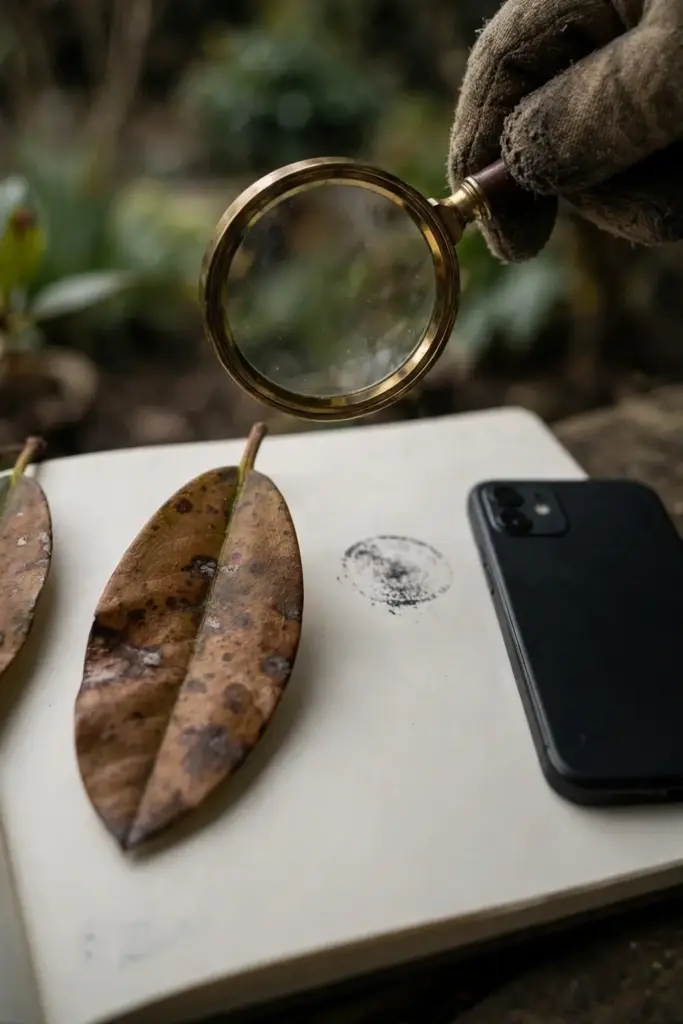
The University of Georgia gives the counterintuitive rule: learn the symptoms, do not dig up plants, because removal spreads faster. Contact county extension. The agent submits samples. The agency arranges destruction. Digging up a suspect plant tears roots, shakes soil, and scatters spores across the garden. Reporting keeps the plant in place while the lab decides.
Photograph the symptoms with a date stamp. Shoot the whole plant, then the worst leaves, then the trunk or branch canker. Note the location, the host species, the planting date if known, and the nursery it came from. A photo set with dates and notes is worth more to the diagnostic lab than a verbal description. The lab reads the photos and decides whether a sample is needed.
Compare the symptoms to a symptom gallery before calling. The APHIS alert directs gardeners to compare symptoms to the California Oak Mortality Task Force symptom gallery. A gallery check separates a plausible suspect from a plain nutrient deficiency or freeze injury. The gallery does not confirm a diagnosis. It tells the gardener whether the report is worth filing. File the report when the gallery match is plausible.
Do not prune a suspect plant before reporting. Pruning cuts spread the pathogen on the blade and remove the tissue the lab needs. Leave the plant as it stands. Report it. Wait for the instructions. The waiting is the hardest part of this strategy, and it is the part that protects the garden.
Strategy 8: Report to Your State Plant Health Director or Extension
Report symptomatic plants to the state plant health director, the state plant regulatory official, or the county extension office. Reporting is the core action of the whole routine.
The APHIS alert gives the reporting flow in three steps. Check the host list to see if the plant type is there. Compare the symptoms to the symptom gallery. Report symptomatic plants to the state plant health director or state plant regulatory official. Oregon State University Extension adds its own reporting steps: early detection and reporting, then physical removal under authority guidance. The University of Georgia adds the extension path: contact county extension, and the agent submits samples.
Find the right office before an emergency. Look up the state plant health director and the county extension office now, while the garden is healthy. Save the phone number and the email address. A gardener who already knows the office files a report in minutes. A gardener who searches for the office during a scare loses days.
Give the office the full photo set and notes. Host species, planting date, nursery source, symptom dates, and the photo set with date stamps. The office uses that package to decide whether a sample is needed and how fast. A complete package gets a fast answer. A vague call gets a callback.
Cooperate with the inspection. The inspector may take samples, tag the plant, and set conditions for the garden. Follow those conditions exactly. The conditions protect the neighbors as well as the garden. A gardener who cooperates with the inspection protects the whole region. A gardener who hides a suspect plant endangers it.
Strategy 9: Contain on Confirmation and Let Authorities Lead
Contain on confirmation, and let the authorities lead. Infected plants are destroyed under authority coordination. The gardener does not improvise a cure.
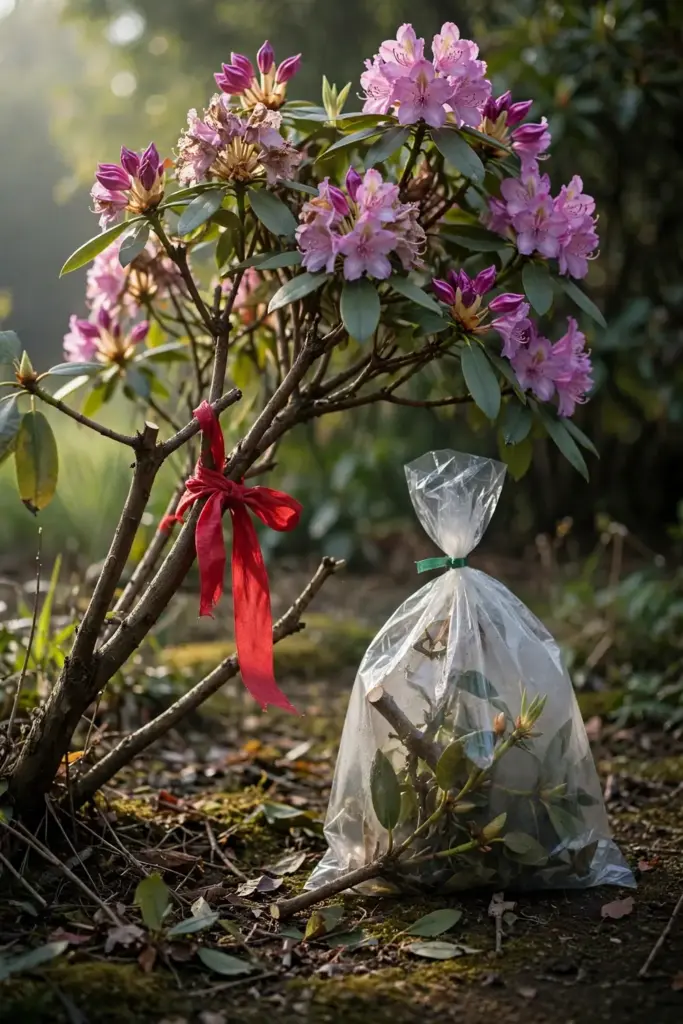
The University of Massachusetts landscape fact sheet gives the destruction rule: infected plants are destroyed, there is no chemical control, and state officials coordinate destruction. The APHIS alert agrees: there is no treatment for Phytophthora ramorum infection. Prevention is the best defense. Destruction is the response to confirmation, and the authorities run it.
Bag and landfill infected material per authority instructions. Never compost, mulch, or send infected material to municipal yard waste. Composting does not kill the pathogen. Mulch spreads it. Municipal yard waste carries it to a new site. The authority instructions will name the disposal route: bagging, landfill, incineration, or deep burial. Follow the named route exactly.
Do not treat a confirmed plant with phosphonate or fungicide on your own. Preventive phosphonate for vulnerable oaks appears in some California guidance, and it is applied by licensed professionals only. Washington State University Extension lists no chemical management for home landscapes. The home default is no chemical treatment. A homeowner who sprays a confirmed plant wastes money and risks spreading the pathogen during the application.
Keep the garden under the prevention routine after a confirmed case. Quarantine new plants. Disinfect tools. Water at the base. Report anything suspect fast. A garden that contained one case can stay clean with the routine. A garden that relaxes after one case invites the second.
Living With Ramorum Blight Rules in Your Area
Some rules stay. A garden in an infested area lives under prevention habits for as long as the pathogen is nearby.
Join a community science effort when one runs nearby. The sudden oak death blitz programs in California train volunteers to survey and sample. A blitz gives the garden an extra set of eyes and the region an extra set of data. The blitz also connects the gardener to the local extension office, which is the office that answers the next report.
General bacterial blight care follows the same order: cut, clean, destroy, then keep the canopy dry. The guide to bacterial blight simple solutions covers that order for bacterial blight problems across the garden. The pathogens differ. The habits do not.
Canker diseases on other trees need their own responses, and the site covers them separately. The guide to bacterial canker in fruit trees separates bacterial cankers from fungal ones. Ramorum blight stays a Phytophthora disease. A canker on a fruit tree is far more likely bacterial canker or a fungal canker. Check the host first, then match the treatment to the disease.
Do not let the prevention routine slide in a dry year. A dry year feels safe. The pathogen survives in soil and in nursery stock through dry years, and it returns with the next wet spring. The routine costs little in a dry year: buy safe, quarantine, disinfect, water at the base. The routine saves the garden in the wet year that follows.
Frequently Asked Questions
No cure exists for ramorum blight or sudden oak death. The APHIS alert states that there is no treatment for Phytophthora ramorum infection and that prevention is the best defense. Infected plants are destroyed under authority coordination. The value of this article is keeping the pathogen out of the garden and out of the region, not rescuing an infected plant. Prevention, reporting, and containment are the whole response.
Never dig up a suspect plant. The University of Georgia warns that removing plants could spread the disease faster and farther. Digging tears roots, shakes soil, and scatters spores across the garden. Photograph the symptoms with a date stamp, note the host and location, and report to the state plant health director or county extension. The agent submits samples. The agency arranges destruction when the lab confirms.
Symptoms alone cannot confirm ramorum blight. Leaf lesions, twig dieback, and cankers overlap with other diseases, drought stress, and freeze injury. An official diagnosis must be made by a trained professional and confirmed by laboratory testing. Field identification is suspect-only. Photograph, document, and report. The lab names the pathogen where it matters, and the gardener acts on the report.
Quarantine new host plants for the full period in Strategy 2 before planting near established hosts. Use the long end of the range near oaks or tanoak. The quarantine clock starts when the plant arrives. Do not shorten it because the plant looks healthy. A plant that shows symptoms in quarantine gets reported, not planted.
Ramorum blight is established in coastal California and southern Oregon, and in parts of the United Kingdom. It is not established across the rest of the United States. Gardens outside infested areas still follow the same habits: buy safe, quarantine new plants, and report anything suspect. The nursery trade moves plants across regions, so the prevention routine protects clean regions from an imported case.
Never move firewood out of an infested area. Buy local firewood and burn it local. The pathogen rides in firewood, in cut branches, in leaf litter, and in soil. A truckload of firewood from an infested county carries the pathogen to a clean county. The firewood rule is the single most effective containment habit here, because firewood moves farther and faster than any other pathway.
Where to Go From Here
Start with the nursery gate. Check the buying habits before the next plant purchase.
The order is buy safe, quarantine, keep hosts away from oaks, water with discipline, disinfect tools, never move firewood, document, report, and contain on confirmation. One next action beats ten good intentions. Save the extension office number today. The garden stays clean because the gardener reported early.