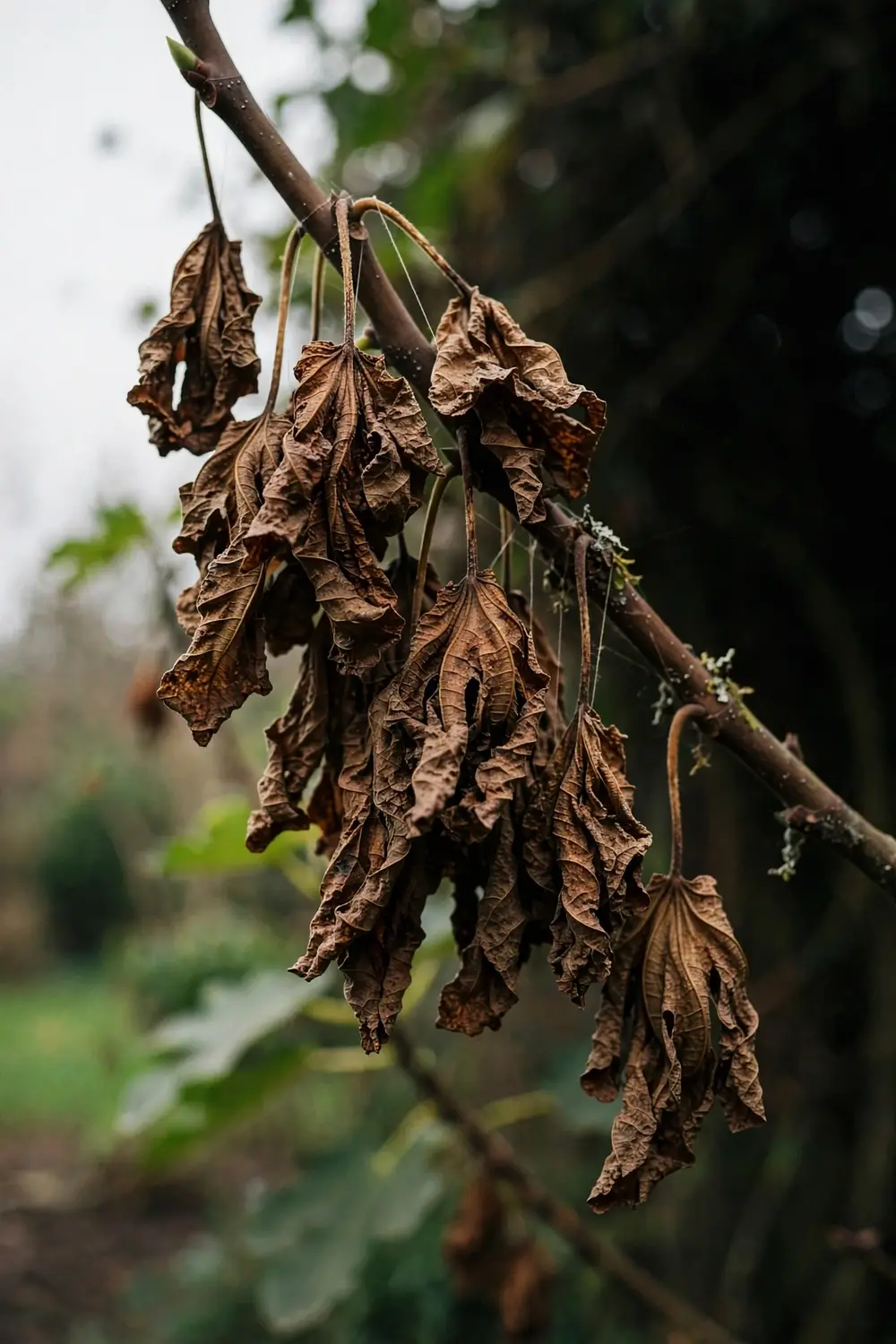

Thread blight on figs has no cure and no fungicide fix. The 5 strategies below keep the disease in check through sanitation, pruning, and dry foliage, starting with the leaf cleanup that removes the fungus from the tree.
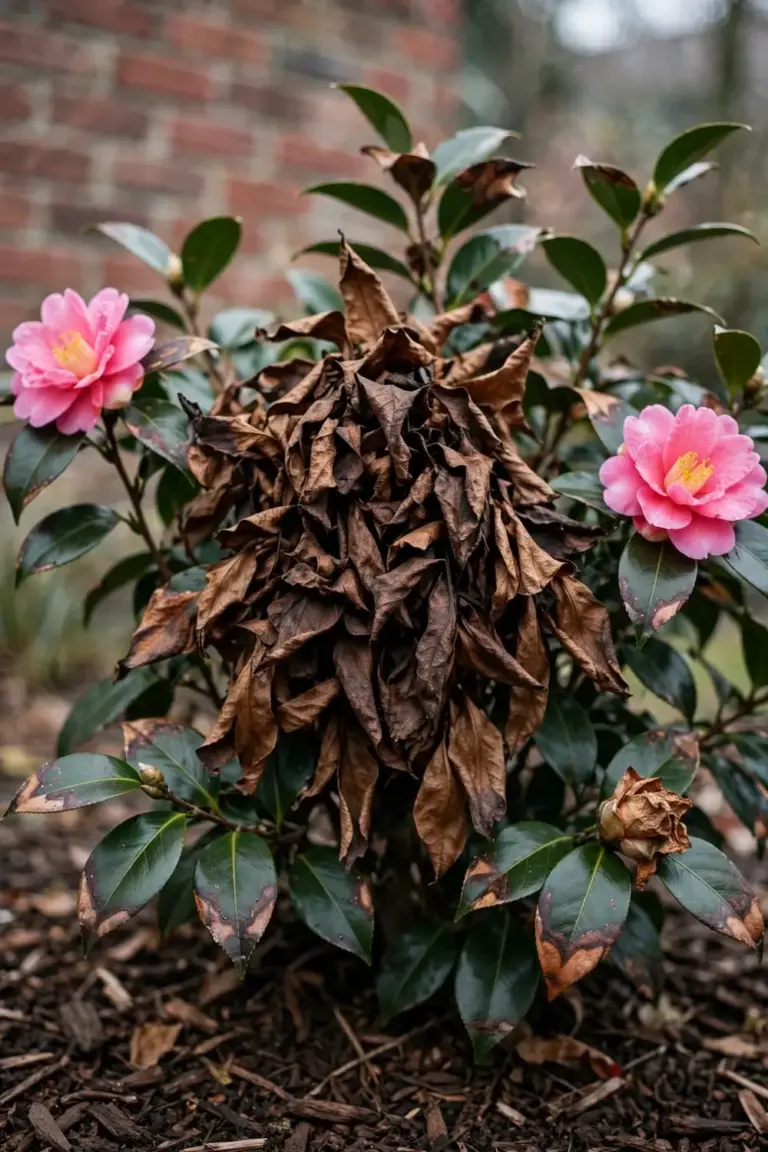
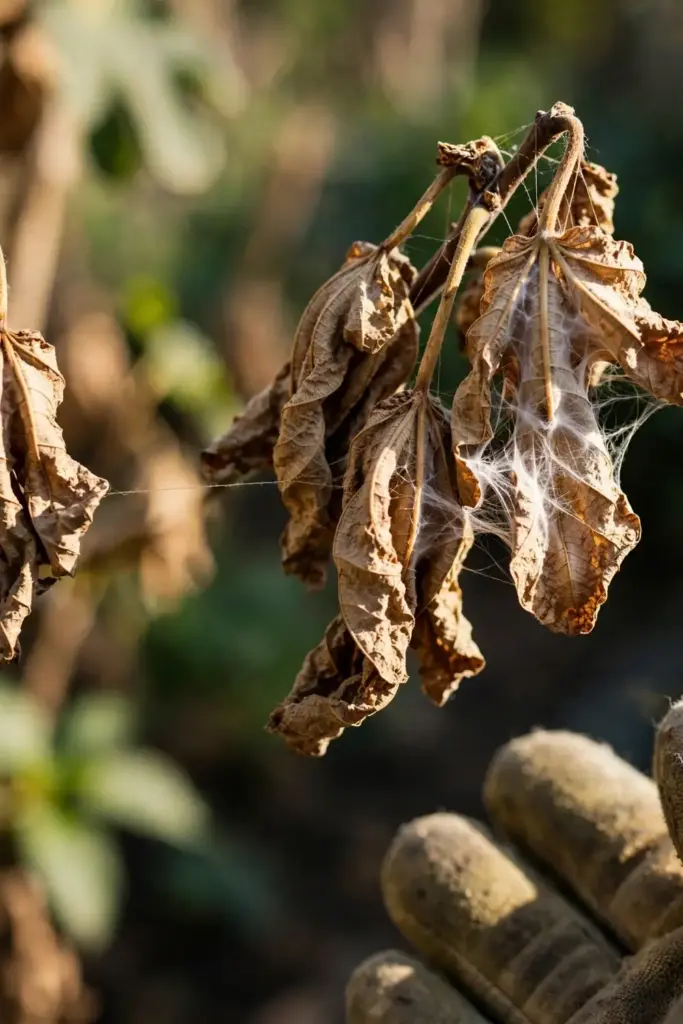
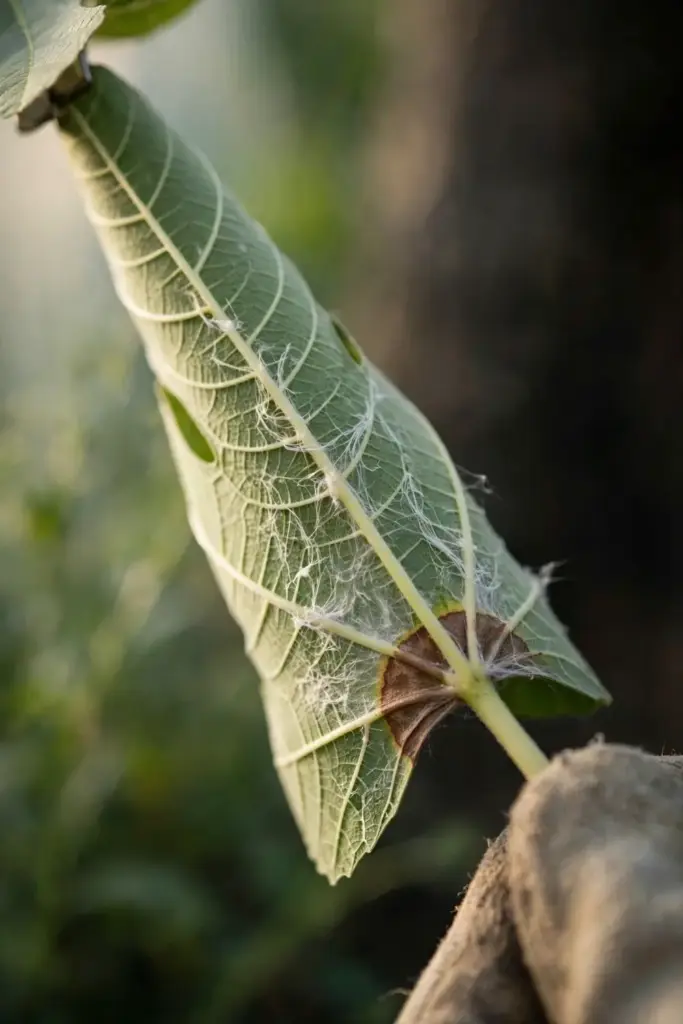
The signature is a fig leaf that shrivels, dries, and stays hanging on the branch by thin threadlike strands. White threads or mycelia sometimes show on the underside of the leaf, and figs that catch the disease before ripening turn hard and dry.
The rest of this page runs the order a fig grower should follow. Identify the disease first, then work the 5 strategies from leaf cleanup to the honest limit on sprays. I have learned that the rake and the trash bag do more for a fig tree than any spray bought after symptoms show.
What Thread Blight on Figs Actually Is
Thread blight on figs is a fungal disease of fig trees. The fungus Pellicularia koleroga causes thread blight on figs.
The fungus was formerly named Corticium stevensii, and some sources spell the current name with one letter different. The Louisiana State University AgCenter lists the pathogen as Pellicularia koleroga, formerly Corticium stevensii, in its Louisiana plant disease management guide. That guide is the backbone of this article. It describes thread blight as a fig disease of warm, humid climates, and it gives the same management in every edition: collect and destroy leaf debris, prune for airflow, keep leaves dry, and use no fungicides.
The name “thread blight” is a collision across several unrelated diseases. Red thread is a turf disease. White thread blight hits tropical plantation crops. This article is about one usage only: thread blight on figs, on Ficus carica, in the home garden. The other usages contribute nothing to fig care, and this article does not cover them.
The fungus survives as sclerotia, which are hard overwintering structures, on the plant, in plant debris, or in the soil. Sclerotia wait through winter and release the next season’s infection when warm, wet weather returns. That survival habit sets the whole strategy. Every fallen leaf left under the tree is a winter shelter for the fungus. Every matted leaf left hanging on the branch is a bridge to the next wet week.
Thread blight on figs favors warm, humid weather and wet foliage. Leaves that stay wet after rain or overhead watering give the fungus the moisture it needs to grow across the leaf surface. Dense canopies hold that moisture longer. Trees in low spots, against walls with no air movement, or under sprinklers that wet the canopy stay wet longest and show the worst symptoms.
The disease does not kill a fig tree outright in most home gardens. It defoliates, it disfigures, and it ruins fruit that catches it before ripening. A fig tree can live with thread blight for years while cropping less each season. The goal is not eradication. Sanitation controls the disease and reduces losses. It does not erase the fungus from the garden.
Thread blight on figs shows up hardest where summers run warm and humid. Gulf Coast gardens, the lower Southeast, and any site where dew lingers past midmorning carry the highest pressure. Figs grow in zones 6 through 9 in much of the United States, and the warm end of that range is where thread blight does its worst work. A fig in a dry summer climate may never see the disease. A fig in a humid summer climate should expect it and run the routine every year.
How to Spot Thread Blight on Fig Leaves and Fruit
| Sign | What It Looks Like | What To Do |
|---|---|---|
| Leaf spots | Semicircular brown spots at the leaf base | Flag the leaf for removal |
| Matted leaves | Leaves shrivel and dry but stay attached by threadlike strands | Prune and bag the matted leaves |
| Threads on undersides | White threads and mycelia on leaf undersides | Remove the leaf, disinfect tools |
| Fig damage | Figs turn hard and dry if disease hits before ripening | Remove affected fruit, bag and trash |
| Sclerotia | Hard resting bodies survive on plant, debris, and soil | Rake and destroy all fallen debris |
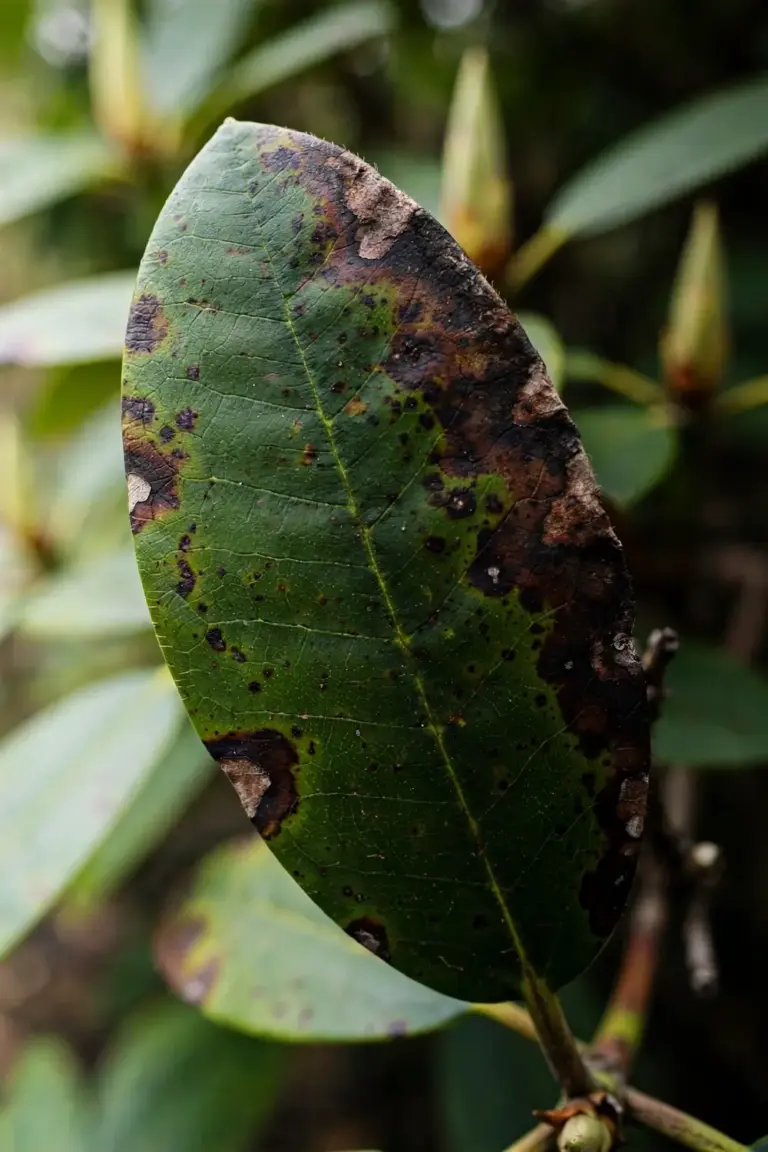
Semicircular brown spots at the base of the leaf start the infection. The spots spread, and the leaf shrivels and dries while staying attached to the branch.
The LSU AgCenter guide describes the pattern in plain terms. Symptoms appear as semicircular brown spots at the base of the leaf. Most infected leaves shrivel and dry up but do not fall off the tree. Leaves may also be covered with irregular holes. Sometimes white threads or mycelia can be seen on the underside of the leaves. Dead leaves often hang on the tree by threadlike strands similar to spider webs.
That hanging, matted look is the tell. Most fig leaf problems drop their leaves. Thread blight glues them in place with fungal threads. Walk the tree in a wet week and look for leaves that shrivel and stay, for brown spots starting at the leaf base, and for white threads on the underside. A leaf that shrivels and hangs by threads is thread blight until proven otherwise.
Fruit tells the same story in miniature. Figs turn hard and dry if the disease occurs before the fruit ripens. A fig that hardens and dries on the branch, beside leaves that shrivel and hang, points at thread blight. A fig that softens, sours, and smells of vinegar points at a different problem, and the sour rot article covers that one.
Field identification is presumptive. Lab confirmation settles a case where it matters, such as a nursery tree or a valuable specimen. For a home fig tree, the hanging matted leaves plus the white threads plus the season are enough to start the sanitation routine. Do not wait for a lab result before raking. The cleanup helps whatever leaf fungus is present.
Check the whole tree, not one branch. Thread blight often starts low, where air moves least and leaves stay wet longest, then climbs. Look at the lowest branches first, then the interior canopy, then the top. A tree with a few matted leaves on one low branch is early. A tree with matted leaves across the canopy needs the full routine at once.
Strategy 1: Rake Up and Destroy Every Fallen Leaf
Rake up all fallen leaves under the fig tree and destroy them. Never compost diseased fig leaves.
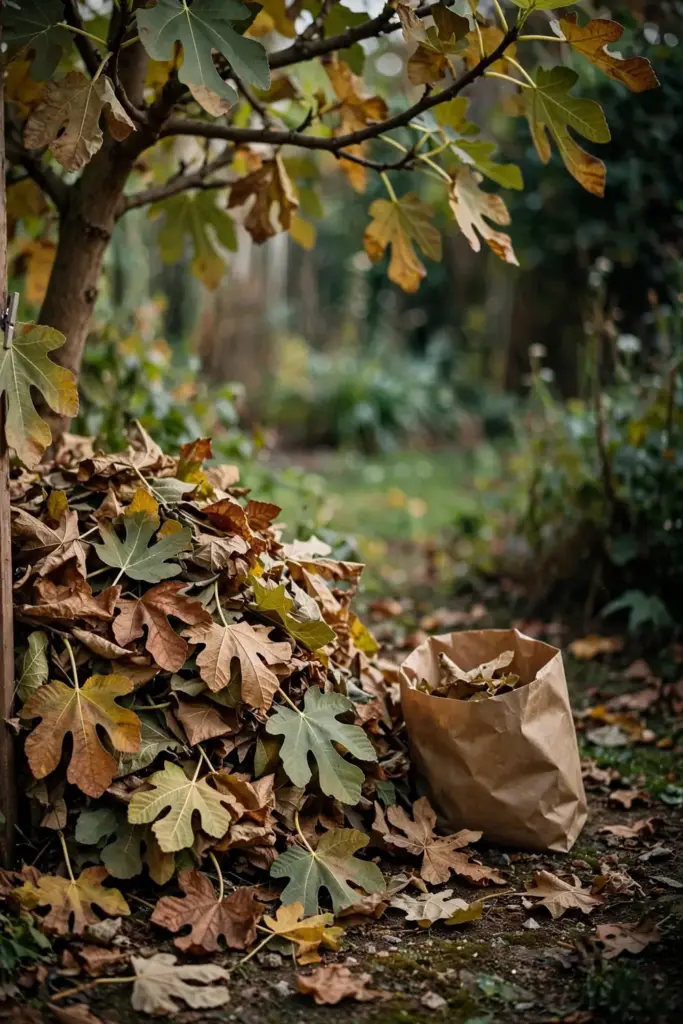
The LSU AgCenter guide gives this as the first management step. Collect and destroy leaf debris. The guide repeats the instruction for fig rust on the same page: do not compost diseased leaves. The fungus survives as sclerotia in plant debris, so a leaf left on the ground is a winter shelter. A leaf bagged and trashed is a shelter removed.
Rake the whole drip zone, not just the visible pile. The drip zone is the circle of ground under the outer edge of the canopy, where rain drips off the leaves. Fallen leaves blow to the edges of that circle and lodge against fences, walls, and trunks. Work outward from the trunk to the drip line, and pick up every leaf by hand where the rake cannot reach.
Destroy means trash or burn where burning is allowed. Composting does not count as destroying for diseased leaves. A home compost pile runs too cool to kill sclerotia in thick leaf litter, and the finished compost then carries the fungus back under the tree. Bag the leaves, tie the bag, and put it in the trash. If local rules allow burning, burn them away from the tree and away from dry mulch.
Repeat the cleanup through the season. One autumn cleanup is not enough. Leaves keep falling, storms keep knocking infected leaves down, and each new fallen leaf restarts the shelter. Rake after every heavy leaf drop. Check under the tree after every storm. A five-minute rake after a storm beats an hour of cleanup in winter.
Make the last cleanup of the year the most thorough one. After the final leaf fall, rake the whole drip zone bare, pick up every leaf by hand from around the trunk, and wash the rake head and gloves with soap and water before storing them. Sclerotia ride into winter on debris, on tools, and on the soil surface under the tree. A clean finish to the season is the cheapest winter protection a fig tree gets.
Clean the ground before pruning, and clean it again after. Pruning shakes infected leaves loose. Those leaves land on clean ground and undo the first cleanup. Rake once before the pruning cut, then rake again after the last cut. The double cleanup is the habit that keeps the routine honest.
Strategy 2: Remove Infected Leaves and Branches Promptly
Remove leaves and branches with visible fungal growth as soon as you see them. Do not leave them hanging on the tree.
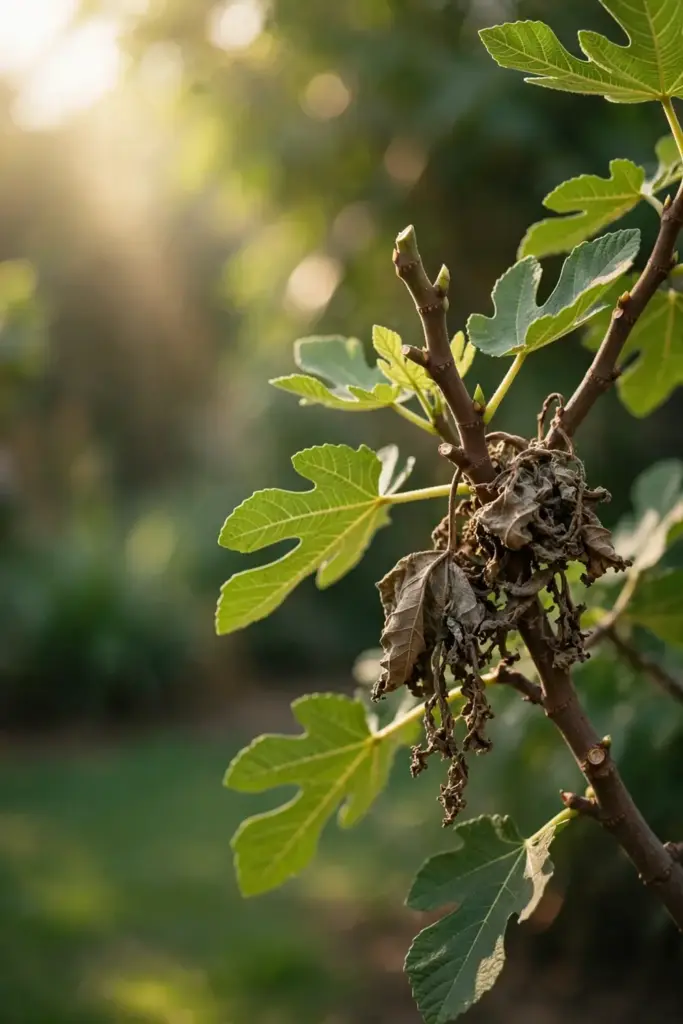
The LSU AgCenter guide lists selective pruning as the second management step, and its fig articles describe removing plant parts that show fungal growth. A matted leaf hanging by threads is a live source of fungus. It sheds spores onto healthy leaves below it every time rain or dew wets it. Cutting it off removes the source.
Pick off infected leaves by hand when the count is small. Hold the leaf by the petiole, snap it off, and drop it straight into a bag. Do not drop it on the ground and pick it up later. The bag travels with you around the tree. A leaf dropped on the ground is a leaf that may stay on the ground.
Cut out a branch when the infection covers most of its leaves. A branch with a few spotted leaves earns leaf-picking. A branch where every leaf shrivels and hangs earns a pruning cut. Cut back to healthy wood, past the last infected leaf, and bag the whole branch. The same rule that governs fire blight pruning governs here: remove the source, do not leave it.
Work from the healthiest branches to the sickest branches when the tree has both. That order keeps hands and tools away from healthy leaves until the end of the job. When the tree is heavily infected throughout, work from the top down so cut material does not fall onto branches you already cleaned.
Wash hands and tools after the job. Fungal threads and sclerotia ride on blades and gloves. A blade that cuts an infected branch and then cuts a healthy branch moves the fungus. Wash the blade with soap and water, dry it, and oil it before storage. Change gloves before touching a healthy fig tree.
Strategy 3: Prune in the Dormant Season for Airflow
Prune the fig tree in the dormant season to open the canopy for airflow. Dormant pruning is the only pruning window for thread blight work.
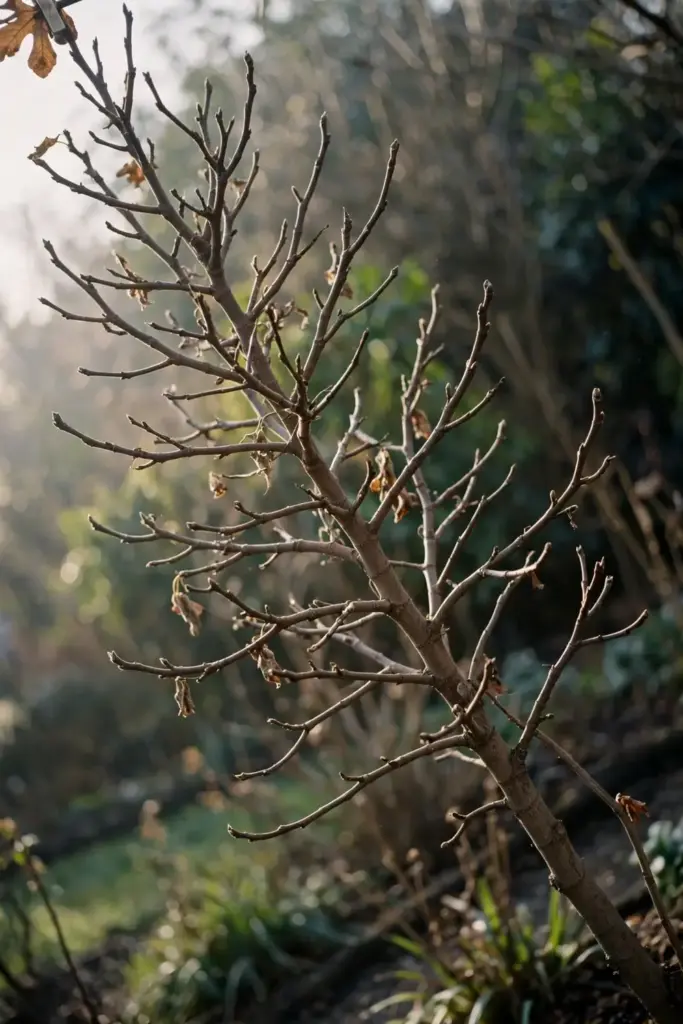
The LSU AgCenter guide is specific on timing. Selective pruning will increase airflow in the plant canopy. Pruning should be done in the dormant season to avoid freeze damage. Pruning in the growing season stimulates soft new growth, and that growth is vulnerable to freeze damage when cold weather arrives. Dormant pruning avoids that risk.
Airflow is the point of the cut. A dense canopy holds moisture on leaves long after rain stops. An open canopy dries fast. Thin the canopy by removing crossing branches, inward-growing branches, and weak shoots that crowd the center. Keep the main scaffold branches with space between them. Sunlight should reach the interior leaves for part of the day.
Keep the cuts small and clean. Cut at the branch collar, the swollen ring where the branch meets its parent limb. A clean cut at the collar closes fastest. Do not leave stubs, which seldom close over, and do not cut flush into the trunk wood, which opens a larger wound. The guide to spring pruning techniques covers clean cut placement for fruit trees in full.
Prune a fig tree into an open shape. A fig grown as a multi-trunk bush needs thinning of the oldest trunks every few years. A fig grown as a single-trunk tree needs its scaffold branches spaced around the trunk, not stacked on one side. Either shape works when air moves through it. The shape that traps humidity in the center fails no matter how tidy it looks.
Do not prune hard in one year to fix years of crowding. A fig tree cut hard in winter answers with a flush of soft shoots in spring, and those shoots stay wet and catch disease first. Remove a third of the crowded wood at most in one dormant season. Return the next dormant season for the next third. Steady thinning beats one hard cut.
Strategy 4: Water at the Base and Keep Leaves Dry
Water at the base of the tree. Never overhead irrigate a fig tree with thread blight.
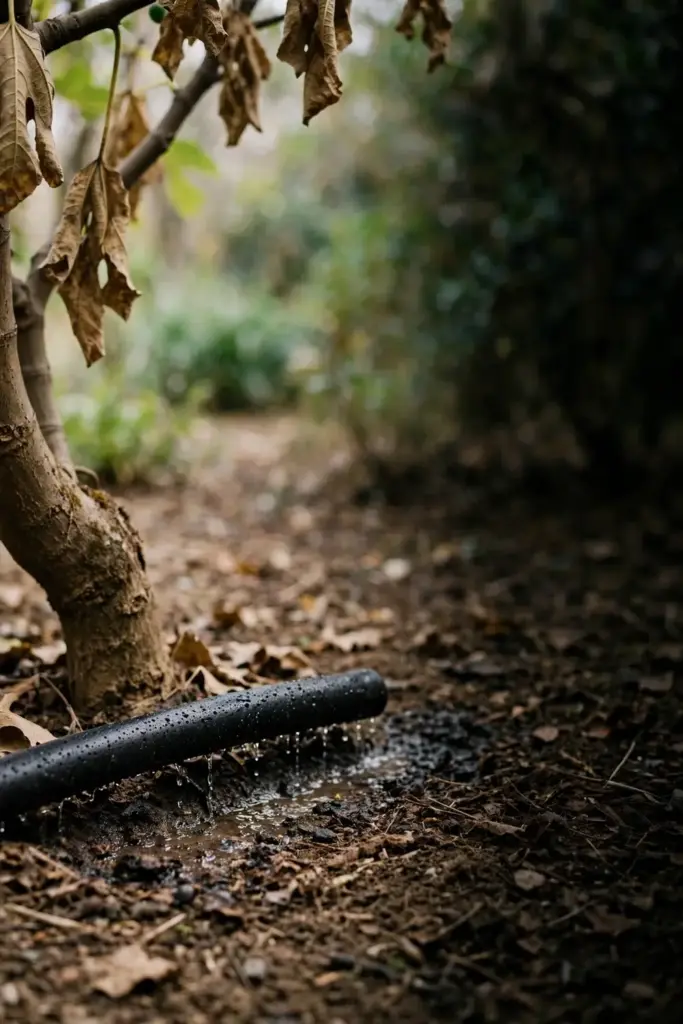
The LSU AgCenter guide states the rule plainly. Do not overhead irrigate, as leaf wetness promotes infection. Overhead water wets the whole canopy and holds it wet for hours. Base watering wets the soil and leaves the canopy dry. That difference is the whole strategy.
Use a soaker hose, a drip line, or a slow hose at the soil line. Lay the soaker hose in a ring around the drip line, not against the trunk. Water slowly so the soil absorbs it without runoff. Water in the morning so any splash that does reach low leaves dries during the day. A morning watering that splashes a little beats an evening overhead watering that soaks the canopy overnight.
Keep mulch off the trunk and out of the canopy. Mulch holds soil moisture and protects the root zone, and a mulch ring under a fig tree is good practice. Mulch piled against the trunk holds moisture against the bark and invites rot. Keep mulch pulled back from the trunk by a few inches, with the root flare visible. The same mulch discipline that prevents trunk rot in other trees prevents it in figs.
Fix sprinklers that hit the fig canopy. A lawn sprinkler that arcs across the fig tree every evening is an overhead irrigation system by accident. Redirect the head, shorten the arc, or move the sprinkler. A fig tree in a lawn that gets sprayed every night will show thread blight no matter how well the rest of the routine runs.
Reduce leaf wetness after rain too. Rain cannot be controlled, but its aftermath can. An open canopy dries fast after rain. A mulched, well-drained root zone does not pond water under the tree. A tree with space around it catches wind that dries the leaves. The pruning in Strategy 3 and the watering in Strategy 4 work together. One dries the canopy from inside. The other stops wetting it from above.
Strategy 5: Accept the Honest Limit and Skip Fungicides
Accept that sanitation controls thread blight on figs. It does not eradicate it. No fungicide fixes this disease for a home fig grower.
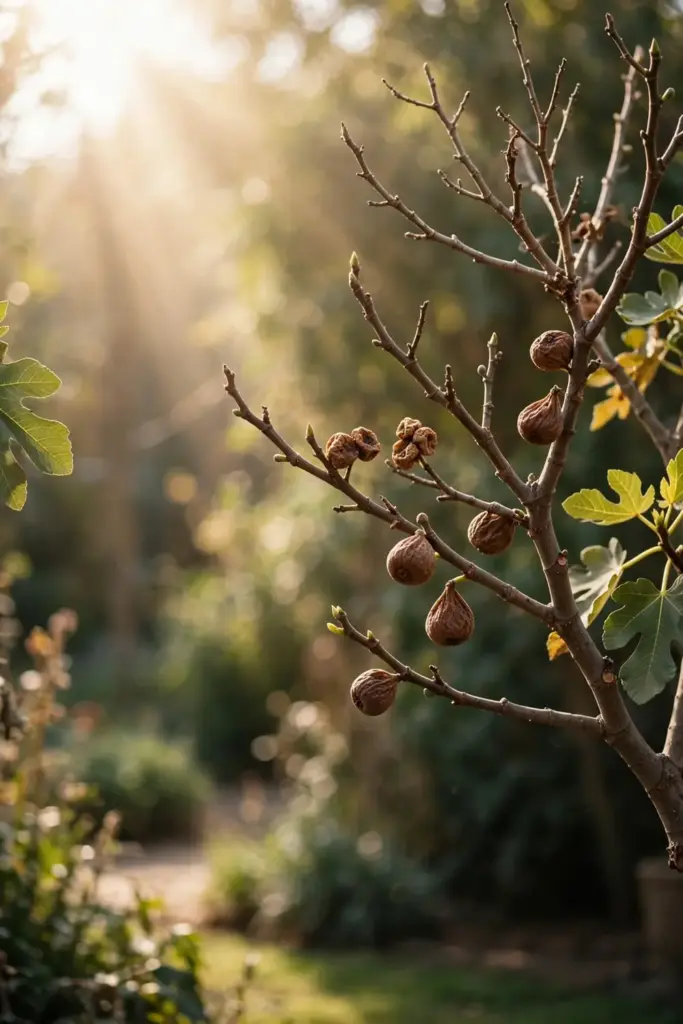
The LSU AgCenter guide states the limit in the management column. No fungicides are registered for thread blight management in Louisiana. That registration statement is Louisiana-specific, and this article phrases it exactly that way. The general home-press guidance goes further: figs with thread blight do not respond to fungicides. Gardening Know How states that sanitation controls the disease and reduces losses without eradicating it.
That honesty matters because the temptation runs the other way. A gardener who sees matted leaves wants a spray that fixes them. A spray cannot un-shrivel a leaf. A spray cannot remove sclerotia from debris. A spray applied after symptoms show protects nothing, because the infection already happened. The money spent on a spray buys less than the same money spent on bags, a rake, and an hour of cleanup.
Do not carry a commercial spray program into a home garden. Commercial fig guides may list products and schedules for production orchards. Those programs assume equipment, licensing, and scale that a home gardener does not have. They also assume a different cost calculation. A commercial grower sprays to protect a crop worth thousands of dollars. A home grower with one fig tree protects a crop worth a few baskets of fruit. The sanitation routine costs less and does more.
Do not confuse thread blight with fig rust when choosing a response. Fig rust is a separate fig disease with its own management, and the LSU AgCenter guide covers it on the same page. Fig rust drops its leaves instead of gluing them to the branch. The two diseases share the sanitation playbook: collect and destroy leaf debris, prune for airflow, keep leaves dry. They do not share a spray answer. Treating thread blight as fig rust, or the reverse, wastes effort on the wrong target.
Measure success by what the tree keeps, not by what the fungus loses. A fig tree with thread blight under a sanitation routine keeps more leaves, ripens more fruit, and enters winter with less inoculum than the same tree left alone. The fungus stays in the garden at a low level. That is the honest outcome. A routine that keeps the disease cosmetic and the harvest steady is a routine that works.
Living With Thread Blight Damage You Cannot Undo
Some damage stays. A fig tree with thread blight loses leaves and fruit that sanitation cannot bring back.
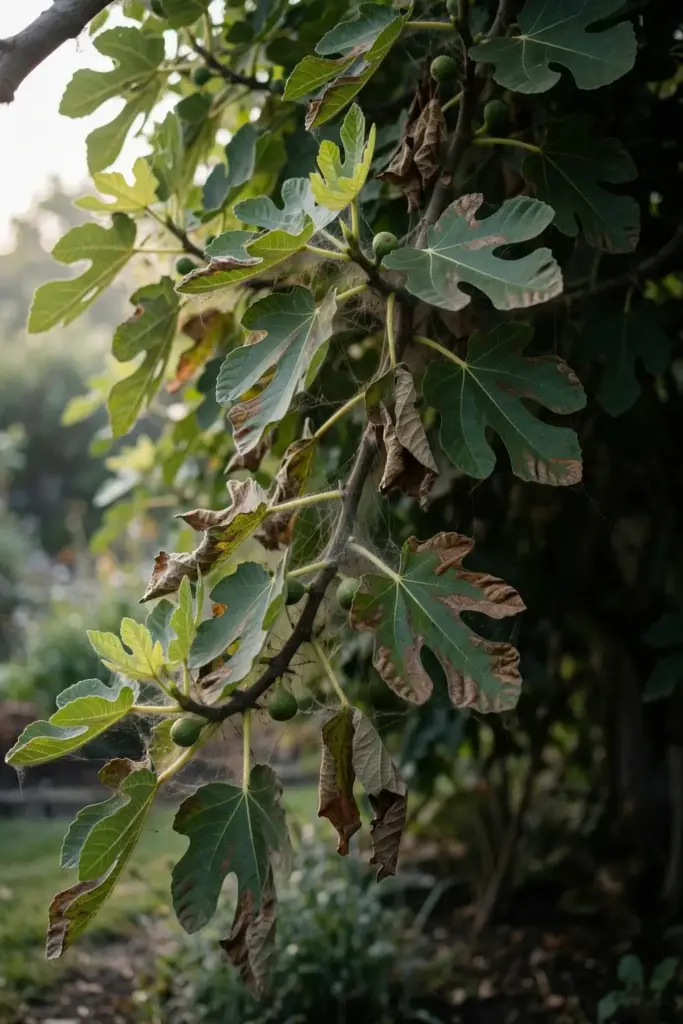
Fruit that hardens and dries before ripening is lost. Do not try to ripen it indoors. A hard, dry fig has no sugar to develop, and it carries the fungus with it. Bag it and trash it with the infected leaves. Sound fruit on the same tree is fine to eat. Wash it before eating, as with any orchard fruit. Thread blight does not make sound figs unsafe.
Leaves that shrivel and hang are dead. They will not green up again. Remove them, and let the tree replace them with new growth. A fig tree that loses leaves to thread blight in summer often pushes new leaves from the same shoots. Those new leaves need the same dry-foliage routine. A tree that defoliates every year and still crops earns its place. A tree that defoliates and stops cropping needs a harder look at site, drainage, and variety.
General bacterial blight care follows the same order: cut, clean, destroy, then keep the canopy dry. The guide to bacterial blight simple solutions covers that order for bacterial blight problems across the garden. The pathogens differ. The habits do not.
Do not plant a second fig tree in the same wet, airless spot and expect a different result. The fungus stays. The weather stays. The site stays. A new fig tree in the same spot faces the same spring with the same disadvantage. Fix the site first: open the canopy of the old tree, improve drainage, move the sprinkler, and give the new tree sun and air flow from the day it goes in. The guide to growing a fig tree from a single seed covers starting figs at home for readers who want to grow a new tree the slow way.
Check the figs around the garden too, including a neighbor’s tree that overhangs the fence. Thread blight does not respect property lines. Spores wash off a neighbor’s matted leaves in the next rain and land on your tree. A short conversation over the fence, plus an offer to bag the neighbor’s fallen leaves, protects both trees for the price of one afternoon.
Frequently Asked Questions
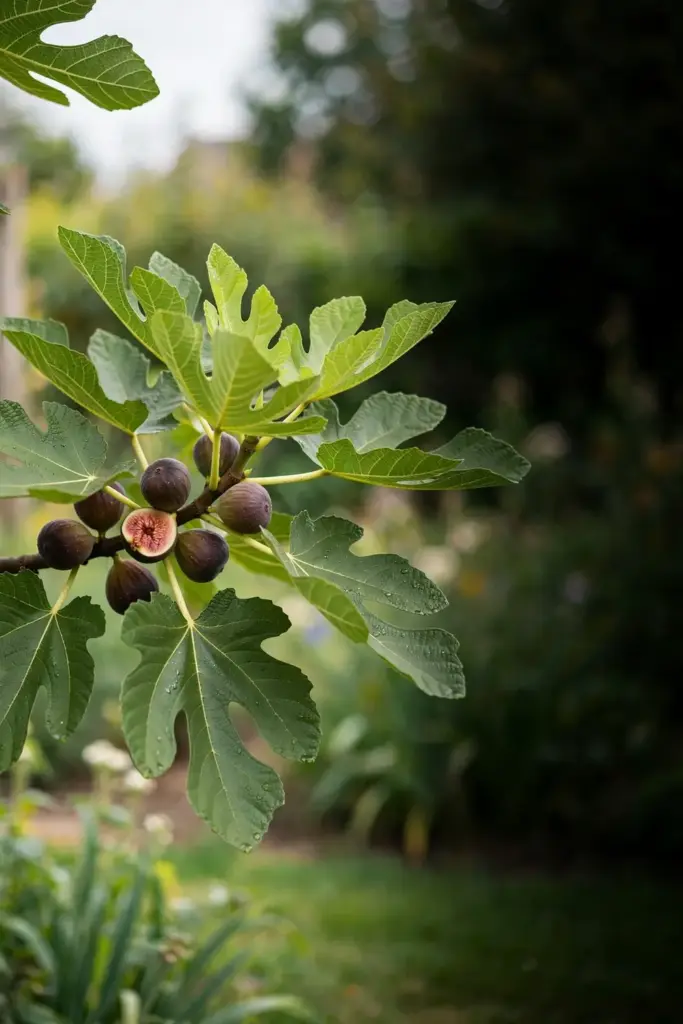
Thread blight rarely kills an established fig tree. The disease defoliates, disfigures leaves, and ruins fruit that catches it before ripening. A tree under a steady sanitation routine keeps most of its canopy and crops every year. A tree left alone for years loses more leaves each season and crops less. Death is not the usual outcome. Decline is. The sanitation routine above stops the decline.
No fungicide cures thread blight on figs for a home grower. The LSU AgCenter guide states that no fungicides are registered for thread blight management in Louisiana. Home-press guidance goes further: figs with thread blight do not respond to fungicides. Sanitation controls the disease and reduces losses without eradicating it. Spend the spray money on bags, a rake, and an hour of cleanup instead.
Never compost diseased fig leaves. The fungus survives as sclerotia in plant debris, and a home compost pile runs too cool to kill those structures. Finished compost then carries the fungus back under the tree. Bag infected leaves and branches, tie the bag, and put it in the trash. Burn them where burning is allowed. Composting is fine for healthy garden debris. It is not a disposal method for diseased fig leaves.
Prune in the dormant season. The LSU AgCenter guide gives that timing to avoid freeze damage from stimulated growth. Dormant pruning opens the canopy for airflow, which dries leaves faster in the growing season. Pick off infected leaves by hand any time you see them. Cut out heavily infected branches during the dormant pruning session. Do not prune hard in one year. Remove a third of the crowded wood at most per season.
Sound figs from an infected tree are fine to eat. Wash them before eating, as with any orchard fruit. Figs that harden and dry before ripening are lost. Do not try to ripen them indoors, since they carry the fungus and have no sugar left to develop. Bag dried figs and trash them with the infected leaves. A tree that keeps most of its canopy under a sanitation routine still ripens a useful crop.
Thread blight glues shriveled leaves to the branch with fungal threads. Fig rust drops its leaves instead. Thread blight starts as semicircular brown spots at the leaf base. Fig rust starts as small yellowish spots that turn reddish-brown, with blisters on the leaf underside. Both share the sanitation playbook: collect and destroy leaf debris, prune for airflow, keep leaves dry. Field identification stays presumptive. A lab confirms a case where it matters.
Where to Go From Here
Start with the rake. Walk the fig tree today and pick up every fallen leaf under the canopy.
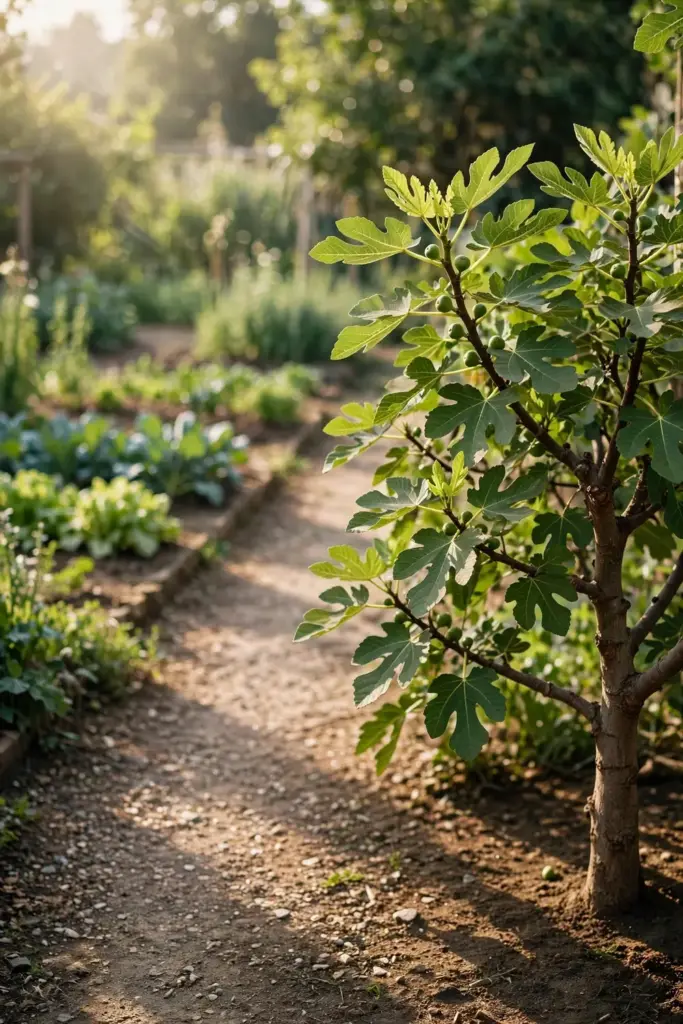
The order is rake, remove, prune in dormancy, water at the base, and skip the spray. One next action beats ten good intentions. Bag the leaves. Trash them. Pick off the matted leaves hanging on the branches. The tree keeps more leaves next season because of the cleanup done this season.