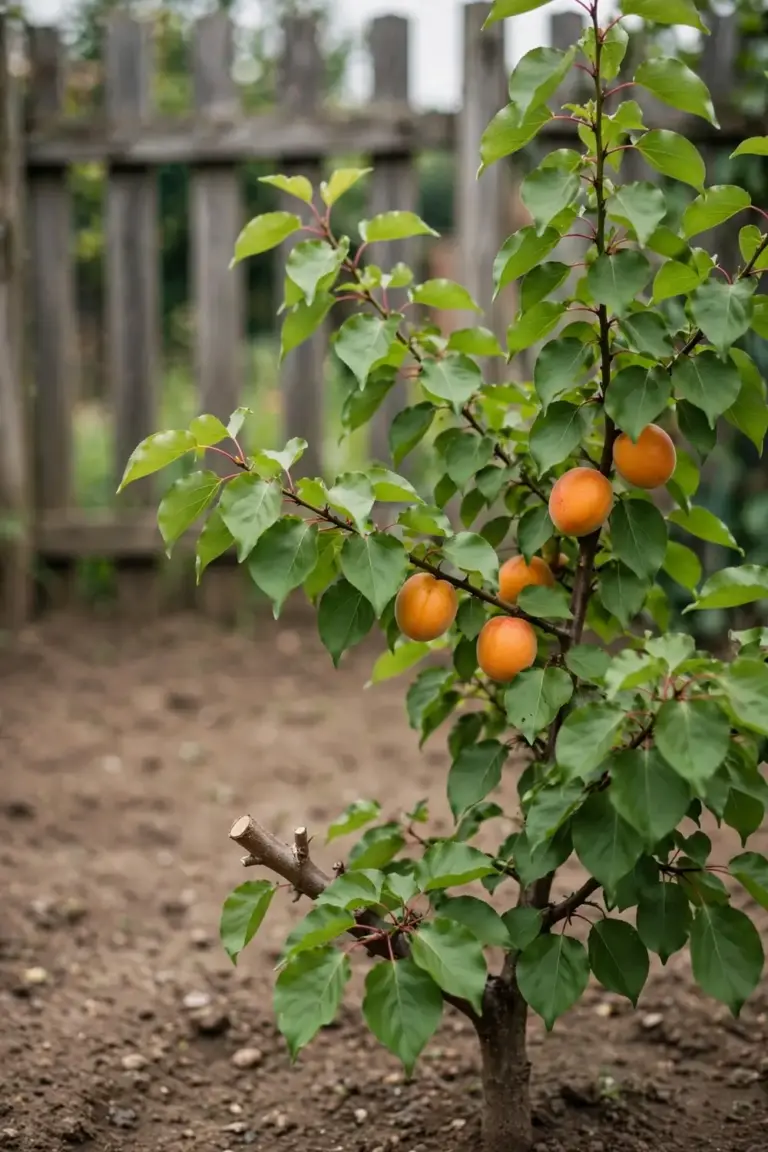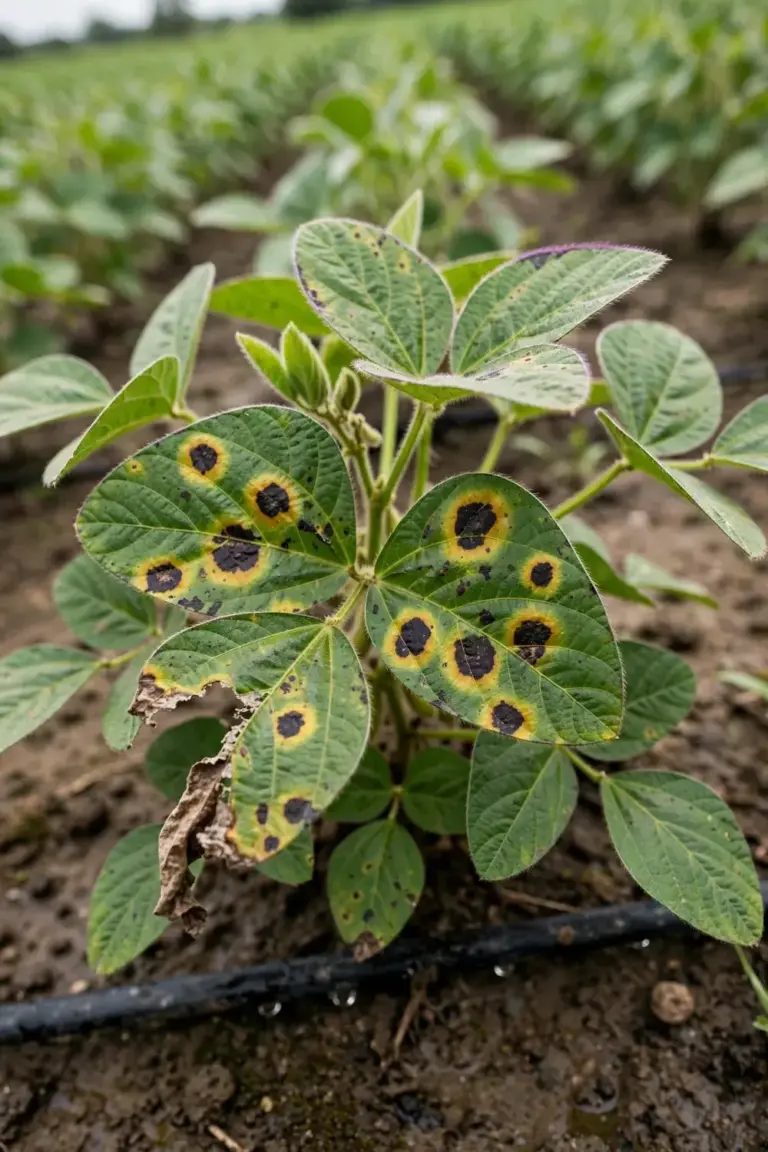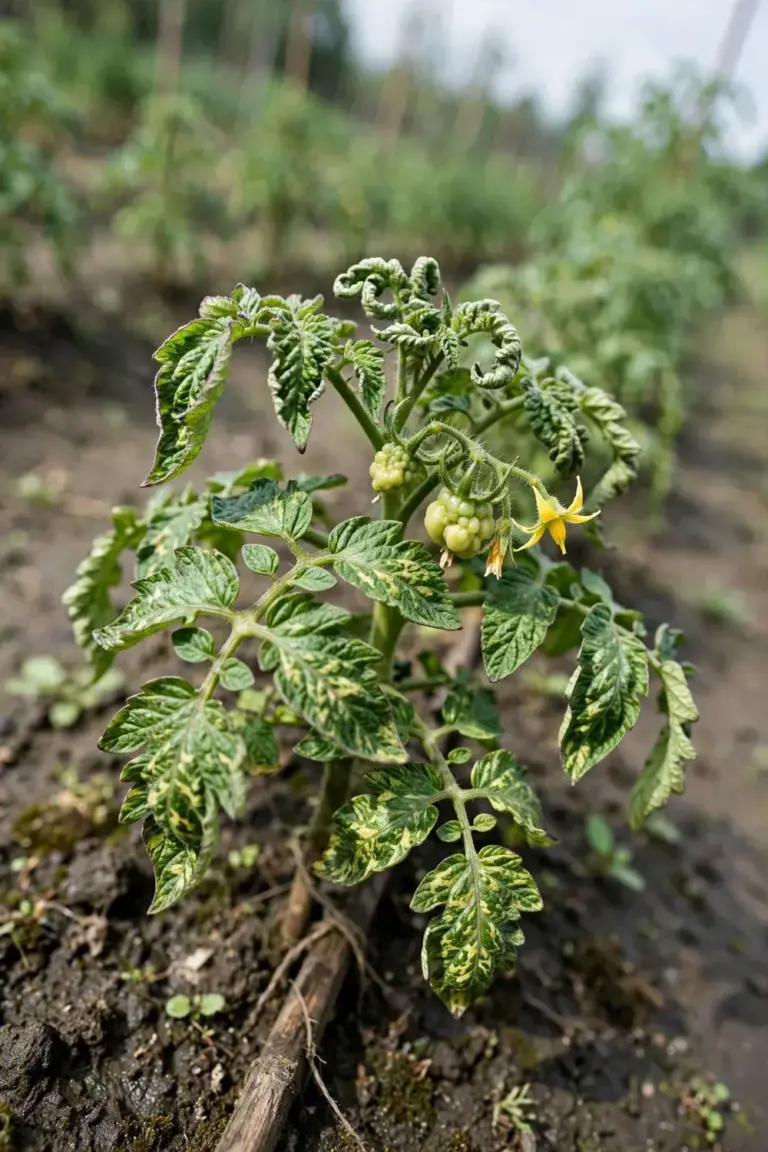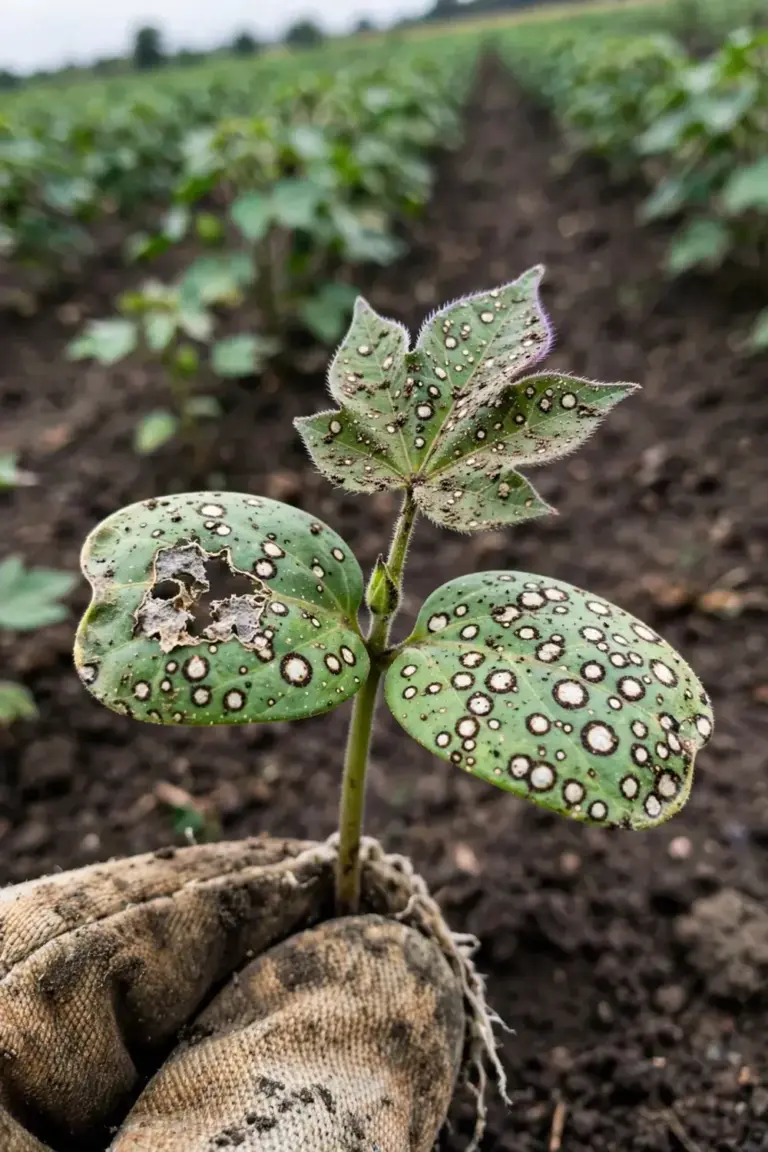

Check the leaves first, then the fruit, then the bark. Those 3 checks name 11 common apricot problems, and each one carries a different fix. An apricot tree is Prunus armeniaca, and this page runs a symptom-first diagnosis organized by plant part, so you start from the mark you see and land on the cause behind it.
The 11 problems below are the ones Australian apricot trees show most often. Leaves carry 3, fruit carries 4, branches and trunk carry 2, and the last 2 cover a tree that bears no fruit and a tree that dies from below ground. Work the list in order, and stop at the first match that fits what you see.
Start with the most visible symptom and check the plant part it sits on. If you searched what’s wrong with my apricot tree, this page answers that question by symptom, not by disease name. A gum flow points to a trunk disease. A fruit that drops or vanishes points to fruit pests, fruit thinning, or animals. When 2 problems could fit, the table below separates them by where the damage sits.
| What You See | Look At | Likely Problem | Section |
|---|---|---|---|
| Round holes in leaves, purple spots on fruit | Leaves and fruit | Shot hole | 1 |
| Yellow leaves, green veins | Newest leaves | Iron chlorosis or wet feet | 2 |
| Yellow spots on top, rusty dust below | Underside of leaf | Rust | 3 |
| Brown fruit with gray tufts, dried mummies | Fruit and blossoms | Brown rot | 4 |
| Perfect fruit, maggots inside | Cut fruit open | Queensland fruit fly | 5 |
| Small fruit falls before ripening | Ground under tree | Natural thinning or stress | 6 |
| Fruit vanishes overnight | Whole tree | Possums, birds, and bats | 7 |
| Sunken cankers, amber gum | Branches and trunk | Bacterial canker | 8 |
| One limb wilts and dies fast | One limb | Eutypa dieback | 9 |
| Flowers open, no fruit sets | Blossom timing | Chill hours, frost, or a young tree | 10 |
| Whole tree wilts, dies after warm weather | Crown and roots | Phytophthora root rot | 11 |
1. Shot Hole Punches Round Holes in Apricot Leaves
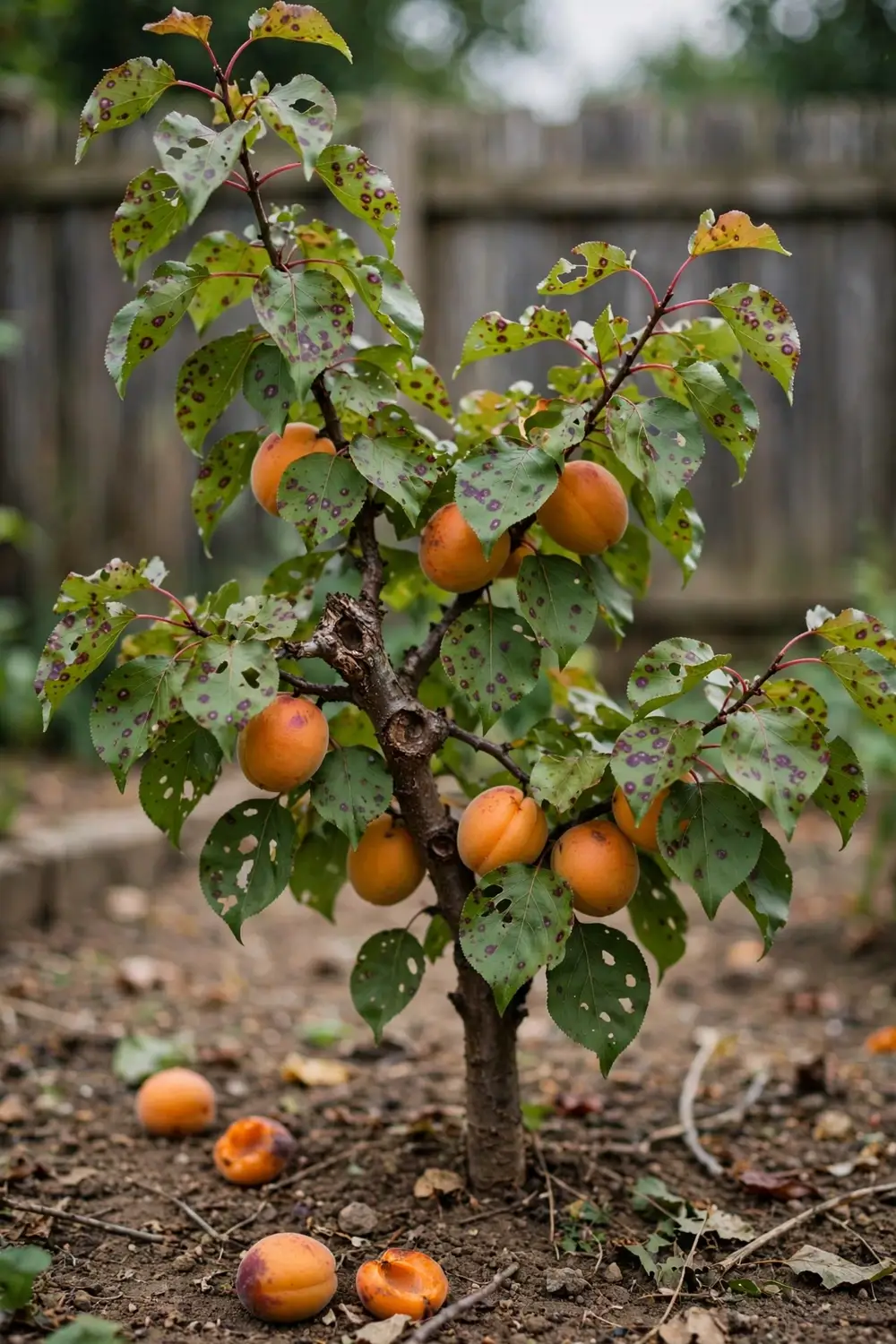
Shot hole starts as small round purple to tan spots on the leaves. The dead center of each spot drops out, and the leaf ends up punched with round holes. Fruit shows the same disease as purple spots that turn into white to gray lesions. The fungus behind it is Wilsonomyces carpophilus, and it overwinters in infected buds and twig cankers, then releases spores in spring rain.
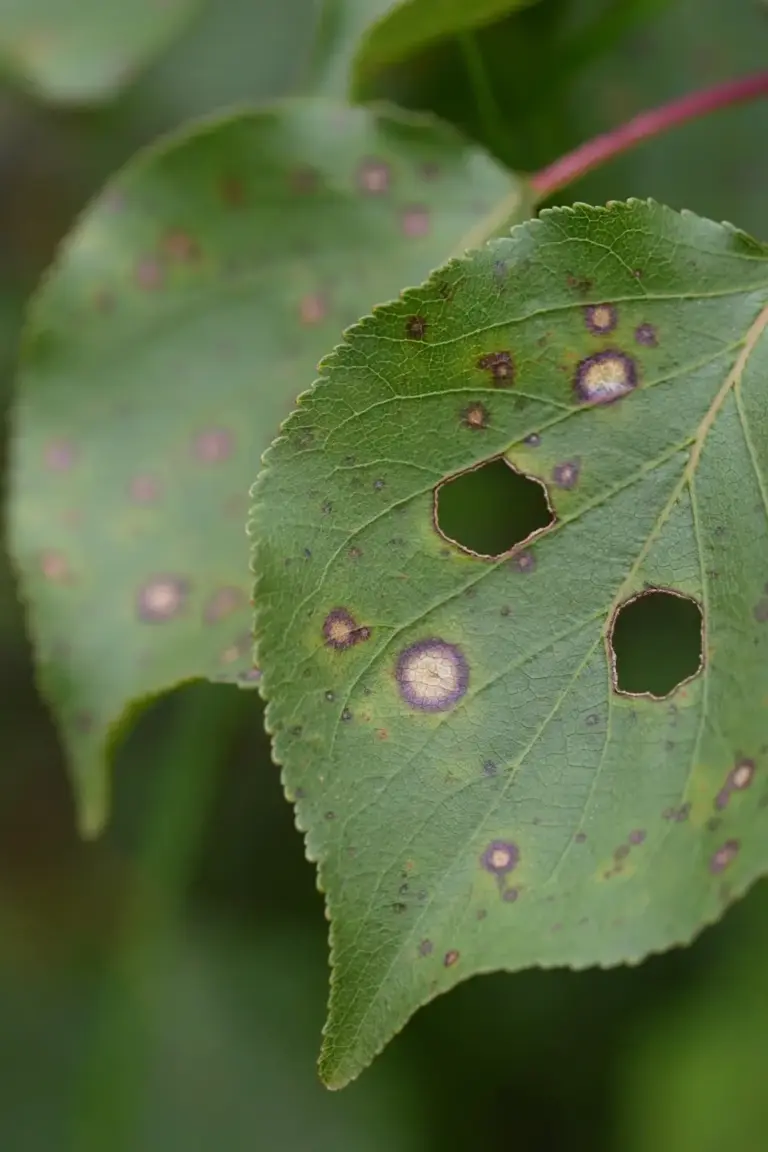
Leaf spots stay small, seldom wider than 6.4 mm, but a heavy infection shreds the canopy and marks the fruit. Utah State University Extension notes that thorough dormant-season pruning of infected twigs and branches is a major part of control for home gardeners. Cut out the infected wood in winter and destroy it, and keep irrigation water off the leaves and fruit.
Spray timing follows the fruit, not the calendar. Apply a fungicide at shuck fall, when the brown papery husk drops off the fruit, and repeat 2 weeks later. Spray again late in the season, when the fruit softens, only if a 4-hour rain is forecast. A tree that loses leaves to shot hole year after year still fruits, but the fruit carries the marks, so dormant pruning plus the shuck-fall spray is the pair that breaks the cycle.
Shot hole control is a 3-year job, not a one-season fix. Colorado State Extension reports that the fungus in infected buds and twigs can keep producing spores for 2 to 3 years, so control requires sprays plus dead-wood removal over a 3-year period. A single clean winter does not end it. Keep pruning out infected twigs every dormant season, and keep the shuck-fall spray going until the tree holds clean leaves 3 summers in a row.
2. Yellow Leaves Mean Iron Chlorosis or Wet Feet
Yellow leaves ask one question first: which leaves turned yellow. Iron chlorosis yellows the newest growth first, and the yellow deepens toward the shoot tip while the veins stay green. Nitrogen shortage yellows older leaves first and stunts growth. Waterlogging yellows leaves across the tree and leaves the soil wet underfoot. The pattern names the cause before any test.
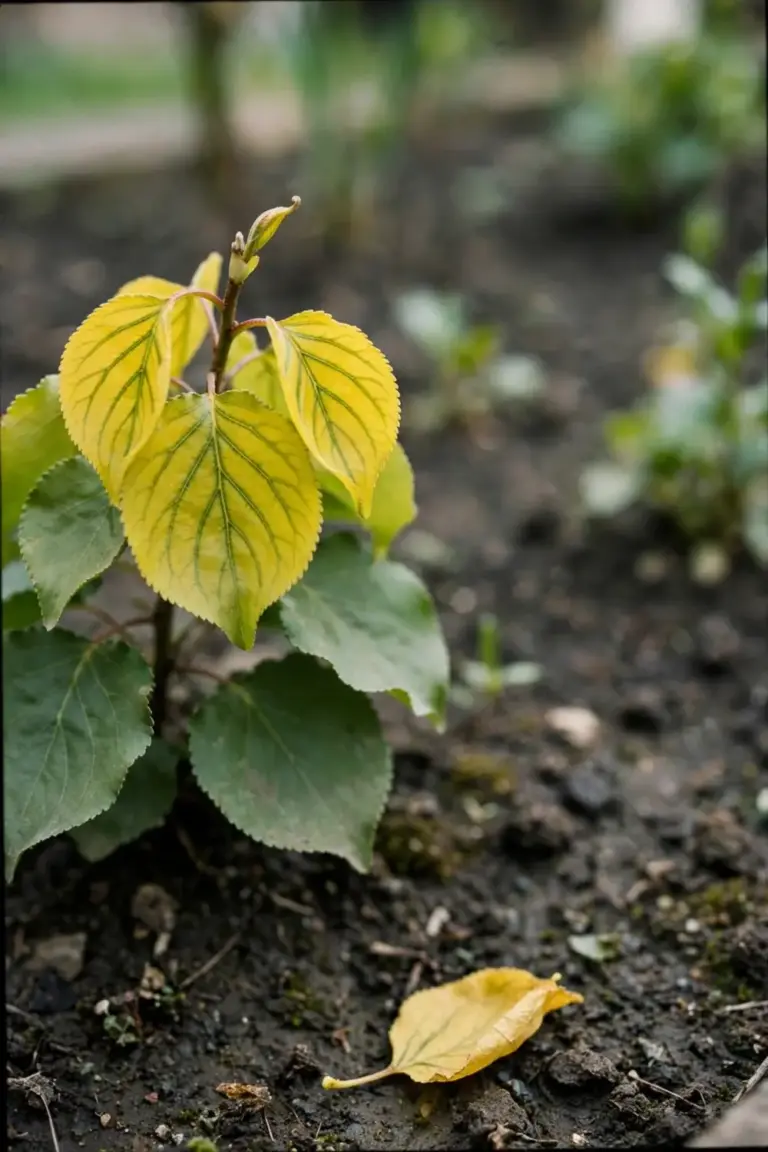
Iron chlorosis shows up most on high pH calcareous soils, rich in calcium and magnesium carbonates, or where soils stay waterlogged, according to Yara’s apricot nutrient guide. Fix the soil before you reach for a bottle. Improve drainage, keep mulch pulled back from the trunk, and test the soil pH. Building soil health with organic matter and drainage work does more for a chlorotic tree than a single spray.
Chelated iron treats the symptom while the soil work takes effect. Apply it per the product label, and recheck the newest leaves after 2 weeks. New growth comes out green when the fix works. Old yellow leaves rarely green up again, so judge the result by the shoot tips, not by the leaves that already yellowed. A tree that yellows again each spring on the same soil needs the drainage fix, not another bottle.
3. Rust Shows Yellow on Top and Rusty Pustules Below
Rust announces itself on the top of the leaf as small yellow patches that run together. Flip the leaf, and the underside carries the matching rusty brown spots. I flip the leaf before I name the spot, because rust shows on the underside first. The fungus is Tranzschelia discolor, and it spreads on airborne spores that need wet leaves to infect.
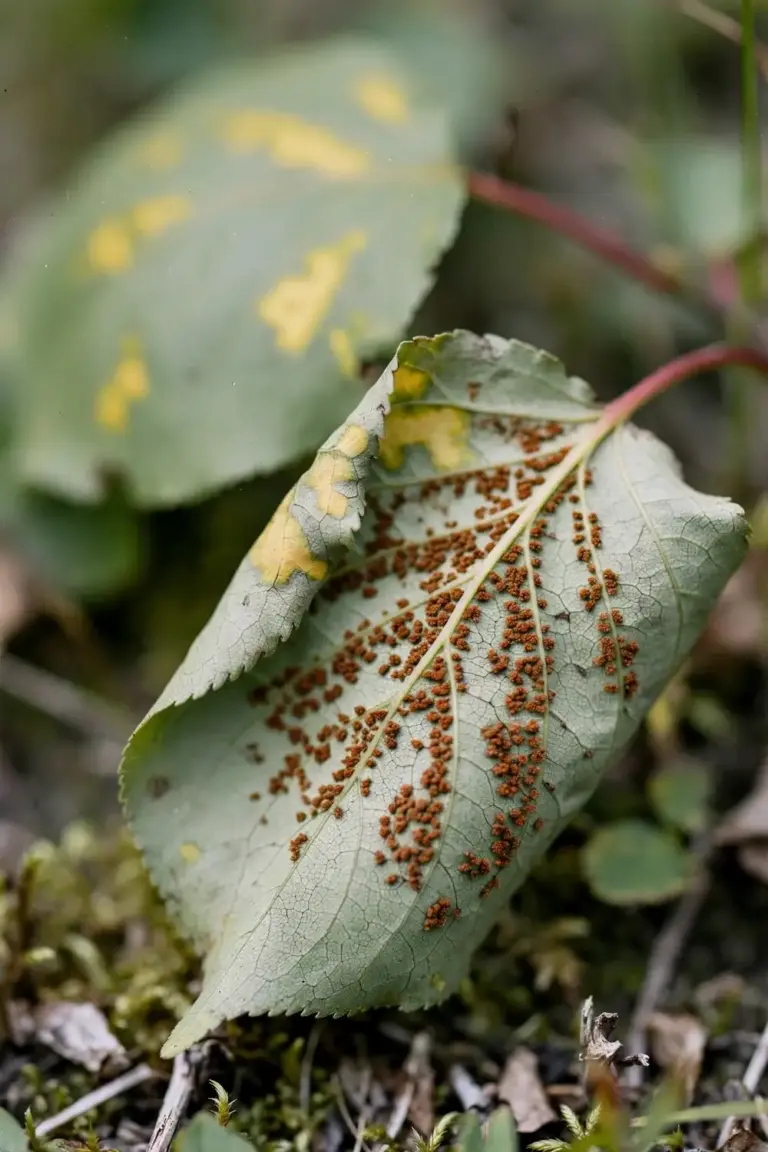
Fruit carries the same disease as small depressed spots with a dark reddish center, often with a pale green border. NSW DPI’s Primefact on rust of stone fruit states that fruit infections penetrate several millimeters into the flesh, which makes infected fruit unsalable. Leaves drop early under a heavy infection, and the tree loses vigor for the next season.
Control starts with airflow and sanitation. Open the canopy with summer pruning so leaves dry fast after rain, and clear fallen leaves from under the tree. A protectant fungicide applied at bloom, again at petal fall, and again 10 days later covers the infection window in a wet season. In a dry season, sanitation and airflow alone hold rust down, and spraying buys little.
Rust also hides in twig cankers. UC IPM notes that twig cankers are the first symptoms in spring after petal fall on 1-year-old fruiting wood, and a heavy early leaf infection can cause midseason defoliation and heavy fruit infection at harvest. Prune out cankered twigs in the dormant season, and check the bark of 1-year-old wood for the small blisters and lengthwise splits that mark a canker.
4. Brown Rot Turns Fruit Brown and Leaves Mummies
Brown rot hits blossoms first, then fruit. Blossoms turn brown and die, and the dead flowers stay stuck to the twigs. Fruit infections start as small brown spots, and under wet and humid conditions ash-gray to brown tufts of fungus grow over the infected area. Infected fruit rots fully, shrivels into a mummy, and either hangs on the tree or drops to the ground. The fungus is Monilinia fructicola, and it attacks peaches, apricots, nectarines, plums, and cherries, according to University of Nebraska-Lincoln Extension.
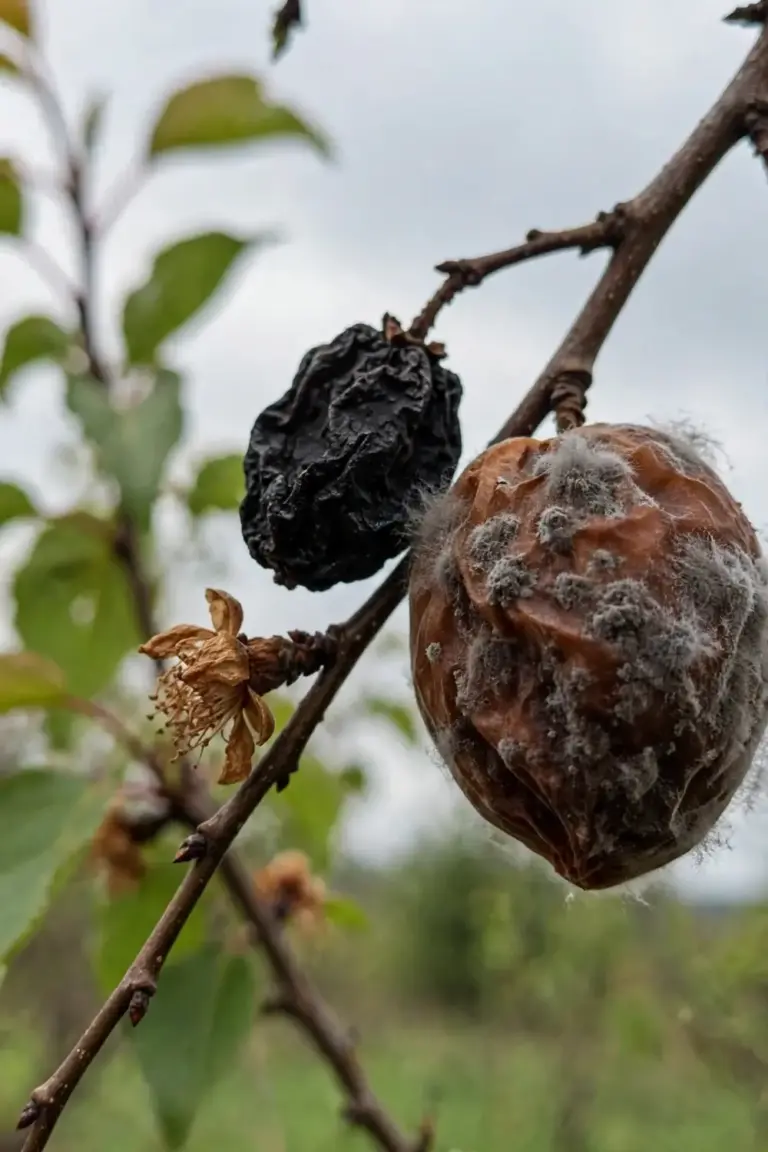
Mummies are the reservoir. The fungus overwinters in mummified fruit and infected twigs, then releases spores in spring rain. Winter sanitation cuts next season’s inoculum more than any spray. Remove every mummy from the tree and from the ground, and prune out twig cankers. Burn, bury, or bin the material. Never compost it.
Blossom blight is the same fungus working earlier in the season, and blossom blight on fruit trees covers that stage in full. For the fruit stage, pick off infected fruit the moment you see the brown spot, and keep the canopy open so fruit dries fast after rain. A fungicide at bud swell protects blossoms, and a spray a month before harvest protects ripening fruit. Once a fruit rots, no spray cures it, so the work is prevention and removal.
Cultivar choice shifts the odds. University of Nebraska-Lincoln Extension lists Goldcot, Harcot, Hargrand, Harogem, and Velvaglo as resistant apricot cultivars, and Harglow, Harlayne, Harojoy, Harostar, Harvald, and Vivagold as moderately resistant. Chinese Apricot, Puget Gold, and Tomcot sit at the susceptible end. A tree that rots every year despite sanitation may be a susceptible cultivar, and replanting with a resistant one pays off faster than spraying harder.
5. Queensland Fruit Fly Hides Maggots in Perfect Fruit
Queensland fruit fly is the cruelest apricot pest in Australia because the fruit looks untouched. The female stings ripening fruit and lays eggs inside. The skin shows only a small sting mark, or nothing at all, while maggots feed inside and the flesh turns to liquid brown rot. Cut open any suspect fruit. Maggots inside mean fruit fly, even when the skin looks clean.
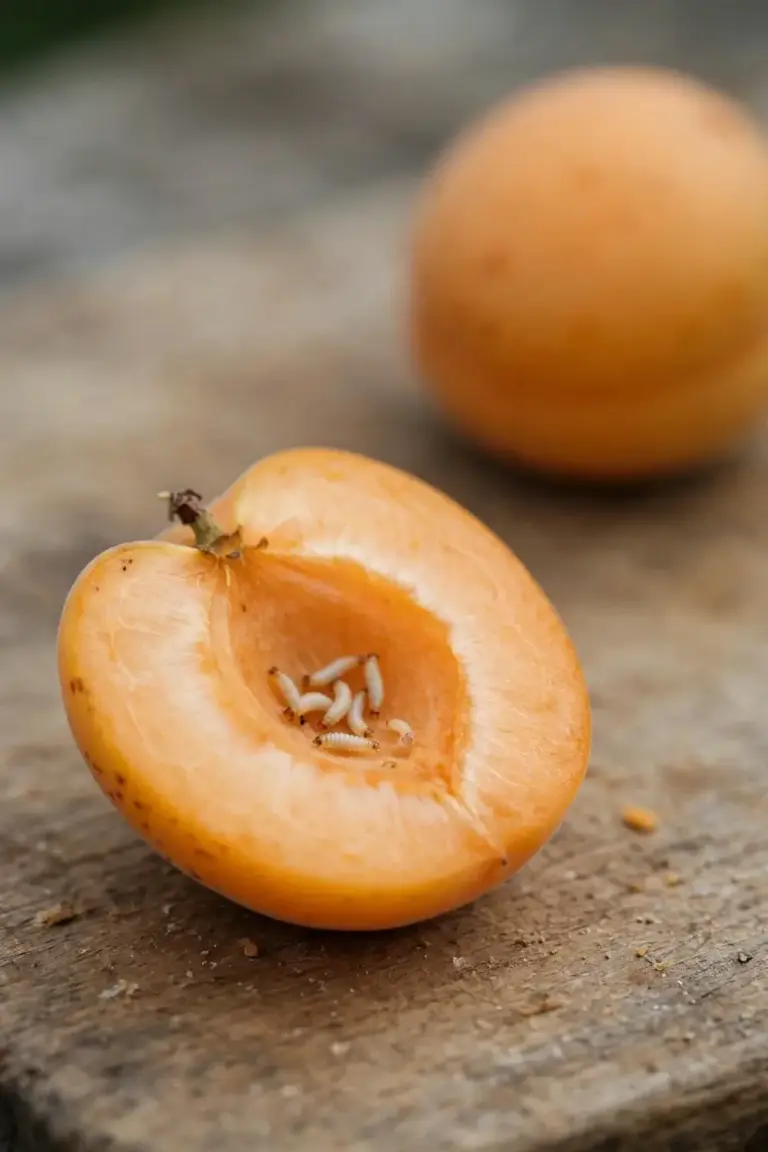
The life cycle runs fast in warm weather, with the full cycle taking as little as 4 weeks, according to the Sustainable Gardening Australia guide. That speed is why one infested fruit left on the ground seeds the next generation. Hygiene breaks the cycle. Pick fruit before it falls, collect fallen fruit daily, and destroy infested fruit by freezing, boiling, or sealing it in a plastic bag in the sun. Never compost suspect fruit.
Exclusion beats spraying for a home tree. Install netting after fruit set, at least 6 weeks before harvest, and check it for holes. Protein bait sprays applied to trunks and foliage 5 to 8 weeks before harvest, reapplied weekly, draw females away from the fruit, per the Lucidcentral Queensland fruit fly fact sheet. Traps monitor activity but never control a population alone. Net the tree, bait weekly, and clean up every fallen fruit, and the crop survives.
Harvest timing is a weapon. The Lucidcentral fact sheet advises picking mature green fruit early, because fruit fly attacks ripening fruit. Queensland fruit fly hosts include apples, pears, peaches, apricots, plums, cherries, citrus, tomatoes, capsicums, chillies, passionfruit, loquats, and strawberries, per Sustainable Gardening Australia. A single unpicked apricot left to rot feeds the next wave, and the wave spreads to every other fruit in the yard.
6. Fruit Drops Before It Ripens: Thinning or Trouble
Some fruit drop is the tree thinning its own crop. Most fruit trees set far more flowers than they can carry, and they shed the surplus in 2 waves. The first wave comes shortly after bloom, when unpollinated or weakly pollinated fruit drops. The second wave comes 3 to 4 weeks later, when fruit reaches 1.3 to 2.5 cm across, and competition for water and nutrients drives the drop. Purdue Extension calls this second wave June drop, and it looks alarming but it is the tree sizing its crop to what it can feed.
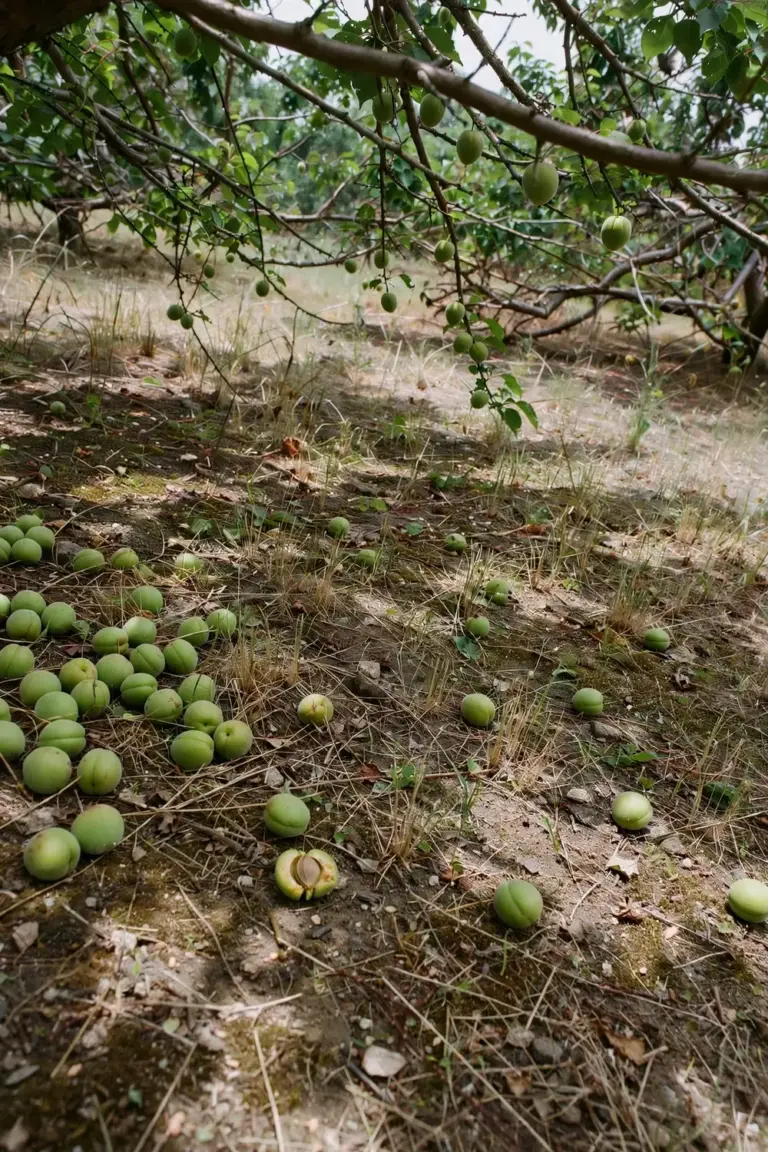
Hand thinning beats waiting when the set is heavy. Thin before the fruit reaches half its mature size, and leave 5.1 to 10.2 cm between apricots. Fewer fruit grow larger, and branches stop breaking under the load. Pull the smallest and most blemished fruit first, and leave the strongest fruit on each spur.
Drop outside the normal pattern points to stress. Cold injury, uneven watering, and pest or disease pressure all push extra fruit off the tree. A tree that drops nearly everything after a heavy set is usually overbearing or biennial, and thinning at fruit set next season steadies it. A tree that drops fruit with spots, gum, or maggots has a disease or pest problem, and the drop is a symptom, not the diagnosis. Find the mark on the dropped fruit before you act.
7. Possums, Birds, and Bats Strip Fruit Overnight
Wildlife damage looks different from disease damage because the fruit is gone, not rotten. Possums strip fruit overnight and leave torn skin and half-eaten fruit on the ground, while birds peck holes in ripening fruit and leave the rest hanging, and flying foxes take whole fruit and leave crushed skin under the tree. A tree stripped bare in one night has an animal problem, not a fungus, so look for the culprit pattern before you spray anything.
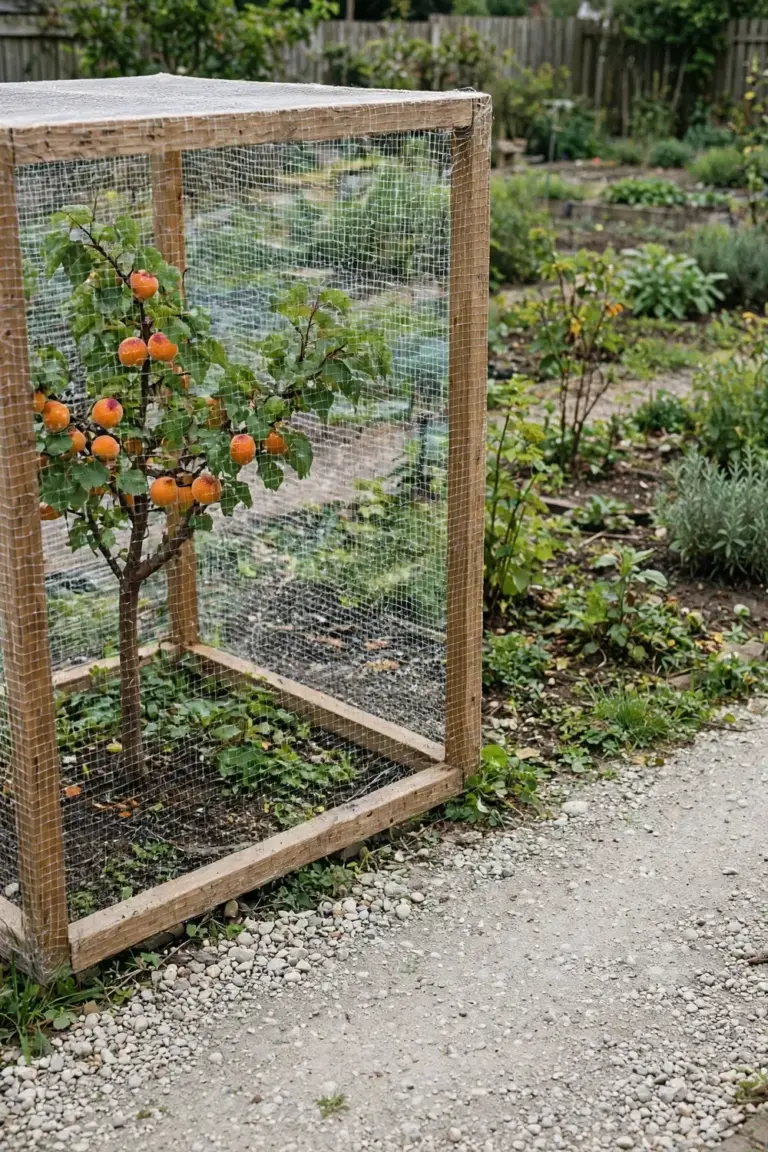
Netting is the only reliable answer, and the mesh size decides whether it helps or harms. Wildlife Victoria requires netting on household fruit trees to have a mesh no greater than 5 mm by 5 mm at full stretch, under rules in force from 1 September 2021. Wide mesh entangles birds, possums, and flying foxes, and the struggle cuts deep. Use white netting so nocturnal animals see it, pull it taut over a frame, and remove it once the harvest ends.
Fruit bags cover a smaller crop with less risk. Slip a bag over each cluster after fruit set, and leave the rest of the tree open for birds and bats. A tree collar or guard near the base stops possums climbing into the canopy. Pick fruit a day early rather than leaving ripe fruit on the tree overnight. The animals come for ripe fruit, and an early pick removes the invitation.
Check the net daily while it is up. Wildlife Victoria advises checking trees daily for entangled wildlife, removing netting once fruit is harvested or over-ripe, and never throwing netting loosely over a tree. Fix netting tightly to branches or tie it onto the trunk, and consider netting selected branches only. Leave the rest of the tree open. A taut, fine-mesh net that you check every morning protects the crop without harming the animals.
8. Bacterial Canker Sinks Cankers and Oozes Amber Gum
Bacterial canker shows up in spring as limb dieback with rough cankers and amber gum. The bark sinks into a dead patch, and gum oozes from the margin. Leaf spot and blast of young flowers and shoots come with it. The bacterium is Pseudomonas syringae, and it spreads in splashing rain, favored by high moisture and low temperatures in spring.
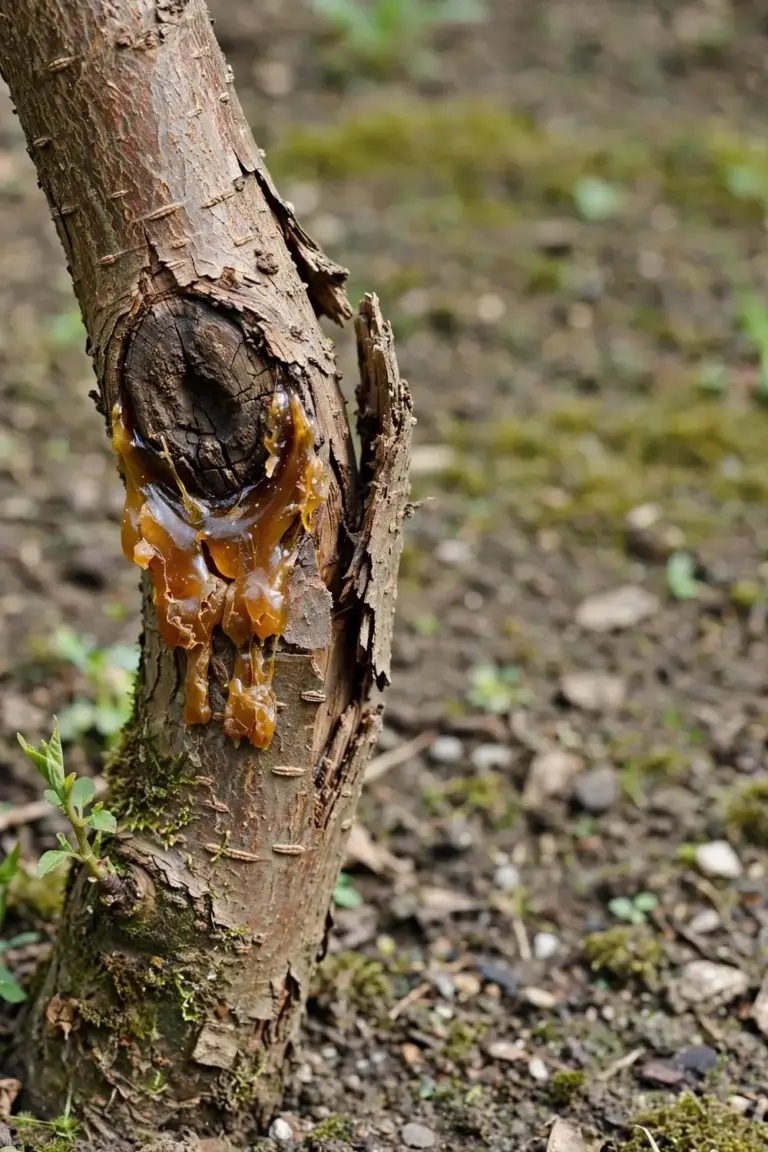
A sour sap phase hides the canker. In that phase the tree shows no gum and no canker, but the inner bark turns brown, fermented, and sour smelling. Orange or red flecks under the bark mark the invasion. Trees often sucker heavily from near ground level or below the infected limbs. Cut into the bark beside a suspect limb and check the inner bark before you decide the tree is healthy.
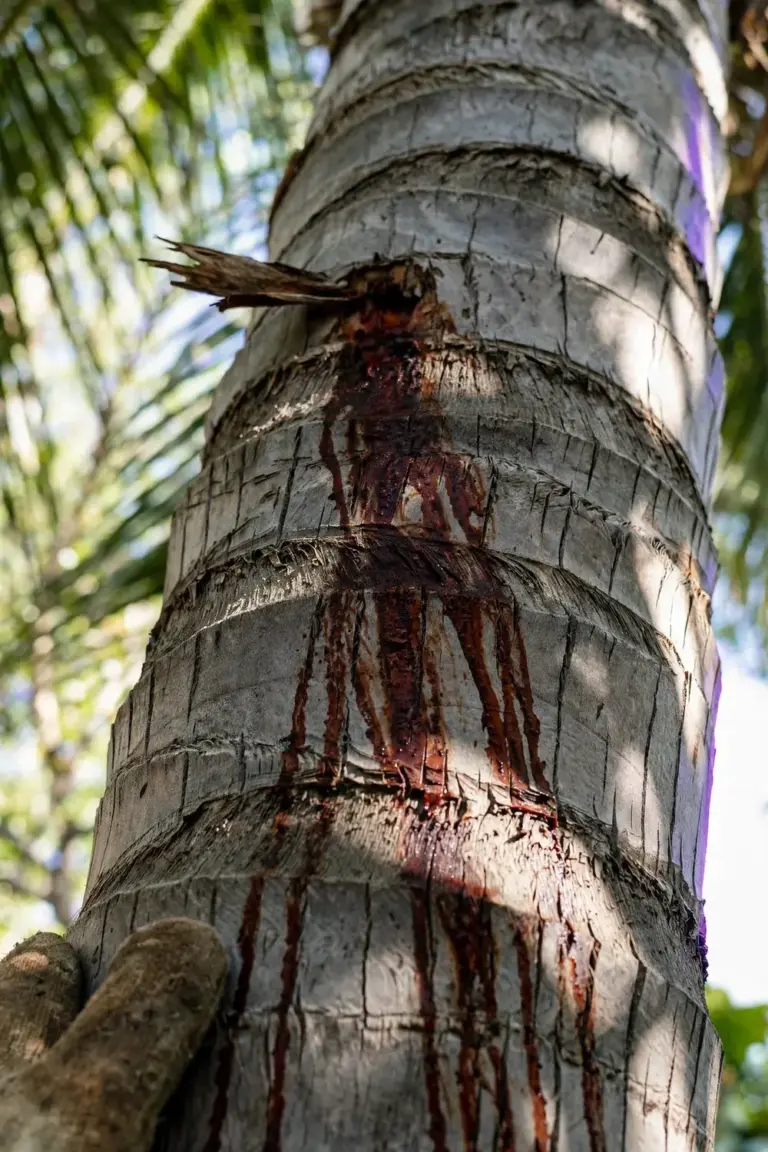
Control is site work and vigor, not a cure. UC IPM’s apricot bacterial canker guide notes that young trees from 2 to 8 years old take the worst damage, and the disease runs hardest in low, gravelly, sandy spots and soils with shallow claypans 61 to 91 cm deep. Plant on ground that drains, keep the tree vigorous, and avoid wounds in wet weather. Prune out cankered limbs in dry weather, cutting back to clean wood, and disinfect tools between cuts. Copper sprays in dormancy protect fresh wounds in a wet winter. Bacterial canker in fruit trees covers the full canker group across stone fruit. A canker that girdles a limb kills that limb, so cut it out early.
9. Eutypa Dieback Wilts a Whole Limb Overnight
Eutypa dieback kills fast and visibly. One limb wilts in late spring or summer, and the wilted leaves stay attached. The bark over the canker turns dark and rough, and brown gum seeps from the margin. Cut into the wood and the discolored tissue forms a U or wedge shape. The fungus is Eutypa lata, and it enters through pruning wounds that stay wet after rain.
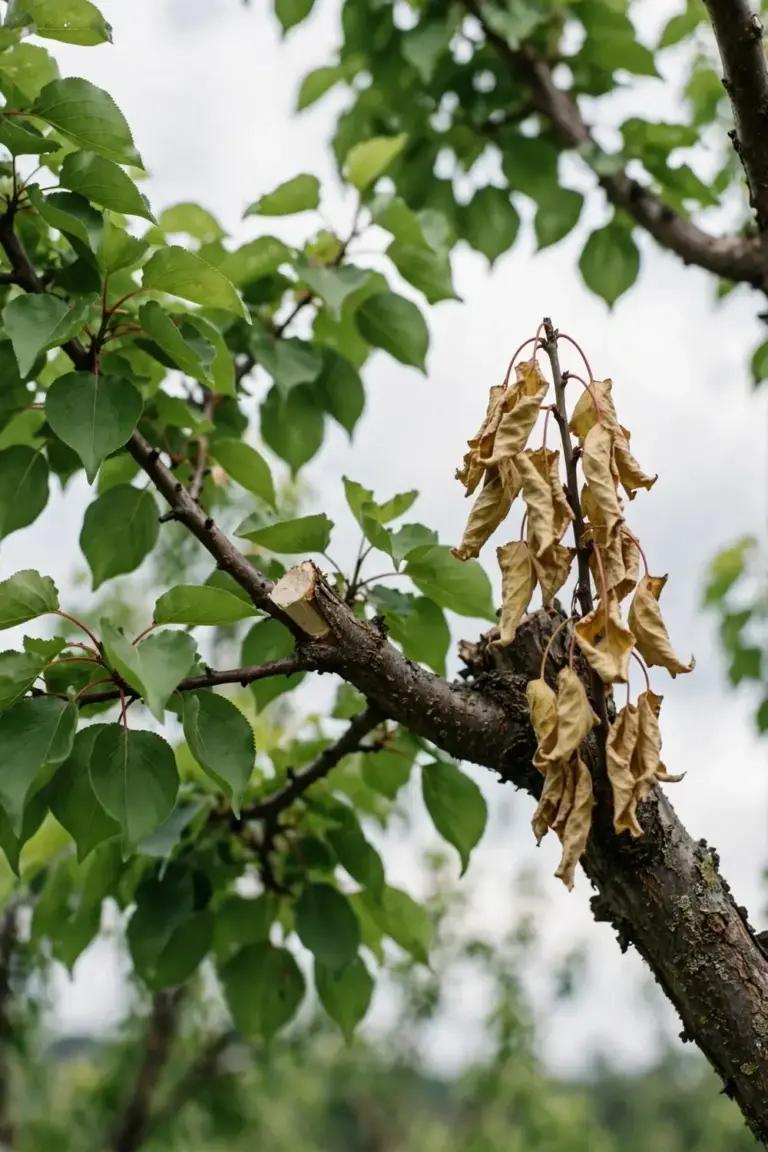
Pruning season is the whole control. Rain 2 to 6 weeks after pruning infects fresh wounds, so apricots get pruned in summer, after harvest, when wounds dry fast. The UC Real Dirt advisory puts the preferred window in July and August, before the first fall rains. Prune at least 6 weeks before winter rain so cuts close before spores fly.
Cut out infected limbs at least 30.5 cm below any internal discoloration, per UC IPM guidance. Check the cross-section as you cut. Keep cutting back until the wood runs clean, with no wedge of dark tissue. Disinfect tools between cuts, and destroy the infected wood. Sealants and wound paints disappoint, because they crack and trap moisture under the seal. A clean cut in dry summer air heals better than any paint.
10. No Fruit: Chill Hours, Late Frost, or a Young Tree
A healthy apricot that flowers but sets no fruit has a timing problem, not a disease. Apricots need winter chill to break dormancy, and apricots that need only 300 chill hours break dormancy early, then bloom into a late frost that kills the flowers. A hard frost during or just after bloom destroys the blossoms, and the tree carries no fruit that year even though it looked fine in flower. Frost pockets at the bottom of a slope collect cold air and lose crops first.
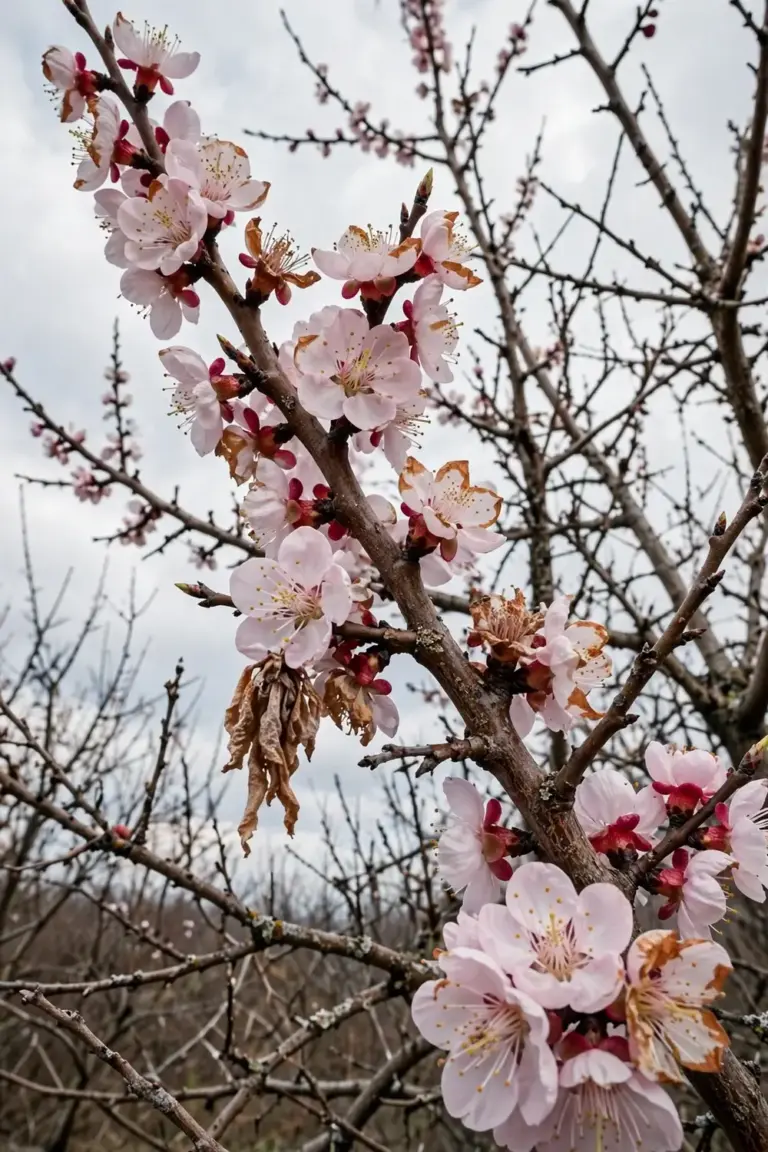
Pollination rarely causes a total crop failure. Most apricot varieties are self-fertile, so one tree fruits alone. Bees stay home in cold, wet, or windy bloom weather, and a cold snap during bloom cuts pollination even on a self-fertile tree. Never spray insecticide on a tree in bloom. The spray kills the pollinators the tree needs.
Age explains a young tree that flowers lightly and sets nothing. Apricots fruit young and reach full production with age, so a tree in its first couple of seasons owes you nothing yet. A mature tree that suddenly stops fruiting after years of crops needs a check for chill shortfall, frost damage, or overcropping the year before. A tree that overbears one year often rests the next, and thinning at fruit set steadies the cycle.
11. Phytophthora Root Rot Kills From Below Ground
Phytophthora root and crown rot kills apricots from the roots up, and the first signs look like thirst. Leaves wilt, dry, and stay attached to the tree. Growth slows, leaves come out small, and the canopy thins. Crown rot moves fast, and trees collapse and die soon after the first warm weather of spring. Root rot moves slower, and a tree can stay unthrifty for several years before it dies. The pathogen is Phytophthora, a soilborne water mold, and UC IPM’s apricot Phytophthora guide states that periods of 24 hours or more of saturated soil favor infection.
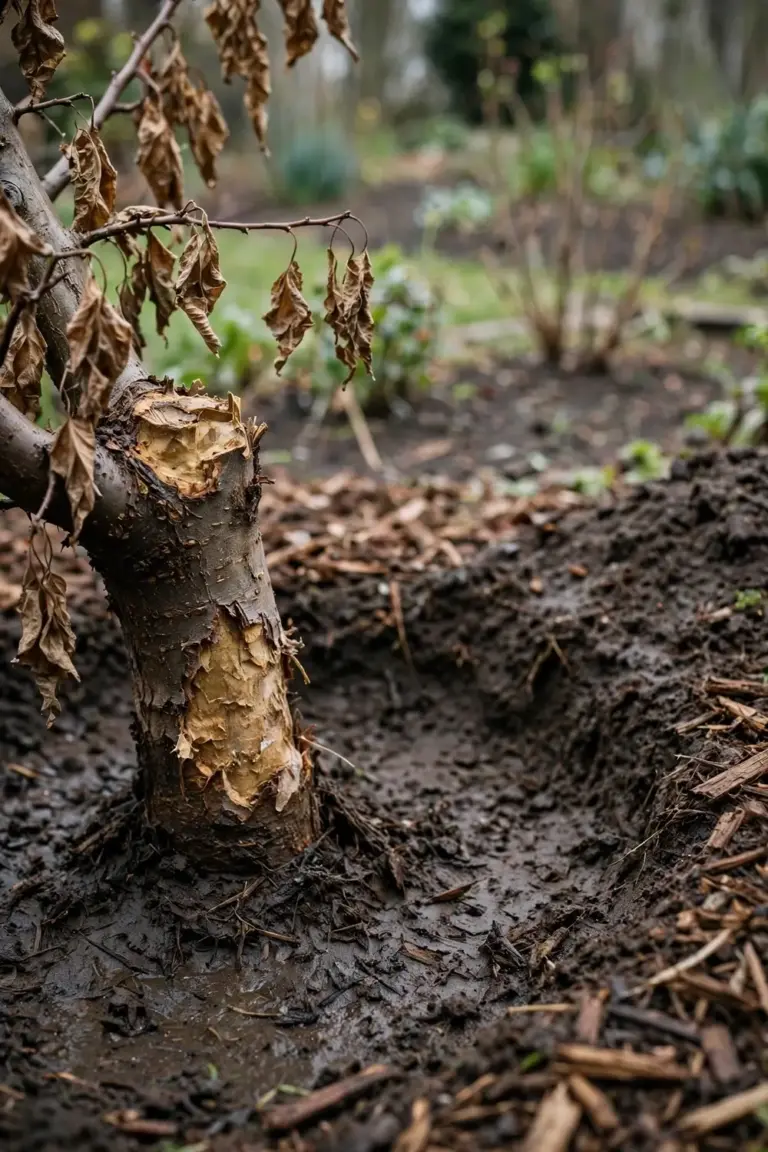
Drainage is the whole prevention. Plant on a slight mound or berm so water runs away from the crown, and never let irrigation water stand around the trunk. Shorter, more frequent irrigations beat long soakings on heavy soil. What is mulching helps here only when the mulch stays pulled back from the trunk, because mulch piled against bark holds moisture where the crown rots.
Dig to confirm before you treat. Scrape the bark at the crown and check the cambium. Healthy cambium runs off-white, while infected cambium turns tan to cinnamon brown, and feeder roots go black and few. A tree with a girdled crown cannot be saved, so replace it and fix the drainage before replanting. Phosphonate sprays suppress the disease on newly planted trees in a site with a history of rot, but no spray fixes a crown that is already girdled.
Rootstock choice helps at replanting. UC IPM notes that rootstocks vary in susceptibility, and none resist all Phytophthora species, but Marianna 2624 and Myrobalan 29C show some resistance. Plant the replacement on a slight mound with a resistant rootstock, and keep irrigation water off the crown. A site that killed one apricot kills the next one unless the drainage changes first.
Frequently Asked Questions
Summer yellowing points to water or nutrients, not disease. Check which leaves yellowed first. Newest leaves with green veins mean iron chlorosis on high pH or waterlogged soil. Older leaves yellowing first mean nitrogen shortage. Soil that stays wet points to drainage. Test the soil, fix the drainage, and treat the shortage the test names.
A tree with cankers on small limbs can be saved by pruning out the infected wood in dry weather, cutting back to clean bark. A tree with cankers girdling the trunk cannot be saved, because the canker cuts the flow of water and nutrients. Keep the tree vigorous, plant on draining ground, and spray copper in dormancy to protect wounds.
No spray cures brown rot once fruit rots. Prevention works: remove every mummy and infected twig in winter, open the canopy for airflow, and spray a fungicide at bud swell for blossom blight and a month before harvest for fruit rot. Pick off infected fruit at the first brown spot, and never compost diseased material.
Net the tree with wildlife-safe mesh after fruit set, at least 6 weeks before harvest. Apply protein bait to trunks and foliage 5 to 8 weeks before harvest, weekly. Pick fruit before it falls, collect fallen fruit daily, and destroy infested fruit by freezing, boiling, or solarizing in a sealed bag. Traps monitor, but they never control a population alone.
No. Apricots get pruned in summer, after harvest, because winter pruning wounds stay wet and invite Eutypa dieback. Prune in July and August, at least 6 weeks before winter rain, so cuts close before spores fly. Remove dead and infected wood in dry weather, disinfect tools between cuts, and destroy the pruned material.
Walk the Tree Once a Week and Catch Trouble Early
A weekly walk catches every problem on this page while it is still small. The next time you ask what’s wrong with my apricot tree, look at the leaves, then the fruit, then the bark, and check the ground under the tree for dropped fruit. Carry shears and a bag, and remove anything suspect on the spot. The apricot rewards the gardener who looks often and acts fast, with clean fruit on a tree that stays healthy year after year.