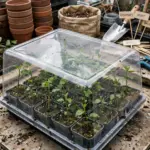
Bend 1 low branch to the soil, pin it down, and wait 6 weeks. Layering is when the gardener coaxes roots from a stem while it still hangs on its parent plant, then cuts the new plant free once its roots hold.
Layering suits the plants that refuse cuttings. A shrub that drops every cutting you take will often root a layered branch without a fuss, because the parent keeps feeding it through the whole job. The new plant arrives large, with roots and shoots ready, instead of starting life as a bare stick in a pot.
| Item | Detail |
|---|---|
| What it is | Rooting a stem while still attached |
| Types | 5: tip, simple, compound, mound, air |
| Rooting time | Air layers take 6 to 10 weeks |
| Watch out for | Cutting the stem free too soon |
What Is Layering?
Layering is a technique of plant propagation where the new plant remains at least partially attached to the mother plant while forming new roots. The stem stays joined to the parent, the parent keeps sending water and food down the stem, and roots grow at the buried or wrapped point. Once the roots are strong enough, the gardener cuts the stem below the new roots, and the layered piece becomes a plant of its own. The 5 basic types of layering are tip, simple, compound, mound, and air, as the Oklahoma State University Extension layering guide lists them.
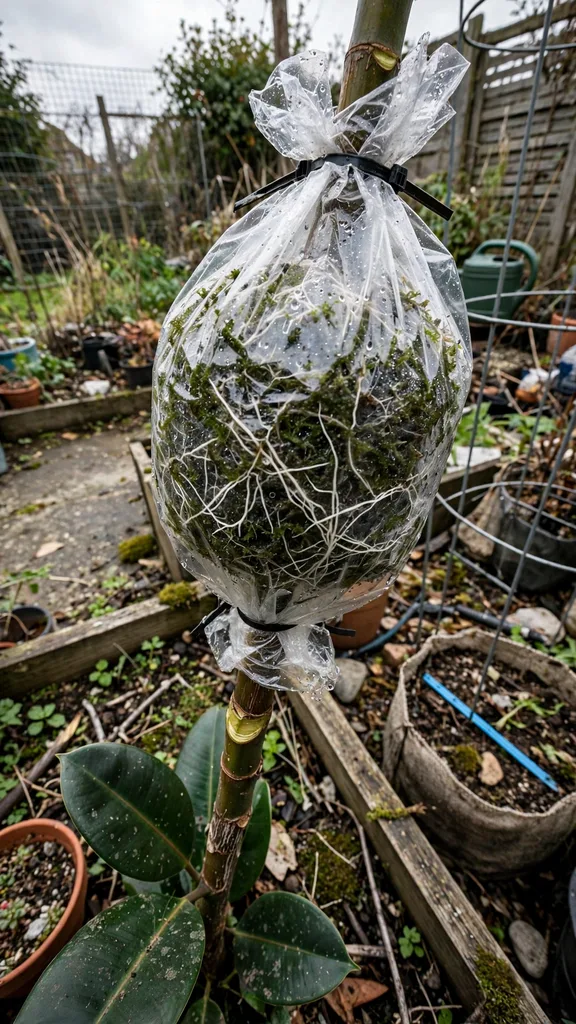
Layering needs no special tools and no mist bench, which sets it apart from cuttings. A pin, a knife, and a handful of damp moss cover most jobs. It also wastes little: a cutting that fails is gone, while a layered branch that fails stays on the parent and tries again next season. The price is patience. A layer roots in weeks or months, not days, and the gardener must check the moss or soil through the whole wait. That trade suits shrubs and houseplants that root slowly, where a large new plant is worth the wait.
How Layering Works
A layer roots because a wound changes the flow of food in the stem. Nicking or ringing the bark stops sugars moving down past the wound, so they gather at the cut and feed new root cells. Burying the wounded point in damp soil, or wrapping it in damp moss, keeps the new roots moist while they grow. For air layering, find a branch about midway up the trunk, within reach, that is about 2.54 to 5.1 cm in diameter. Peel off a ring of bark 2.54 to 5.1 cm wide, wrap the wound in moist moss, and seal it in plastic so the moss never dries.
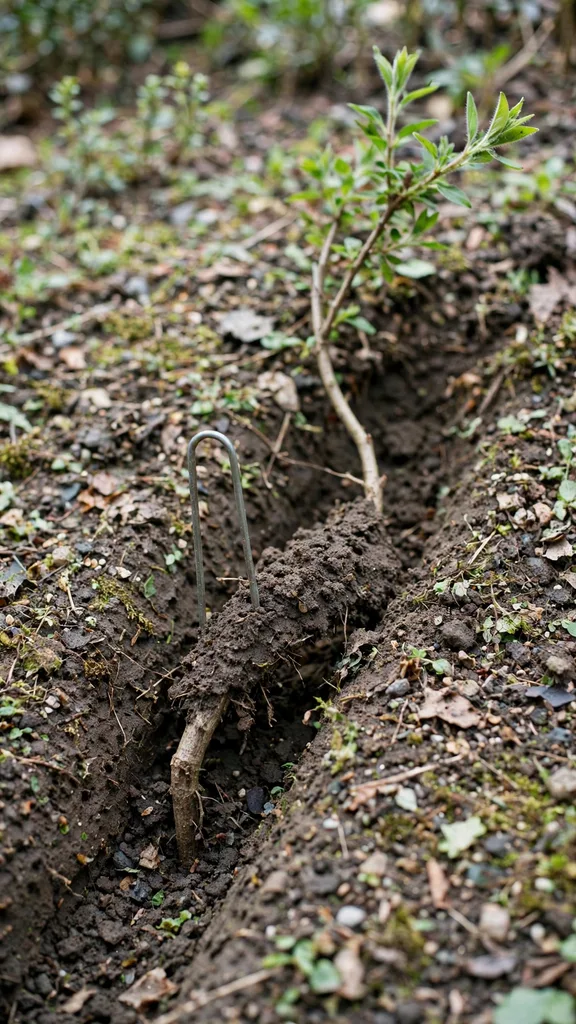
Simple layering works lower down: bend a low branch to the ground, wound the underside, pin it into a shallow trench, and cover it with soil. Tip layering buries just the shoot tip, mound layering cuts the plant to the ground and heaps soil over the base, and compound layering buries a long stem at several points along its length. That process usually takes 6 to 10 weeks for an air layer, and the roots must show on all sides of the moss before the stem is cut free, according to the South Dakota State University Extension air layering guide. Keep the new plant in shade for a week after cutting, until it stands on its own roots. When a stem roots better severed than attached, the cutting guide covers that method instead.
Layering vs Cutting
Layering and cutting both make clones, and both start with a wound on a stem. The difference is the lifeline: a layer keeps its parent feeding it, while a cutting must root or die on its own. That one difference decides which method fits a hard-to-root plant.
| Feature | Layering | Cutting |
|---|---|---|
| Attached? | Stays on the parent until rooted | Severed at once |
| Food supply | Parent feeds it throughout | Stored food only |
| Failure cost | Low, the branch stays alive | High, the cutting dies |
| New plant size | Large, with roots and shoots | Small, a bare stick |
| Best use | Hard-to-root shrubs and houseplants | Easy shrubs and soft stems |
How to Recognize and Measure Layering
Recognize a ready layer by the roots, not by the calendar. An air layer is ready when white roots show through the plastic on all sides of the moss, thick enough to hold the ball together. A buried layer is ready when a gentle tug meets resistance, and new shoots push from the buried section. A layer with 1 or 2 thin roots is not ready: cut it free now and it wilts within days, since its roots cannot feed its leaves. Wait another 2 weeks, keep the moss damp, and check again before you reach for the knife.
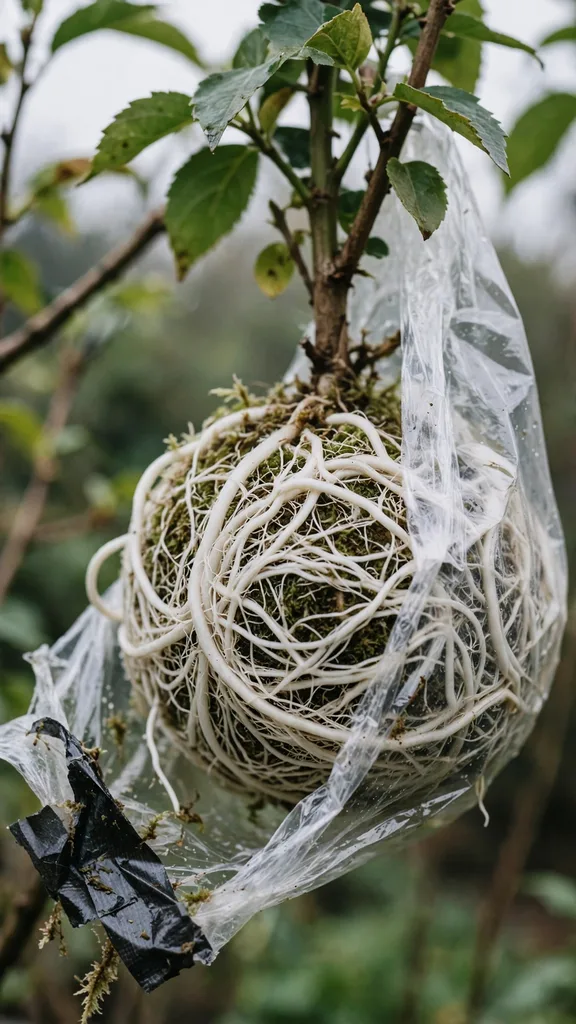
Measure the wound before you wrap it. A ring of bark 2.54 to 5.1 cm wide gives roots room to form without starving the stem above. A ring too narrow heals over before roots appear, and a ring too wide dries the stem. Check the moss every week: damp moss feels like a wrung-out sponge, and dry moss feels like paper. Rewet dry moss at once, since a single dry week can stall rooting for a month.
Common Mistakes With Layering
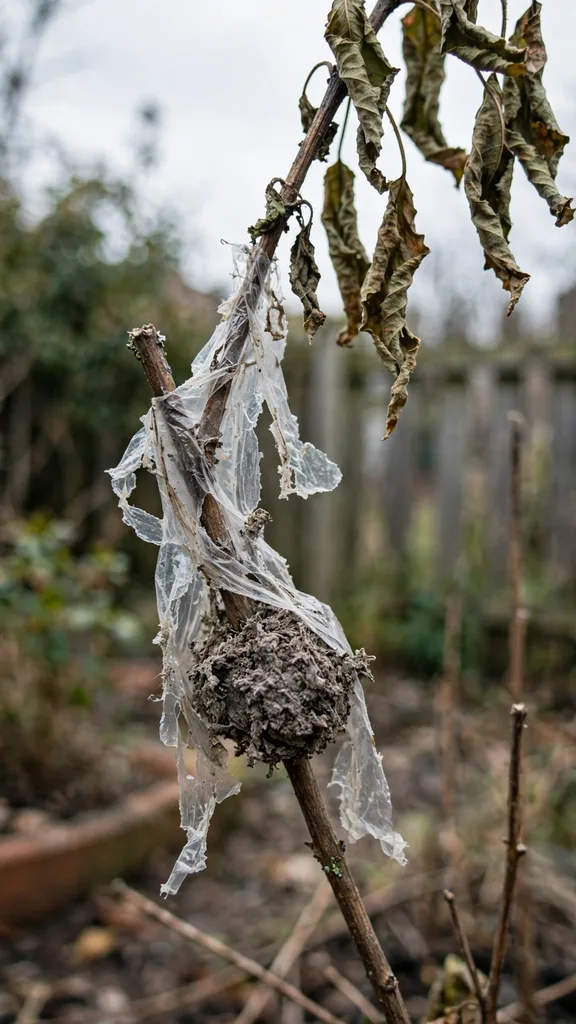
- Cutting free too soon. A layer with thin roots cannot feed its leaves, and it wilts within days of the cut. Wait until roots show on all sides of the moss before you sever the stem.
- Letting the moss dry. Dry moss stops rooting dead. Seal the plastic well at both ends, and check the wrap every week through the whole wait.
- Wounding too deep. A cut through the woody core weakens the stem and invites rot. Cut through the bark only, down to the hard wood, and stop there.
- Layering a flowering stem. A stem in flower spends its energy on blooms, not on roots. Layer a vegetative shoot, and cut the flowers off the branch before you start.
- Forgetting to pin the stem. A simple layer that lifts out of the soil in wind never roots. Pin the stem firmly into the trench, and weigh it down with a stone until roots hold it.
When Layering Matters in Your Garden
Layering matters most for plants that refuse cuttings. Azalea, magnolia, camellia, and many houseplants root slowly or not at all from a severed stem, and layering is the reliable way to copy them. It matters too for a tall, bare houseplant: an air layer turns one leggy stem into a fresh young plant, while the old stem sprouts again below the cut. The wider skill sits in the propagation guide, which places layering among the 7 asexual methods.
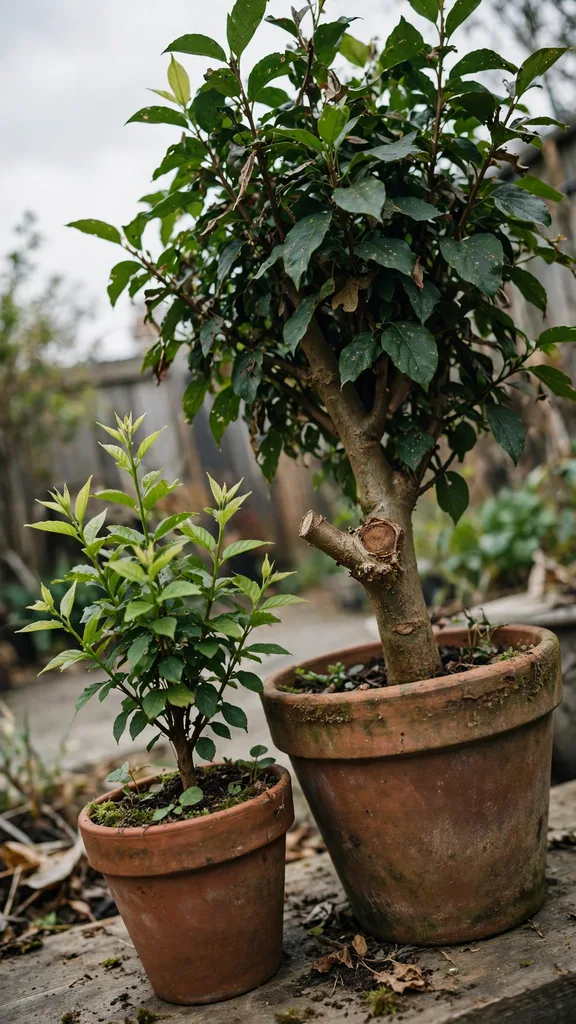
It matters least where cuttings root fast. A soft-stemmed shrub that roots in 2 weeks needs no layer, and a gardener with 20 plants to make will finish sooner with a tray of cuttings. Layering is a one-at-a-time method, and its strength is certainty, not speed. For the full picture of the terms in this series, see the gardening glossary.
FAQ
Simple layers root in one season, and air layers usually take 6 to 10 weeks in warm weather. Slow shrubs can take a full season, and the roots must show on all sides before the stem is cut free. Check the moss weekly, keep it damp, and wait for thick white roots rather than trusting the calendar.
Rubber plant, croton, dracaena, schefflera, azalea, magnolia, roses, and camellia all air layer well. The method suits woody plants with stems at least 1.27 cm thick, and houseplants that grew tall and bare. Soft, thin stems layer better by bending them to the soil instead.
No, but it helps on slow plants. A dusting of hormone on the wound speeds rooting on woody stems that root reluctantly. Easy plants root without it, and the parent feeding the stem already gives the layer a head start over a cutting. Use hormone when the plant is known to root slowly.
A careful layer does no lasting harm. The wound heals once the stem is cut free, and the parent usually sprouts new shoots below the cut. A wound cut too deep can weaken the stem, so cut through the bark only and stop at the hard wood. Remove a failed layer and let the bark heal.