Snip 2 crowded carrot seedlings at soil level and leave the strongest one standing. Thinning is the removal of extra seedlings so the plants left behind have room, light, and water to grow to full size.
Thinning feels wasteful the first time. The seedlings you pull out are healthy, green, and full of promise, and the row looks bare after the job. The bare row is the point. A crowded row grows 20 thin seedlings that never fill out, while a thinned row grows 6 strong plants that feed the kitchen.
Small seeds cause the problem. Carrot, lettuce, radish, and beet seed are too small to place one by one, so gardeners sow thickly to beat poor germination and then thin the extras. Large seeds such as beans and peas go in at final spacing and rarely need the job at all.
| Point | Detail |
|---|---|
| What it is | Removing extra seedlings to reach final spacing |
| Deciding number | Thin when seedlings stand 2.5 to 5.1 cm tall |
| Method | Snip at soil level for root crops, pull for the rest |
| Final spacing | Carrots 5.1 to 7.6 cm, head lettuce 25.4 to 30.5 cm |
| Best for | Carrots, beets, lettuce, radishes, spinach |
What Is Thinning?
Thinning is the second half of sowing. You sow thickly, wait for germination, then remove the weakest seedlings until the survivors stand at the spacing the seed packet lists. The plant you keep gets the light, water, and nutrients the whole crowded row was sharing.
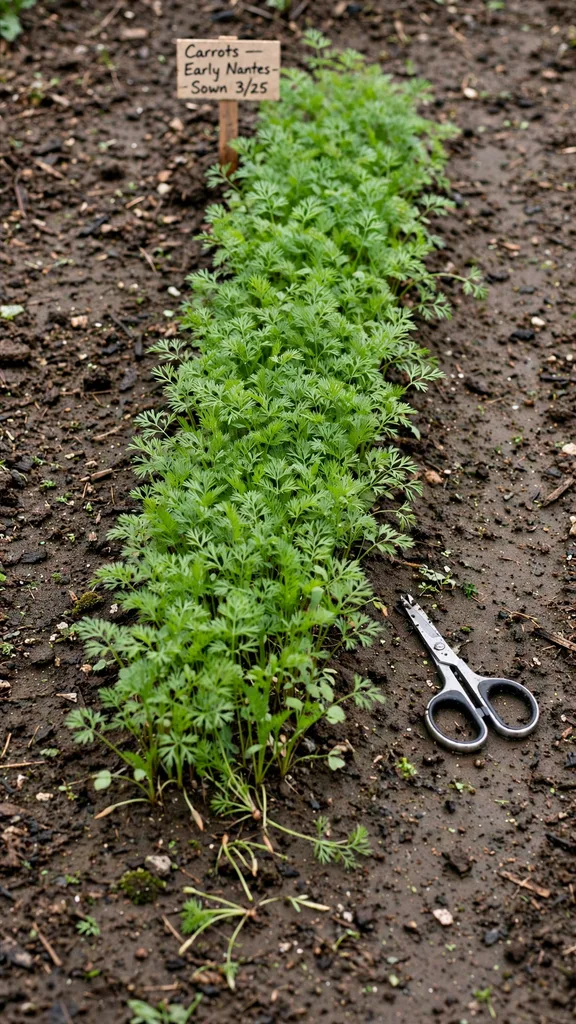
The deciding number is the timing. The University of Florida Extension thinning guide says to thin when plants stand 2.5 to 5.1 cm tall or carry two sets of true leaves, and the same guide sets carrot spacing at 5.1 to 7.6 cm between plants for the best root development. Thin at that size and the roots of the kept plant stay undisturbed. Wait until the row is a tangle and pulling one seedling drags its neighbours out with it.
Thinning also sets the harvest. A carrot given 5.1 cm of room grows a straight root. A carrot given 1 cm of room grows a thin thread that splits and forks. The seed packet lists the final spacing for the variety, and the packet is the last word when it differs from a general guide.
How Thinning Works
Thinning works by ending competition early. Seedlings in a crowded row shade each other, stretch tall and pale toward the light, and send roots into the same small pocket of soil. The strongest seedling still loses, since it shares water with 10 neighbours. Remove the neighbours and the kept plant gets the full pocket.
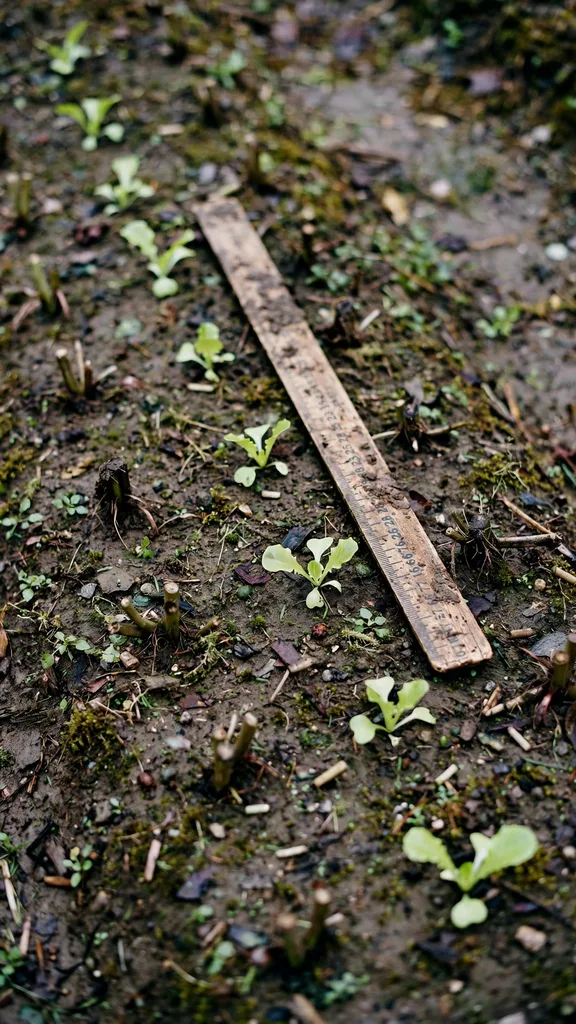
Water the row the day before thinning. Damp soil lets a pulled seedling slide out without tearing the roots of the plant beside it, and the kept plants recover faster when the soil is already moist. Work in the cool of the morning or evening, and water the row again after the job so the disturbed soil settles around the kept roots.
Snip root crops at soil level with small scissors. Carrots, beets, parsnips, and radishes grow their harvest underground, and pulling an extra seedling can drag the kept root sideways or snap its fine hairs. Pulling suits lettuce, spinach, and other leafy crops, where the roots are shallow and the neighbours separate cleanly. The thinned leaves of lettuce, beet, and radish go into a salad bowl instead of the compost pile.
Thinning vs Transplanting
| Point | Thinning | Transplanting |
|---|---|---|
| What it does | Removes extras from a sown row | Moves a started plant to a new spot |
| When it happens | Days after germination | Weeks after sowing, at 3 to 5 true leaves |
| Tool | Small scissors or fingers | Trowel, pots, trays |
| Root disturbance | Minimal when snipped | High, the whole root ball moves |
| Best use | Small direct-sown seed | Tomatoes, peppers, brassicas |
| Waste | Extra seedlings are removed | Few plants are lost |
Thinning and transplanting both set final spacing, and they suit different crops. Direct-sown crops get thinned where they stand. Started crops get moved once they are strong. A gardener who thins a tomato row wastes plants that could have gone into pots, and a gardener who transplants carrots breaks the root that matters.
How to Recognise Crowded Seedlings
A crowded row shows itself in the leaves. Seedlings stand shoulder to shoulder, the lower leaves yellow from shade, and the stems stretch tall and thin instead of growing stocky. The row looks full from above and starved from below, since the leaf canopy hides the competition underneath.
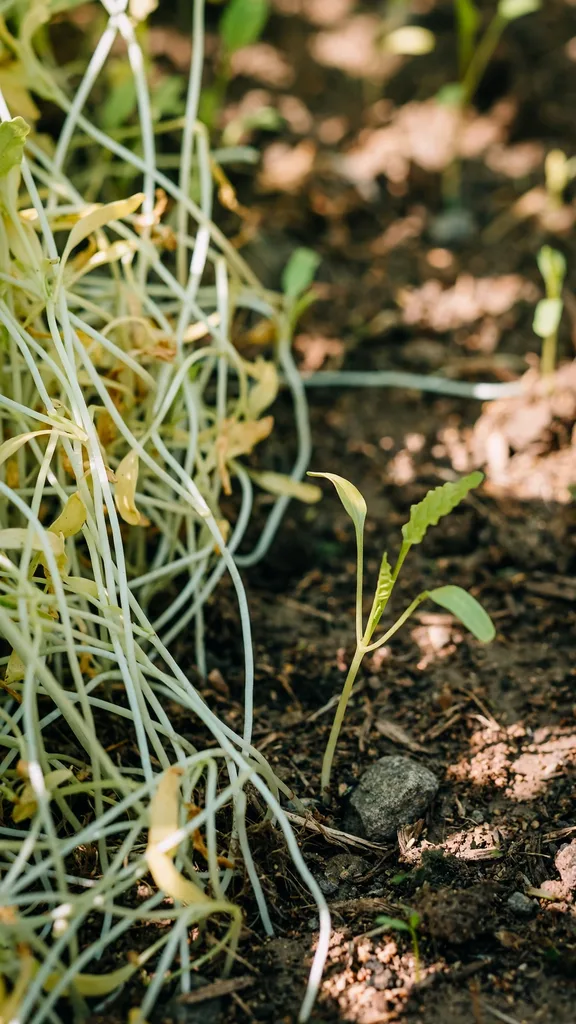
Count the gap between stems. Carrots need 5.1 to 7.6 cm, beets need 7.6 to 10.2 cm, and leaf lettuce needs 10.2 to 15.2 cm. Head lettuce needs far more, and the University of Nevada Extension fall gardening guide lists head lettuce spacing at 25.4 to 30.5 cm apart, with carrots at 5.1 to 7.6 cm. Measure the gap with two fingers and thin anything closer than the packet spacing.
Work in two passes when the row is very thick. Thin to half the final spacing at the first true leaves, then thin to full spacing a week later. Two light passes disturb the row less than one heavy pass, and the second pass lets you keep the strongest plant of each pair.
Common Mistakes With Thinning
Waiting too long is the first mistake. Seedlings thinned at 15.2 cm tall have roots tangled together, and pulling one lifts three. Thin when the plants stand 2.5 to 5.1 cm tall, while the roots are still short and separate. A small plant forgives a tug. A big plant does not.
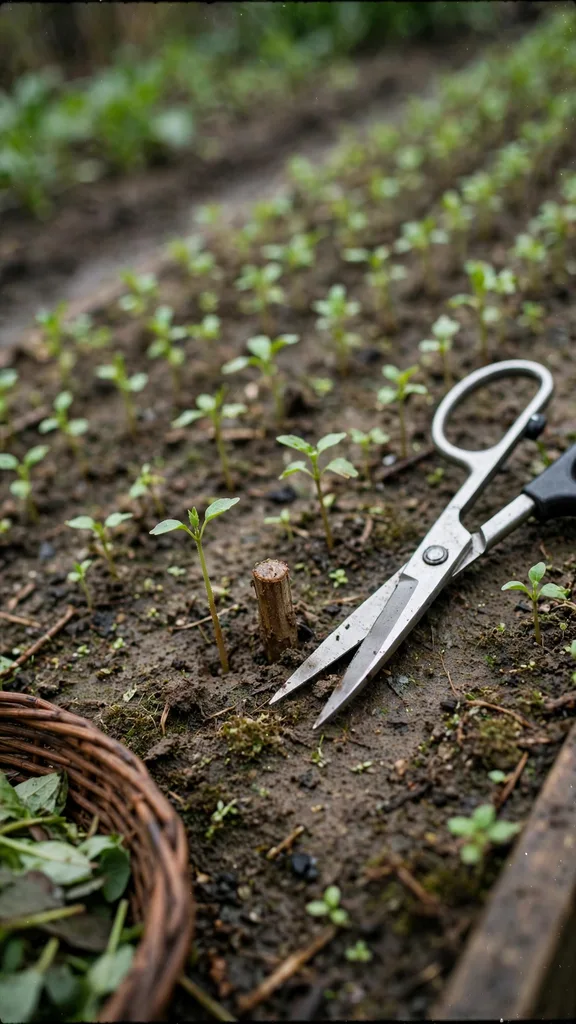
Pulling root crops instead of snipping them is the second mistake. A pulled carrot seedling drags the kept carrot sideways, and the kept root grows forked or bent. Snip the extra at soil level with scissors and leave the root to rot in place. The stump feeds the soil and the kept plant never feels the cut.
Thinning dry soil is the third mistake. Dry soil grips roots and tears them, and the kept plants wilt in the sun after the job. Water the row the day before, thin in the cool of the day, and water again right after. The seed starting guide covers the sowing depth and soil moisture that make thinning easier from the start.
When Thinning Matters in Your Garden
Thinning matters most in the spring vegetable bed. Carrots, beets, lettuce, radishes, and spinach all go in thickly, and all of them need the job within 2 weeks of germination. A spring sowing left unthinned gives a small harvest in June and a lesson in July.
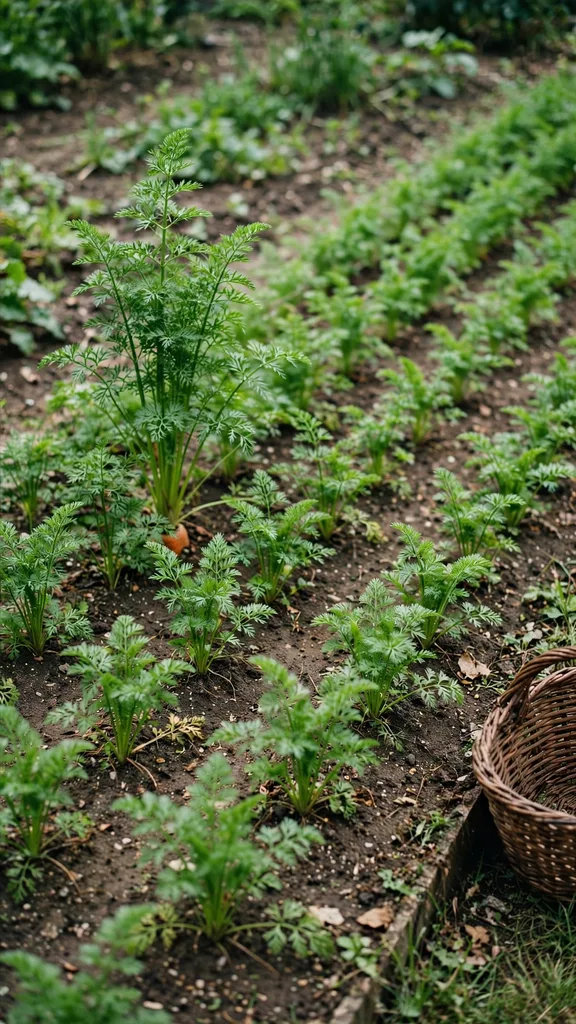
Thinning also matters in a small garden. A bed of 1 square metre holds only so many plants, and a crowded bed wastes the whole square on seedlings that never size up. Thin to the packet spacing and the same bed yields full roots and full heads. The germination guide helps you judge when the row has sprouted evenly enough to thin.
Start from the gardening glossary when a term in this page is new. Thinning is a 10 minute job that decides the harvest, and the plants you keep will show the difference within a fortnight.
FAQ
Yes, when the crop is edible and the seedlings are young and clean. Thinned lettuce, beet leaves, radish seedlings, and spinach make a sharp salad green. Wash them well, use them the same day, and skip any seedling that looks diseased or was treated with a spray.
Yes. Sow 2 seeds per cell and snip the weaker one once true leaves appear, leaving 1 strong plant per cell. A cell with 2 seedlings gives 2 weak plants that compete for the same small pocket of mix. One plant per cell grows a stocky stem and a full root ball.
The row stays crowded, the plants stay small, and the harvest shrinks. Carrots grow thin and forked, lettuce heads stay loose and small, and beets stay the size of marbles. Crowded leaves also hold moisture and invite disease, so the row suffers twice.
No. Thinning removes extra crop seedlings of the same variety to reach final spacing. Weeding removes plants of other species that compete with the crop. Thin first, then weed the gaps, since a weeded row shows the true spacing and makes the next thinning pass easy to judge.