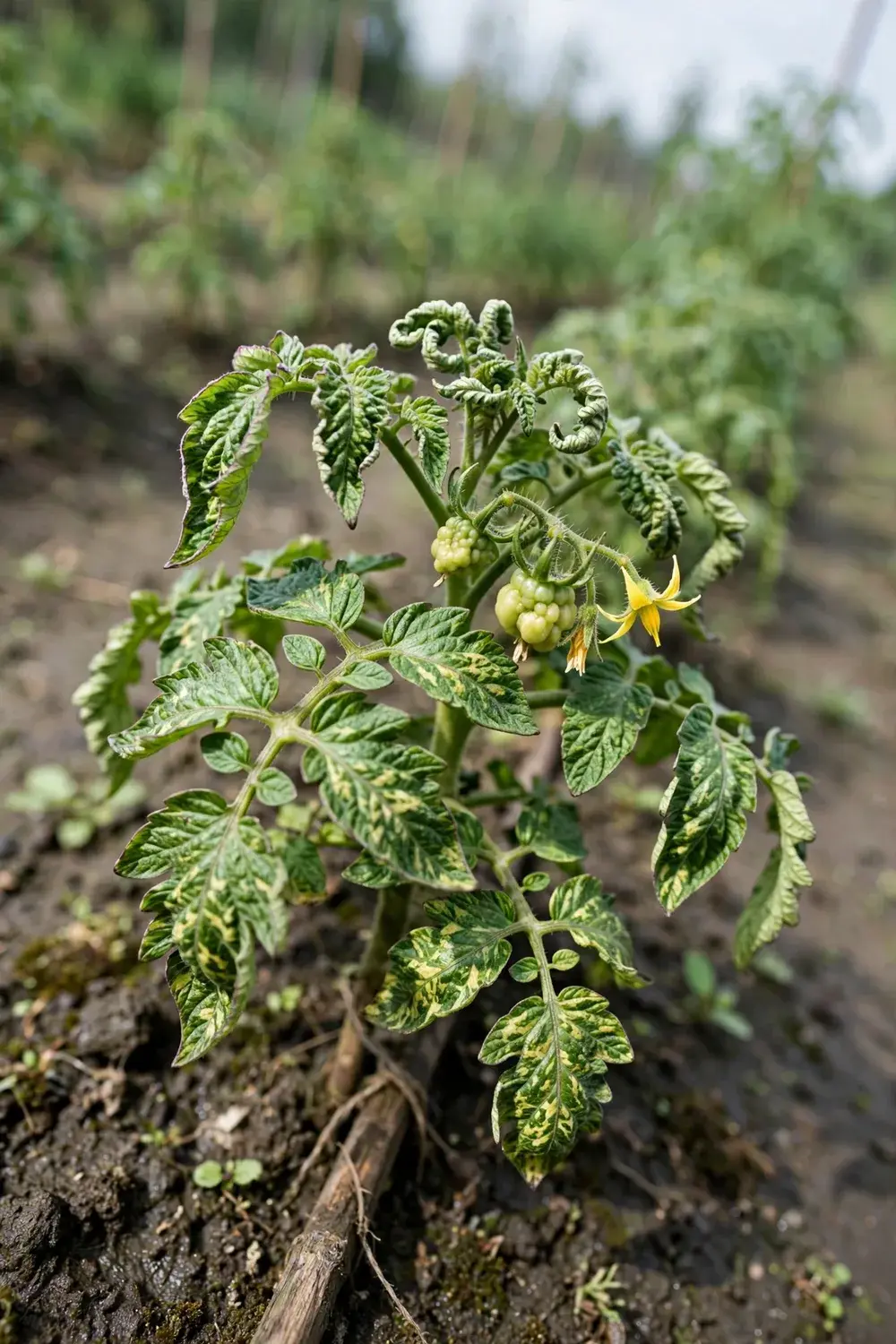

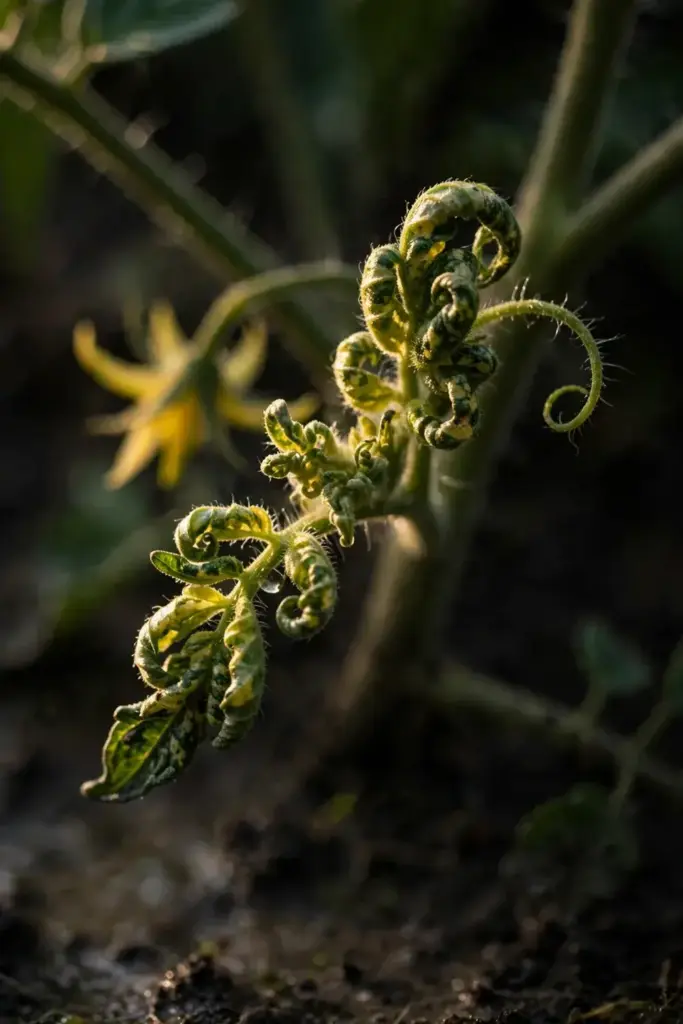
Tomato aspermy virus is a plant virus that is uncommon in tomato and has no cure. In tomato it causes severe leaf mottle with distortion and dwarfing, and fruit that stays small and malformed and usually seedless. A plant that shows that pattern stays infected for life, and aphids pass the virus to the next plant in under 1 minute.
I have learned to treat any mottled, dwarfed tomato plant as a virus suspect first and a feeding problem second, since no fertilizer fixes a virus.
This short guide names the virus, shows its symptoms, and gives the honest response. It offers no cure, because none exists. For the wider job of raising healthy plants, the guide to growing juicy tomatoes covers planting and care from the start.
What Tomato Aspermy Virus Actually Is
Tomato aspermy virus is a distinct virus species in the genus Cucumovirus, in the family Bromoviridae. It is a close relative of cucumber mosaic virus, and it is a separate species from that virus. The virus reference DPV 079 places tomato aspermy virus in the genus Cucumovirus.
Researchers first described tomato aspermy virus in tomato in 1949, when it caused severe leaf distortion and seedless fruit. Agdia records that first description in 1949. Older references also call it chrysanthemum mosaic or chrysanthemum aspermy virus, which reflects where the virus does most of its real damage.
Tomato aspermy virus is widespread and common in cultivated chrysanthemums and uncommon in tomatoes. DPV 079 states that the virus is widespread and common in cultivated chrysanthemums but uncommon in tomatoes. Agdia states that outbreaks are uncommon in tomato and that the virus is not considered an important virus infecting tomato. A home tomato gardener will rarely meet it.
The virus infects over 100 species across 24 dicotyledonous families and 3 monocotyledonous families. DPV 079 gives that host range. Chrysanthemum is its main cultivated host. Tomato is an occasional host. Tomato aspermy virus is not seed-borne in tomato.
How to Identify Tomato Aspermy Virus on Leaves and Fruit
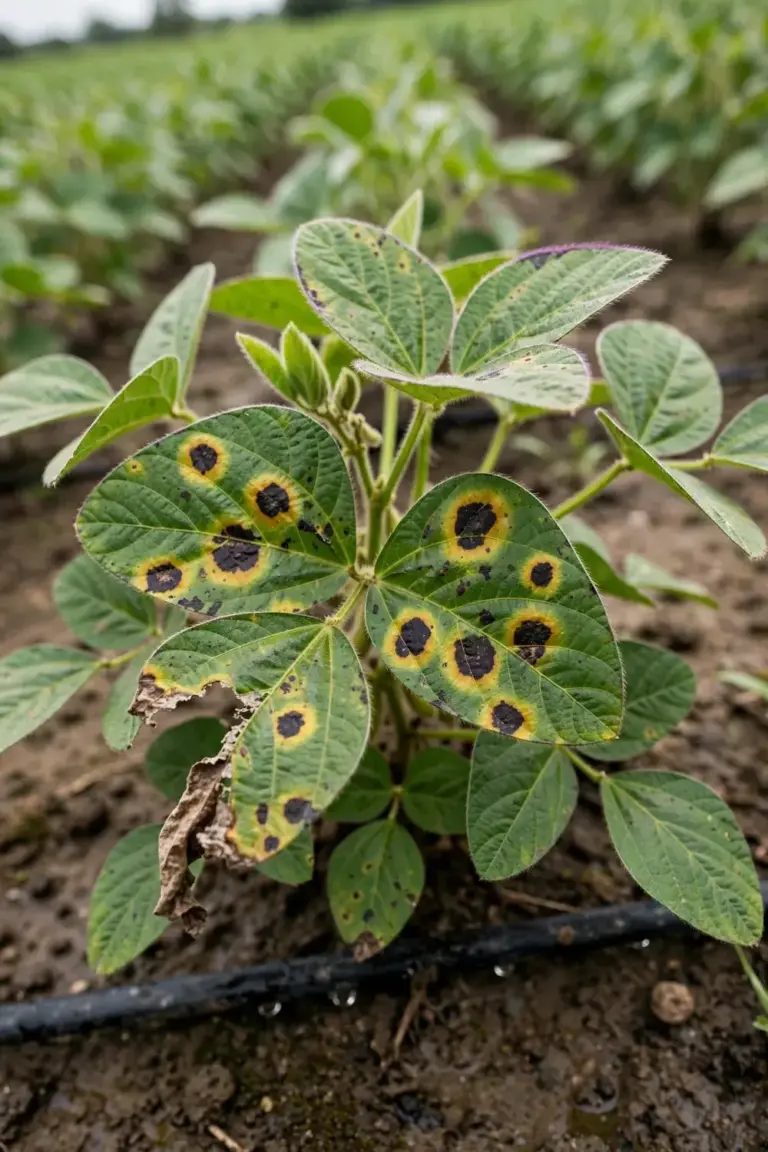
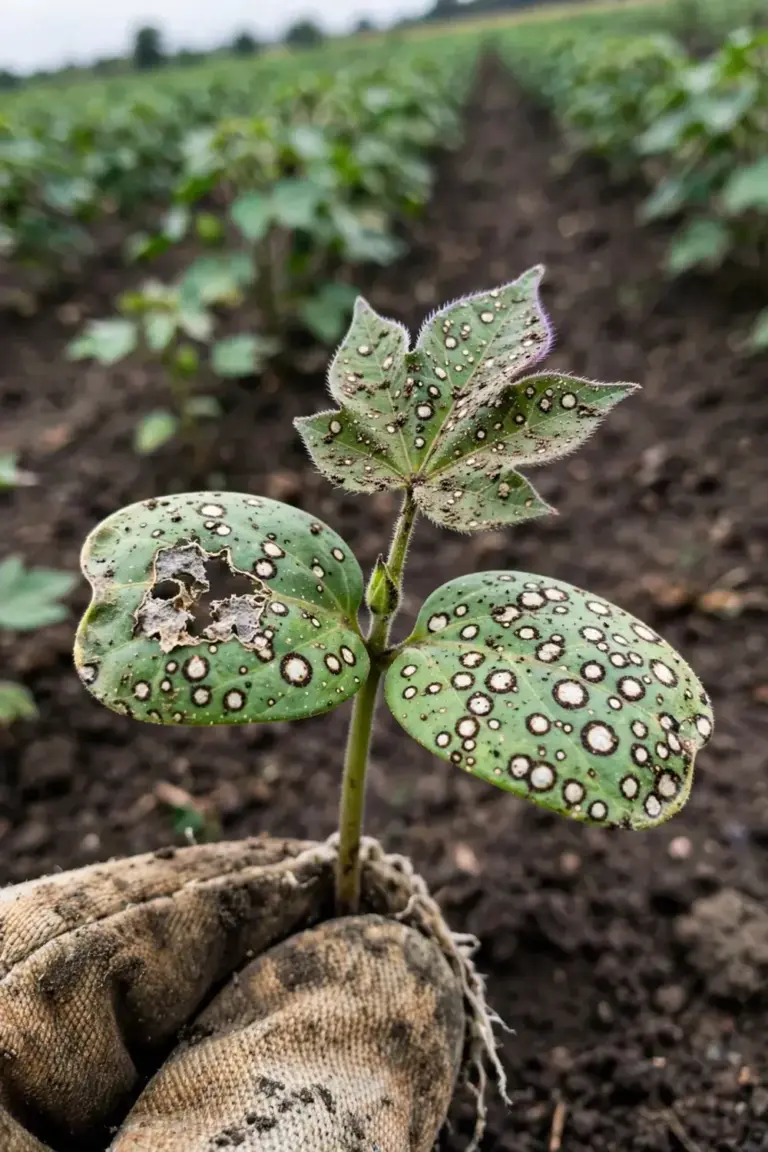
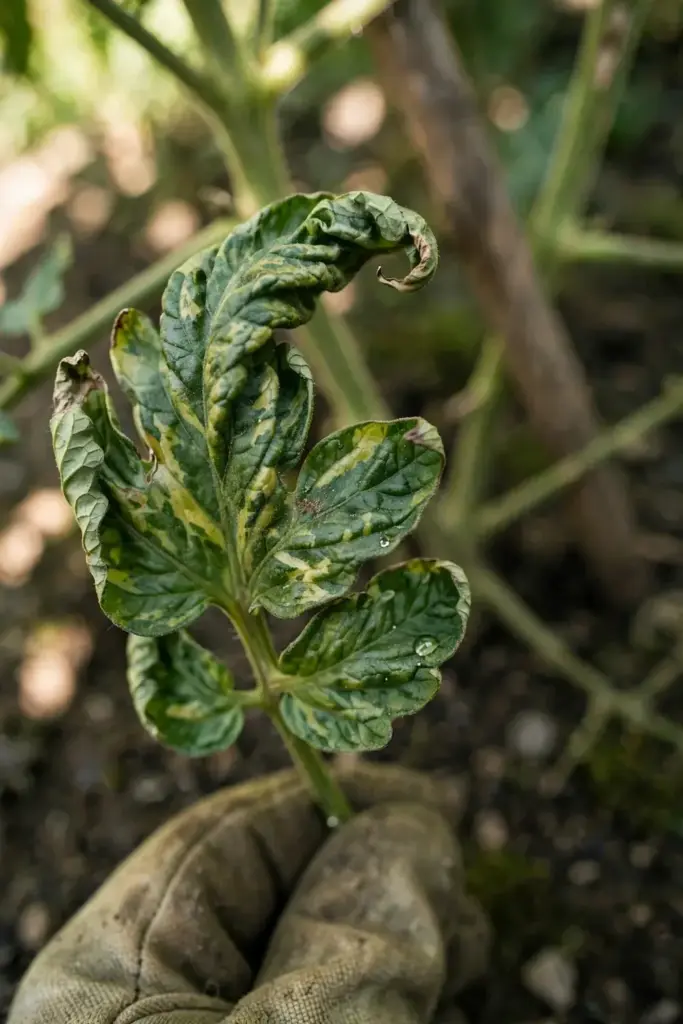
Look for severe systemic leaf mottle with distortion and dwarfing across the whole plant, plus fruit that stays dwarfed and malformed and usually seedless. DPV 079 describes that exact pattern in tomato. Infected plants sometimes push out extra axillary shoots, which gives a bushy look.
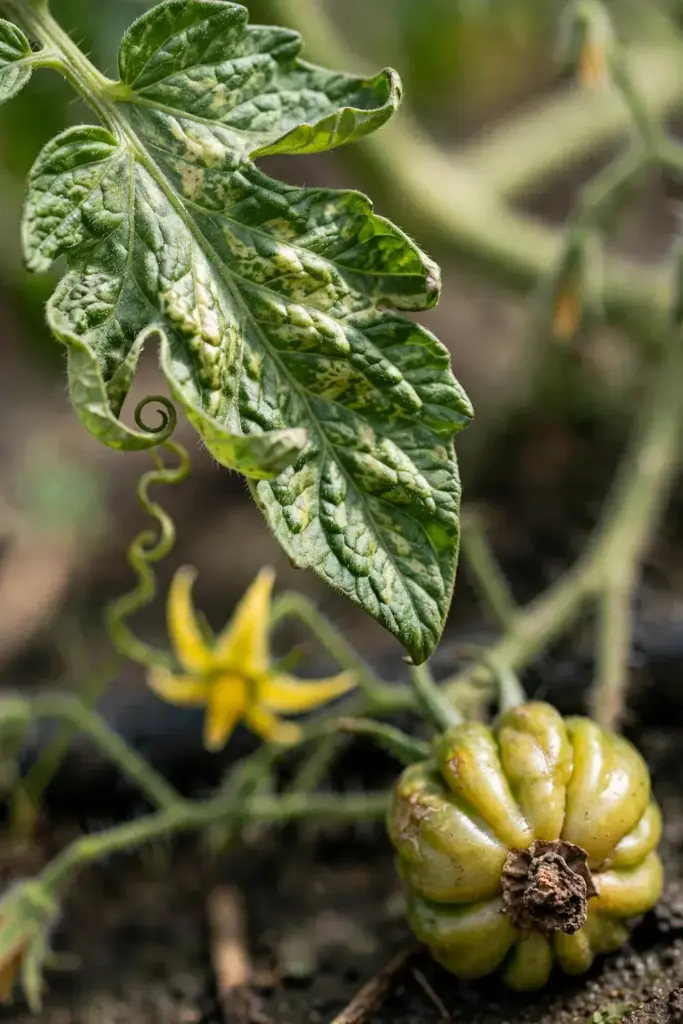
Systemic means the whole plant carries the virus. New growth shows the worst of it. One mottled branch on an otherwise healthy plant points elsewhere. Whole-plant mottle points toward a virus.
Field symptoms alone cannot name this virus. Tomato aspermy virus overlaps other mosaic viruses in the field. Only lab testing settles identity, and even lab testing needs care, because the standard assay cross-reacts with a close relative. Agdia notes that its tomato aspermy virus assay shows mild cross-reactivity with cucumber mosaic virus. Photograph the plant. Note when symptoms started. Then act.
Why Tomato Aspermy Virus Has No Cure
No spray, prune, or feed cures a plant virus. Once tomato aspermy virus infects a tomato plant, that plant stays infected for life. Agdia states that once infected, plants remain infected for life as no curative therapies are available for viruses.

Pruning off mottled leaves removes symptoms from view. It leaves the virus in the rest of the plant. Feeding a virus-infected plant feeds a plant that cannot clear the virus.
Heat does not fix it either. DPV 079 notes that a few isolates withstand heat treatment in living plants. Heat therapy and meristem culture belong in a laboratory, and they are not home treatments.
Aphid sprays do not stop the spread of tomato aspermy virus. Aphids acquire the virus within 15 seconds of stylet insertion and pass it on in under 1 minute, with no latent period. The spray kills the aphid after the bite already happened. Feeding aphids keep the virus for 30 minutes, rarely 1 hour. That short window is why the virus moves fast through a bed even when aphid numbers look low.
What to Do With a Tomato Plant You Suspect Has Tomato Aspermy Virus
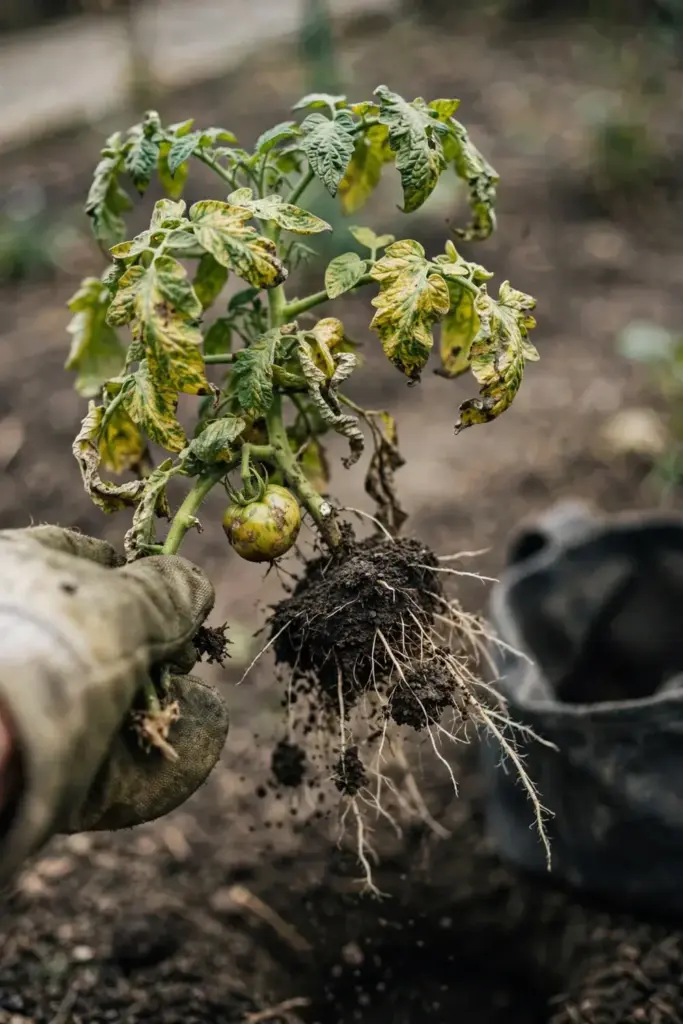
Pull the plant, bag it, and destroy it. A suspect plant is a source of virus for every aphid that feeds on it.
| Action | What It Achieves | Verdict |
|---|---|---|
| Pull and destroy the plant | Stops aphids from picking up virus from that plant | Do this |
| Prune off mottled leaves | Hides symptoms while the virus stays systemic | Skip |
| Spray the plant for aphids | Kills aphids after they already feed | Helps the wider garden, does not save the plant |
| Feed the plant | Feeds a plant that cannot clear the virus | Skip |
| Save seed from its fruit | Fruit is usually seedless | Skip |
Handle a suspect plant as little as possible. Cornell advises gardeners to photograph suspect plants and contact a local extension specialist about submitting samples for testing. Clean tools and gloved hands after you touch it. Cornell advises strict sanitation for anything that touched an infected plant.
Do not compost a suspect plant. Bag it and bin it, or burn it where local rules allow. A compost pile keeps infected material in the garden.
How to Lower the Odds the Next Tomato Plant Gets a Virus
Buy healthy plants, keep aphid numbers down, and keep chrysanthemum beds away from the tomato bed. None of these steps guarantees a virus-free season. They are general virus hygiene, and they lower the odds.

Start with healthy plants from a trusted source. Agdia calls introducing healthy propagative material the most effective step in virus management. A plant that arrives clean stays clean until a vector reaches it.
Keep aphid numbers low. The virus moves on 10 aphid species, and aphids spread it in a non-persistent manner. The beginner’s guide to organic pest control covers aphid control without harsh sprays. Aphid control helps the whole bed, even though it cannot block a single probe in seconds.
Chrysanthemums host the virus commonly. Keep chrysanthemum beds away from tomato beds where space allows, and check chrysanthemums for stunting and flower break. Chrysanthemums host their own pests too, and the chrysanthemum gall midge guide covers one of them.
Frequently Asked Questions
Yes. Aphids carry tomato aspermy virus between hosts, and chrysanthemum is the virus’s main cultivated host. An infected tomato plant beside a chrysanthemum bed puts those flowers at risk. Check chrysanthemums for stunting, mottling, and flower break. Keep the beds apart where space allows. Lab testing settles identity when symptoms stay unclear.
You cannot tell by eye. Tomato aspermy virus overlaps other mosaic viruses in the field, so symptoms alone never settle the name. Lab testing with ELISA or PCR settles identity. Even lab testing needs care, since the Agdia assay shows mild cross-reactivity with cucumber mosaic virus. Photograph the plant and ask a local extension service about testing.
No. Tomato aspermy virus is systemic, so the whole plant carries the virus even where leaves still look healthy. Pruning removes mottled leaves from view and leaves the infection in place. The plant stays a virus source for every aphid that feeds on it. Pull the plant, bag it, and destroy it. Protect the rest of the bed instead.
Where to Go From Here
Walk the tomato bed this week. A plant with whole-plant mottle, distortion, and dwarfing plus small seedless fruit is a pull, not a feed. Bag it, bin it, and clean your tools.

Start the next plant from healthy stock. Keep aphid numbers down and chrysanthemum beds apart from the tomato bed. The virus is rare in tomato, and the honest response is short. Pull the suspect plant and protect the rest.