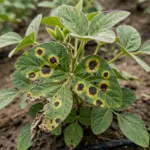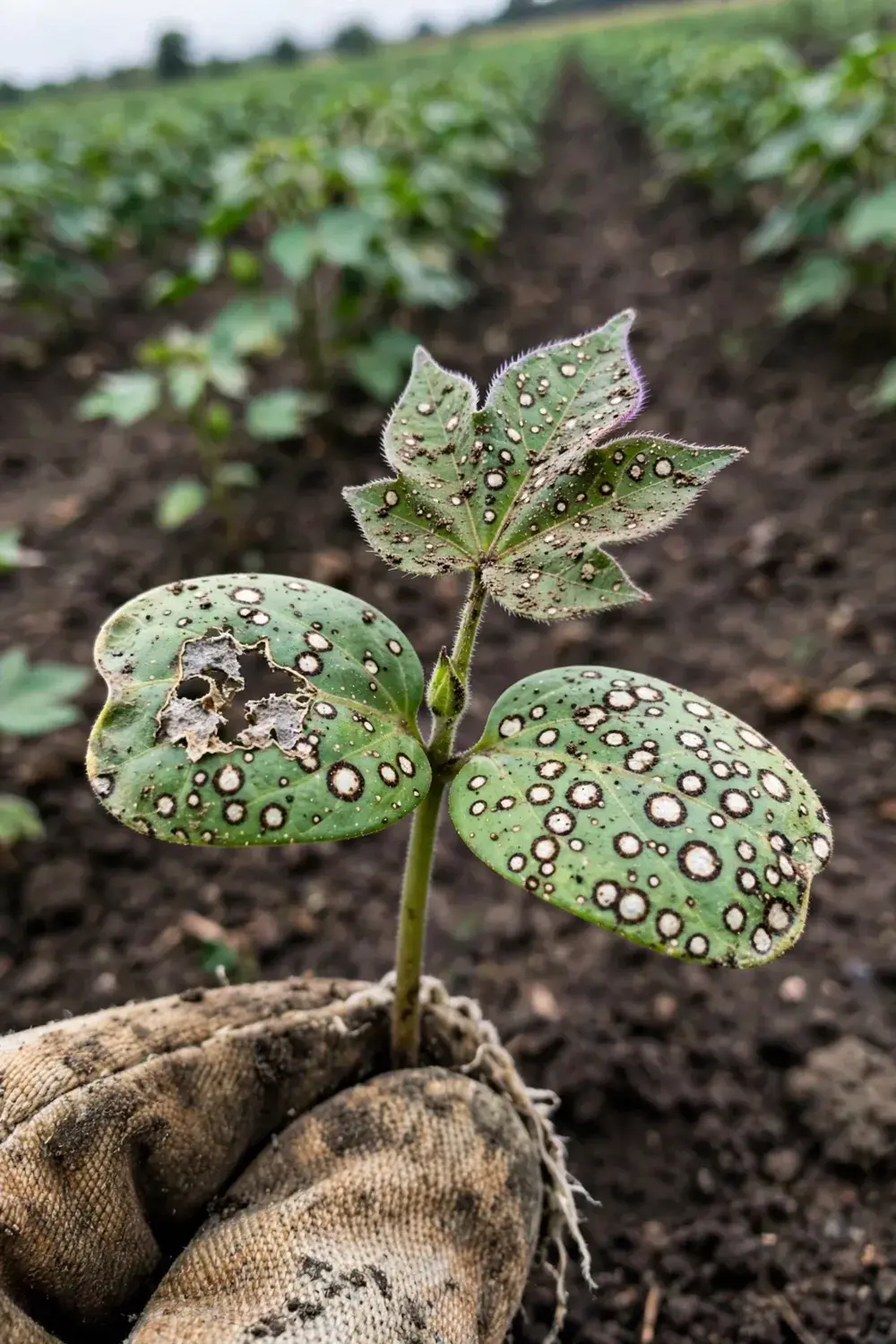

Wet Weather Blight of Cotton is a minor fungal disease of cotton that spots leaves in cool, wet weather and fades when dry, warm weather returns. Lesions on cotyledons and leaves start near 2 mm across, white to light brown, with a dark border. I have learned to wait for sunshine before judging a spotted cotton seedling, since most plants recover without any spray.
The fungus behind it is Ascochyta gossypii. Clemson lists this cotton disease under Phoma sp., genus only. The literature name is Ascochyta gossypii, and Phoma exigua is its anamorph name. The disease hits cotton only. It is not a general garden disease, and the Phoma leaf spot of beets and greens is a different disease on different hosts.
The rest of this page gives one symptom check, one table, and 3 small moves that fit a home patch. Sunshine does the real work. The moves below only trim the odds.
What Wet Weather Blight of Cotton Actually Is
Wet Weather Blight of Cotton is a fungal disease of cotton (Gossypium spp.). The fungus Ascochyta gossypii causes it. The disease shows early in the season, in cool, wet weather, on seedlings and older plants. Younger cotton takes the harder hit.
The fungus is seed-borne and survives in soil on infected residue. The Texas Plant Disease Handbook notes the fungus is seed-borne and survives in the soil on infected plant residue.
Cool, cloudy, rainy weather drives it. Warm, dry weather ends the outbreak. Plants that looked rough in a wet week often push clean new growth once the sun returns.
How to Identify Wet Weather Blight of Cotton on Leaves and Stems
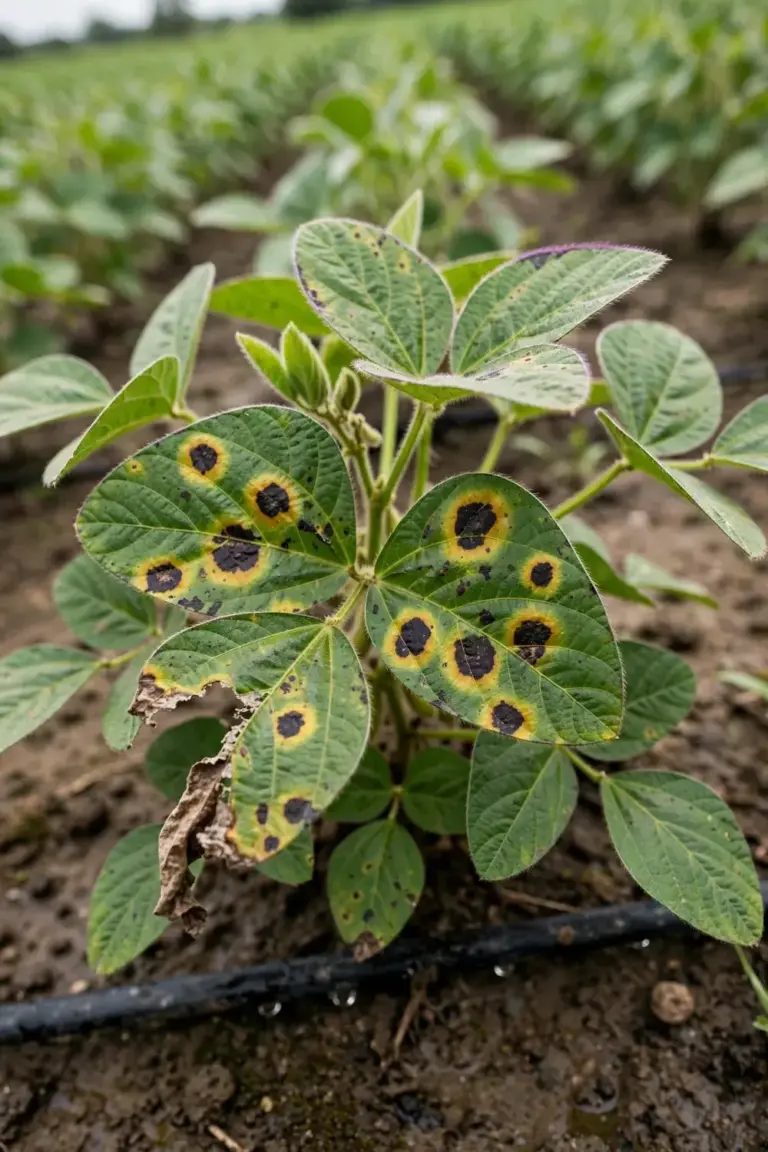
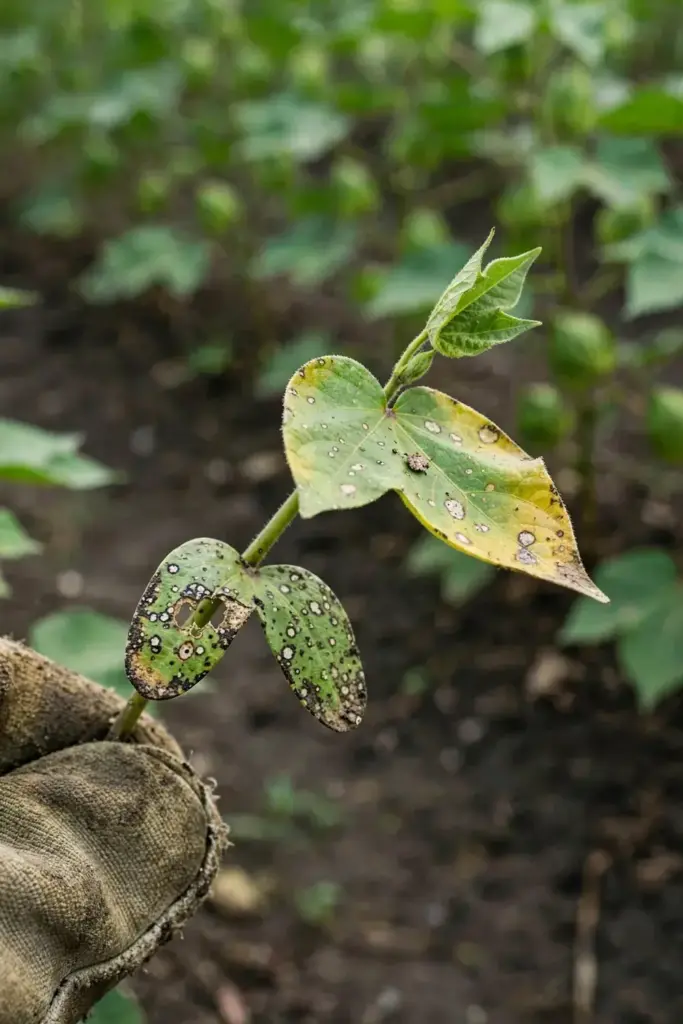
Start at the lowest leaves. Wet Weather Blight of Cotton shows first as small, round spots on cotyledons and lower leaves.
| What You See | Where to Look | What It Tells You |
|---|---|---|
| Small round spots, white to light brown, dark border, near 2 mm across | Cotyledons and lower leaves | Early infection, watch the next leaves |
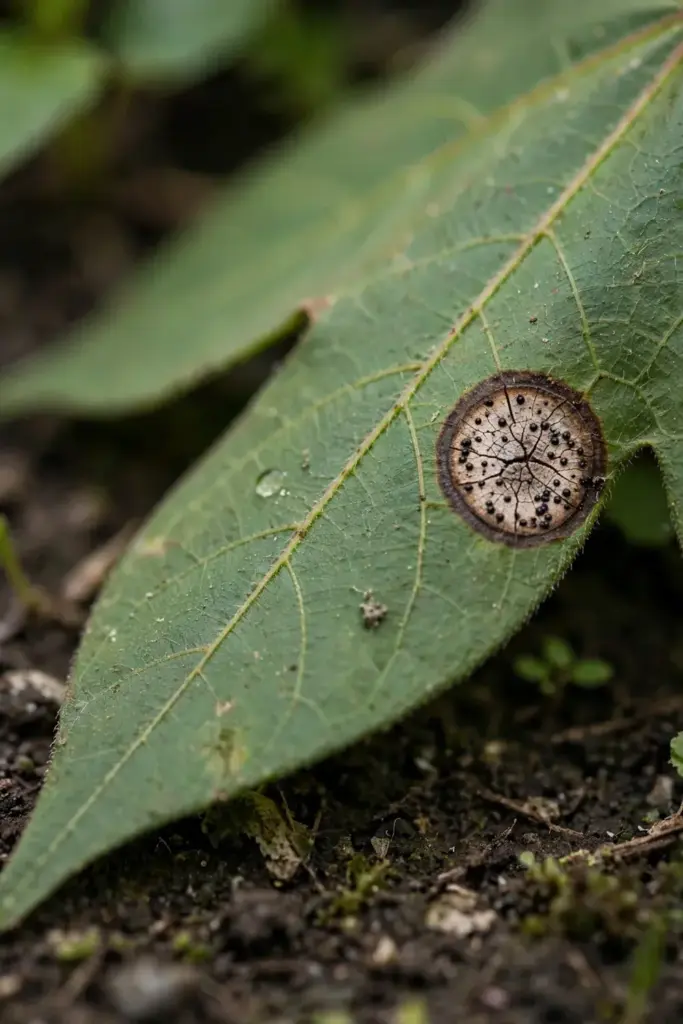
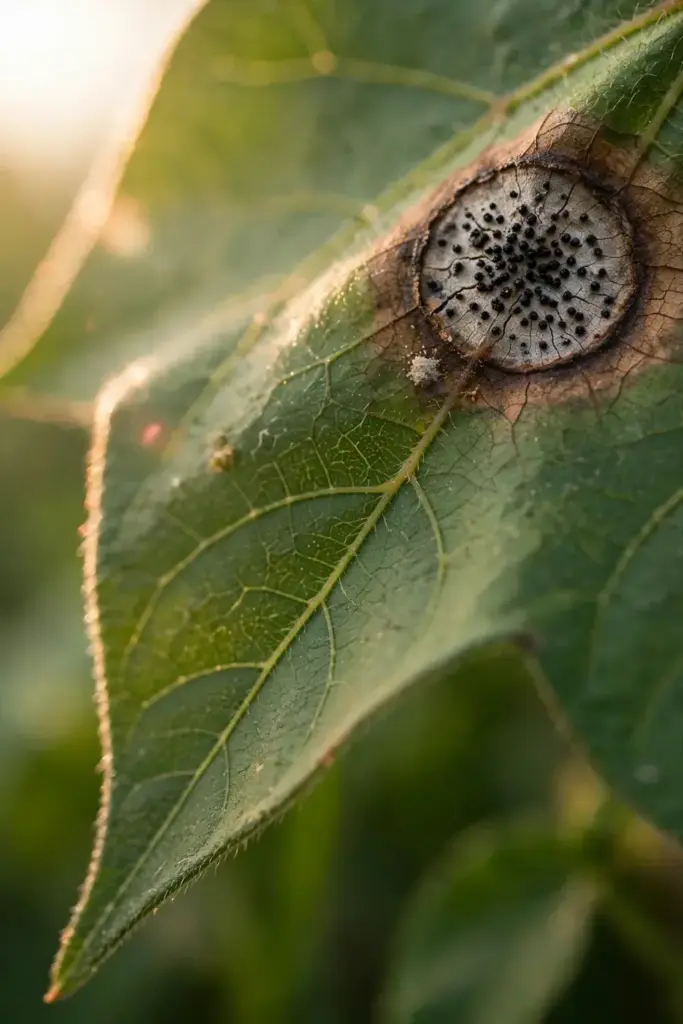
| Spot centers turn ashy and fall out, leaving holes | Leaves | Lesions are aging, not a new disease |
| Dark brown, elongated, slightly sunken cankers | Stalks and branches | Stem tissue is hit, watch for girdling |
| Spots at the base of the petiole | Petiole bases | Check the stem below for cankers |
The University of Tennessee guide puts lesions on cotyledons and leaves near 2 mm across, white to light brown and circular, with small black fruiting structures embedded in the tissue.
Other cotton leaf spots overlap this one. Bacterial blight, Alternaria leaf spot, Cercospora leaf spot, and Stemphylium leaf spot all mark cotton leaves. Field ID sorts suspects. A lab test settles the call. The University of Missouri Extension scouting guide advises sending 5 to 10 leaves with symptoms in a plastic bag to a diagnostic laboratory.
Why Sunshine Ends Wet Weather Blight of Cotton
Sunshine ends most outbreaks. Wet Weather Blight of Cotton is a weather disease. The fungus needs cool, cloudy, wet conditions to keep cycling. Dry, warm weather breaks the cycle.
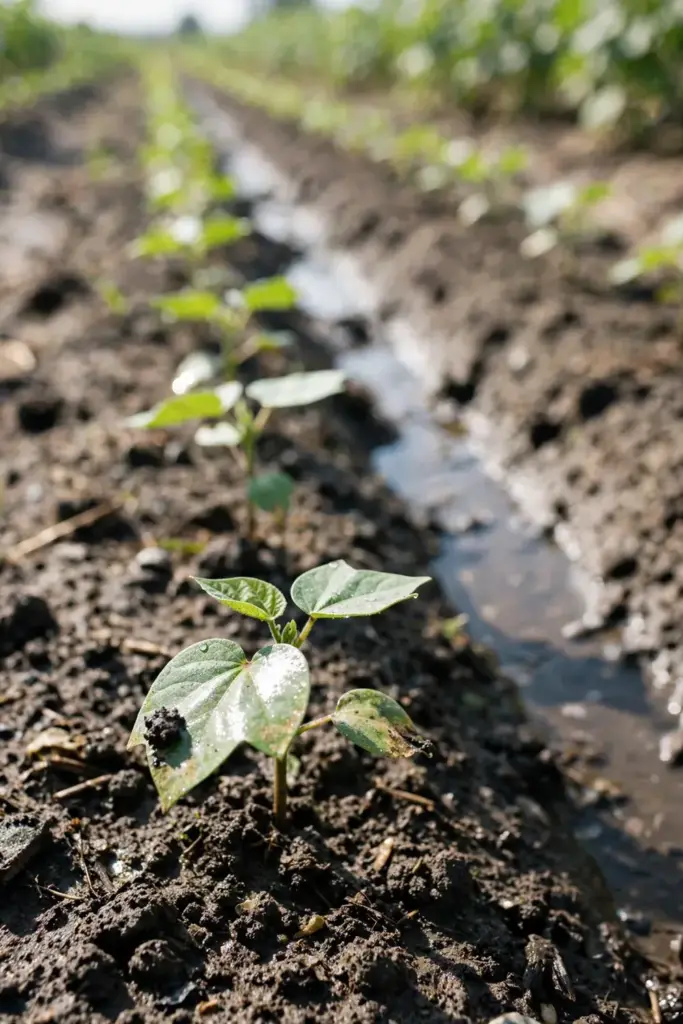
The University of Tennessee news note calls the disease cosmetic, says no fungicide is warranted, and prescribes a solid dose of sunshine. Yield loss is rarely reported. Skip the spray. Watch the new growth.
Severe cases still exist. Seedlings hit at the hypocotyl can die, and Texas Extension notes a whole stand can be lost in a severe outbreak. Most home-scale cases stay cosmetic. Judge the patch by its newest leaves.
3 Small Moves That Help at Home Scale
No move cures Wet Weather Blight of Cotton. These 3 moves trim the odds and fit a home patch. Field programs such as per-acre fungicide schedules and commercial seed treatments belong to field production. Leave them there.
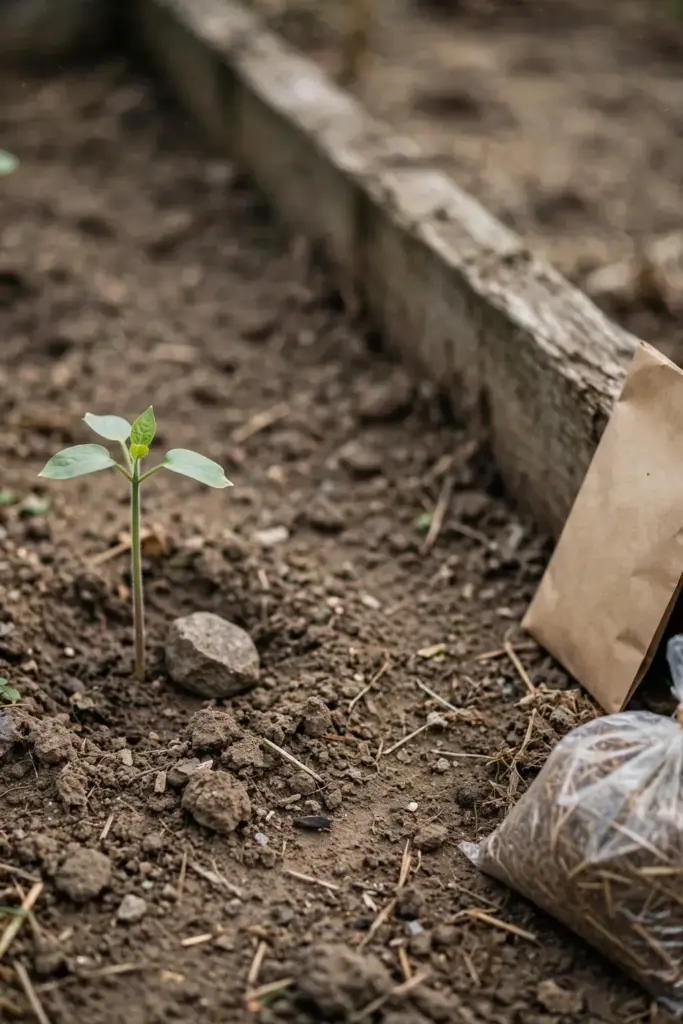
Start with certified disease-free seed. The fungus rides in seed, so clean seed cuts the first source. The seed-starting guide covers the clean-start habits that keep seedlings strong.
Keep leaves dry. Water at the soil line in the morning so leaves dry fast. Do not work among wet plants. Soil that drains well keeps the patch from holding standing water. The soil health guide covers building that base.
Clear residue and rotate. The fungus waits in infected residue, so bag fallen leaves and stems at season end and keep them out of the compost pile. Plant cotton in a different bed next season. The cover crops for fall planting guide covers what to grow in the rested bed.
Frequently Asked Questions
Rarely. Seedlings hit at the hypocotyl can die, and a severe outbreak can take a whole stand. Most home-scale cases stay cosmetic. Older plants drop spotted leaves and push clean new growth once dry, warm weather returns. Judge the patch by its newest leaves, not by the oldest spots.
No. Extension guidance calls the disease cosmetic and says no fungicide is warranted. A spray will not beat sunshine to the cure. Save the spray for diseases that actually threaten the crop. Spend the effort on clean seed, dry leaves, and residue cleanup instead.
This disease hits cotton. It does not jump across the garden to unrelated plants. The fungus survives on cotton residue and cotton seed. Clear cotton residue at season end and rotate the bed. Other leaf spots on other plants come from their own pathogens.
It can, when cool, wet spring weather returns and infected residue or seed carries the fungus over. Clean seed, residue cleanup, and rotation cut the carryover. Even with all three, a long wet spring can still bring spots. Sunshine ends the outbreak again.
Where to Go From Here
Wet Weather Blight of Cotton looks worse than it is. Spots mark the old leaves. Sunshine clears the new growth. Wait for a few dry, warm days before judging the patch.
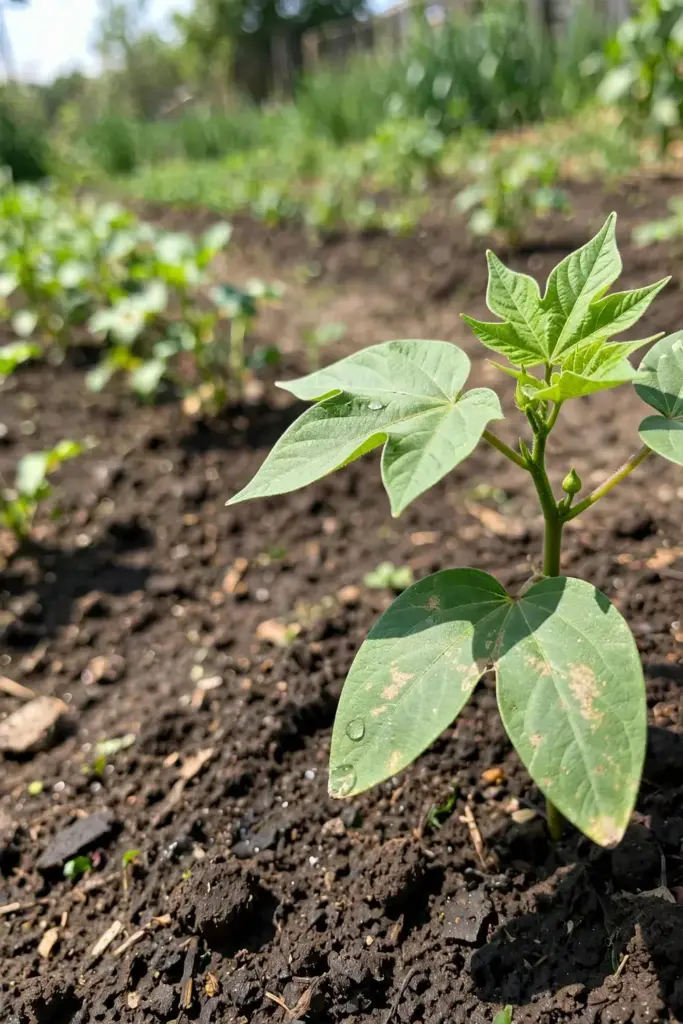
Take one next action. Check the newest leaves after a week of dry weather. Clean new growth means the outbreak is over. Spots that keep climbing into new growth, or stems that girdle, earn a lab test.