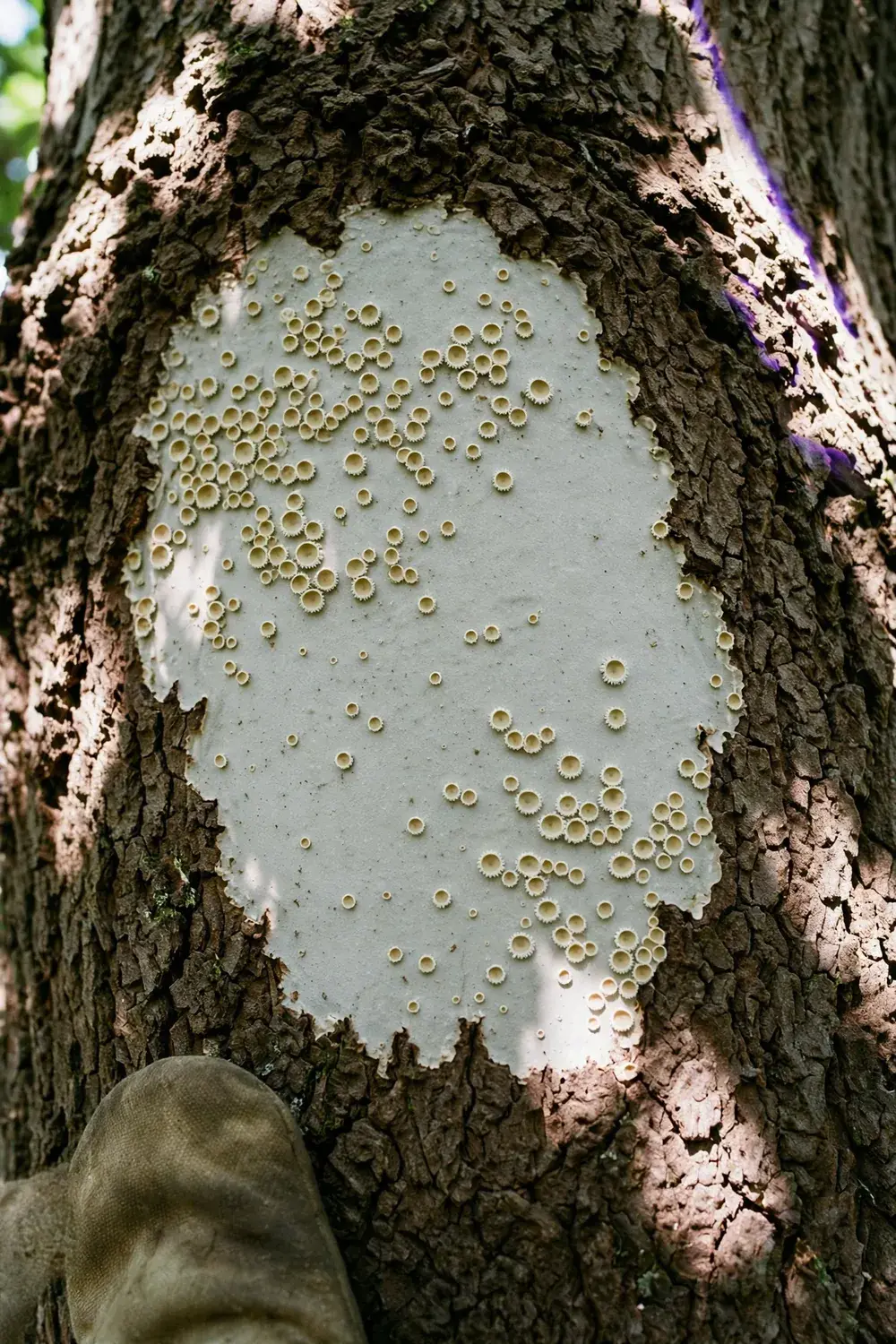

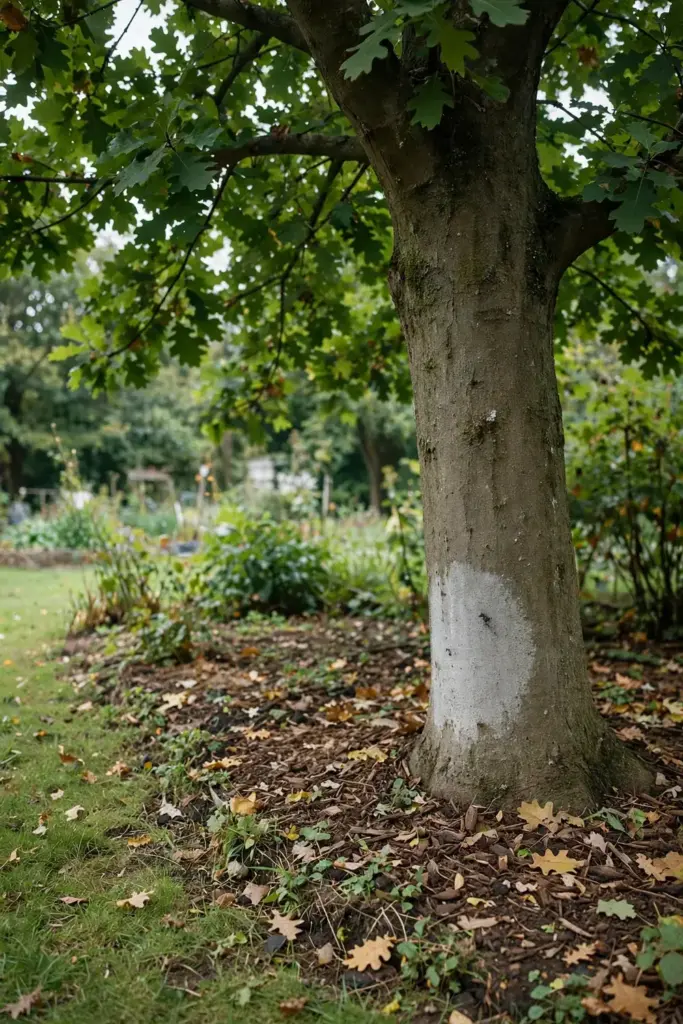
Walk up to the trunk and look at the bark before you reach for a spray. Smooth patch fungus turns rough oak bark into smooth light-gray patches from about 8 cm to more than 30 cm across, and it harms nothing. No spray, no scraping, and no rescue improves the tree.
I have learned to check the canopy before I judge the bark. Smooth patch fungus is a bark condition of oak and other hardwoods, and Aleurodiscus oakesii is the fungus most often named for it. Several fungi can cause the same patches. All of them feed on dead outer bark.
The rest of this page gives the field signs, the reason no treatment exists, 5 moves that help the oak, and one warning about a bark disease that does kill. The moves cost nothing beyond normal tree care.
What Smooth Patch Fungus Actually Is
Smooth patch fungus is a saprophytic fungus that colonizes dead outer bark on living oak and hardwood trees. It breaks down the corky outer layer, and the bark sloughs off in patches. The living tissue underneath stays untouched.
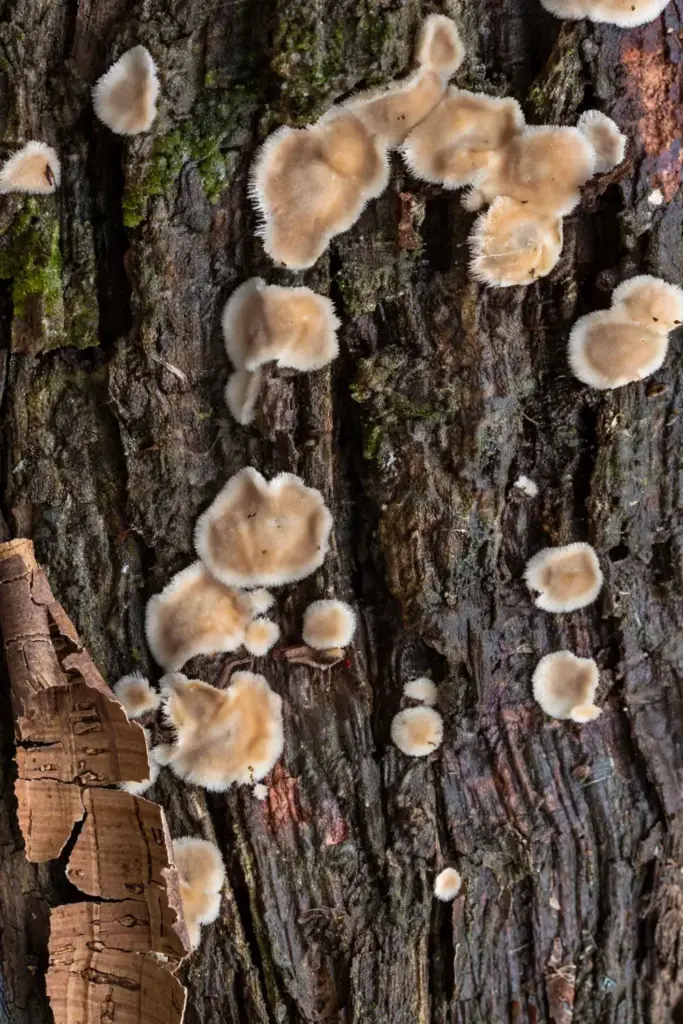
The Purdue Landscape Report on smooth patch names Aleurodiscus oakesii as the species that produces clusters of flat disc-like fruiting bodies on the smooth bark. Several fungi can cause the same syndrome, so the name covers a bark condition with more than one agent. The disease also goes by bark patch and white patch.
White oaks show it first and most often. Other hardwoods carry it too, including hickory, ash, birch, and pecan. The fungus lives in the outer bark only. A tree grows new wood under bark each year, and the how trees grow thicker each year guide shows how those layers stack.
How to Recognize Smooth Patch Fungus on Oak Bark
Look for a smooth light-gray patch where rough bark used to be. The patch sits lower than the surrounding bark, and its edge runs irregular. Patches run from about 8 cm to more than 30 cm across, and they show on the lower trunk and on larger branches.
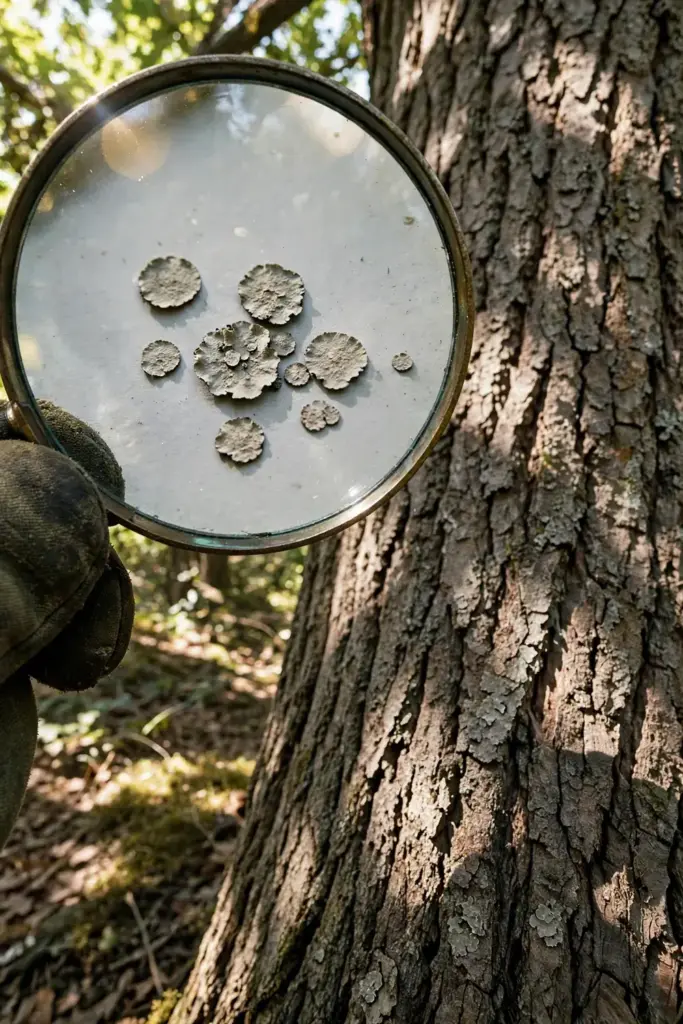
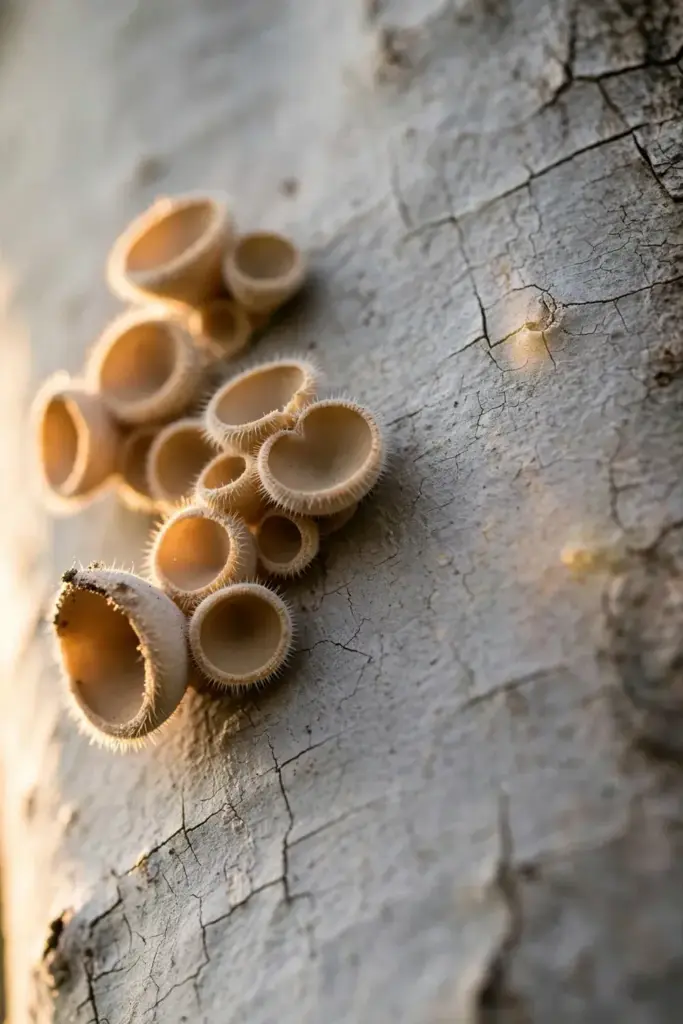
Tiny fruiting bodies dot the smooth bark. They are flat gray or beige discs, usually under 1.3 cm across, with edges that curl. They read as lichen at a glance. Rain swells them into view, and dry weather shrinks them back.
| What You See | What It Tells You |
|---|---|
| Smooth light-gray patch on the trunk | Outer bark has sloughed, leaving smoother bark behind |
| Flat gray or beige discs under 1.3 cm across | Fruiting bodies of the smooth patch fungus, clearest after rain |
| Small patches joining into one large area | Patches merge as the fungus works through the outer bark |
| Rough furrowed bark around the patch | Normal bark beside the patch, for comparison |
Compare the patch with bark a hand span away. Normal oak bark stays rough, furrowed, and darker. The smooth patch sits depressed against it. A patch that keeps its smooth gray face through the seasons is smooth patch doing its slow work.
Why Smooth Patch Fungus Needs No Treatment
Smooth patch fungus needs no treatment because it never reaches living tissue. It feeds on the dead corky layer outside the living bark. The tree keeps growing, keeps leafing, and keeps adding wood.
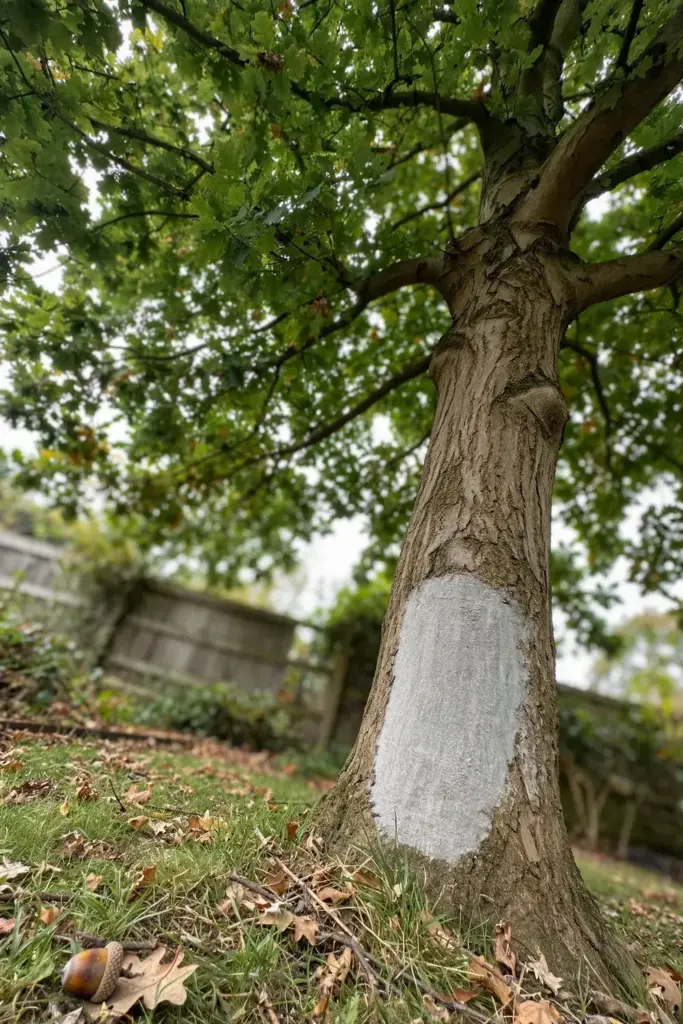
The Illinois Extension smooth patch page states the verdict in one line. No control is recommended. The same page notes at least three saprophytic fungi cause the condition, and none cause major damage to the tree.
That verdict holds even when patches spread. Spores ride wind and water, and new patches can open on the same trunk or a neighbor oak. Spread changes the bark. It does not change the tree.
Treatment talk usually starts from fear. Stripped bark looks sick. The stripped look is the whole disease, and nothing under it needs fixing.
1. Water the Tree Through Dry Spells
Water the oak deeply when weeks pass without rain. Drought stress weakens a tree and opens the door to real killers.
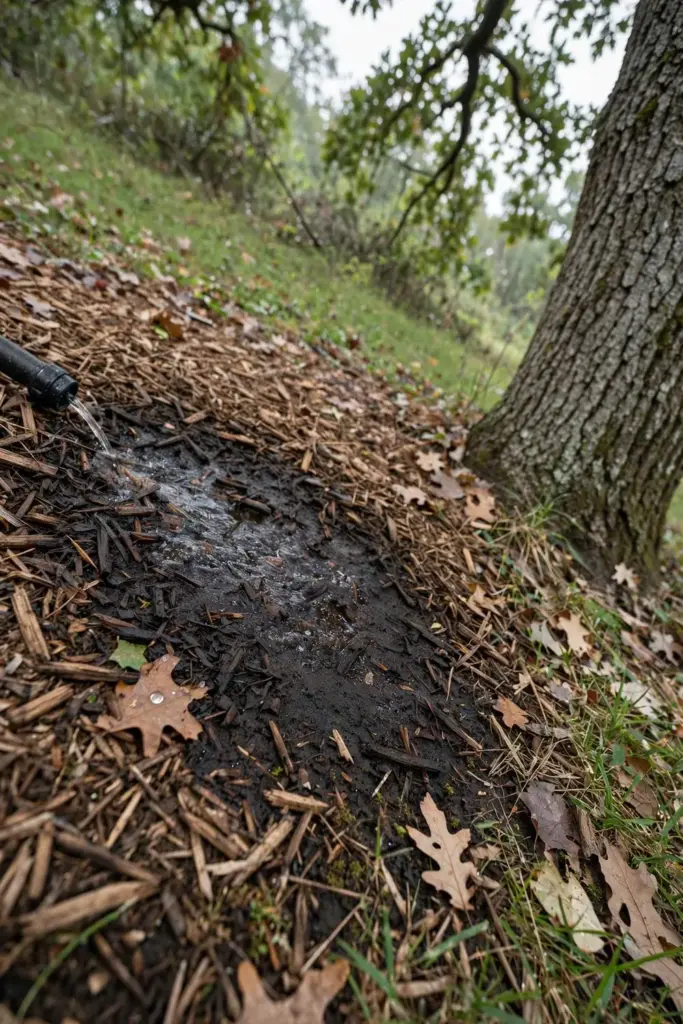
Soak the ground under the canopy. Keep the spray off the trunk. A deep soak beats a daily sprinkle, because surface water never reaches the feeder roots.
Skip watering when rain does the job. Wet feet rot roots, and rot invites worse trouble than smooth patch.
2. Mulch the Root Zone, Not the Trunk
Spread mulch in a wide ring under the canopy. Mulch holds soil moisture and cools roots in summer heat.
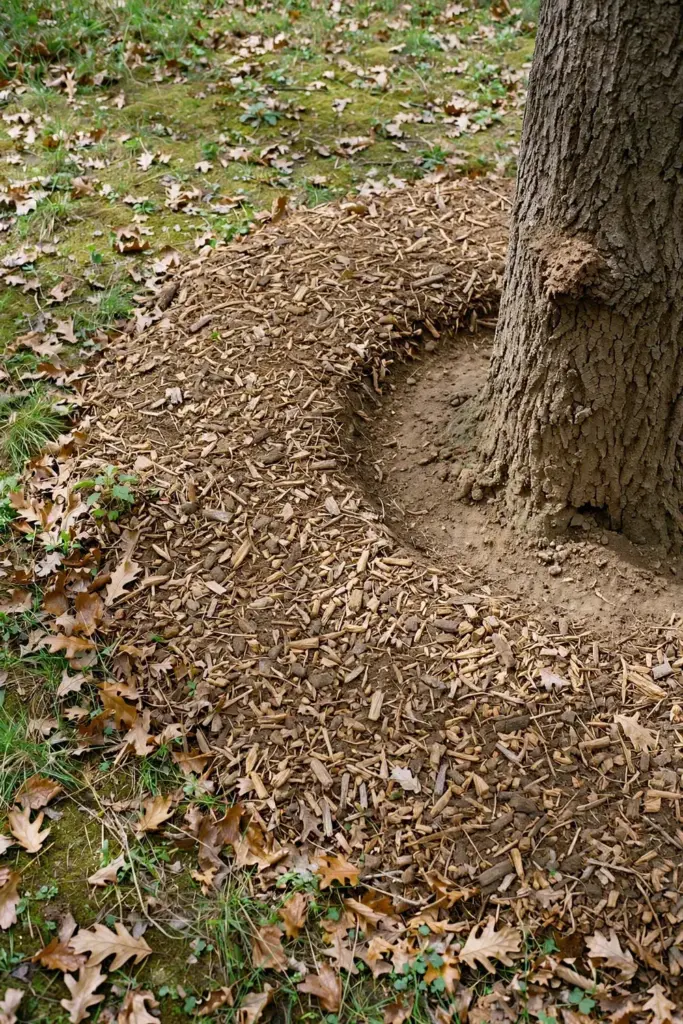
Keep mulch off the trunk. A mulch pile against bark traps moisture and rots the bark it touches. Leave a clear gap of bare soil around the trunk base.
The soil health guide covers how mulch and organic matter build the soil a tree stands in.
3. Keep Mowers and Trimmers Off the Bark
Keep the mower deck and trimmer line away from the trunk. A bark wound opens a path for decay fungi, and decay fungi do reach living wood.
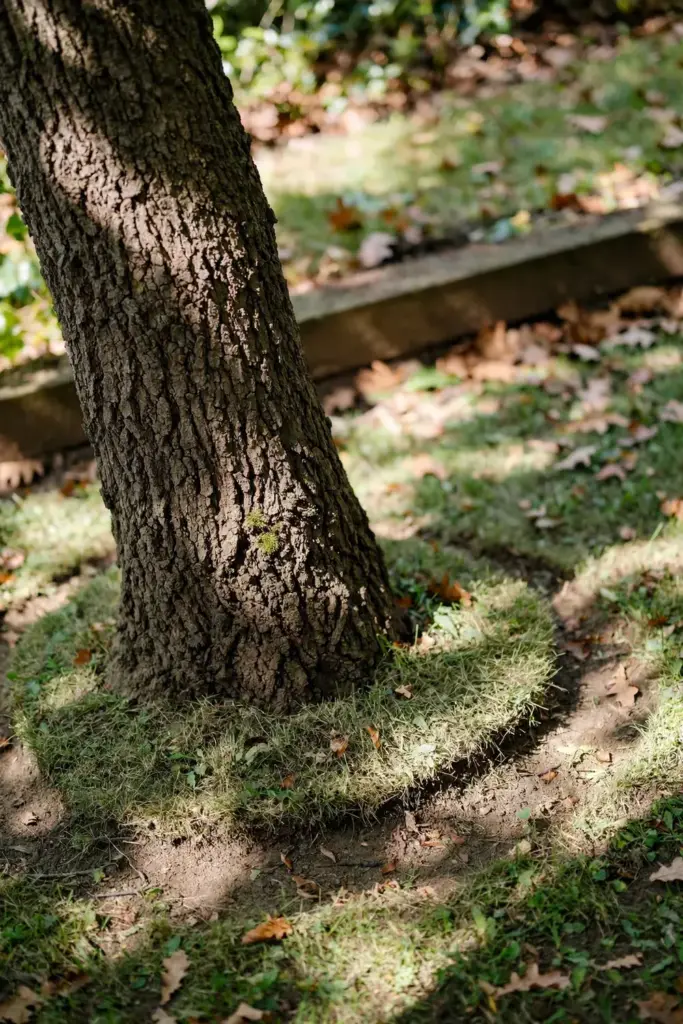
Mow a wide pass around the tree. Trim the grass at the trunk base by hand, with shears, if it needs cutting at all.
One nick heals. Repeated nicks girdle. The trunk takes the damage long before the canopy shows it.
4. Skip the Fungicide
Skip the fungicide. No spray changes dead bark, and the tree needs no rescue.
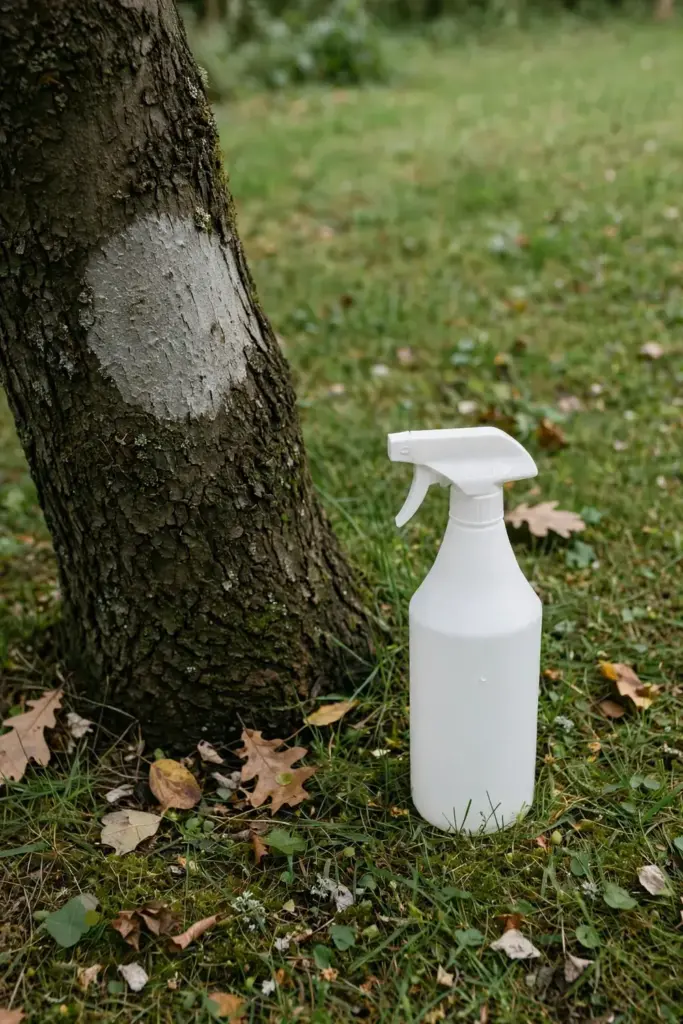
Fungicides cost money and add chemical load to the yard. Spending either on a harmless bark condition buys nothing.
Save the spray budget for a disease that answers to it. Smooth patch fungus is not one.
5. Check the Canopy Once a Year
Check the canopy once a year, in full leaf. Full leaves and steady shoot growth mean a healthy oak.
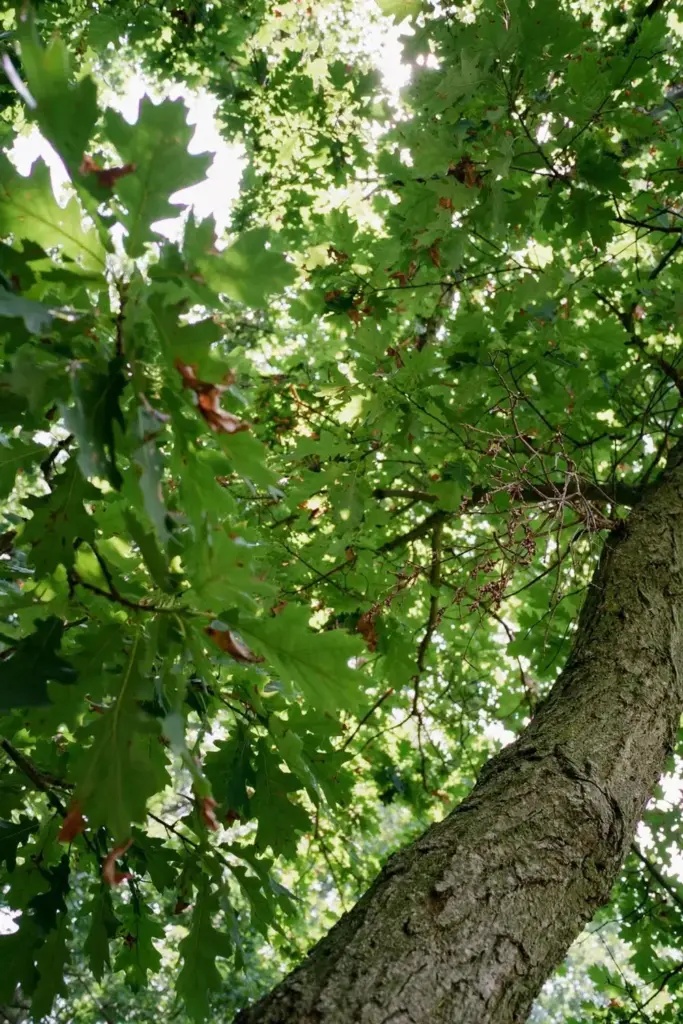
Note what changes. Thinning leaves, dead branch tips, or a bare crown section point at a different problem, and that problem may need an arborist.
A bark check without a canopy check misses the tree. The canopy reports health. The bark only reports bark.
The One Bark Problem You Must Not Confuse It With
Hypoxylon canker kills oaks. Biscogniauxia, formerly Hypoxylon, is a wood decay fungus that attacks stressed hardwoods, and oak is its most frequent host. Stress opens the door. Heat, drought, root damage, chemical injury, or insect injury must weaken the tree first.
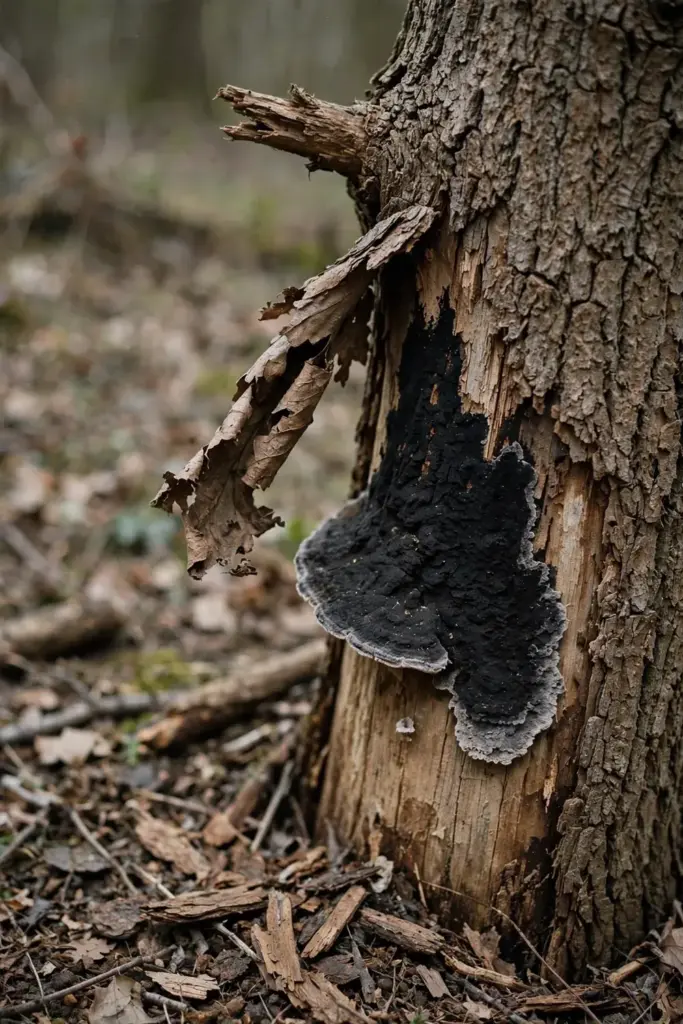
The signs differ from smooth patch. Bark cracks and falls in sheets, and a pile of bark gathers at the base of the trunk. The exposed fungal growth starts white, then turns gray, red-brown, and black. The fungus can girdle the trunk and kill the tree, and it weakens the wood so the tree stands less steady in wind. The Purdue Hypoxylon canker guide describes these signs in full.
Call a certified arborist when bark falls with dieback, or when the trunk shows black fungal mats. An arborist judges stability and decides whether the tree stays or goes. Smooth patch never earns that call. Hypoxylon can.
Oaks face other real killers too. Diplodia dieback kills whole oak branches and leaves brown leaves hanging. A canopy that thins or dies back deserves a name, and the name decides the response.
Frequently Asked Questions
No. Smooth patch fungus feeds on dead outer bark only, and it never reaches living tissue. The tree keeps growing, leafing, and adding wood under the smooth patches. Patches may spread across the trunk over years, and the spread still harms nothing. Judge the tree by its canopy. Full leaves and steady growth mean the oak stands healthy under its patched bark.
No. No spray changes dead bark, and the tree needs no rescue. Fungicides cost money and add chemical load to the yard, and spending either on a harmless bark condition buys nothing. Save the spray budget for a disease that answers to it. Water during drought and mulch the root zone, two moves that cost nothing beyond normal tree care. Keep the mower deck off the bark. Those moves help the oak. A spray does not.
It can. Spores spread by wind and water, and new patches can open on the same trunk or a neighbor oak. The spread changes bark, not tree health. A healthy oak with smooth patches needs no treatment and no isolation. Watch the canopy instead. Thinning leaves or dying branch tips point at a different problem, and that problem may need an arborist.
Do not scrape it. Scraping wounds the bark underneath and opens a path for decay fungi, which do reach living wood. The smooth patch itself harms nothing, and removing it buys nothing. Leave the patch alone. Keep mowers and trimmers off the trunk, and let the bark carry its smooth gray face.
Where to Go From Here
Walk out and look at the trunk. Smooth light-gray patches with flat discs after rain mean smooth patch fungus, and smooth patch fungus means no action.
Water in drought and mulch the root zone. Keep the mower off the bark. Check the canopy once a year. Call an arborist when bark falls with dieback or black mats show.
Smooth patch fungus is the bark condition that asks nothing of you. Give the oak water and mulch. Keep the mower off the bark. The tree handles the rest.