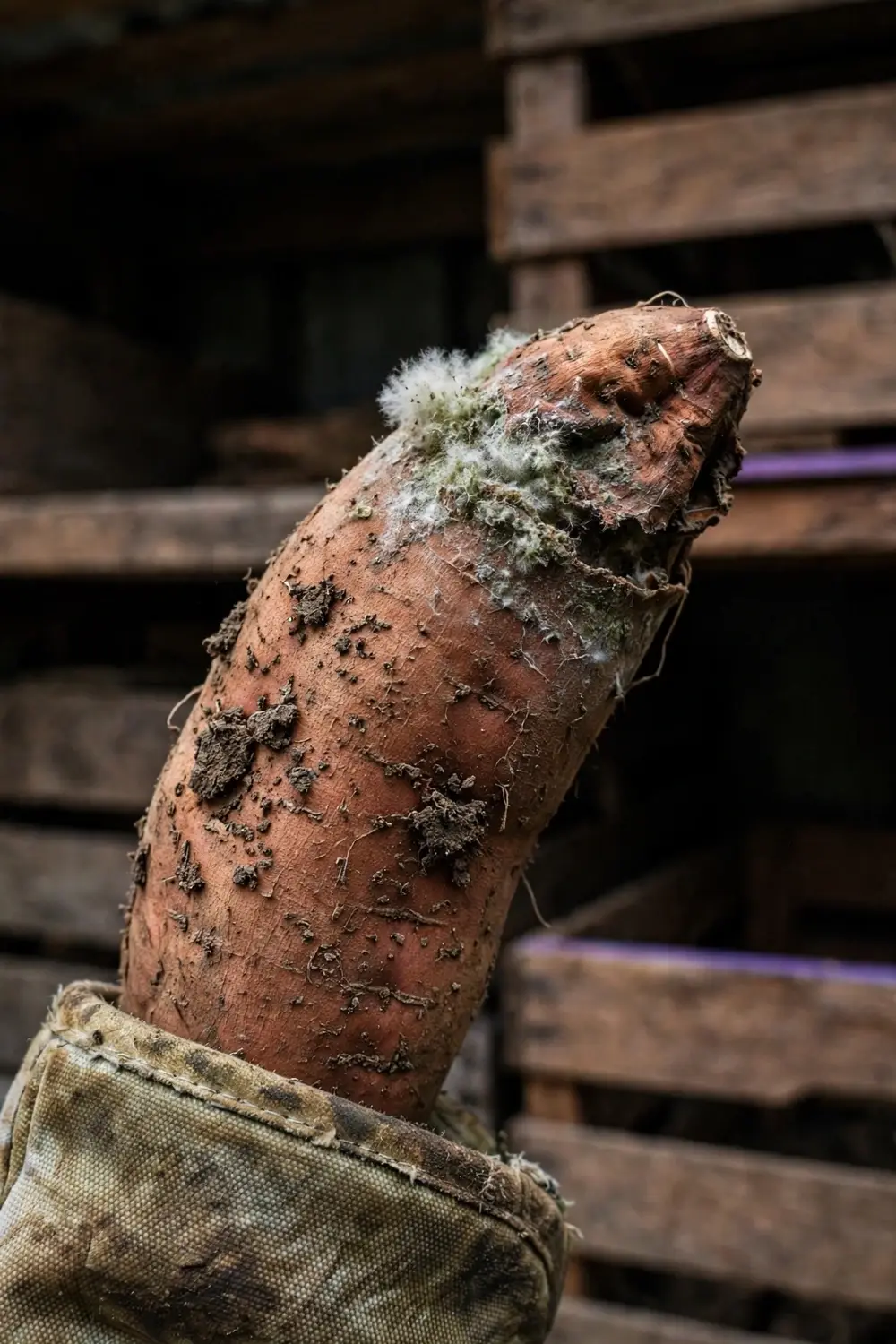

Punky Rot of sweet potato is a minor storage rot with no specific cure and no reliable way to identify it at home. The published record gives 1 symptom note for it. The honest response is 5 storage-hygiene moves, not a punky-rot treatment.
Punky Rot is a postharvest disease of sweet potato (Ipomoea batatas) storage roots, caused by fungi in the genus Trichoderma. It shows up in storage, not in the field. No growing-plant symptoms appear in the record. I have learned to treat any soft stored root as a loss, not a rescue project.
The rest of this page states what the record does and does not establish, clears up four common confusions, and gives 5 storage moves that cover what the record does not. The moves are generic storage hygiene. None of them targets punky rot alone, because no punky-rot-specific measure exists in the published record.
What Punky Rot of Sweet Potato Actually Is
Punky Rot is a storage rot of sweet potato. Trichoderma spp. cause it. The Clemson Index of Plant Diseases in South Carolina lists exactly one entry for it, under sweet potato, and gives the pathogen at genus level only.
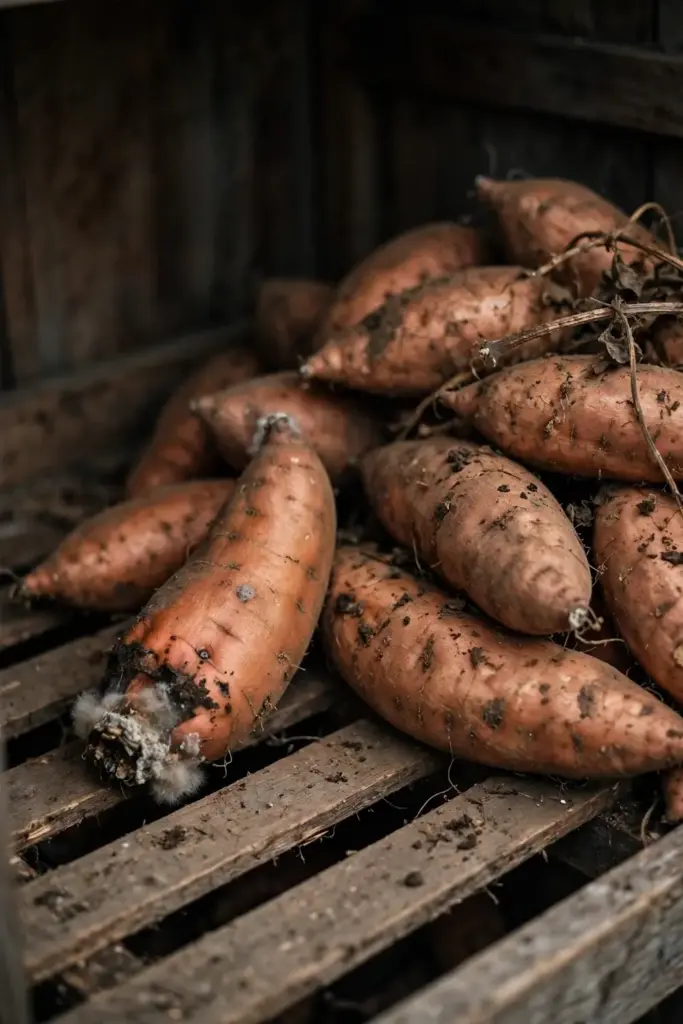
A 2004 review of sweet potato diseases in Papua New Guinea files punky rot among the minor storage diseases and names Trichoderma koningii as the agent. The Papua New Guinea review places it in its minor-disease table, alongside charcoal rot and blue mould rot. This article keeps the genus-level name Trichoderma spp. The Clemson entry gives genus only, and the species attribution varies across the literature. No single species stands as settled.
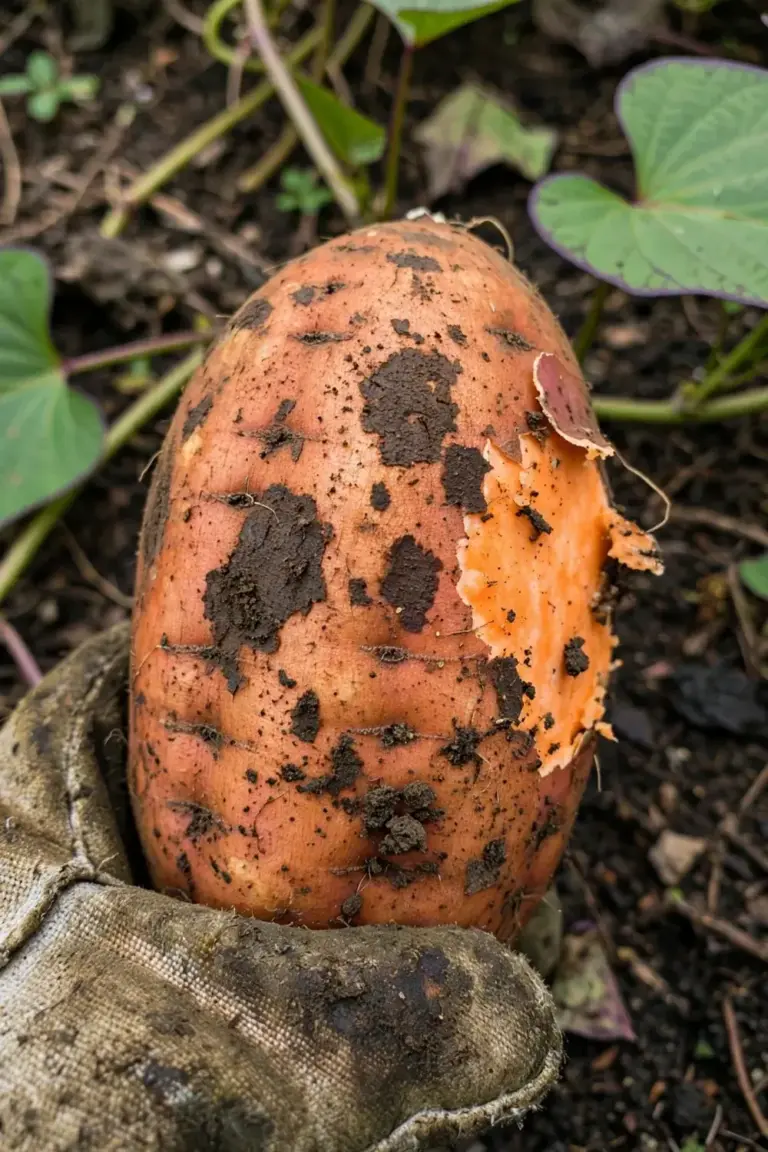
Punky Rot attacks stored roots. It is a postharvest problem. The record gives no field symptoms, no vine or leaf signs, and no description of how the rot starts on a growing plant. A gardener meets this disease, if at all, in the storage bin.
Why Punky Rot Is Hard to Identify
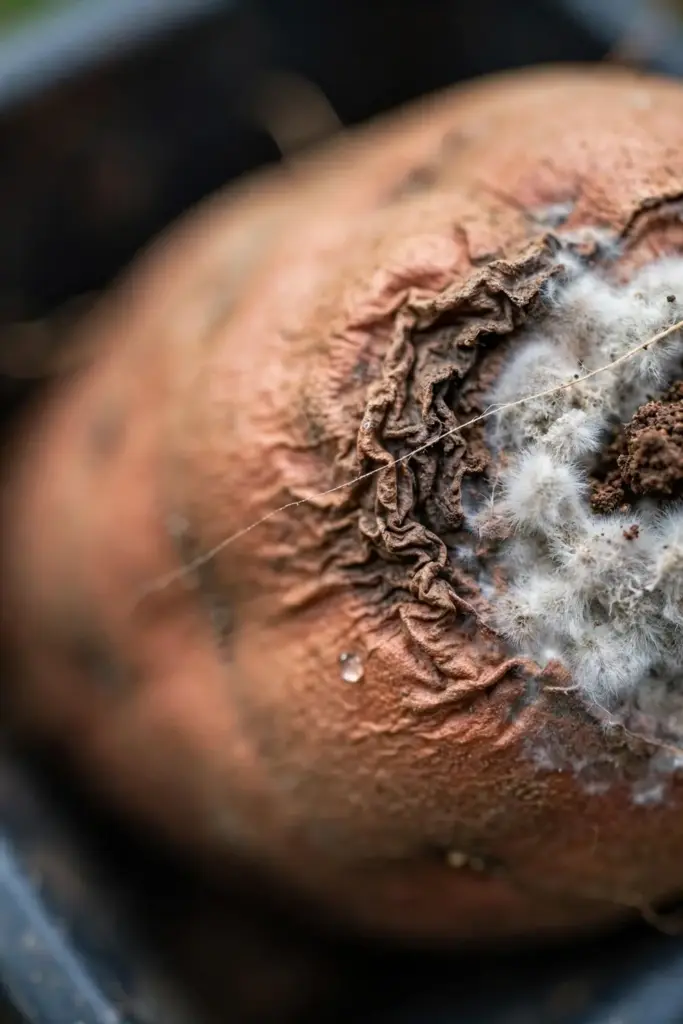
The published record gives exactly one symptom note for Punky Rot. A paper in Plant Disease describes its symptoms as similar to green mold disease. That clause is the full published symptom description. No source in the scouted record gives color, texture, smell, or a timeline for punky rot.
| What the Record Establishes | What the Record Does Not Establish |
|---|---|
| Host is sweet potato stored roots | Color or texture of the rot |
| Pathogen genus is Trichoderma spp. | How fast the rot spreads |
| Setting is postharvest storage | Smell or taste changes |
| Symptom note is similar to green mold | Any feature that separates it from other storage rots |
| Classification is a minor storage disease | Any punky-rot-specific treatment |
Data not available covers the rest. No field guide, fact sheet, or home-gardener page describes what punky rot looks like in enough detail to identify it. Treat any rotting stored root as storage rot and act on that. Do not try to name the exact rot from appearance alone. A lab can name the agent when the call matters, and field ID cannot.
What Punky Rot Is Not
Punky Rot is not punky wood. The word punky also describes soft, decayed wood. That is a generic adjective for decayed timber. This disease is a named sweet-potato storage rot, and the two subjects share only a word.
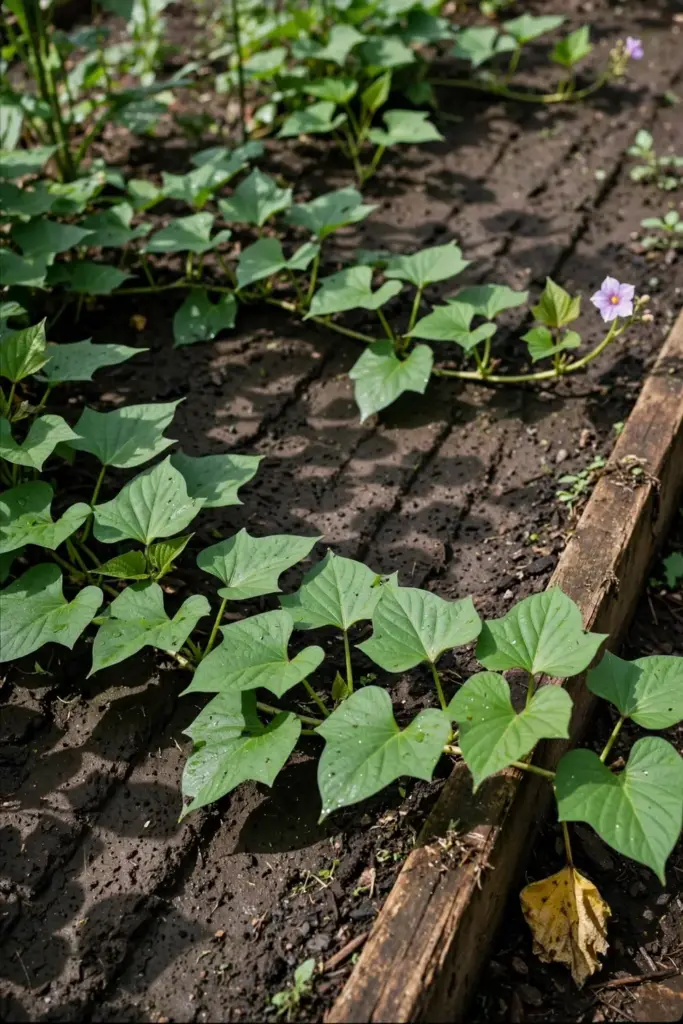
Punky Rot is not a field disease. The record gives no vine, leaf, or stem symptoms. A wilting vine or a spotted leaf points to a different problem. Do not blame punky rot for anything you see on a growing plant.
Punky Rot is not a beneficial-fungus story. The genus Trichoderma includes strains used as biocontrol agents against plant pathogens. A laboratory study found that Trichoderma harzianum strains showed strong antifungal activity against sweet-potato storage-rot pathogens in dual culture. The PMC study tested those strains against other rots, not against punky rot. Biocontrol literature is not punky-rot management evidence.
Punky Rot is not a settled single species. Literature names Trichoderma koningii. Clemson gives genus only. This article keeps the genus-level name and does not present one species as the settled cause.
1. Cure Roots Promptly After Harvest
Cure freshly dug sweet potatoes right after harvest. Curing heals cuts and bruises, and healed skin keeps decay organisms out.
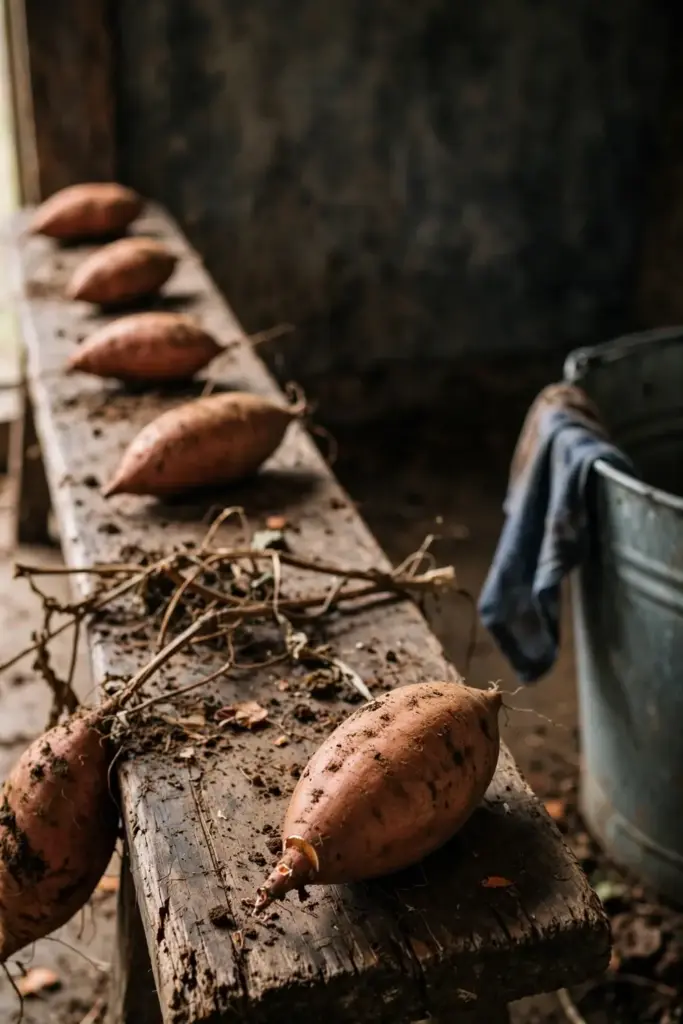
The Oregon State sweetpotato page gives the curing target as 85 degrees F and 90 to 95 percent relative humidity for 4 to 7 days. The same page warns that a delay of 2 or more days before curing leaves injuries unhealed and invites decay. The Iowa State Extension answer corroborates the range with 1 week at 80 to 85 degrees F and 90 to 95 percent relative humidity.
Keep roots in a single layer with air moving around them during curing. Give the curing space ventilation so carbon dioxide does not build up and moisture does not condense. The how to grow sweet potato guide covers harvest timing and digging for a healthy crop.
Curing also improves flavor as starches convert to sugars. The storage payoff is the point here. A healed root stores. A green root rots.
2. Store Cured Roots at 55 to 60 Degrees F With Moving Air
Move cured roots to cool storage at 55 to 60 degrees F and 85 to 90 percent relative humidity. Oregon State gives that range for storage, and Iowa State gives the same range with the same humidity band.
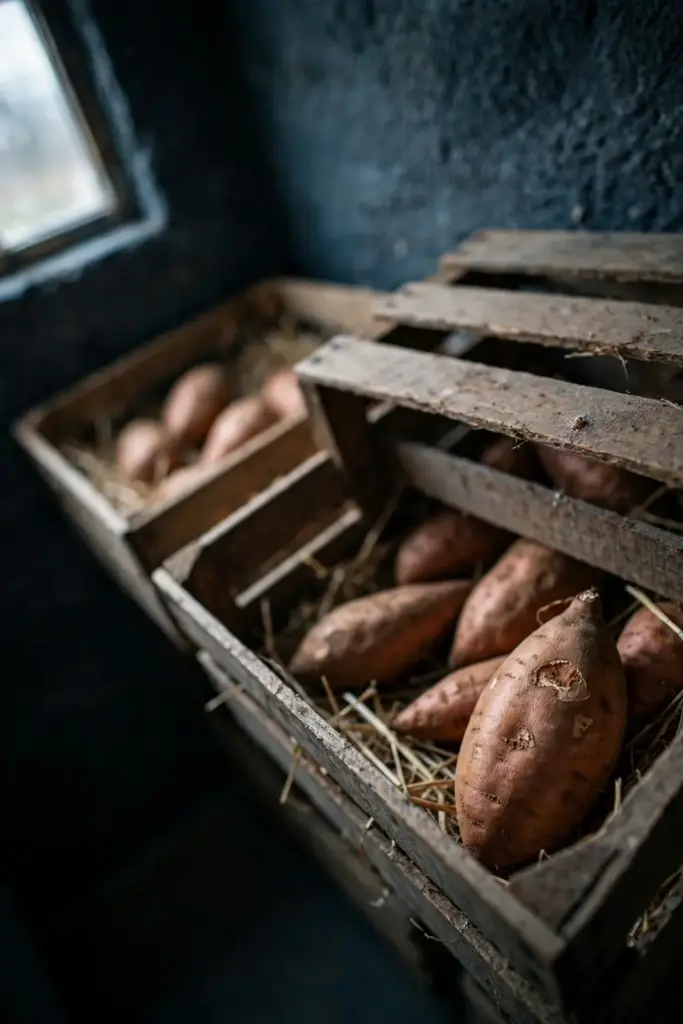
Stay inside the band. Storage below 55 degrees F gives chilling injury, off flavor, and discolored flesh. Storage above 60 degrees F stimulates sprouting. Iowa State notes that properly cured and stored sweet potatoes keep for 4 to 6 months.
Ventilation matters as much as temperature. Oregon State calls for enough ventilation during curing to prevent carbon dioxide buildup, oxygen depletion, and condensation. Carry the same rule into storage. Stagnant, wet air favors rot. Moving air keeps the bin dry enough to slow it.
3. Handle Roots Gently and Keep Wounds to a Minimum
Wounds are the entry points for storage rots. Every cut, bruise, and broken tip gives decay organisms a way in.
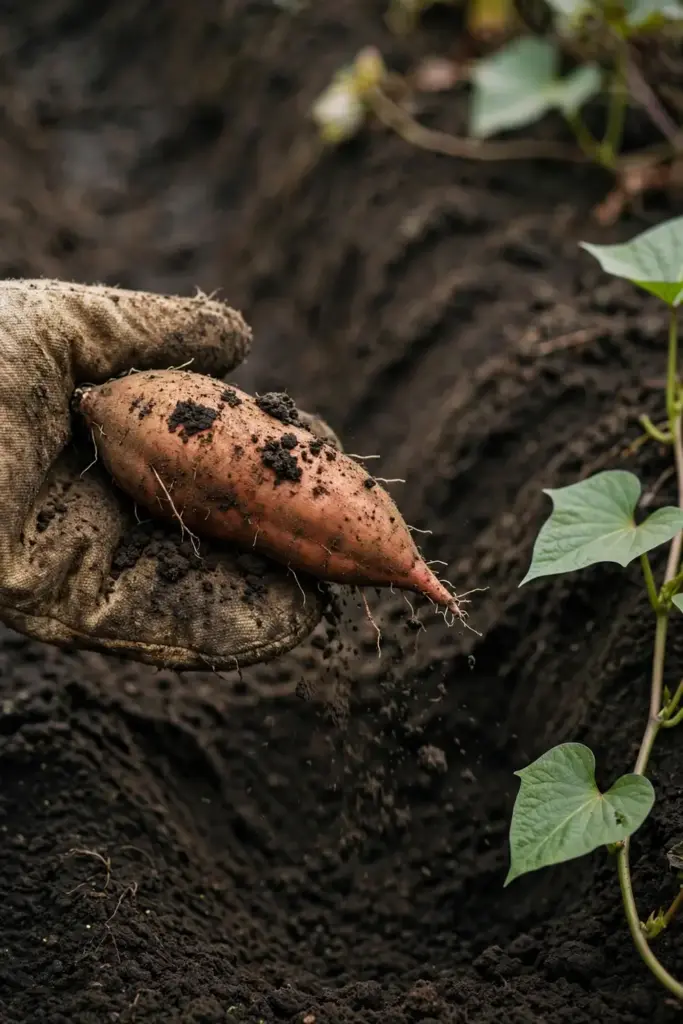
Dig carefully to avoid cutting or bruising the roots. Iowa State gives that instruction as the first harvest rule. Lift with a fork set wide of the root zone, and sort on a soft surface. Do not toss roots into a bin.
Keep handling to a minimum after curing. Each extra pass over the roots adds new nicks. Move roots once, into their storage container, and leave them there until use.
4. Check Stored Roots Often and Remove Rotting Roots at Once
Check stored roots on a regular pass through the bin, and pull any root that has gone soft, moldy, or foul. Bag it. Put it in the trash. Never leave a rotting root sitting beside sound roots.
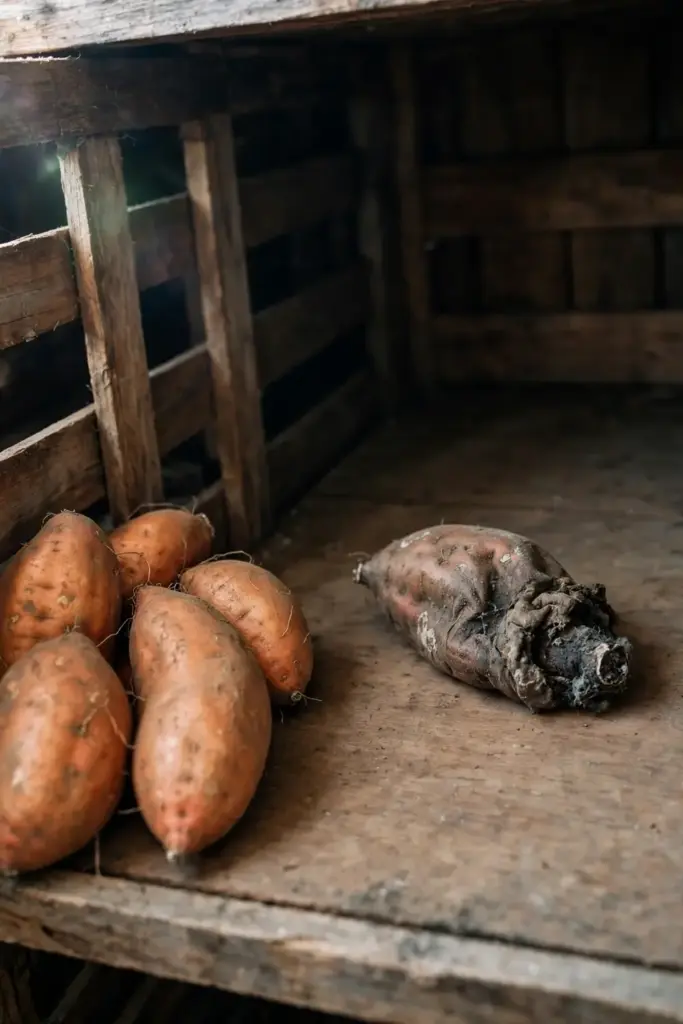
Do not compost rotting roots. Composting returns the material to the garden, and the rot would ride along to the next bed. The same rule covers cull piles left beside the bin. Clear the bin fully, then wash the containers that held the crop.
A rotting root is a loss. Cut away no part of it for the table. Sound roots stored in the same bin stay sound when the rotting ones leave early.
5. Clean the Storage Area Between Batches
Sweep out the storage area between batches. Remove old roots, soil, and debris from shelves, crates, and bins. Wash crates and bins with soap and water, then dry them before the next harvest goes in.
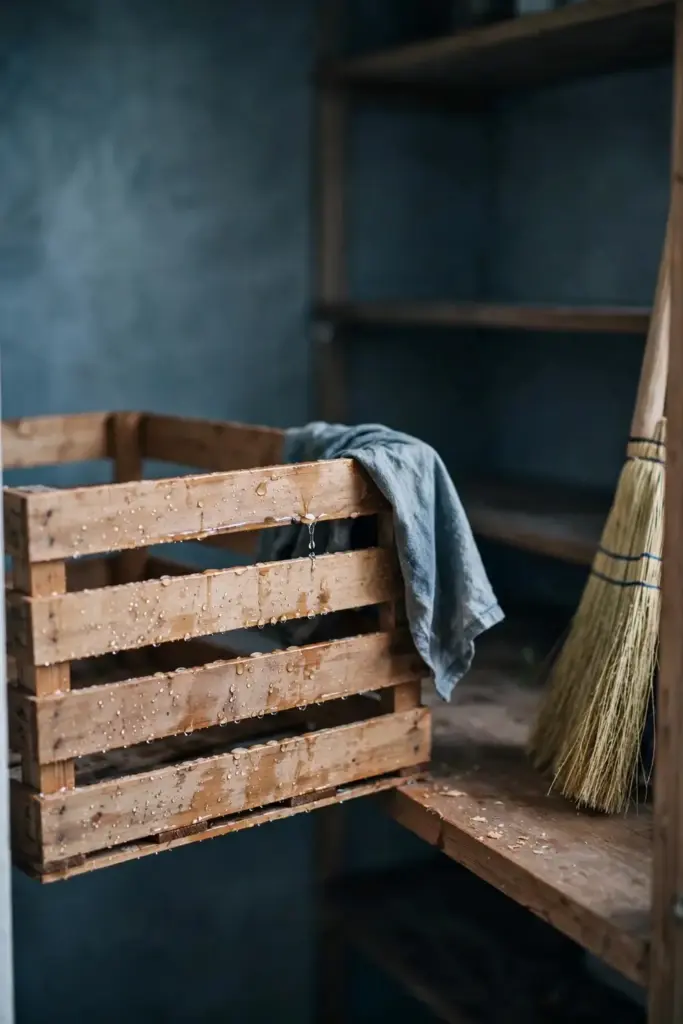
Dust and old root fragments carry decay organisms into the next batch. A clean bin gives the next harvest the same fresh start the first batch had.
Start clean, cure promptly, and store cool. The bin does more for punky rot than any spray on the shelf.
Frequently Asked Questions
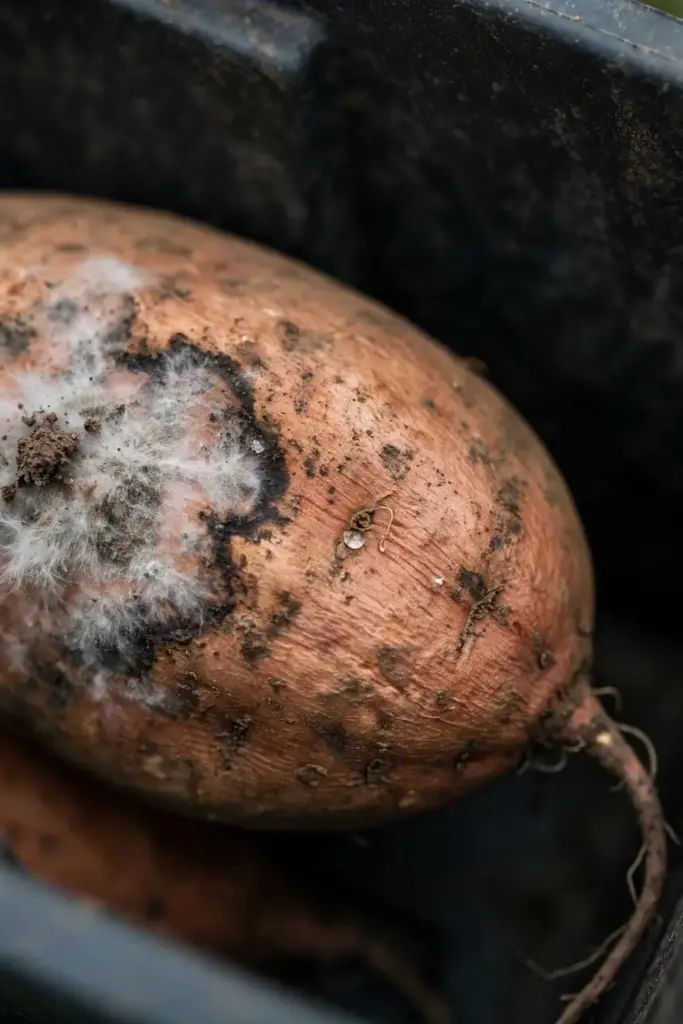
Do not eat rotting roots. Discard any root that has gone soft, moldy, or foul, and bag it for the trash. Sound roots from the same bin stay edible when rotting roots leave early. Wash your hands, knife, and board after handling a rotting root. When a root looks mostly rot, it belongs in the trash, not on the plate.
No. Punky Rot is its own named entry, caused by Trichoderma spp. The only published comparison says its symptoms resemble green mold disease. Resemblance is not identity. Do not treat the two as one disease, and do not borrow green mold advice as punky-rot advice. The record gives no feature that separates punky rot from other storage rots at home.
No punky-rot-specific spray appears in the published record. No fungicide, botanical, or home remedy carries punky-rot evidence. Storage hygiene is the only home response the record supports. Cure promptly, store at 55 to 60 degrees F with moving air, handle roots gently, remove rotting roots at once, and clean the bin between batches.
Data not available covers punky rot specifically. No source in the record describes its spread to other crops in storage. As a storage rot, it belongs nowhere near sound roots. Keep rotting roots out of the bin, keep batches separate, and clean containers between batches. Those three habits limit any storage rot, named or not.
Where to Go From Here
Punky Rot of sweet potato stays a thin entry in the record. It has a genus, a host, a storage setting, and one symptom clause. It has no field marks, no timeline, and no specific cure.
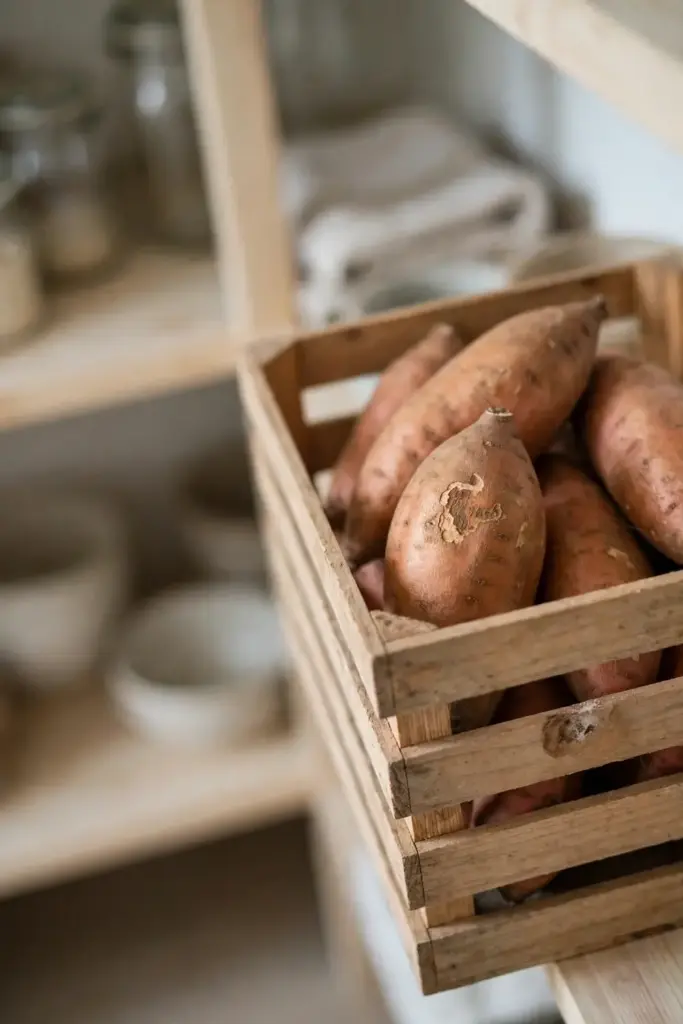
The 5 moves above are the whole home playbook: cure promptly, store cool with moving air, handle gently, pull rotting roots at once, and clean the bin between batches. The soil health guide helps you build the bed the next crop grows in, season after season.
Start with the bin. End with a clean one.