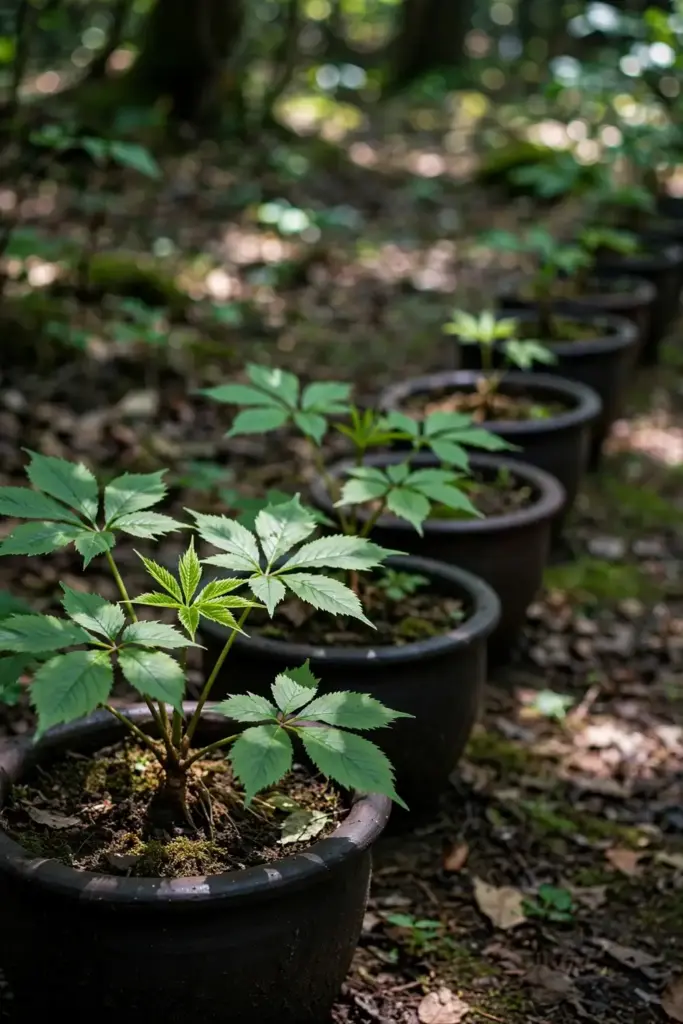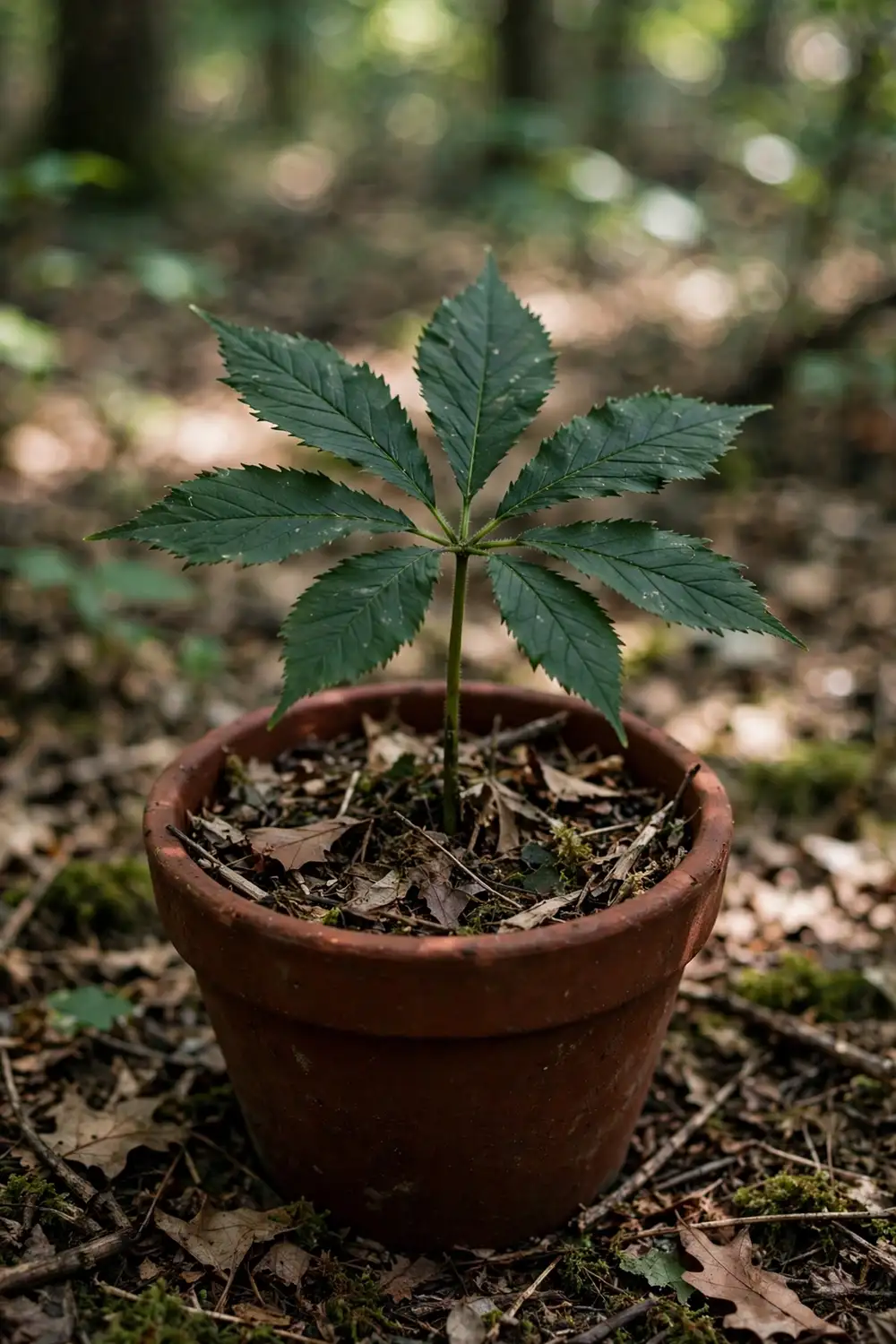

Fill a 40 cm pot with forest-floor mix this autumn. That is how to grow ginseng in pots: a shade-loving woodland perennial whose taproot you will not see for five to ten years. The rest of this page is 15 moves, from potting mix to harvest. I have learned that ginseng rewards the gardener who sets up the shade and then forgets the calendar. It asks for almost nothing and repays attention with interest.
Ginseng (Panax species) is a slow-growing woodland herb famous for its forked taproot. This guide covers container growing only. For starting ginseng from seed, including the long stratification the seed demands, read our complete Asian ginseng growing guide first, then come back here for the pot method. Expect a decent harvestable root no sooner than five years after planting, and ten is normal for wild-simulated quality, because Better Homes & Gardens’ ginseng guide puts the wait at 5 to 10 years before you can harvest a decent root. The pot is not a shortcut. It is a way to grow this plant where no woodland exists.
1. Choose American or Asian Ginseng
Two species dominate home growing, and they suit different gardeners. American ginseng (Panax quinquefolius) is native to eastern North American woodlands, hardy in zones 3 to 8, and the easier species for most temperate gardeners. Asian ginseng (Panax ginseng, also called Korean ginseng) prefers slightly warmer conditions and is the species behind most commercial cultivation. Both need deep shade, both take years, and both grow the same way in a pot. Choose the species native to your continent when in doubt: it is already adapted to your seasons. Buy roots or stratified seed from a reputable grower, never wild-dug plants, which may be illegal to harvest and are often poached.
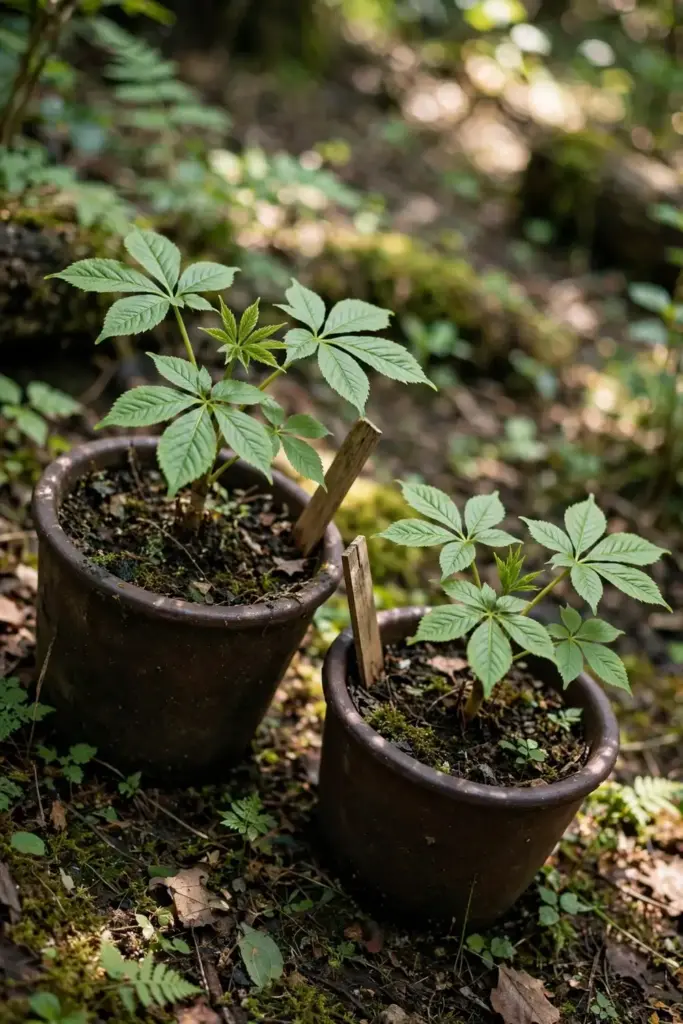
Think of the choice as matching the plant to your winter. A gardener in Minnesota wants the species that evolved under Minnesota snow; a gardener in Georgia wants the one comfortable with milder cold. Both species look alike as young plants: a single stem with a whorl of palmately divided leaves, white flowers in spring, red berries in autumn. You choose by hardiness and provenance, not by appearance. A reputable seller labels the species clearly and tells you the seed’s origin. Vague labels mean a vague grower. When the label names the county the seed was collected in, you have found a serious seller worth returning to.
| Species | Latin name | Zones | Notes |
|---|---|---|---|
| American ginseng | Panax quinquefolius | 3–8 | Native to eastern North America; 70–90% shade |
| Asian ginseng | Panax ginseng | 4–8 | Korean/Chinese species; see our from-seed guide |
2. Understand the 5-to-10-Year Clock
Read this before you buy anything. Ginseng roots do not mature until four to ten years have passed, and a decent harvestable root takes 5 to 10 years, per BHG’s growing notes. Commercial field-grown roots harvest at the early end; wild-simulated roots, grown slowly under forest conditions, need 6 to 10 years or more, as the American ginseng cultivation summary records. A pot-grown root lands somewhere between, depending on your care. This is not a crop. It is a savings account you cannot touch for half a decade. If that timeline disqualifies the project, plant something else with a clear conscience. If it excites you, keep reading.
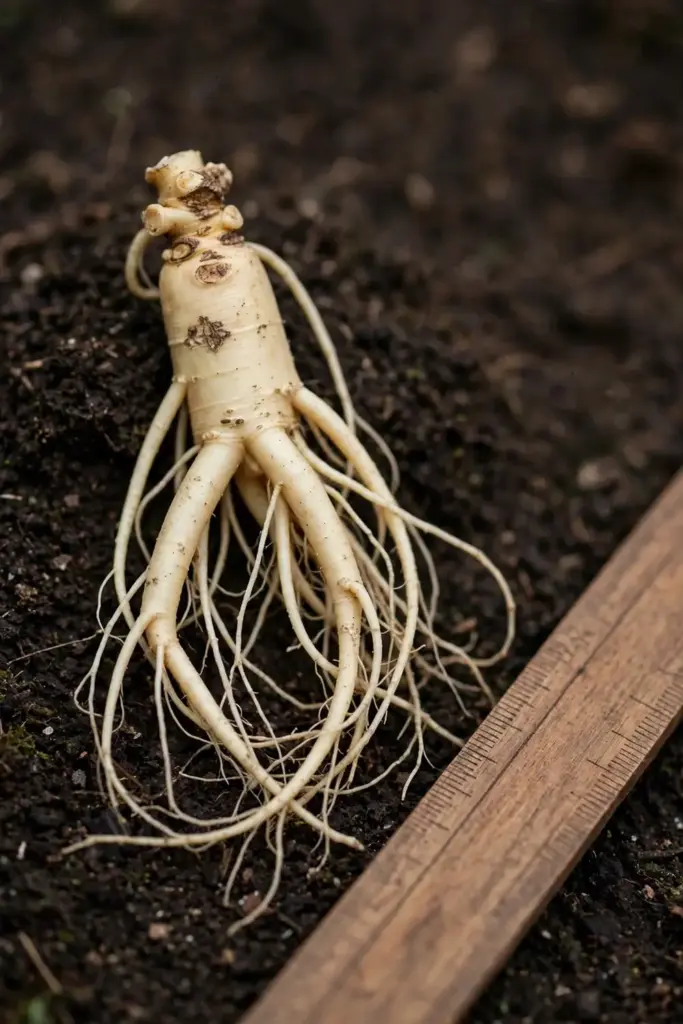
The slowness is the point, not a flaw. Ginseng builds its root one growing season at a time, and each year’s stem leaves a scar on the root neck that marks its age like a tree ring. Rushed roots grown fast under heavy feed are watery and light; slow roots grown lean are dense and heavy. You cannot hurry this plant, so do not try. The gardeners who succeed with ginseng are the ones who plant it, set up the conditions, and then get interested in other projects for five years. Start a second pot every autumn and the harvests eventually overlap into a steady rhythm.
3. Why Pots Work (and Where They Don’t)
Pots suit ginseng’s early years beautifully and its later years adequately. A container lets you build perfect forest-floor soil, control drainage exactly, and move the plant out of flood, drought, or construction. It also lets gardeners without woodland grow ginseng at all. The limits are real: a pot-grown root never reaches wild size, the soil volume restricts the taproot, and you must water and shade-manage forever. Ginseng is not a good choice for growing indoors, because it needs the cycles of the seasons including cold dormancy, when the leaves die back in fall and re-emerge in spring, as BHG’s container notes explain. The pot lives outdoors year-round. Your job is soil, shade, and patience.
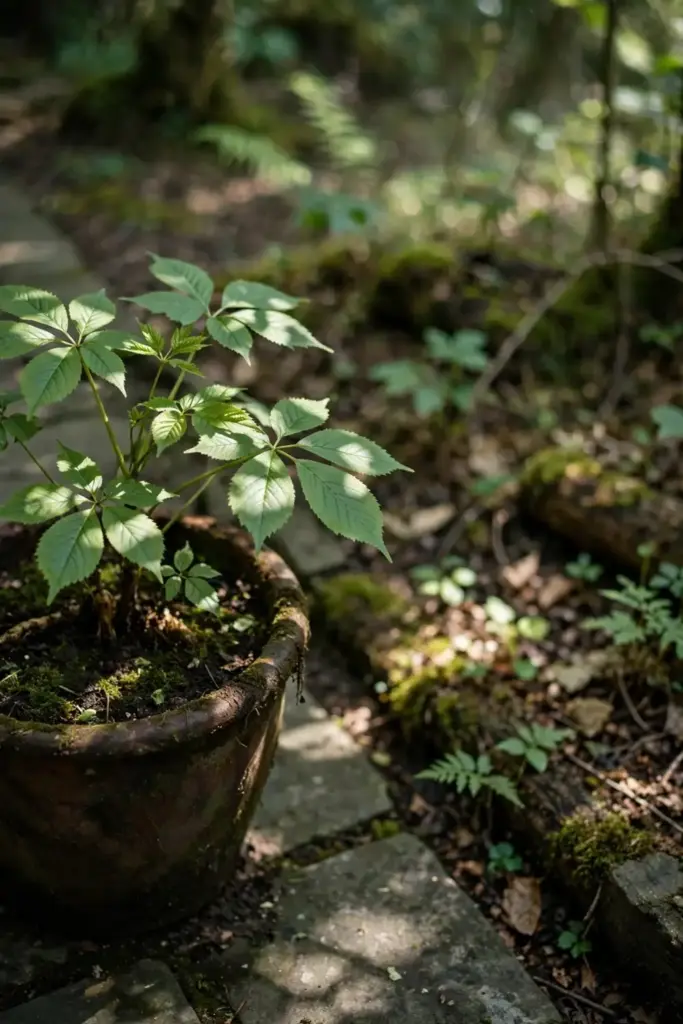
Consider the pot a nursery, not a plantation. The first two or three years in a container are ideal: perfect soil, easy watering, no competition from tree roots. After that, you have a choice. Keep the plant potted and accept a smaller root at harvest, or transplant the young root to a shady garden bed for its remaining years. Many growers do both: pots for starting, woodland beds for finishing. Either way, the pot years are never wasted. They are the years the root establishes the structure it will fill out later. A root that spends its youth in perfect potting mix carries that advantage underground for the rest of its life.
4. Get Stratified Seed or Year-Old Roots
Start with stratified seed or one-year-old rootlets, not fresh seed. Fresh ginseng seed can take up to a year and a half to germinate and needs months of stratification; buying stratified seed skips the hardest part. One-year-old rootlets skip even more: they emerge the first spring and grow all season. Our Asian ginseng guide covers stratification in full for growers who want the complete from-seed journey. For the pot method, rootlets are the smart buy. Order from a specialist nursery in summer for autumn delivery, and plant the day they arrive. Dried-out rootlets are dead rootlets.
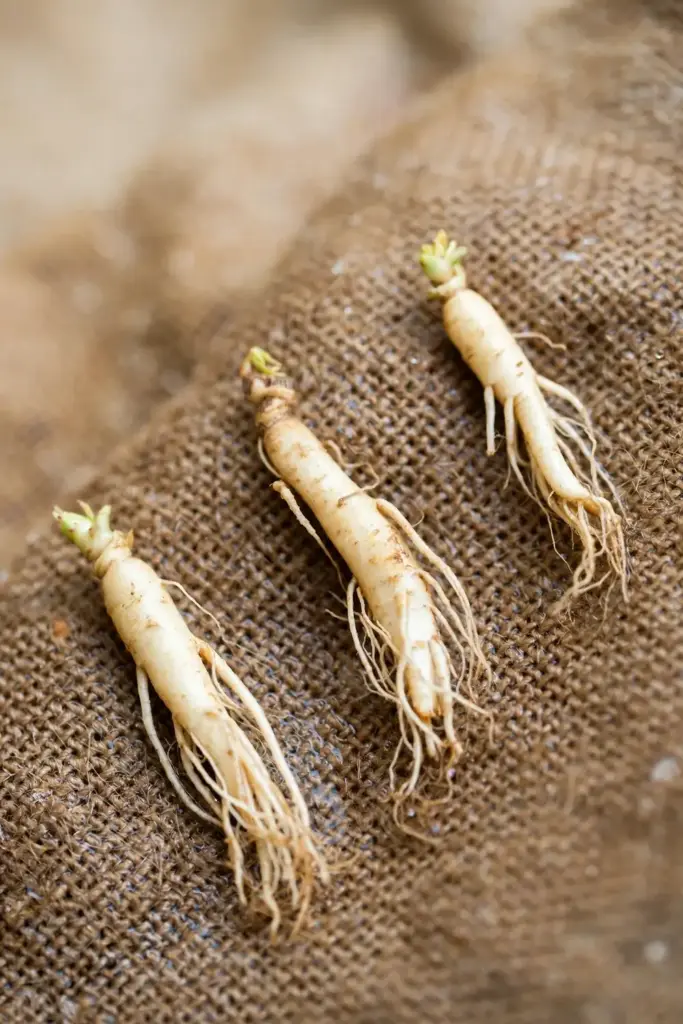
Inspect rootlets on arrival before you plant. A healthy one-year rootlet is pale, firm, and carrot-like, with a visible bud at the crown. Soft, dark, or shriveled rootlets go in the bin, not the pot; planting dead stock wastes a season of hope. If the shipment arrives while you cannot plant, heel the rootlets into damp sand in a cool shed for a few days. Never store them in a sealed plastic bag at room temperature. They need air and cool, like the forest floor they came from.
5. Pick a 40 cm Deep Pot
Pick a container 40 cm in diameter with generous drainage holes, as Gardening Know How’s potted-ginseng guide recommends. Depth matters more than width: the taproot drives straight down, and a shallow pot forks it early. Terracotta breathes well but dries fast; thick plastic holds moisture longer. Either works if the drainage is excellent. One plant per pot for the first three years; after that, the root needs the whole volume. Do not crowd seedlings thinking you will separate them later. Ginseng resents transplanting after about age two, and dividing a pot of three-year-olds kills more than it saves.
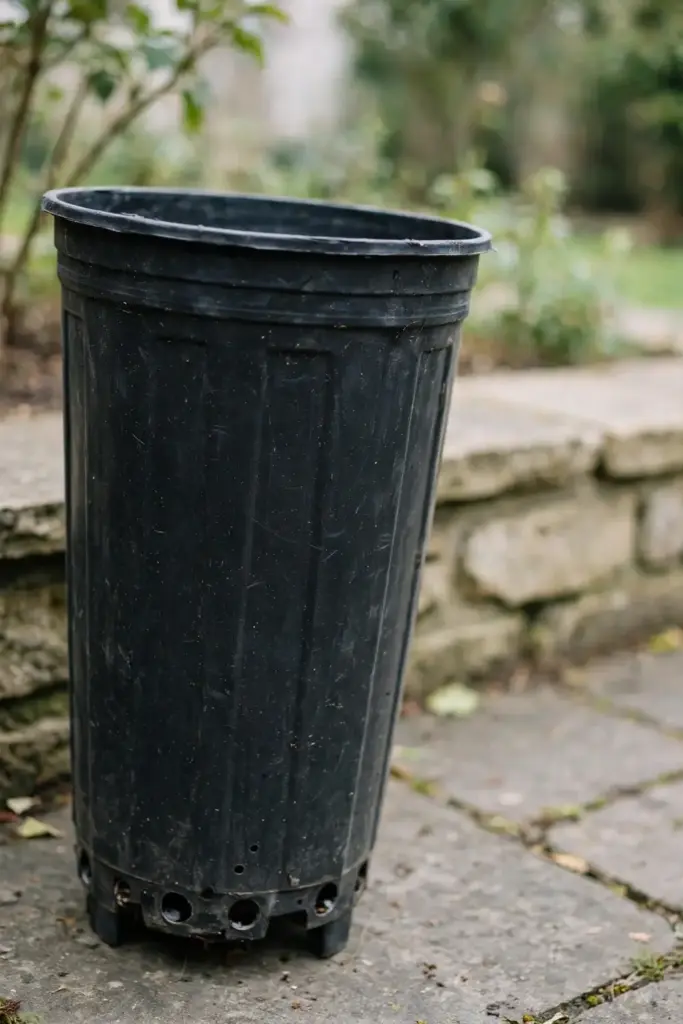
Drill extra holes if the pot has only one. Ginseng sits in its pot through winter rains, and a single clogged hole drowns the root by February. Four or five 2 cm holes across the base drain reliably even when one clogs with mix. Four or five 2 cm holes across the base drain reliably even when one clogs with mix. Stand the pot on pot feet, not flat on paving, so water escapes freely and air reaches the base. These small drainage details decide whether your five-year investment survives its third winter. Check the holes every autumn when you top up the mulch.
6. Mix a Forest-Floor Potting Blend
Build the woodland floor in the pot. Mix two parts leaf mold or composted bark, one part loam-based compost, and one part coarse perlite or grit for a blend that holds moisture yet drains freely. The mix should be light and slightly acidic, well-drained, never soggy. Fill the pot to 5 cm below the rim to leave watering space. Soak the filled pot a day before planting so the mix settles; top up any sinkage. A forest floor is decades of fallen leaves over loam. Your mix imitates that in an afternoon, and the ginseng cannot tell the difference if the texture is right.
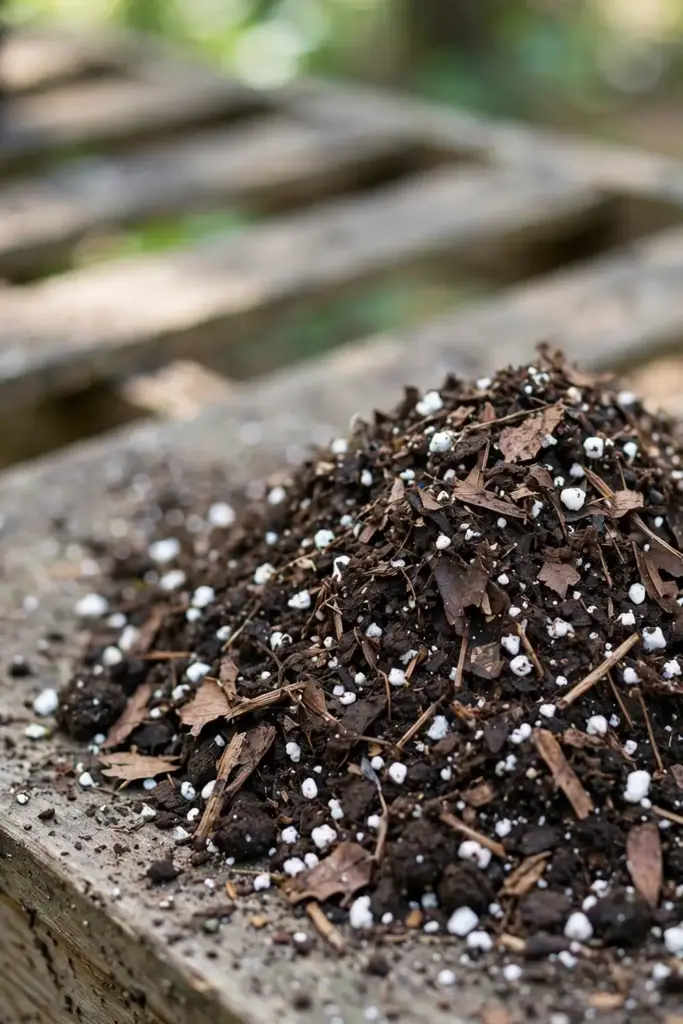
Make leaf mold the backbone, not an afterthought. Bagged leaf mold from the garden center works, but a sack of last autumn’s shredded leaves, kept damp in a bin for a year, is better and free. Squeeze a handful of the finished mix: it should hold together loosely, then crumble when poked. If water streams through instantly, add more leaf mold. If it puddles, add more grit. This squeeze test, done once before planting, prevents years of fighting a mix that was wrong from the start.
7. Plant 4 cm Deep in Autumn
Plant in autumn, when the root wants to settle before winter. Set stratified seed or rootlets 4 cm deep, as GKH’s planting notes specify, spacing multiple seeds 8 cm apart if you sow a nursery pot. Cover with mix, water gently, and top with 5 cm of shredded leaf mulch. Label the pot with the species and the planting date. Then walk away until spring. Nothing visible happens all winter, and that is correct. The root is growing microscopic feeder roots in the cold soil while you drink tea indoors. Resist digging to check. Every inspection breaks the new roots.
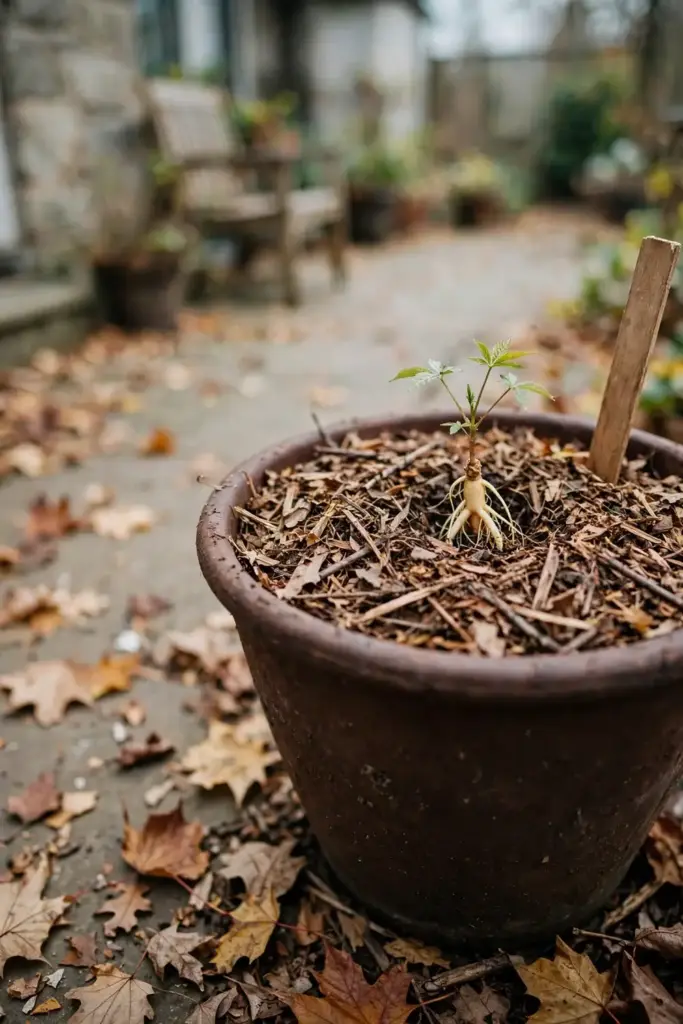
Autumn planting works because it matches the plant’s own calendar. In the wild, berries drop in autumn, seeds stratify through winter, and rootlets settle as the soil cools. Your pot imitates that sequence exactly. Spring planting also works for rootlets, but autumn gives the root a head start on feeder-root growth before the first shoot emerges. Either way, plant on a cool, overcast day and water well. The root should never sit exposed to air for more than a few minutes during planting.
8. Give 70 to 90 Percent Shade
Shade is non-negotiable. American ginseng grows best in 70 to 90 percent shade, per Territorial Seed’s growing notes, which means dappled woodland light, not darkness and not sun. Place the pot on the north side of a building, under a deciduous tree, or beneath a shade cloth that blocks most of the sun. Morning sun is tolerable; afternoon sun scorches the leaves within hours. Watch the foliage: deep green and upright means the shade is right, while bleached or crisped edges mean too much light. A pot is easy to move, so use that advantage. Shift the pot as the seasons change the sun angles.
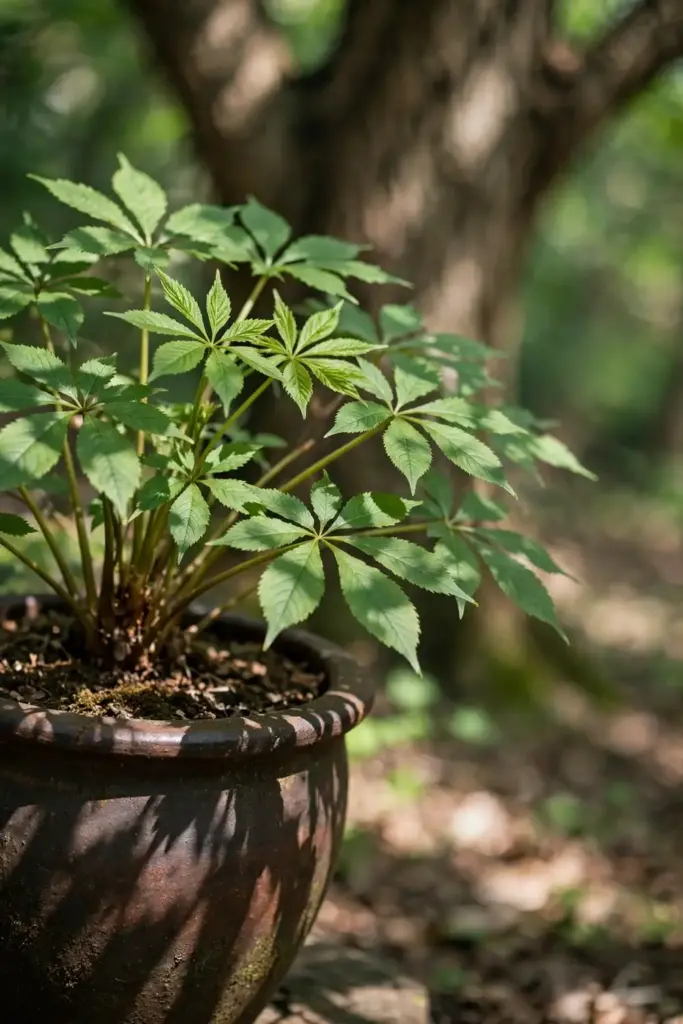
Learn to read the light like a woodlander. Hold your hand over the pot at noon: dappled shifting shadows mean good ginseng light, while a hard-edged shadow means too much sun. Under a deciduous tree, the light changes with the seasons, which suits ginseng perfectly: brighter in early spring before the canopy leafs out, deeper shade in summer. That is the exact rhythm the plant evolved for. A shade cloth works too, but a living tree gives the shifting seasonal light for free.
9. Water Like a Woodland Floor
Keep the mix consistently moist but never waterlogged. Water when the top 2 cm dries, soaking until water runs from the drainage holes. In summer heat that may mean daily watering; in cool spring, twice a week. A woodland floor is damp, not wet: think wrung-out sponge. Mulch holds the moisture between waterings. Reduce watering as the leaves yellow in autumn; the plant is going dormant and drinks almost nothing all winter. The number-one killer of potted ginseng is summer overwatering in a shadeless spot. Shade first, then water correctly.
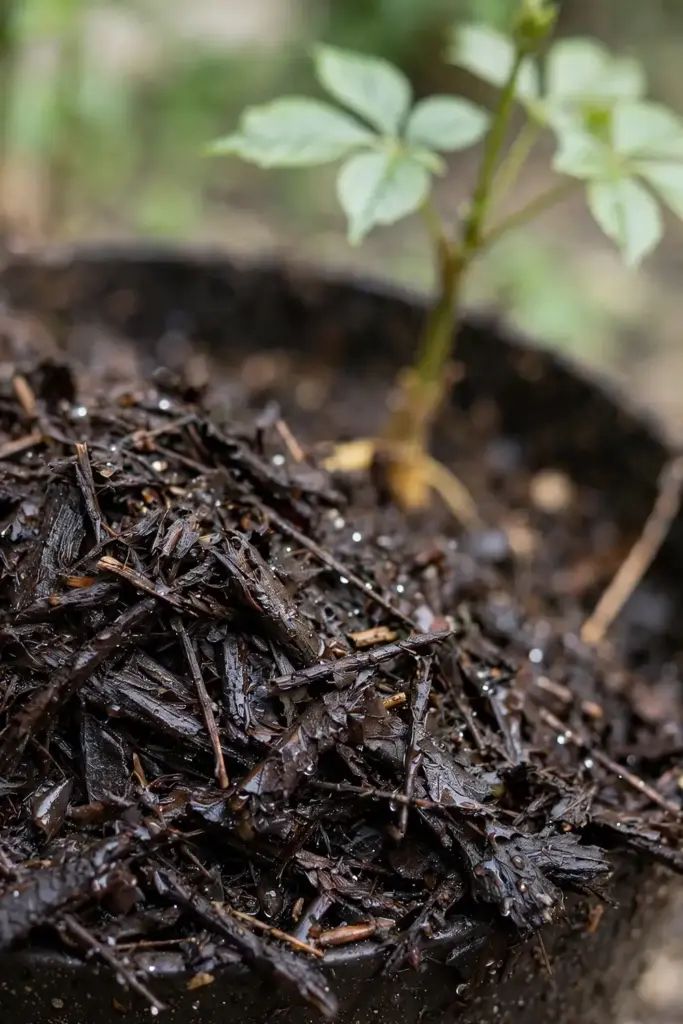
Use rainwater when you can. Ginseng prefers slightly acidic conditions, and hard tap water creeps the mix alkaline over the years. A water butt under a downspout supplies a shade garden’s modest needs. If you must use tap water, let it stand overnight so the chlorine dissipates. Water in the morning so the foliage dries by midday; wet leaves overnight invite the fungal spots that plague this plant. The watering can is your most-used ginseng tool. Everything else is patience. In a rainy climate you may barely water at all; in a dry summer the pot becomes a daily appointment.
10. Never Fertilize
Here is the easiest feeding schedule in gardening: none. Do not fertilize ginseng, as GKH’s care guide states plainly. The leaf-mold mix feeds the plant for years, and added fertilizer grows soft, disease-prone tops at the expense of the root. Top-dress with fresh leaf mold each autumn instead; that is the forest feeding itself. If the leaves emerge pale and weak in spring after several years, a thin compost top-dressing is the strongest intervention you should attempt. A ginseng root grown lean and slow is the goal. Rich soil grows a big top and a disappointing root.
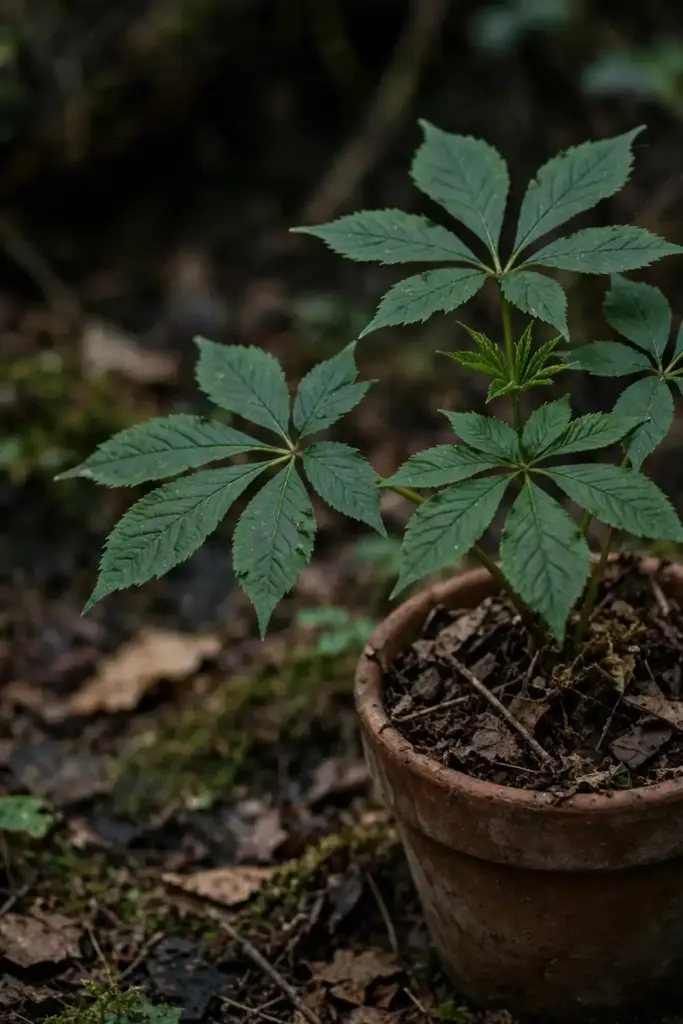
Understand why this rule exists. In the wild, ginseng grows in lean forest soil and puts its energy into a dense, slow-built root. Fertilizer tells the plant that resources are abundant, so it invests in leaves instead. The result looks impressive above ground and disappoints below it, which is the opposite of what you want. Commercial growers learned this long ago: the best roots come from the poorest-looking tops. When your ginseng looks modest, it is probably doing exactly the right thing underground.
11. Leave the Pot Outside All Winter
Cold dormancy is mandatory, not optional. The plant must go through winter cold with its leaves dying back to the ground in fall and re-emerging in spring. Leave the pot outdoors all winter. In zones 6 and colder, bury the container a few inches into the ground and mulch heavily over the top, mimicking a wild plant under autumn leaves, as BHG’s overwintering advice describes. An unheated garage or cold frame works where ground-burying is impractical. Do not bring the pot into a heated room. Warm winters produce weak, confused growth that never amounts to a root.
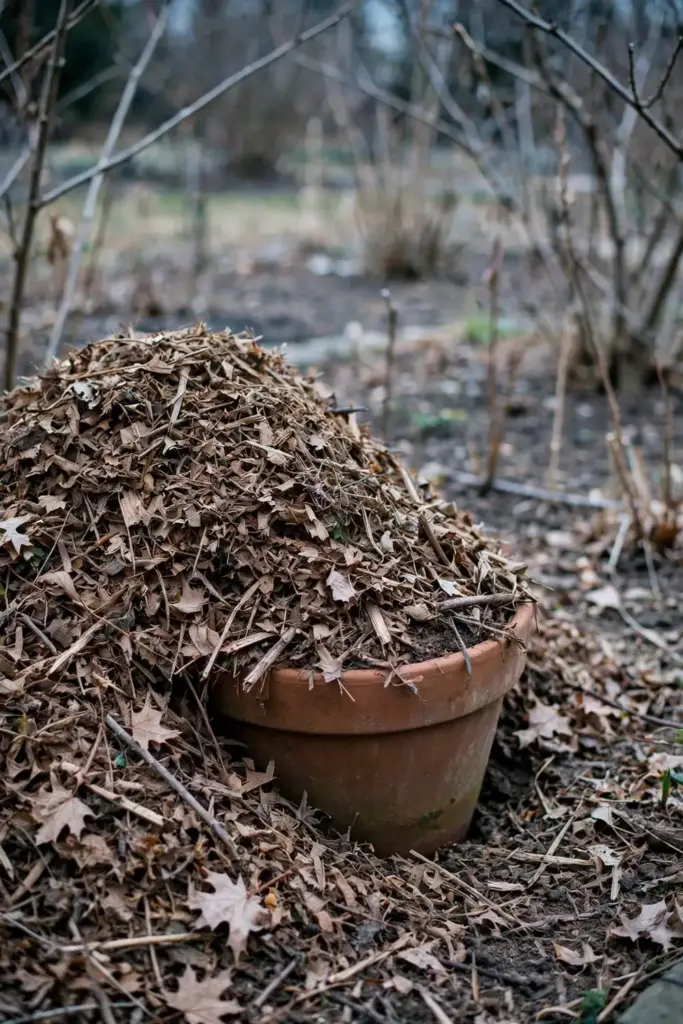
Do not panic at the autumn dieback. The stem yellows, flops, and vanishes, leaving a pot of mulch that looks empty for six months. This is dormancy, not death. Mark the pot clearly so nobody “tidies” it away or plants something else in it. In spring, a single spear pushes through the mulch, often weeks after your other perennials wake. Late emergence is normal for ginseng. The root wakes on its own schedule, and it has never once been wrong about the season.
12. Mulch Like Falling Leaves
Mulch is the forest floor’s blanket. Keep 5 to 8 cm of shredded deciduous leaves over the pot surface year-round, topping up each autumn. The mulch holds moisture, moderates soil temperature, feeds the soil life, and hides the pot’s surface from drying wind. Use oak, maple, or beech leaves; avoid walnut leaves and fresh wood chips. In spring, the ginseng spear pushes straight through the mulch without help. Do not clear it away. A bare pot surface in summer is a dried pot by evening, and a dried ginseng root stalls for the whole season.
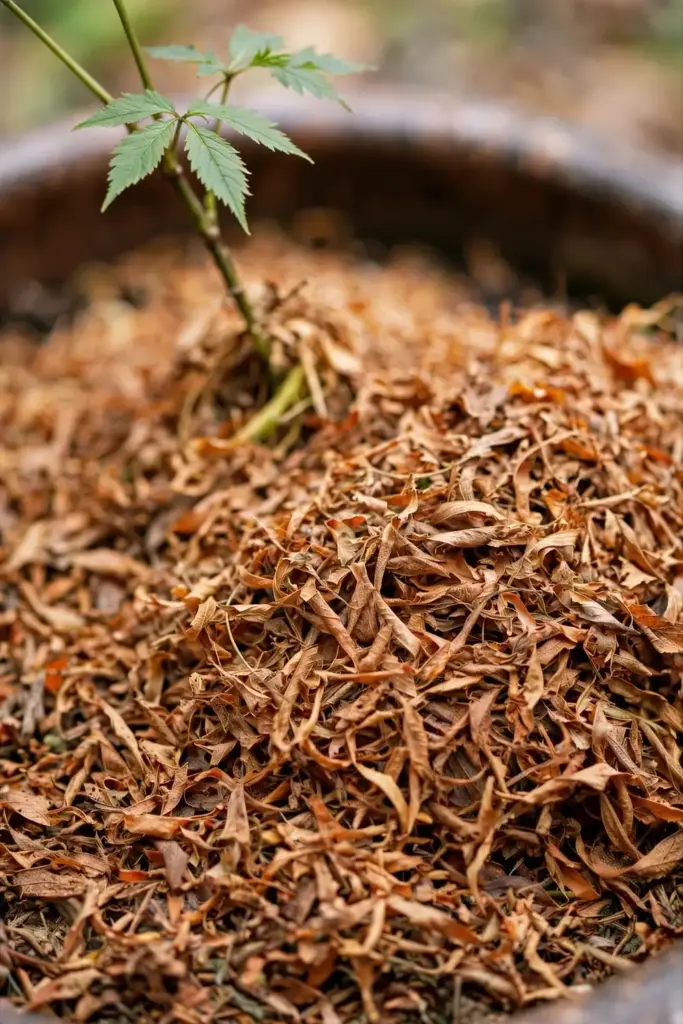
Shred the leaves before applying. Whole leaves mat into a soggy layer that sheds water; shredded leaves knit into a breathable blanket that drinks rain. A simple pass with the lawnmower over a pile of dry leaves makes perfect mulch in minutes. Keep a sack of shredded leaves in the shed for topping up through the year. This one habit, repeated every autumn, does more for your ginseng than almost any other practice here.
13. Watch for Fungal Trouble
Shade plus moisture invites fungi, and ginseng is susceptible. Root rot from waterlogged mix is the main killer; prevention is drainage, not treatment. Damping off fells seedlings at the soil line: the damping-off guide covers the air-flow and bottom-watering fixes. Leaf blights spot the foliage in wet summers; space pots for air movement and water the soil, not the leaves. Remove and bin any collapsed plant immediately rather than composting it. Never reuse the mix from a diseased pot. Fresh mix is cheap; a spreading infection is not.
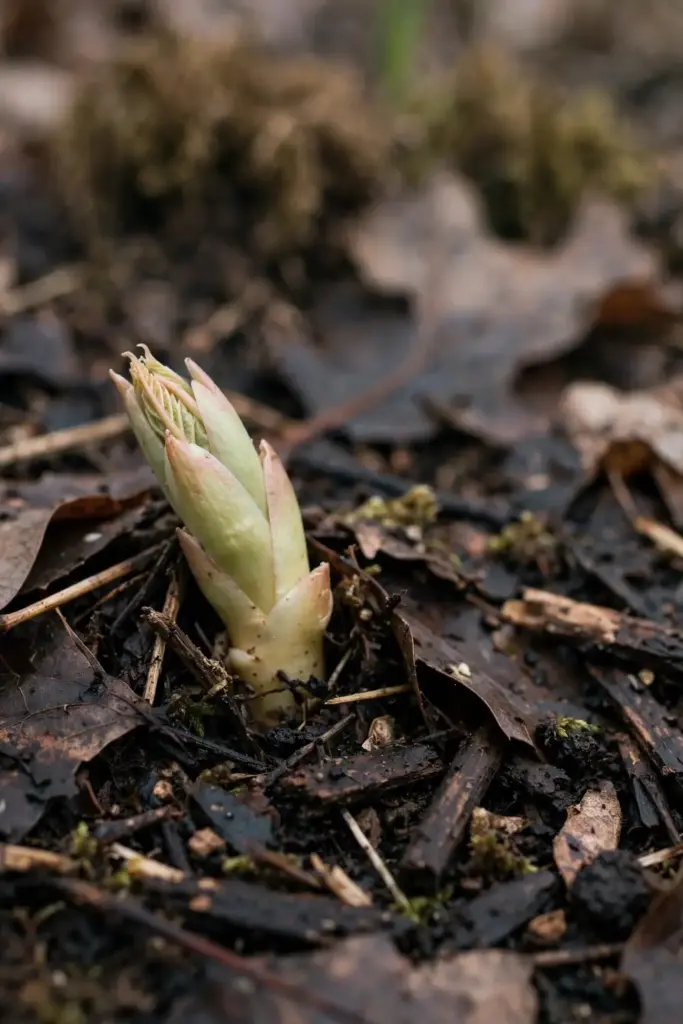
Inspect the crown each spring as the spear emerges. A healthy crown is firm and pale with a tight bud; a soft, dark crown signals rot from winter wetness. If you catch it early, unpot the root, trim any mushy tissue back to firm white flesh, dust with cinnamon, and repot in fresh mix. This rescue works about half the time, which beats the alternative. Most fungal trouble traces back to two causes: too much water and too little air. Fix those and the fungi mostly leave you alone. A pot with four drainage holes, pot feet, and morning sun on the foliage dries fast enough to starve most rots before they start.
14. Let the Berries Ripen and Replant
From year three or four, the plant flowers and sets clusters of bright red berries. Each berry holds one or two seeds. Let them ripen fully on the plant, then pick and pulp them immediately; ginseng seed must never dry out. Sow fresh seed at once in a nursery pot, or stratify it for the full cycle our Asian ginseng guide describes. This is how a single pot becomes a small colony over the years. Plant the seeds from your own berries wherever you want the next generation. A ginseng grower who replants the berries is never without young plants coming on.
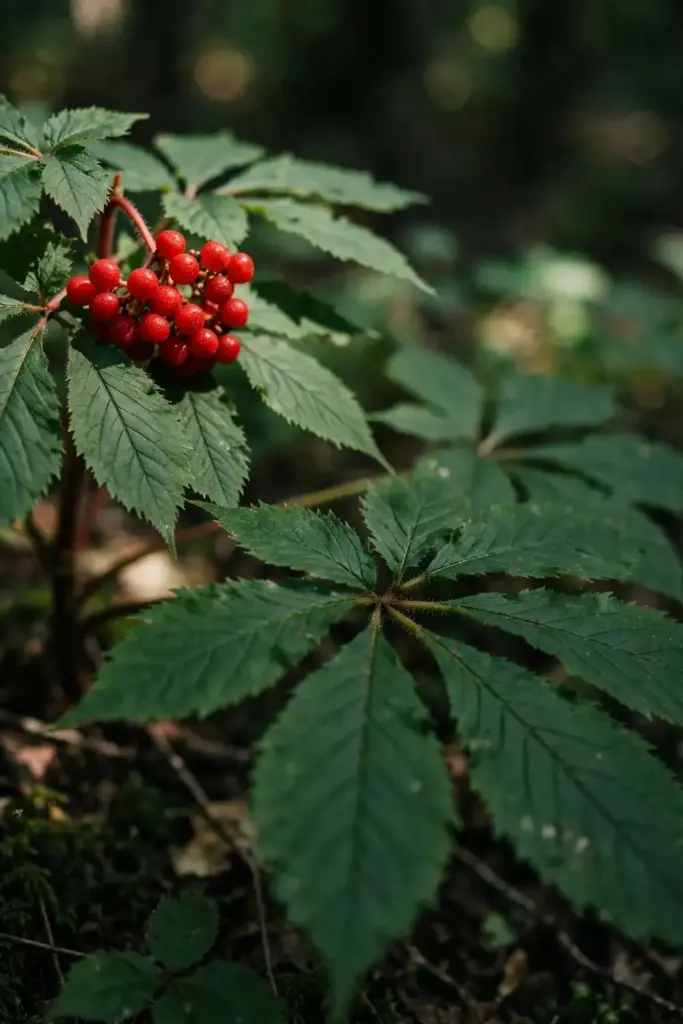
The berries are also your age certificate. A plant fruiting for the first time is at least three years old; a plant with a heavy berry cluster and a thick stem is five or more. Count the stem scars on the root neck at harvest to confirm: one scar per year. This slow accounting is part of ginseng culture. When you finally dig a root with five scars, you are holding five years of your own patience in your hand. Few garden harvests feel like that. Write the planting year on the pot label and leave it there; future you will want the receipt.
15. Harvest in Year 5 to 10
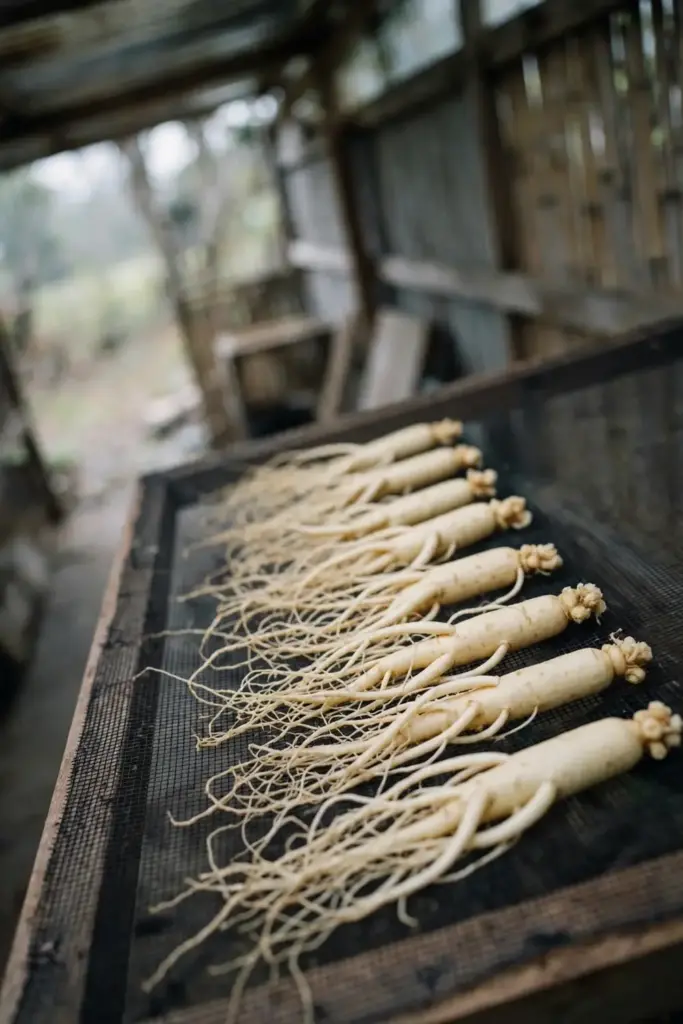
Dig in autumn of year five at the earliest, when the leaves begin to die back naturally. Loosen the whole pot’s mix and lift the root with your hands, keeping every fork and rootlet intact; broken roots dry poorly. Expect a modest, finger-sized root from a pot, not a wild monster. Wash gently, then dry on a screen in a well-ventilated spot out of direct sun for two to four weeks, turning occasionally, as BHG’s harvest notes describe. Store dried roots in a ventilated box. Leave at least one plant unharvested to keep the berry cycle going. The first root you dig yourself, after five years of shade and patience, feels like excavating treasure.
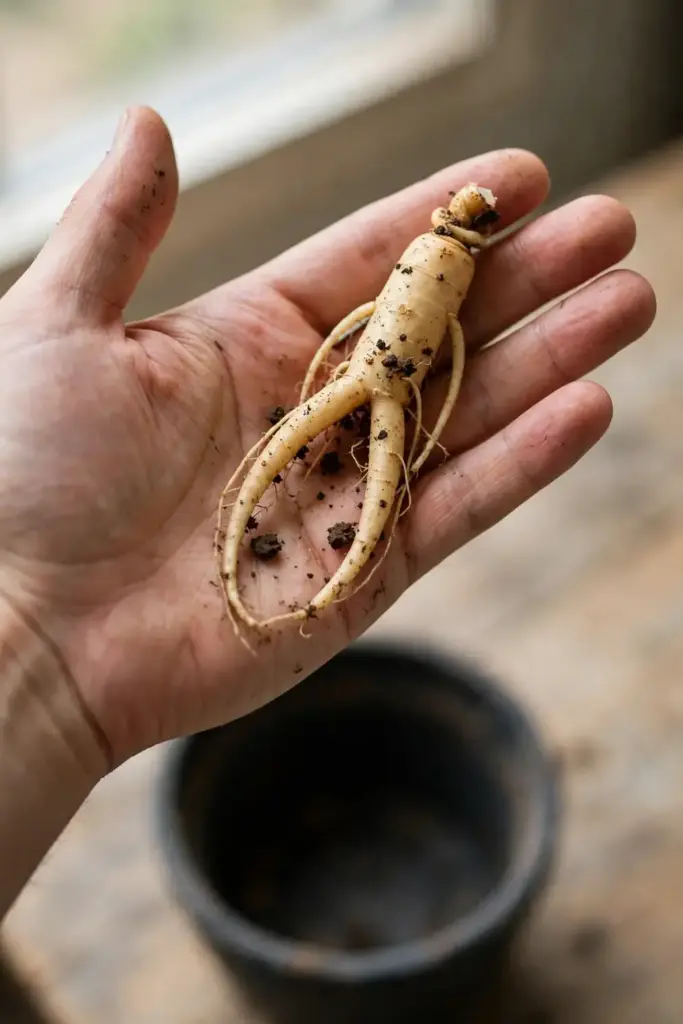
Dry the roots slowly and completely. Rushed drying in heat cooks the root and ruins its texture; slow air-drying preserves it. The root is ready when it snaps cleanly rather than bending. Under-dried roots mold in storage, which wastes five years in a month. Check stored roots monthly through the first winter and remove any that soften. Your patience got the root this far. A few more weeks of careful drying finish the job properly. Then start the next pot, because a ginseng grower with only one root in progress is a gardener with nothing to dig for another five years.
Frequently Asked Questions
Not well. Ginseng needs the full cycle of the seasons, including a cold winter dormancy when the leaves die back to the ground and re-emerge in spring. A heated indoor room denies it that rest, and the plant declines within a year or two. Grow the pot outdoors year-round instead, in deep shade, and give it winter cold. The pot is for gardeners without woodland, not for windowsills.
Both grow the same way in containers. American ginseng (Panax quinquefolius, zones 3–8) suits North American and northern European gardeners and tolerates colder winters. Asian ginseng (Panax ginseng, zones 4–8) suits slightly warmer climates. Culture is identical: a deep pot, forest-floor mix, deep shade, no fertilizer, and a cold winter. Choose the species whose native range matches your winters.
It is probably dormant, not dead. Ginseng dies back to the root every autumn and re-emerges in spring; a pot of bare mulch all winter is normal. Mark the pot so you do not plant something else in it by mistake. If nothing emerges by late spring, tip the pot out gently: a firm, pale root is alive but delayed, while a mushy dark root rotted from overwatering. Most “deaths” are just impatience meeting dormancy.
As deep as you can manage, with 40 cm the practical minimum for a mature root. The taproot drives straight down from the start, and a shallow pot forks or stunts it permanently. Use a tall nursery pot or a deep planter rather than a wide shallow bowl. One plant per deep pot after year three gives the root the full soil column to grow into.
Where to Go From Here
Set up the shade this weekend. Mix the forest floor, plant in autumn, and let the winters do their work. Check the pot when you remember and water when the top dries. Leave the rest to the seasons. In year five, you dig. Until then, the ginseng grows best when you are busy elsewhere, and that may be the easiest gardening you ever do. Patience is the whole technique.