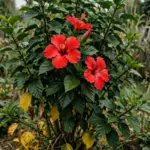
Plant one lantana 14 days after your last frost in the sunniest bed you own. That is how to grow lantana for color from spring to frost. I have learned that a lantana left unpruned turns woody and bare at the base by its second summer. The second decision is the variety on the tag, because the common species seeds itself into wild ground in warm states.
Work in spring. Plant after the soil warms. Cut back in March. Water through bloom. Lantana grows as a woody shrub where winters stay mild and as an annual where frost kills it. One plant fills a bed corner on its own, and its flower heads change color as they age, so a single cluster can carry yellow, orange, and pink at once.
Lantana asks for little and gives months of flowers. The work is choosing the right type, giving it sun and drainage, and cutting it back once a year. Get those three right and the plant handles heat, salt air, and dry weeks without complaint.
Lantana at a Glance: Sun, Soil, and Size
| Need | Target |
|---|---|
| Light | Full sun, the sunniest spot in the garden |
| Soil | Well drained, slightly acid, sandy loam suits it |
| Water | Keep new plants moist for the first weeks, then deep watering once a week in bloom |
| Height | 30.5 to 182.9 cm, by cultivar |
| Spread | 61 to 152.4 cm, by cultivar |
| Bloom | Spring until frost, flower heads 5.1 cm across |
| Cold | Perennial where winters stay mild, annual where frost kills it |
| Feed | One light spring feeding, excess feed cuts flowers |
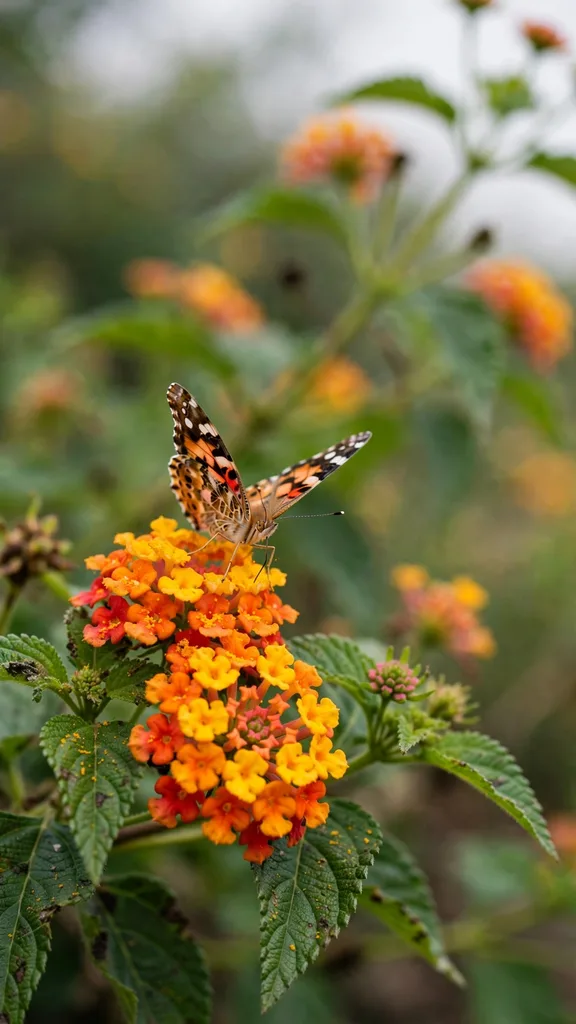
Lantana is a small shrub in the verbena family, native to the West Indies and tropical America. Its stems turn woody with age and its habit spreads wider than it stands. Flower heads open in tight discs and shift color as they age, which is why one plant can show three colors on a single head. Butterflies and hummingbirds work the clusters from midsummer to the first frost.
The table above sets the whole job. Sun decides the flower count. Drainage decides whether the roots survive. Size decides the spacing. Everything else in this page is timing and the variety on the tag.
Salt air does not slow lantana down. It tolerates salt and grows well near the beach, where many flowering shrubs burn at the leaf edges. Sandy soil suits it as long as water drains away fast. Heavy clay is the one soil that fails it, because water sits around the roots and rot follows.
Pick a Sterile Lantana Variety First
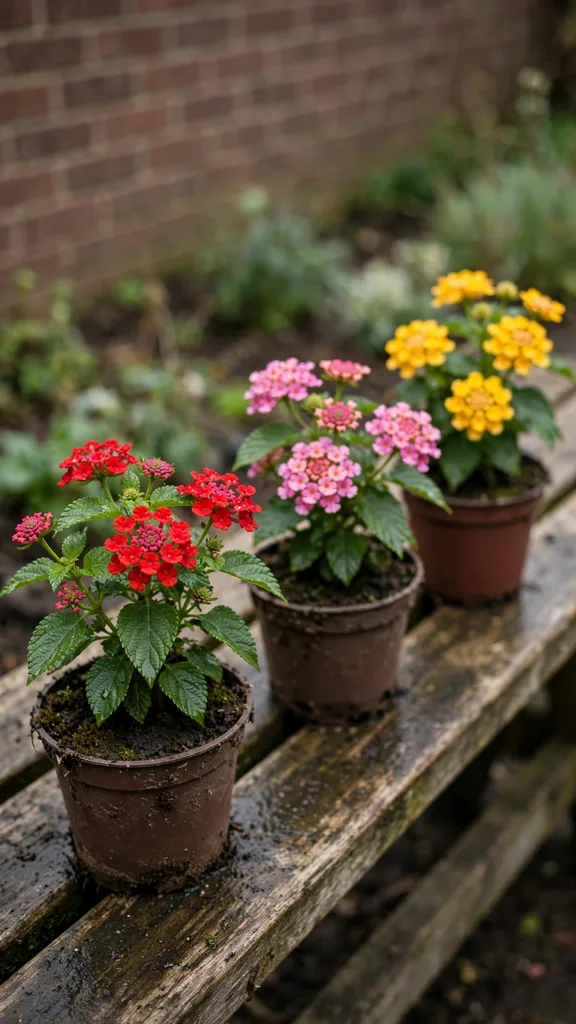
Read the tag before you buy the plant. The common species, Lantana strigocamara, seeds freely, and birds carry those seeds into wild ground. UF/IFAS lists Lantana strigocamara as invasive and does not recommend it in Florida, while its breeding program released three sterile cultivars, ‘Bloomify Red’, ‘Bloomify Rose’, and ‘Luscious Royale Red Zone’, which cannot produce viable seed or pollen. Sterile plants put their energy into flowers instead of seed, so they bloom harder and stay where you planted them. Each cluster holds 30 individual flowers.
| Cultivar | Height | Spread | Notes |
|---|---|---|---|
| ‘Miss Huff’ | 1.5 to 1.8 m | 1.5 to 1.8 m | Sterile, orange, coral, and gold flowers, hardy through South Carolina |
| ‘New Gold’ | 61 cm | 121.9 cm | Sterile, deep gold flowers, no berries, heavy bloomer |
| ‘Bloomify Red’ | 25.4 cm | 27.9 cm | Sterile, compact mound, yellow buds open bright red |
| ‘Bloomify Rose’ | 25.4 cm | 27.9 cm | Sterile, compact mound, orange buds fade to magenta |
| ‘Chapel Hill Yellow’ | 40.6 cm | 61 to 91.4 cm | Medium yellow flowers, hardy to USDA Zone 7b |
| ‘Weeping Lavender’ | 20.3 to 30.5 cm | 121.9 cm or more | Trailing stems, lavender flowers, spills over walls and pots |
‘Miss Huff’ suits a gardener who wants a big shrub and sees frost. It grows 1.5 to 1.8 m tall in one season and carries orange, coral, and gold on the same head. ‘Mozelle’ matches it in size and cold tolerance with softer colors, pale yellow to peach and soft pink. Both are sterile.
‘New Gold’ suits a hot bed that needs fast cover. It spreads 121.9 cm wide at 61 cm tall, flowers deep gold, and sets no berries. ‘Chapel Hill Yellow’ and ‘Chapel Hill Gold’ suit colder ground. Both hold to USDA Zone 7b, grow 30.5 to 40.6 cm tall, and spread 61 to 91.4 cm wide.
‘Samantha’, sold as ‘Lemon Swirl’, suits a gardener who wants foliage as well as flowers. Its leaves are dark green edged in chartreuse, its flowers bright lemon yellow, and it grows 61 to 91.4 cm tall and 121.9 cm wide. It is sterile and sets no berries. The ‘Patriot’ series covers the middle ground, with ‘Patriot Cowboy’ staying 30.5 cm tall and wide, ‘Patriot Popcorn’ weeping at 30.5 cm tall and 61 cm wide, and ‘Patriot Rainbow’ opening chiffon yellow and changing to orange and fuchsia-pink on a plant 30.5 cm tall and 38.1 cm wide.
‘Weeping Lavender’ is trailing lantana, Lantana montevidensis, a different species from the shrub types. Its stems trail 121.9 cm or more and carry lavender flowers. Use it where stems can spill over a wall, a raised bed edge, or a hanging basket.
The same UF/IFAS notes warn that lantana leaves are highly toxic to animals and unripened berries are poisonous. Site the plant away from grazing animals and pick up fallen berries where dogs roam. Sterile cultivars set few or no berries, which removes most of the risk at the source.
Buy the plant, not the color alone. A tag that names no cultivar and no species is a gamble in a warm state. A named sterile cultivar is the safe pick in every state.
How to Grow Lantana in 7 Steps After the Last Frost
Planting is a spring job. Lantana wants warm soil and no frost after it goes in. Clemson Extension advises planting lantana in spring, at least 2 weeks after all danger of frost is past, because hardy types show no growth until soil and air temperatures turn quite warm. A plant set out too early sits still, then sulks.
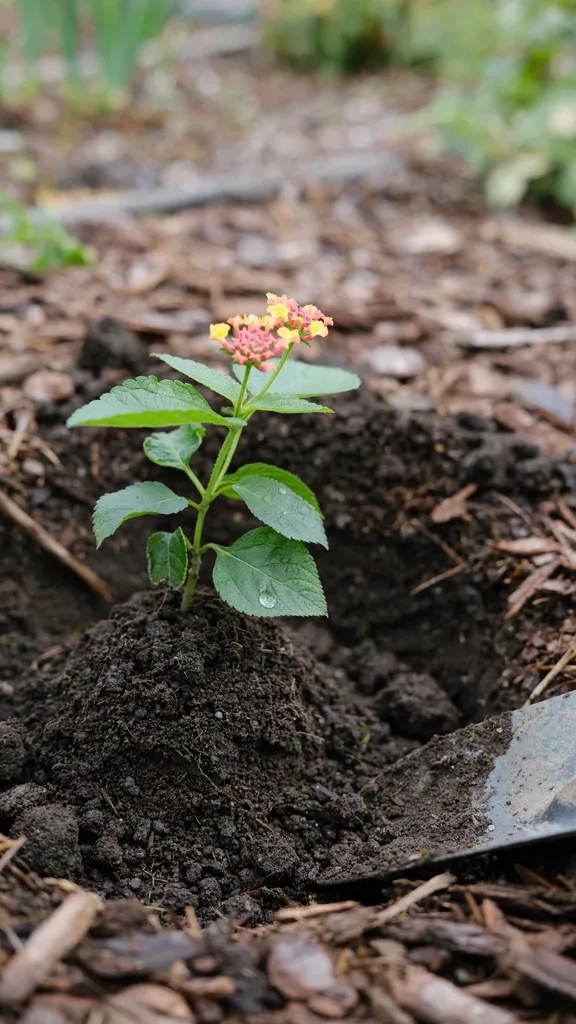
- Pick the sunniest bed. Full sun gives the most flowers. Shade gives leggy stems and few blooms.
- Test the drainage. Dig a 30.5 cm hole, fill it with water, and watch it empty. Standing water after an hour means the bed needs a raised mound or a different spot.
- Dig the hole as wide and deep as the pot. Loosen the root ball edges with your fingers so circling roots point outward.
- Set the crown level with the soil surface. A buried crown rots. A high crown dries out.
- Backfill with the soil you dug out. Firm it with your palms. Water the plant in until the soil settles.
- Space plants one mature width apart. Compact types sit 61 cm apart. Shrub types sit 91.4 to 152.4 cm apart.
- Mulch 5.1 cm deep and keep the mulch 7.6 cm clear of the stems. Mulch holds moisture and keeps weeds down without touching the crown.
Water new plants often enough to keep the soil moist for the first few weeks until roots spread into the surrounding soil. After that, lantana tolerates dry spells. Overwatering hurts more than underwatering. Soggy soil invites root rot, and wet leaves invite mildew.
Lantana grows fast once warm weather arrives. ‘Miss Huff’ can reach full height in a single season. Give it the space the tag promises on day one, or you will be cutting it back by midsummer to keep it off the path. Petunias suit the same hot, sunny beds and fill the gaps at the front of the border while lantana mounds behind them.
Water Lantana Deep Once a Week in Bloom
Water deeply once a week during bloom if the week brings less than 2.5 cm of rain. Soak the root zone until the soil is wet 15.2 cm down. Shallow sprinkles grow shallow roots.
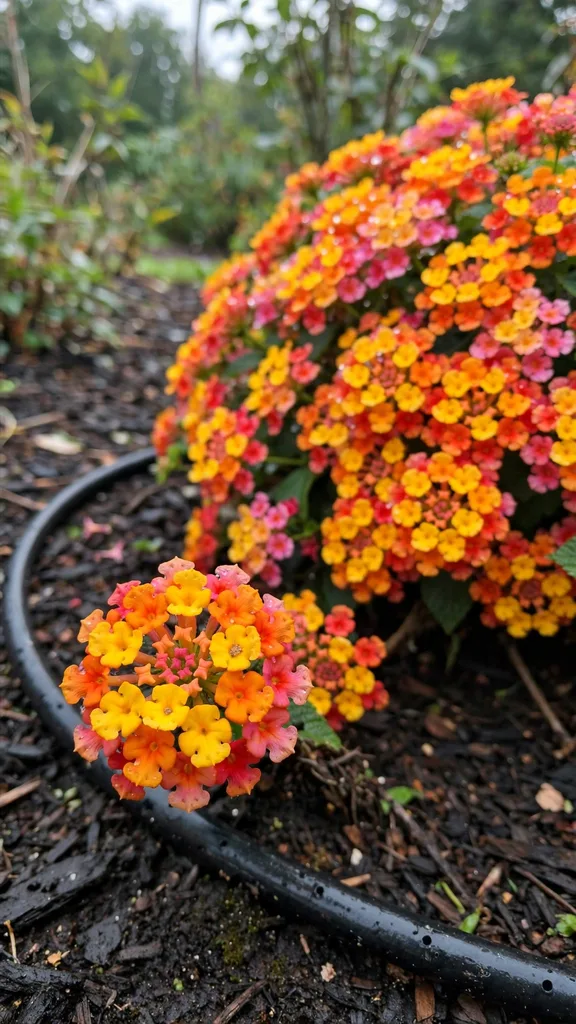
Aim the water at the soil, not the leaves. Overhead watering wets the foliage and raises the odds of powdery mildew and root rot. A soaker hose or a slow hose at the base does the job without wetting a single leaf.
Established lantana tolerates drought, but drought costs flowers. A plant kept too dry for a long stretch slows its growth and drops its bloom. The leaves stay alive. The color goes quiet.
Cut the water back in fall as growth slows. A plant heading into winter with wet feet and soft growth faces frost with no defense. Let the soil dry between waterings once nights turn cool.
Potted lantana dries faster than bed lantana. Check the pot with a finger every 2 days in hot weather. Water when the top 2.5 cm of mix feels dry. Empty the saucer after watering so the pot never sits in water.
Prune Lantana Hard in March for Fresh Growth
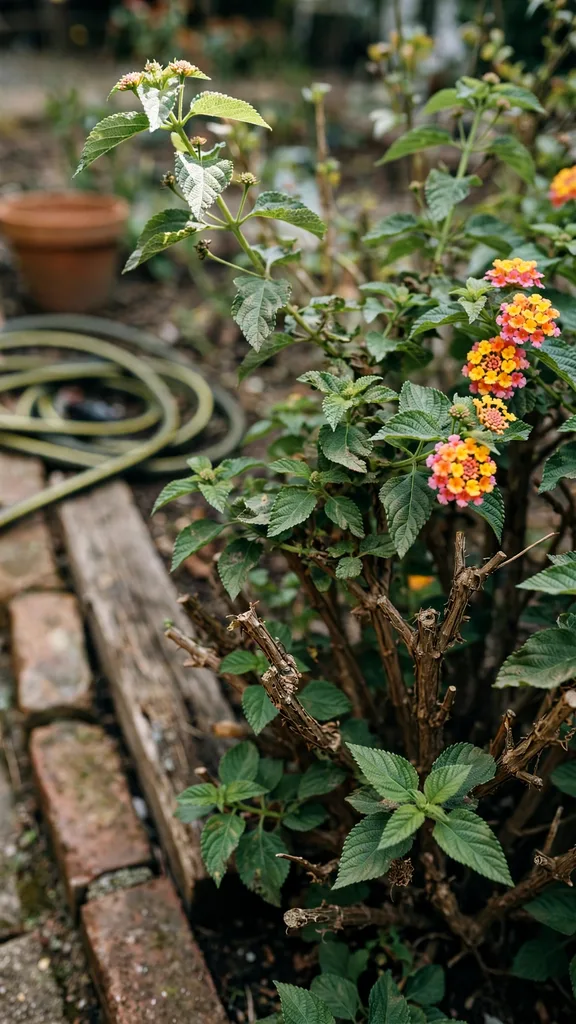
Cut perennial lantana back hard in spring, before new shoots emerge, to remove old growth and stop the base turning woody. Cut the stems to 15.2 to 30.5 cm from ground level. The plant answers with fresh stems and a full season of flowers across the whole mound, not just the tips.
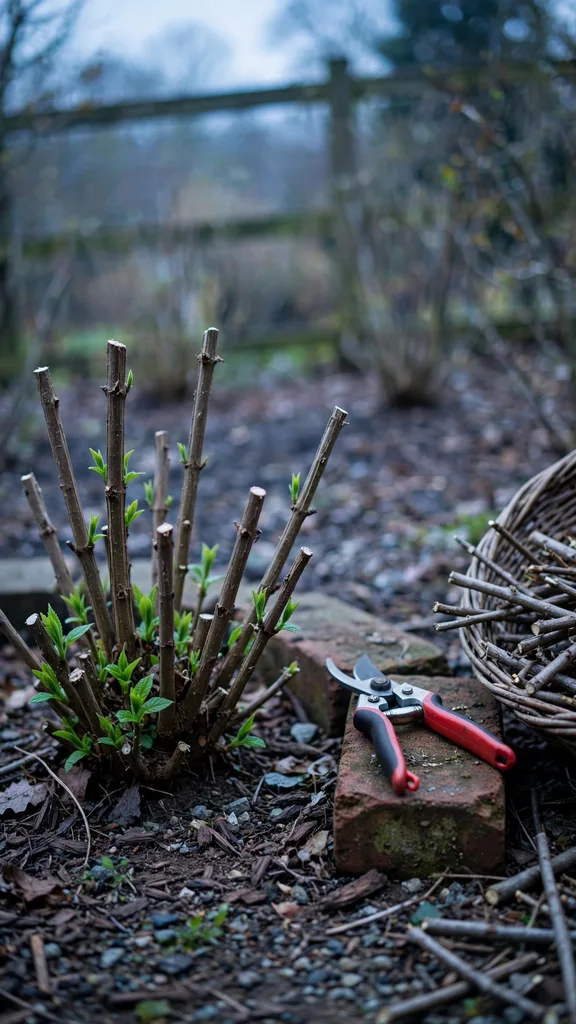
Skip hard pruning in fall. A hard cut late in the year pushes soft growth that frost kills, and the plant enters winter weaker than it should. Fall work is limited to removing dead stems and cutting back a plant that has outgrown its space.
Shear the stem tips lightly through summer to keep the plant branching and blooming. Tip pruning after each flush of flowers pushes new buds. A plant that has grown too large for its space tolerates a cut of a third of its height and spread during the growing season. Water it and feed it lightly after the cut and it returns to bloom fast.
Deadhead spent flower heads on seed-producing types to stop berries forming and push more flowers. Snip the faded cluster off just above a leaf joint. Sterile cultivars need no deadheading, since they set no seed.
Wear gloves and long sleeves for pruning. The stems are rough, the leaves smell sharp when crushed, and the sap irritates skin. Wash your hands after handling cut stems.
Grow Lantana in Pots That Move Before Frost
Lantana grows well in pots, and a pot turns an annual into a plant you keep. Set one trailing lantana in a 30.5 cm pot with drainage holes and let the stems spill over the edge. Set one compact shrub type in a 38.1 cm pot so it has room to mound.
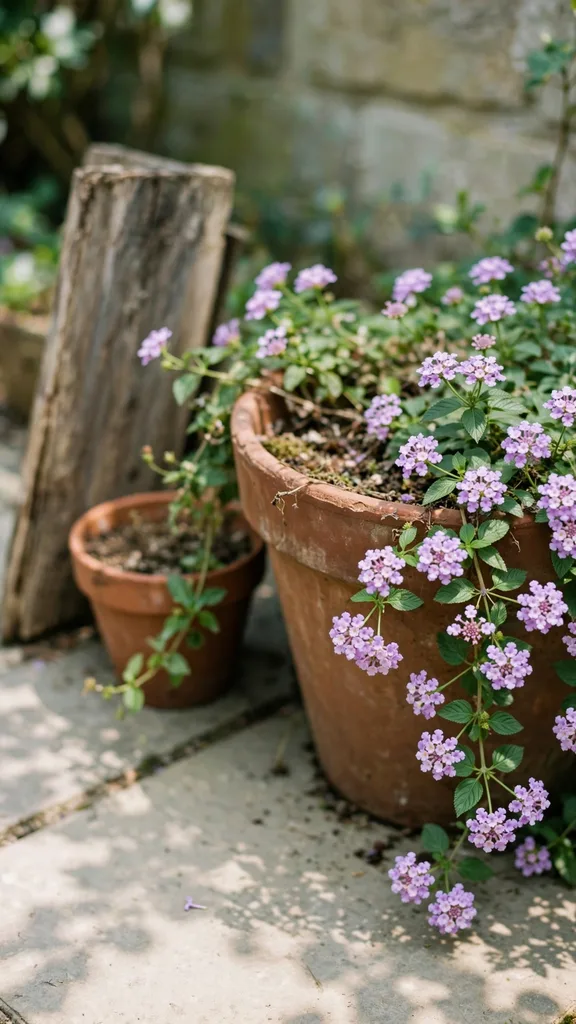
Fill the pot with a free-draining mix, not garden soil. Garden soil packs down in a pot and holds water against the roots. Mix two parts potting mix with one part coarse perlite or bark for drainage.
Put the pot where it gets sun most of the day. A pot against a south or west wall catches heat and light through the afternoon. Turn the pot a quarter turn every 2 weeks so one side does not go bare while the other side blooms.
Terracotta dries faster than plastic and suits a gardener who waters too much. Plastic holds moisture longer and suits a hot balcony where a pot dries out by noon. Either works as long as the pot has drainage holes and never sits in a full saucer.
Water pots more often than beds. A pot in full sun can dry out in a day. Check the top 2.5 cm of mix with a finger. Water until it runs from the drainage holes, then empty the saucer.
Move the pot indoors before the first frost if you want to keep the plant. Cut the stems back by a third first, so the plant fits through the door and drops fewer leaves inside. Keep it in the brightest window you own and water it sparingly through winter. Whiteflies and spider mites attack plants kept over winter indoors, so check the leaf undersides every week and wash off any pests you find with a hard spray of water.
Match Lantana to Your Zone and State Rules
Lantana is perennial where winters stay mild and annual where frost kills it. In warm coastal ground it grows as a woody shrub year round. Inland and north, frost kills the top growth and the plant either regrows from the roots or dies outright.
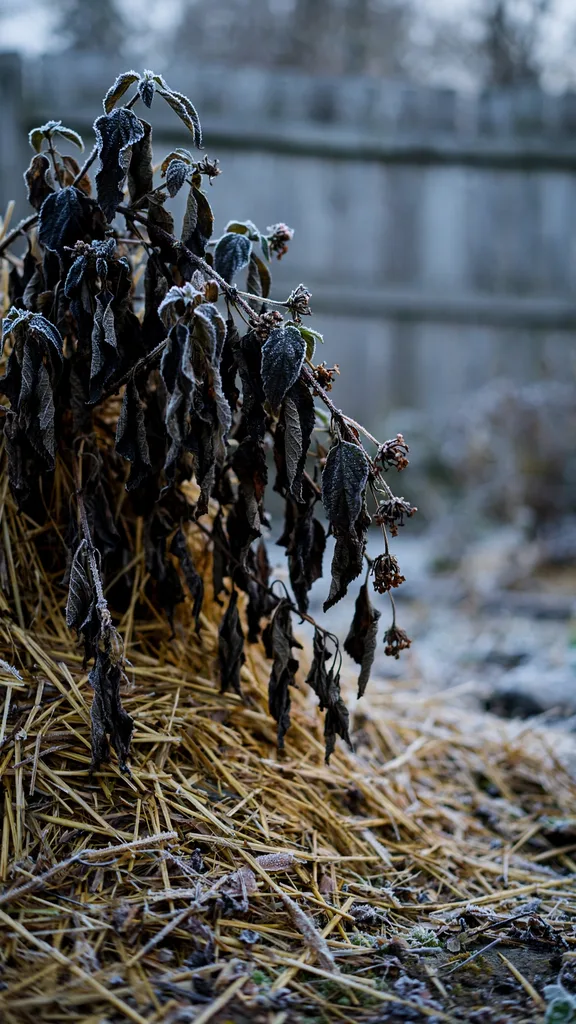
Cold tolerance runs by cultivar. ‘Miss Huff’ is hardy throughout South Carolina and regrows from the roots after frost. ‘Chapel Hill Yellow’ and ‘Chapel Hill Gold’ hold to USDA Zone 7b. ‘New Gold’ overwinters on the coast and often survives inland with mulch. Most other cultivars perform as annuals outside warm zones.
Mulch the roots 7.6 cm deep in fall in zones at the cold edge of a cultivar’s range. Mulch insulates the crown and buys the roots a few extra degrees. Pull the mulch back in spring so new shoots emerge into light.
Check your state rules before planting the common species in a warm state. Florida lists the common species as invasive and recommends sterile cultivars or native lantana instead. Texas and the Carolinas treat it differently, and local rules change, so ask your state extension office if the tag names no cultivar.
Grow lantana as an annual where winters are cold and none of this matters. The plant flowers all summer, dies with the first hard frost, and you plant a fresh one next spring. Simple. Cheap. Done.
Skip the 5 Mistakes That Stop Lantana Blooming
Planting in Shade
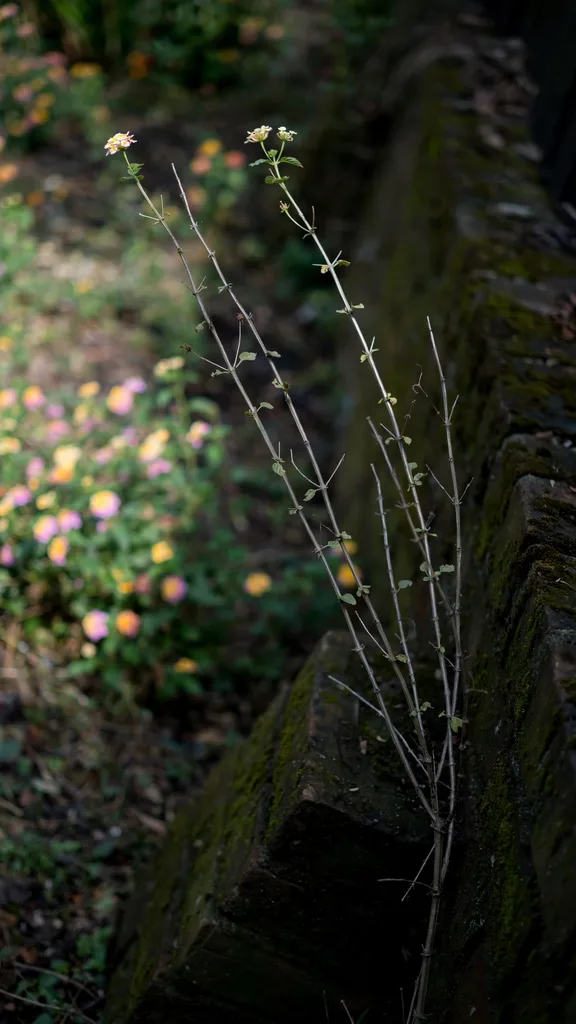
Shade is the first cause of a lantana that never blooms. A plant in partial shade grows long stems with few flowers, and a plant in deep shade grows leaves and nothing else. Move it to full sun. Accept a green shrub if you leave it where it stands.
Watering From Above Every Day
Daily overhead watering keeps leaves wet and soil soggy. Wet leaves invite powdery mildew. Soggy soil invites root rot. Water the soil once a week and let the leaves stay dry. A spring pruning guide helps with the March cutback that follows a wet winter.
Feeding Like a Hungry Annual
Lantana needs little fertilizer. One light spring feeding is enough. Heavy feeding grows leaves at the cost of flowers and makes the plant soft enough for disease to take hold. Skip the weekly liquid feed. A plant that looks hungry in poor soil wants compost, not a double dose of fertilizer.
Planting the Common Species in a Warm State
The common species seeds itself where winters are mild. Birds eat the berries and drop the seeds in wild ground. Plant a named sterile cultivar or a native lantana instead. The flowers look the same. The risk does not.
Skipping the Spring Cutback
A lantana never cut back turns woody at the base and bare in the middle. The flowers move to the tips and the plant looks tired by its second summer. Cut the stems to 15.2 to 30.5 cm in March. The plant regrows from the base and flowers across the whole mound.
Diagnose Pale Leaves, Lace Bugs, and Root Rot
Pale Leaves and No Flowers
Pale leaves with no flowers point to shade or excess fertilizer. Move the plant to full sun if the bed gets less than half a day of direct light. Stop feeding for the season if you fed more than once. New growth after the fix comes in green and starts budding within weeks.
Lace Bugs on the Leaf Undersides
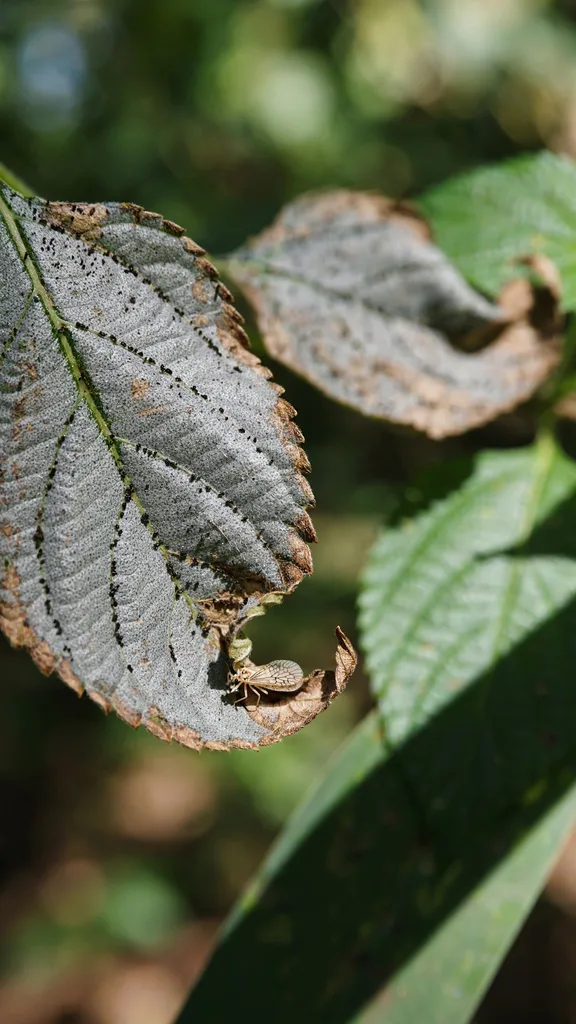
Lace bugs feed on the leaf undersides and leave the leaves gray, stippled, and brown at the edges. Flip a leaf and look for tiny flat insects and black specks of waste. Wash the plant with a hard spray of water to knock the insects off. A plant in full sun with good air flow recovers faster than one crowded against a wall. Severe attacks call for removing the worst leaves and letting the plant regrow.
Root Rot in Wet Soil
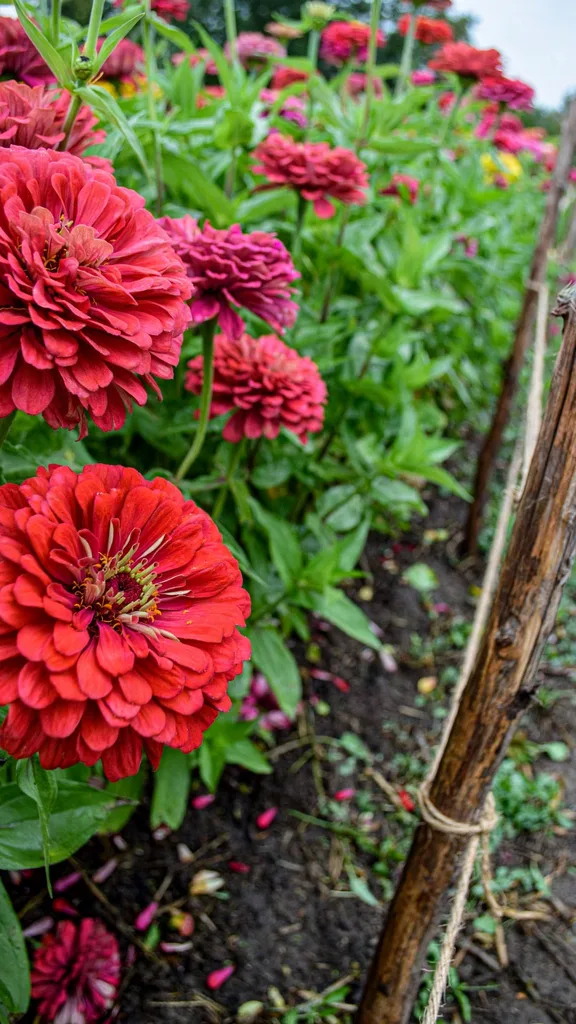
Root rot shows as wilting leaves on a plant standing in wet soil. The roots have drowned and cannot take up water, so the plant wilts while the soil stays damp. Stop watering. Let the bed dry out. A plant in a pot needs fresh dry mix and a pot with open drainage holes. A plant in heavy clay needs a raised bed or a new spot with fast drainage. Zinnias share the same demand for sun and drainage, and they make a good bed partner for lantana in a hot border.
Whiteflies cluster on the leaf undersides of plants kept indoors over winter. Sooty mold follows them, coating leaves in black. Wash the leaves with water, improve the air flow, and the mold stops spreading once the insects are gone.
Powdery mildew coats leaves in white dust when the plant grows in shade or the leaves stay wet. Move the plant to sun, water the soil instead of the leaves, and cut out the worst stems for air flow.
Caterpillars chew notches in the leaves and buds through summer. Pick them off by hand when you see them and check the leaf undersides for eggs. A plant in full sun with good air flow outgrows light damage on its own, so hold off on sprays unless the plant is losing whole stems.
Frequently Asked Questions About Growing Lantana
Lantana is a perennial where winters stay mild and an annual where frost kills it. In warm coastal ground it lives as a woody shrub for years. Inland and north, the first hard frost kills the top growth. Some cultivars regrow from the roots in spring. Most perform as annuals. Replant each spring.
Lantana needs full sun to bloom well, the sunniest spot in the garden. Shade cuts the flower count fast, and deep shade stops blooming altogether. Morning sun alone leaves the plant leggy with few flowers. A bed that gets sun most of the day gives the heaviest bloom from spring to frost. Move a non-blooming plant to a sunnier spot before feeding it.
Sterile lantana varieties set no viable seed, so they cannot spread into wild ground. ‘Bloomify Red’, ‘Bloomify Rose’, and ‘Luscious Royale Red Zone’ are sterile cultivars from the UF/IFAS breeding program. ‘New Gold’, ‘Miss Huff’, ‘Mozelle’, and ‘Samantha’ are also sterile. Choose a named sterile cultivar in warm states, and check the tag for the exact cultivar name before buying.
Poor blooming comes from too much shade or too much fertilizer. Lantana in shade grows leaves and few flowers, while heavy feeding pushes leaf growth at the cost of bloom. Cut feeding to one light spring application and move the plant to full sun. Berry set also cuts bloom, so deadhead spent flowers on seed-producing types or switch to a sterile cultivar.
Yes, lantana berries are poisonous, especially unripened green berries eaten in quantity. The leaves are also toxic to animals and cause vomiting, diarrhea, dilated pupils, and labored breathing when eaten. Keep lantana away from grazing animals and pick up fallen berries where dogs roam. Sterile cultivars set few or no berries, which removes most of the risk.