Put 3 pots on the brightest windowsill and sow one tray of loose-leaf lettuce beside them. That is an apartment garden on a budget. It fits a rented flat, a shelf, and a sill, and it asks for pots, seed, and mix before it asks for anything else.
Sow the lettuce tray first. Herbs follow behind it. Water in the morning. Rotate each pot a quarter turn every few days.
| Idea | Space It Needs | Cost Band |
|---|---|---|
| Windowsill Herb Trio | One sunny sill | Low |
| Loose-Leaf Lettuce Tray | One shelf or sill | Very low |
| Microgreens Tray | One tabletop tray | Very low |
| Green Onion Regrowth Jar | One kitchen counter spot | Very low |
| Mint in Its Own Pot | One bright window | Low |
| Dwarf Cherry Tomato | One large pot by a window | Medium |
| Pothos Cuttings in Water | Wall jars or a shelf edge | Very low |
| Snake Plant Division | One dark floor corner | Very low |
| Stacked Shelf Garden | One sunny wall | Medium |
| Self-Watering Bottle Pots | Sill or shelf | Very low |
| Seed-Starting Station | One baking tray on a shelf | Low |
| Dwarf Chili Pepper | One sunny window pot | Low |
| Sprout Jar | One kitchen counter spot | Very low |
Windowsill Herb Trio for the Kitchen
Basil, chives, and parsley in 3 separate pots give a kitchen herb supply from a single sill. Each pot holds one species, since each herb wants its own water rhythm and its own root room. A 15.2 cm pot with a drainage hole and a saucer suits each plant, and a bag of potting mix fills all 3 with mix left over for the next sowing. Snip outer leaves first and leave the growing tip standing, so the plant keeps producing instead of stalling after one cut.
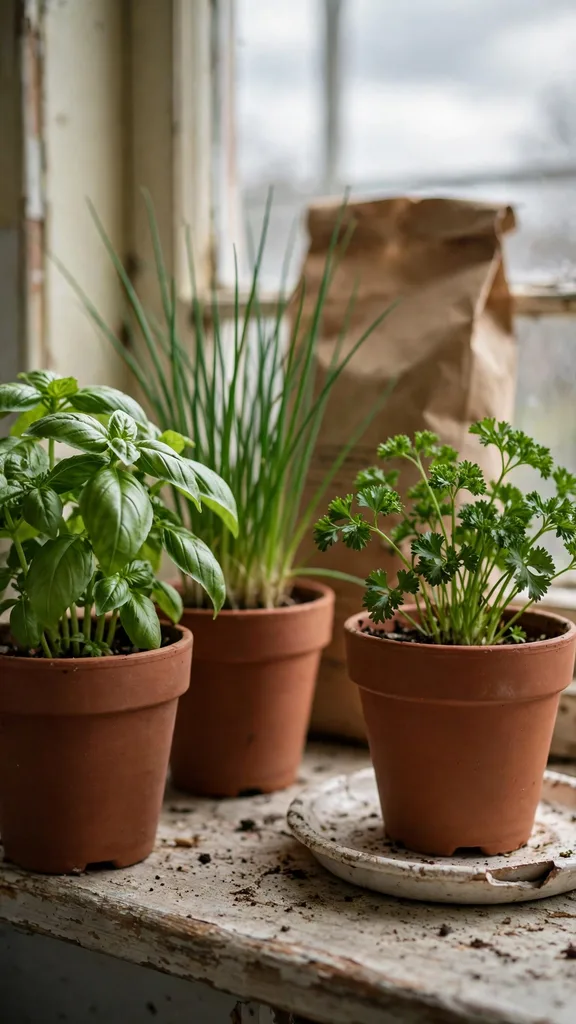
Light decides whether the trio earns its sill. Most herbs need around 8 hours of direct light each day indoors, and a south-facing window is the strongest candidate, according to the Iowa State University Extension guide to indoor herb conditions. The same guide says to let the soil dry between waterings, to grow each species in its own container, and to feed with a balanced fertilizer at half or quarter strength. A north-facing sill fails this test in winter, and a pot that stays wet rots roots before the first harvest. The indoor herb gardens guide covers the full indoor herb routine, and fall herbs to plant lists the herbs that carry a garden into the cold months.
Loose-Leaf Lettuce Tray for Cut-and-Come-Again Salads
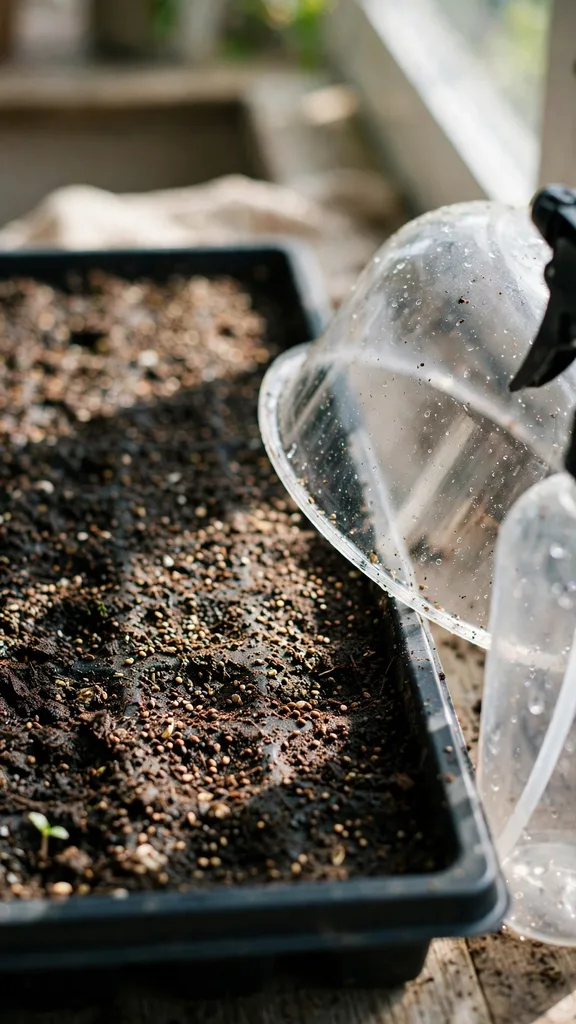
A shallow tray of loose-leaf lettuce is the fastest salad an apartment grows. Sow seed thinly across damp potting mix in a tray 7.6 to 10.2 cm deep, cover the seed with a bare dusting of mix, and keep the surface damp until green shows. Loose-leaf types never need to form a head, so the first cut comes from young outer leaves while the centers keep growing. Cut outer leaves with scissors and leave the crown standing, and one tray gives repeat pickings for weeks.
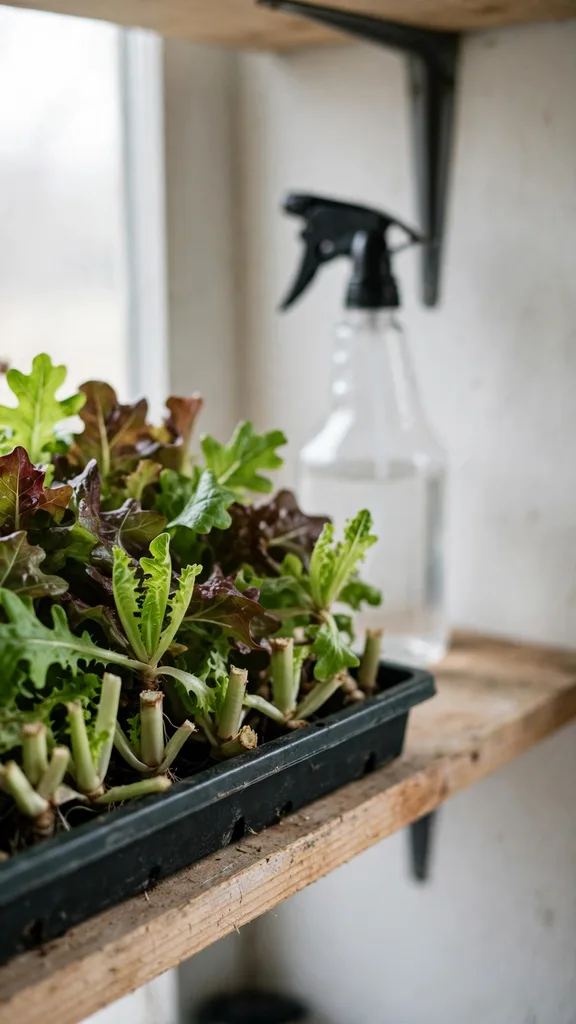
Lettuce and herbs usually need 6 to 8 hours of bright light each day, and loose-leaf lettuce can be harvested at about 4 weeks, according to the Illinois Extension guide to growing herbs and lettuce indoors. The same guide puts room temperature at 21.1 degrees Celsius and below, and it runs 2 40-watt cool white fluorescent tubes 15.2 to 30.5 cm above the plants for 14 to 16 hours a day where window light falls short. Sow a second tray 14 days after the first, so the next cutting is ready as the first tray thins. The lettuce growing guide covers leaf types and spacing in full. A tray left in a warm room bolts and turns bitter before it fills a bowl.
Microgreens Tray for a Fast First Harvest
Microgreens are seedlings cut at the first true leaves, and a tray of them is the shortest path from seed to plate indoors. Fill a shallow tray with 5.1 cm of damp potting mix, scatter seed thickly across the surface, press it down with a flat board, and cover the tray with a second tray for 2 days until the seed sprouts. Lift the cover, move the tray to the brightest spot, and mist the surface each morning. Cut with scissors just above the mix when the first true leaves open.
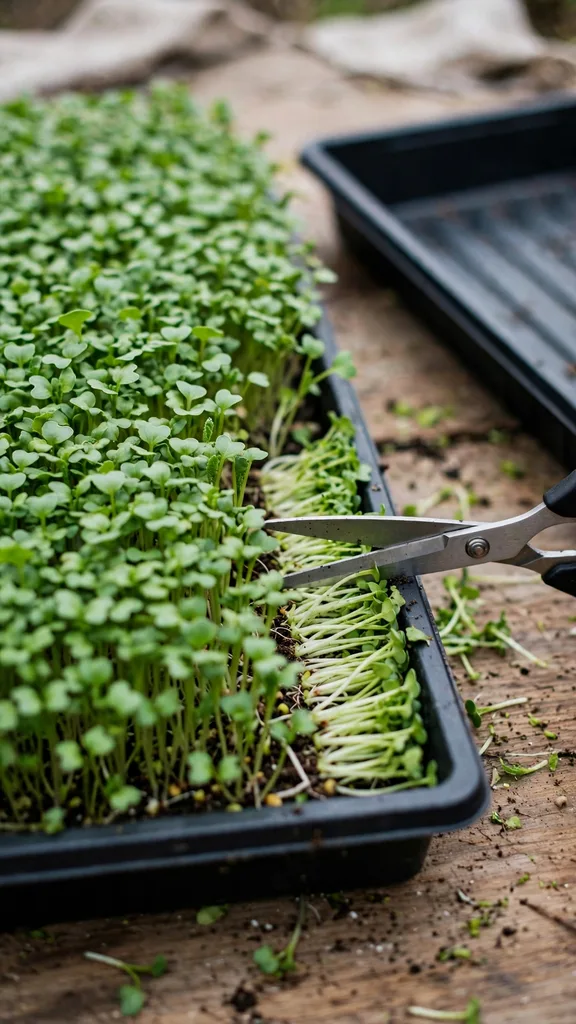
Radish, broccoli, and sunflower microgreens suit this method, and each tray finishes in days rather than weeks. A tray that stays covered after sprouting grows pale stems that flop at the first cut. A tray sown too thickly molds at the base before the leaves open, so thin the seed line and give the tray air. One packet of seed fills 4 trays when the seed goes on thickly but in a single layer. Start the next tray the day the first one is cut, and the kitchen never waits for greens.
Green Onion Regrowth Jar for the Kitchen Counter
Green onions regrow from the white base after the green tops are cut, and a jar of water on the counter is the cheapest garden an apartment can start. Save the white bases with 5.1 cm of green stem attached, stand them upright in a jar with 2.5 cm of water at the base, and set the jar on a bright counter. Change the water every 2 days. New green shoots rise from the center within days, and the jar keeps producing while the water stays fresh.
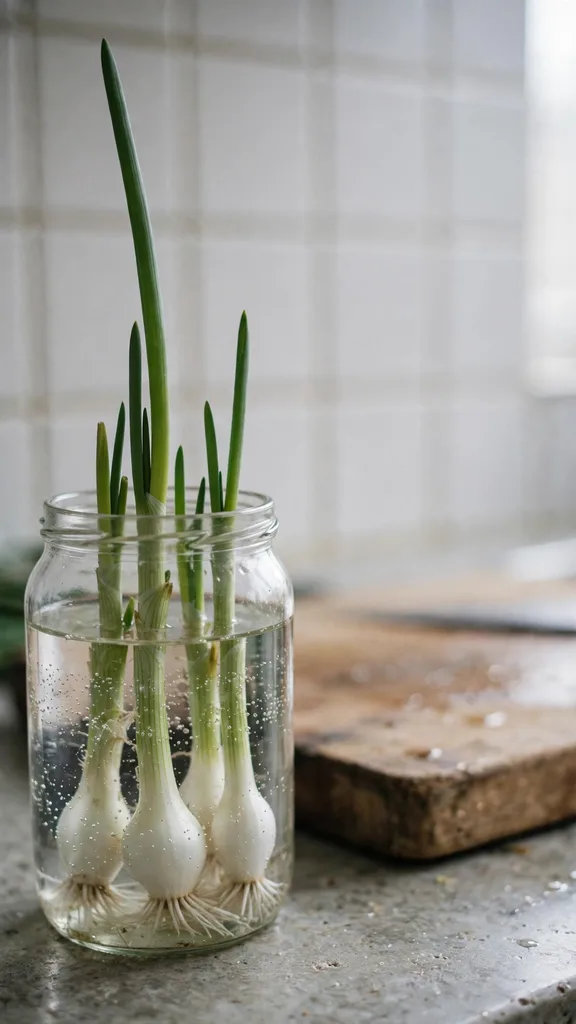
A jar left unchanged turns cloudy and the bases soften at the cut. Move the strongest shoots into potting mix after 2 weeks, in a pot with a drainage hole, and the plants thicken into full green onions with real roots. Keep one jar running at all times, and cut the tallest shoots first so the shorter ones catch up. This idea costs nothing beyond onions already bought for cooking, and it teaches the watering rhythm the rest of the garden needs.
Mint in Its Own Pot for the Brightest Window
Mint earns a pot of its own because its roots run and crowd out anything planted beside it. One plant in a 15.2 cm pot with a drainage hole gives a steady supply of leaves for tea and cooking, and the pot keeps the roots where they belong. Set the pot in the brightest window, water when the top 2.5 cm of mix dries, and pinch the growing tips to keep the plant bushy instead of tall and bare at the base.
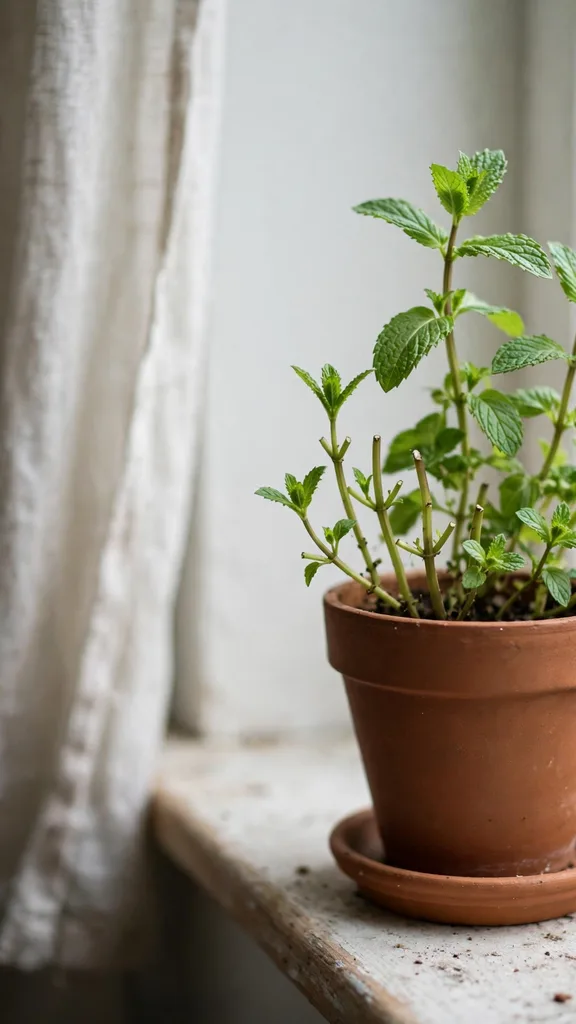
Mint tolerates a missed watering better than basil does, and it forgives a dim week in winter. A pot shared with a slower herb still fails, since mint roots fill the mix first and the neighbor starves. Cut stems above a leaf pair and the plant branches from the node below the cut. A pot with no drainage hole holds water at the base and the lower leaves yellow first, so drill a hole or move the plant to a pot that drains.
Dwarf Cherry Tomato in a Large Pot by the Window
A dwarf cherry tomato is the one fruiting plant that fits an apartment without a grow tent. Pick a dwarf or patio variety, plant one seedling in a pot of at least 19 litres with a drainage hole, and set the pot where it gets the longest direct sun in the flat. Stake the stem with a bamboo cane at planting time, before the roots spread. Water deeply when the top 2.5 cm of mix dries, and feed with a balanced liquid fertilizer at half strength every 2 weeks once flowers open.
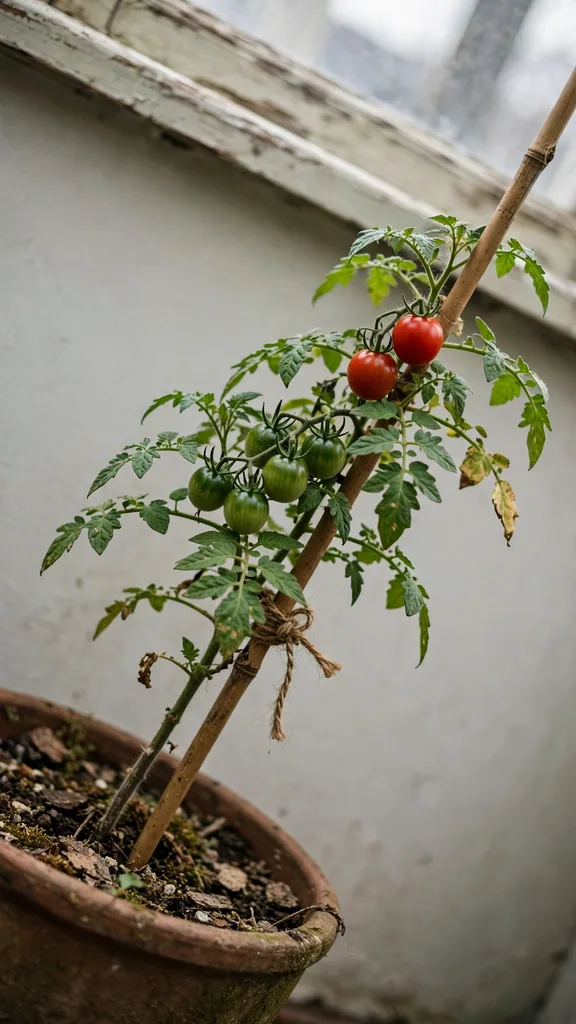
Fruiting plants ask for more light than leafy ones, so a north-facing window starves this plant even in summer. A south-facing window plus a lamp on dull days keeps flowers setting instead of dropping. Shake the open flowers gently each morning to move pollen, since no bees work indoors. A pot smaller than 19 litres dries out by midday in summer and the fruit splits after the next watering. One plant gives a handful of fruit at a time, and that handful is the point.
Pothos Cuttings in Water Jars for Bare Walls
Pothos cuttings root in water, and a row of jars turns a bare wall into green cover for the price of one parent plant. Cut a stem below a node, strip the lowest leaf, and stand the cutting in a jar of water with the node submerged and the leaves above the rim. Set the jars on a shelf edge or hang them on wall hooks where they catch indirect light. Roots show in 2 weeks, and the cutting grows on in water for months.
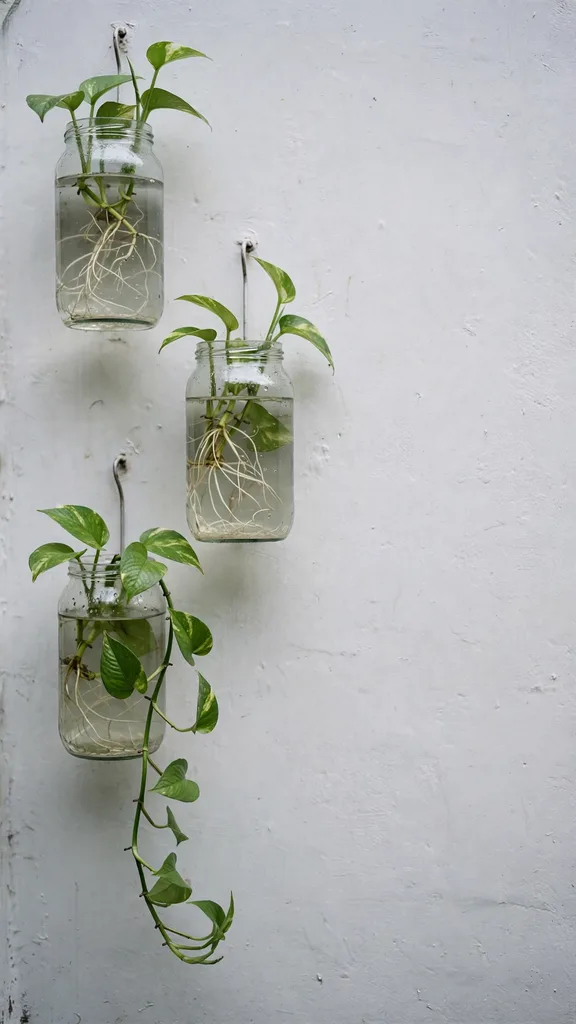
Change the water each week so it stays clear and the roots stay white. A jar left for a month without a change grows algae and the roots turn brown and soft. Move a rooted cutting into potting mix when the roots reach 7.6 cm, and keep the mix damp for the first 2 weeks while the water roots adjust. One parent plant gives 6 cuttings from a single long vine, and each cutting is a plant that costs nothing.
Snake Plant Division for Dark Corners
A snake plant division is a free plant for the darkest corner of a flat. Lift a crowded snake plant from its pot, shake the mix from the roots, and pull the clump apart at the natural joints so each piece keeps roots and at least 2 leaves. Pot each piece in a 15.2 cm pot of free-draining mix, water once, and set it where nothing else grows. Snake plants tolerate low light and dry mix, and they ask for water only when the mix dries through.
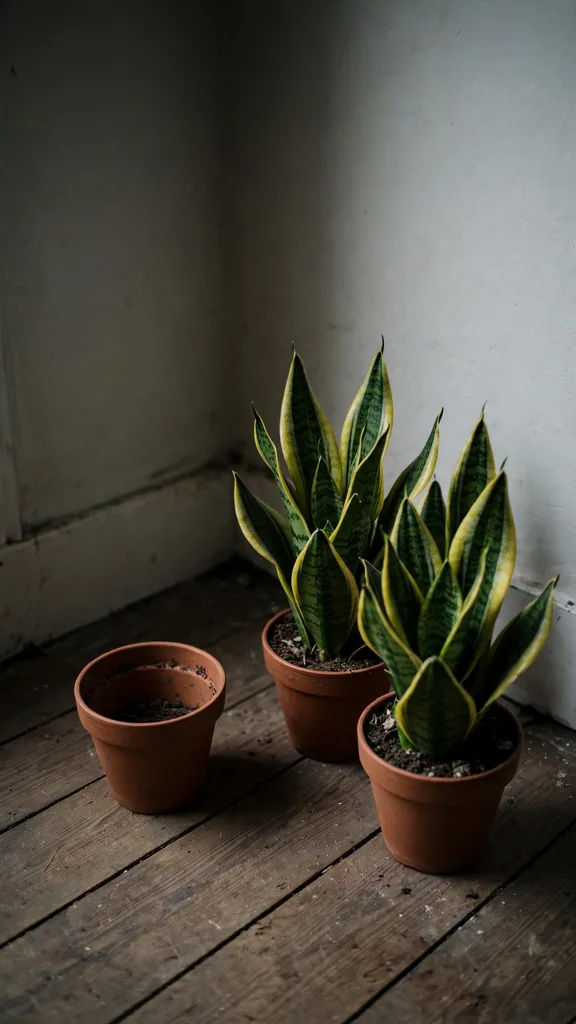
A division potted in a pot far too large stays wet and the base rots. A division with no roots at all sits and sulks for months before it grows, so keep only pieces with roots attached. Water sparingly in winter, when growth slows and the mix stays damp longer. One crowded parent plant gives 3 new plants, and each one fills a corner that would otherwise stay empty.
Stacked Shelf Garden for a Single Sunny Wall
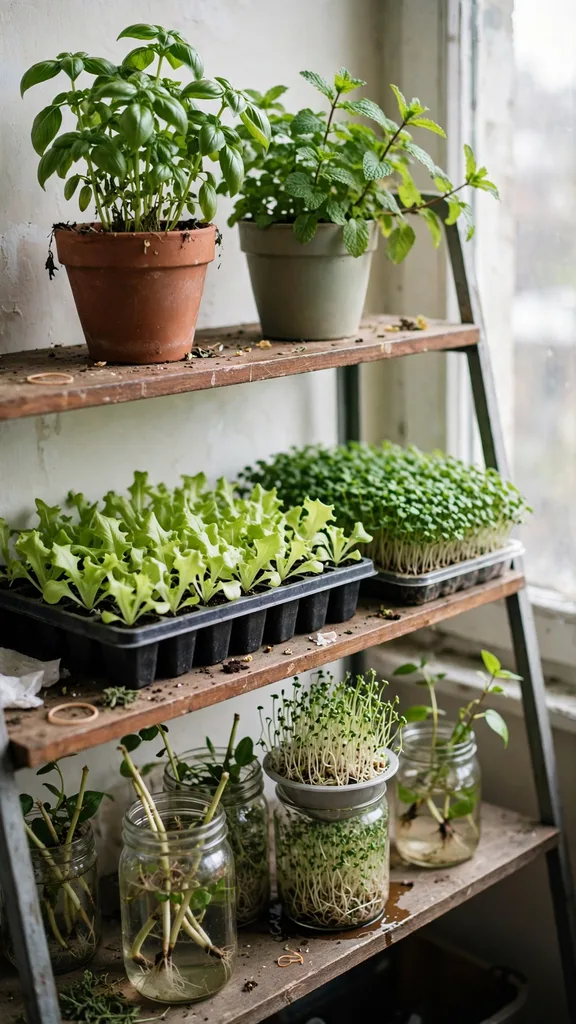
A stacked shelf garden turns one sunny wall into 3 growing levels. Fix a narrow shelf unit against the sunniest wall, place a tray on each shelf to catch drips, and put the light-hungry plants on the top shelf and the shade-tolerant ones below. A clip-on LED bar above each shelf fills the gap where the window light thins, and a timer runs the bars for 12 to 14 hours a day. Herbs sit on the top shelf, lettuce and microgreens on the middle shelf, and cuttings in jars on the bottom shelf.
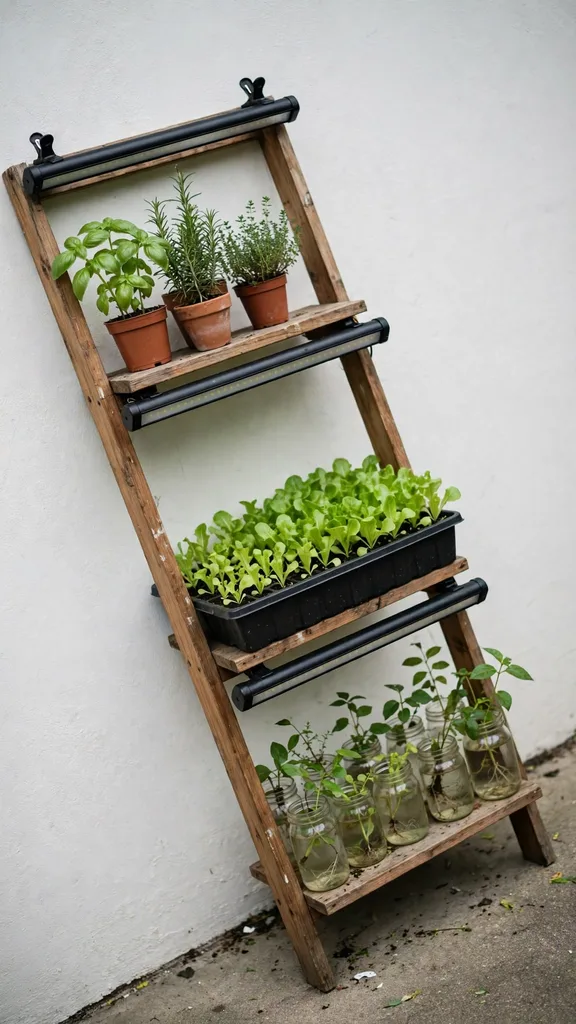
A shelf with no drip tray stains the wall and the shelf below it at the first watering. A shelf loaded with pots and no light bar grows leggy stems on the lower levels while the top shelf thrives. Keep the unit 15.2 cm from the wall. Air moves behind the pots, and mold never starts. One shelf unit holds the whole garden, and the floor below it stays clear for living.
Self-Watering Bottle Pots from Reused Jars
A self-watering bottle pot is a cut bottle that waters a plant from below. Cut a plastic bottle in half, turn the top half upside down into the bottom half as a funnel, thread a cotton wick through the neck, and fill the funnel with potting mix and one seedling. Fill the bottom half with water, and the wick pulls water up to the roots as the mix dries. A jar version works the same way with a smaller plant, and a row of bottle pots fits a sill for the price of the seed.
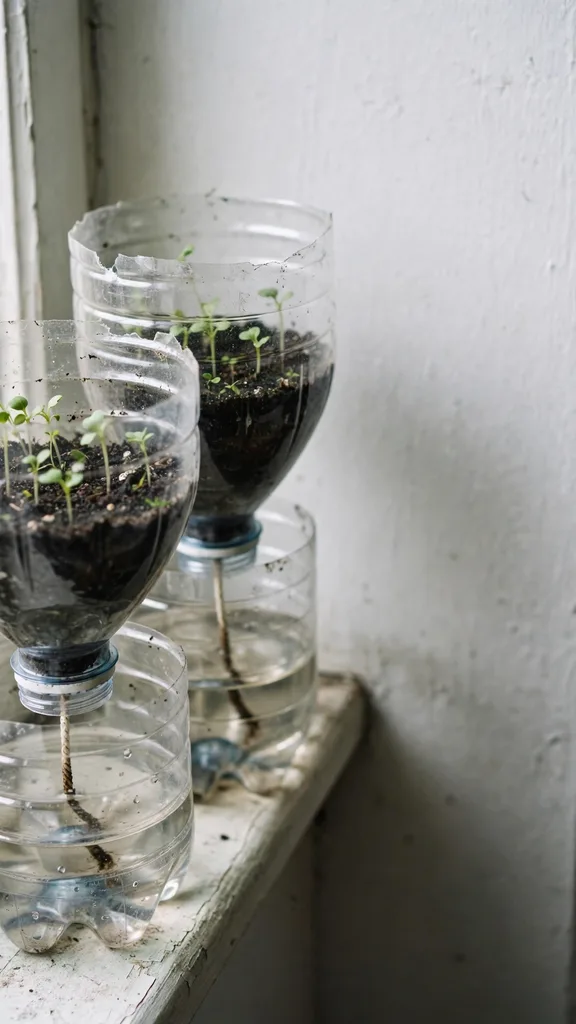
A wick that never touches the water leaves the plant to dry out while the reservoir stays full. A reservoir left uncovered breeds mosquitoes in summer, so cover the gap between the funnel and the bottle with a cloth lid. Refill the reservoir when it drops below half, and flush the mix from the top once a month so salts never build up. A seedling in a bottle pot survives a weekend away, and that is the real saving.
Seed-Starting Station on a Baking Tray
A baking tray is a seed-starting station that costs nothing and contains every mess. Line a rimmed baking tray with a folded towel, set 6 small pots or a cell tray on it, fill with damp seed-starting mix, and sow 2 seeds per cell. Cover the tray with a clear lid or a sheet of clear plastic until the first green shows, then lift the cover and move the tray to the brightest sill. Water from the tray, not from above, so the seed never washes out of place.
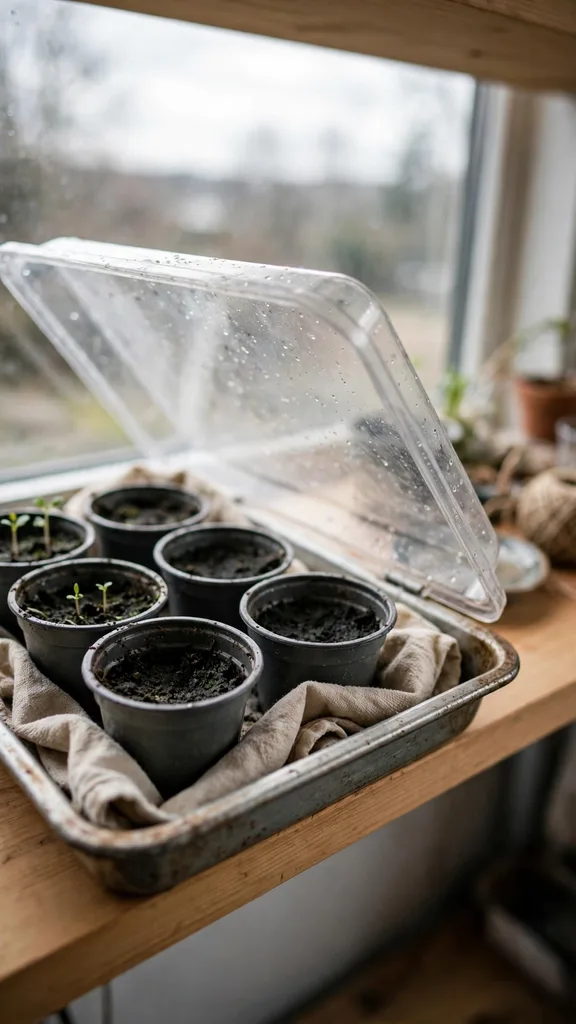
Thin to one seedling per cell once the first true leaves open, and snip the weaker seedling at the base instead of pulling it. A pulled seedling tears the roots of the one beside it. The seed starting guide covers timing and hardening off in full, and the tray method here is the indoor half of that routine. A tray with no drainage in the pots holds water at the base and the seedlings damp off at the soil line. Start seed 6 to 8 weeks before the last frost date for plants that move outside, and keep the indoor herbs and lettuce sowing all year.
Dwarf Chili Pepper in a Sunny Window Pot
A dwarf chili pepper gives a windowsill crop that keeps producing for months. Sow seed in a small pot of damp mix, keep it warm until it sprouts, and move the seedling to a 15.2 cm pot with a drainage hole once it has 4 true leaves. Set the pot in the sunniest window, water when the top 2.5 cm of mix dries, and feed at half strength every 2 weeks once flowers open. Shake open flowers gently each morning to set fruit, since no bees work indoors.
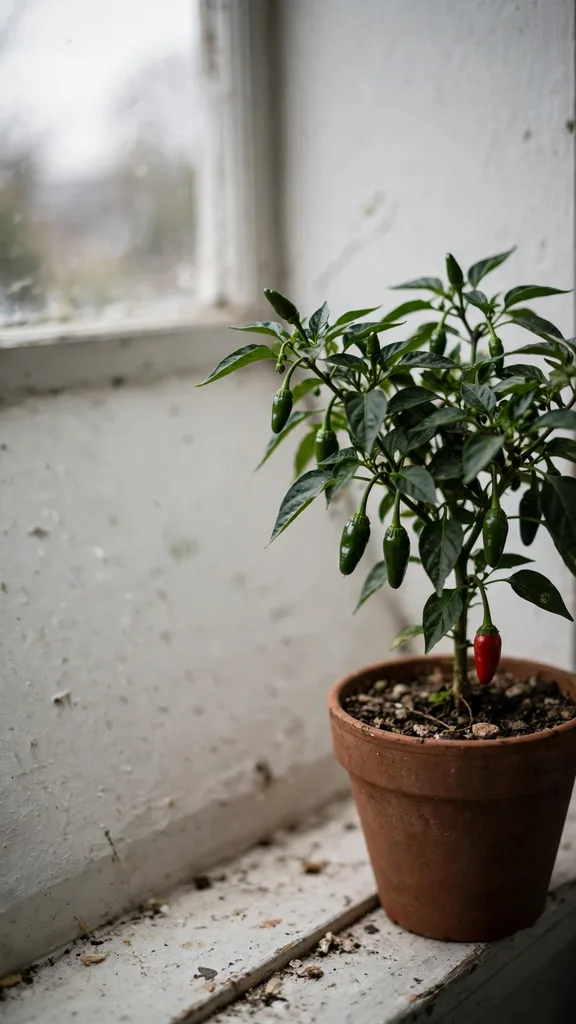
A chili plant in a cold draft drops its flowers before any fruit sets. A plant fed at full strength grows leaves and no peppers, so keep the feed weak and steady. Pick the first peppers green to push the plant into setting more fruit, and leave later peppers to ripen red on the plant. One plant in a sunny window gives peppers through the season, and dried extras keep in a jar for months.
Sprout Jar for Bean Sprouts on the Counter
A sprout jar turns dry mung beans into fresh sprouts in less than a week, with no soil and no light to measure. Put 2 tablespoons of mung beans in a wide-mouth jar, cover with water, and soak overnight. Drain, cover the mouth with cloth held by a rubber band, and set the jar on its side in a dark cupboard. Rinse the beans twice a day with fresh water and drain fully each time, and the sprouts are ready to eat in 4 to 5 days.
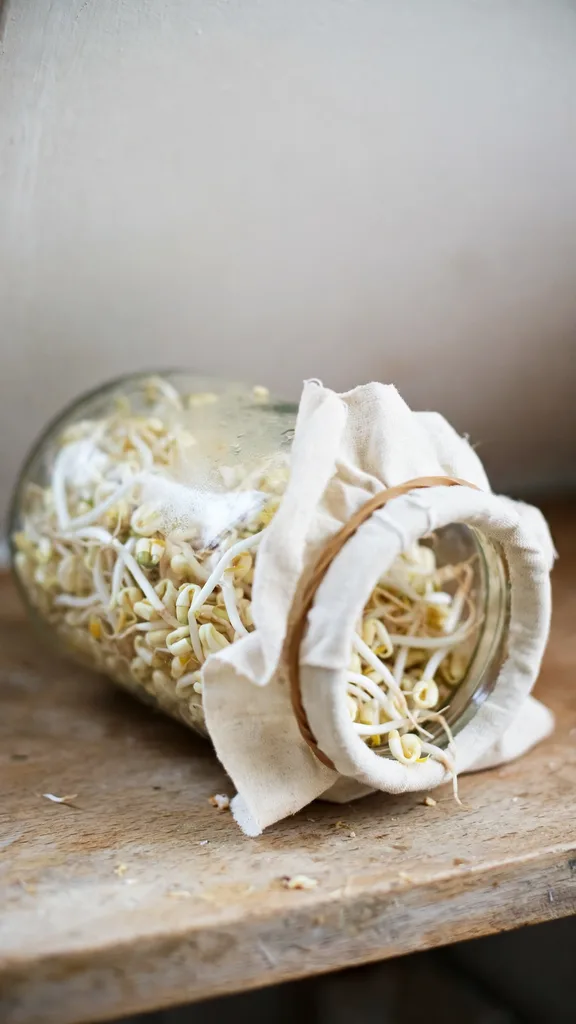
A jar that never drains fully grows sour sprouts with a sharp smell, and that batch goes in the compost. A jar left in direct sun grows green leaves and tough stems instead of pale crisp sprouts, so keep it dark until harvest. Rinse the finished sprouts, drain them well, and store them in a covered container in the fridge for 3 days. One jar gives a handful of sprouts per batch, and a new jar starts the day the last one is eaten.
5 Mistakes That Drain an Apartment Garden Budget
- Buying a plant before measuring the light. A plant that needs 8 hours of direct sun dies on a north-facing sill, and the replacement costs twice the first plant.
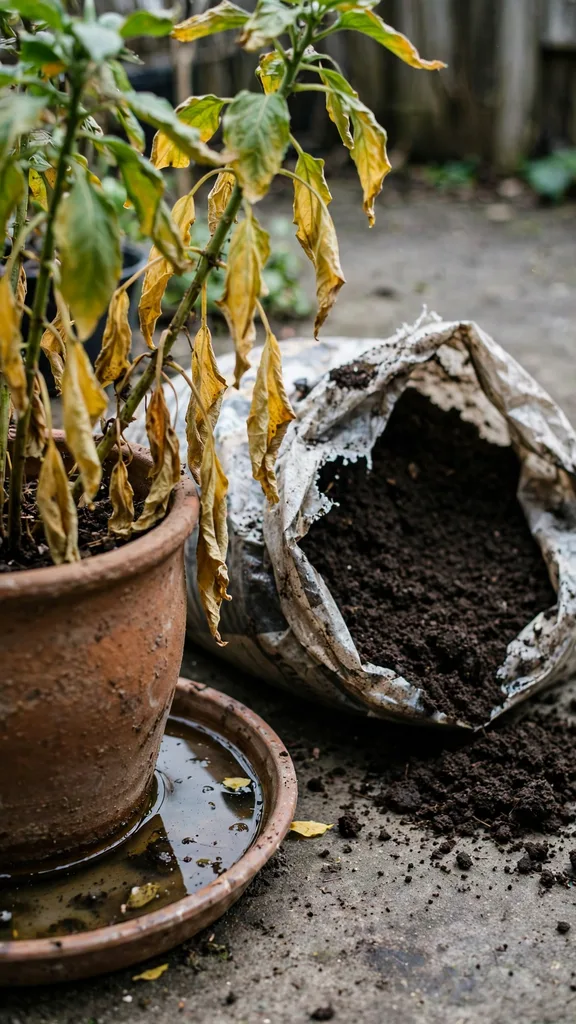
- Potting in garden soil instead of potting mix. Garden soil packs down in a pot, holds water, and suffocates roots. The soil health guide explains why loose, living mix matters more than any fertilizer.
- Watering on a calendar instead of checking the mix. Herbs rot in wet mix and lettuce wilts in dry mix, and neither failure follows a schedule.
- Skipping drainage holes. A pot with no hole holds water at the base, and the first sign is yellow lower leaves that never recover.
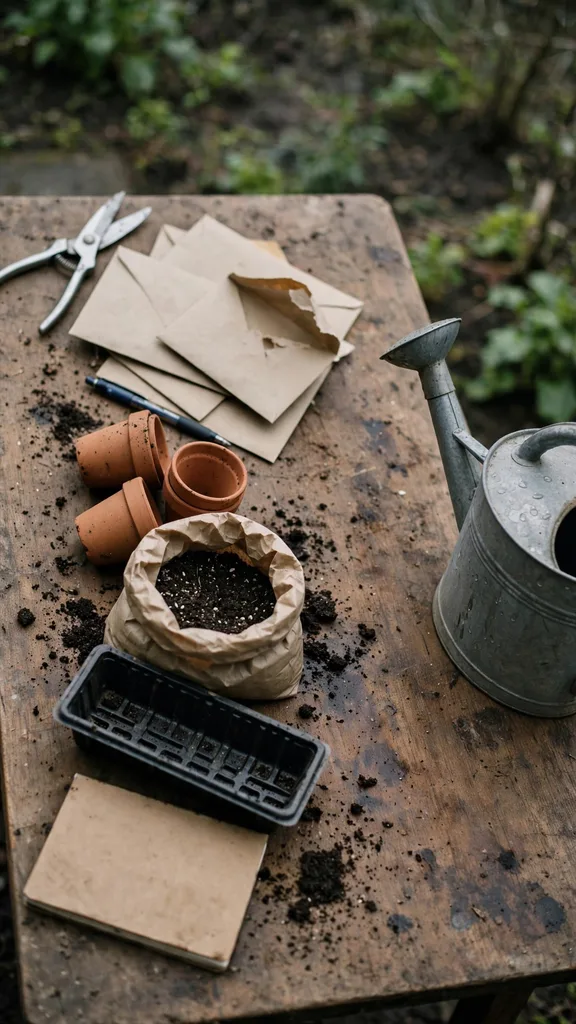
- Buying every tool at once. A pair of scissors, a watering jug, and a tray cover the first season, and the rest waits until a plant proves it needs it.
Apartment Garden on a Budget FAQ
Most herbs and lettuce need 6 to 8 hours of bright light each day, and a south-facing window gives the most. A bright east or west window works for leafy crops, while a north-facing window suits almost nothing edible. A lamp 15.2 to 30.5 cm above the leaves for 14 to 16 hours a day replaces a weak window in winter.
Start with seed, reused containers, and one bag of potting mix. Green onion bases from the kitchen regrow in a jar of water for nothing, and a packet of loose-leaf lettuce seed fills several trays. Buy pots only after the first tray proves the light in the room is strong enough.
Leafy crops grow in a bright south-facing window without a lamp for much of the year. Fruiting plants such as dwarf tomatoes and chili peppers need stronger light and usually need a lamp in winter. Lettuce, herbs, microgreens, and green onions are the safest picks for a window-only garden.
Water when the top 2.5 cm of mix feels dry, not on a fixed day. Herbs prefer a dry spell between waterings, while lettuce and microgreens want steady dampness. Pots with drainage holes and saucers let extra water escape, and empty the saucer so roots never sit in standing water.
Basil, chives, and parsley suit a kitchen sill, loose-leaf lettuce suits a shelf tray, and mint suits its own pot in a bright window. Microgreens suit a tabletop tray, and pothos cuttings suit a bare wall. Pick plants that match the light already in the room instead of fighting it.